 Lynden Siding
 Siding Built for Everson's Corner of Whatcom County
Everson sits in the Nooksack River valley, a short drive from Lynden and close enough to the water and the farmland around it that homes here take on a specific kind of weather punishment. It's not the same exposure you'd get right on the coast, but it's not mild inland weather either. Moist marine air moves up the valley, rain settles in for days at a time in the cooler months, and shaded siding can stay damp long after a storm has passed. We've worked on homes throughout this stretch of Whatcom County long enough to know what that combination does to exterior materials over ten, twenty, thirty years — and it's shaped what we're willing to put on a house.
This page is about what siding, roofing, windows, and decks look like when they're done right for an Everson property, and why we standardized on one siding product instead of offering a shelf full of options.
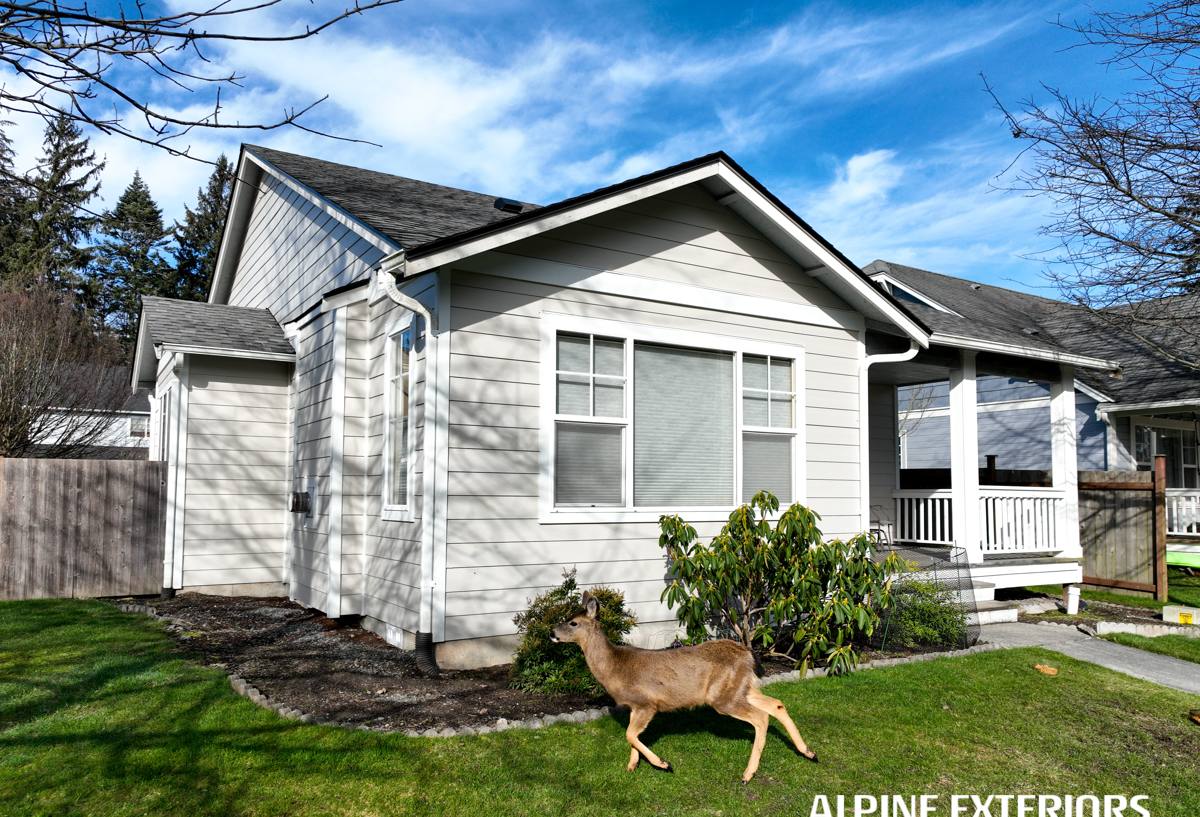
What the Local Climate Actually Does to a House
Salt Air and Moisture Loading
Whatcom County isn't oceanfront, but the marine influence off the Salish Sea reaches well inland, and homes in the Nooksack valley get a steady dose of moist, salt-tinged air, especially with prevailing westerly winds. That air doesn't just sit on the surface of your siding — it works into seams, fastener holes, and any spot where the material or the installation wasn't sealed properly. Over years, that moisture cycling is what breaks down siding that isn't built to handle it.
Driving Rain
This part of Washington gets rain that comes in sideways more often than people expect, pushed by wind off the valley. Driving rain finds every gap in a building envelope — poor flashing, caulked-instead-of-flashed trim joints, siding installed too close to grade. A product that's dimensionally stable and installed with proper water management handles this fine. A product that swells, or that relies on paint film to keep water out, starts showing problems within a handful of years.
Moss and Shade
Long, wet stretches from fall through spring mean moss and algae get a real foothold on north-facing walls, under eaves, and anywhere sun doesn't reach much. Moss holds moisture against the siding surface far longer than open air would, and it's a slow, patient way to degrade a material that isn't moisture-resistant at its core. It's one of the most consistent things we see when we inspect older homes in this area — moss growth correlating almost exactly with where the siding has failed first.
Why We Only Install James Hardie Fiber Cement
We used to get asked why we don't carry vinyl, LP SmartSide, or a lower-cost fiber cement alternative. The honest answer is that we made a call a while back to stop installing products that we'd seen fail — or start looking rough — well before a homeowner expected them to, especially in exactly the kind of climate Everson sits in.
What We Ruled Out, and Why
- Vinyl siding — Vinyl is inexpensive and low-maintenance in the sense that it doesn't need painting, but it's a thin material that expands and contracts with temperature, can crack in impacts, and doesn't offer real fire resistance. In driving rain and wind, seams and J-channels are the weak points, and vinyl's appearance is also just visibly "vinyl" up close — it doesn't take paint if a homeowner ever wants to change color.
- LP SmartSide — This is an engineered wood product, and wood-based siding, even engineered wood, depends heavily on an intact factory coating and correct field sealing of every cut edge. In a valley with this much sustained moisture and moss pressure, any breach in that coating — a missed cut edge, a fastener that wasn't sealed — becomes an entry point for rot. It's a reasonable product in a drier climate; we don't think it's the right call here.
- Cedar and primed spruce — Real wood siding looks great when it's new and it's genuinely high-maintenance from day one — repainting cycles, caulking, and constant vigilance against moisture and pests. In a moss-prone, high-rainfall area, the maintenance burden is significant, and the failure mode when maintenance lapses is rot, not just cosmetic wear.
- Other fiber cement brands (Cemplank, Allura, etc.) — These are legitimate fiber cement products and fiber cement as a category is the right material family for this climate. Our decision to install James Hardie specifically comes down to their climate-engineered HZ product lines, the factory ColorPlus finish, and a warranty and manufacturer track record we're comfortable standing behind on every job. It's a standardization decision for consistency and accountability, not a claim that every other fiber cement brand is defective.
What Hardie Gets Right for This Area
James Hardie fiber cement is non-combustible, dimensionally stable in wet-dry cycling, and comes in HZ5 and HZ10 formulations specifically engineered for wetter, harsher climates like the Pacific Northwest. The ColorPlus finish is baked on at the factory under controlled conditions, which gives it better fade and chip resistance than field-applied paint, and it comes with its own finish warranty separate from the product warranty. It resists moss and mildew better than wood-based products because the material itself isn't a food source for organic growth the way wood fiber is, and it holds paint and caulk properly at trim and joints — which matters enormously when the weather is doing everything it can to force water into those seams.
What a Siding Job Looks Like Done Right
The material is only half the equation. We've seen good siding fail because of bad installation just as often as we've seen bad siding fail because it was never going to hold up. Correct installation in a climate like this means:
- Proper weather-resistive barrier and flashing behind every seam, window, and door opening — not caulk used as a substitute for flashing
- Correct fastener placement and spacing per Hardie's installation specs, since improper nailing is one of the most common causes of early siding failure
- Adequate clearance from grade, decks, and roof lines so water isn't wicking up into the bottom edge of the siding
- Proper joint and butt-seam treatment so water sheds instead of pooling
- Ventilation behind the cladding where the assembly calls for it, so any incidental moisture can dry out
This is also why we don't treat siding as an isolated product decision. Roofing, window flashing, and deck ledger connections all interact with the siding at transition points, and a lot of the moisture problems we get called out to fix started at one of those transitions, not in the field of the siding itself.
Roofing, Windows, and Decks in the Same Climate
Since we handle all four trades, we look at an Everson home as one connected system rather than a stack of separate projects.
Roofing
A roof in this valley needs to shed sustained rain efficiently and resist moss buildup on north-facing and shaded slopes, with valleys and penetrations flashed to handle wind-driven water, not just straight-down rain.
Windows
Window flashing integrated correctly with the siding's weather-resistive barrier is one of the most common failure points we find on older homes — a window that leaks isn't always a bad window, it's often a flashing detail that was never tied into the wall assembly correctly.
Decks
Ledger board attachment and flashing where a deck meets the house is a classic moisture entry point, especially with the amount of rain this area sees. It needs the same careful water management as anywhere else on the exterior.
Cost Factors to Understand
Every home is different, but these are the variables that actually move the price on a siding project in this area:
| Factor | Why It Matters |
|---|---|
| Home size and wall complexity | More corners, gables, and dormers mean more cutting, flashing, and labor time |
| Existing siding removal | Tear-off and disposal of old material adds cost versus new construction |
| Moisture or rot damage found underneath | Common on older homes in wet climates; sheathing repair is priced once it's uncovered |
| Trim and profile selection | Board-and-batten, shake-style panels, and custom trim details take more labor than plain lap siding |
| Access and site conditions | Steep grades, mature landscaping, or tight lot lines affect equipment and staging |
Why a Local Crew Matters Here
A crew that mostly works in a different climate zone doesn't always think about moss-prone north walls, valley-specific wind-driven rain, or how close a deck ledger sits to grade in a wet winter. Working throughout Lynden, Everson, and the rest of Whatcom County means we're dealing with these same conditions on nearly every job, and it changes how carefully we handle flashing details, fastener choices, and clearances — not because it's a special technique, but because we've seen what happens in this specific climate when those details get skipped.
Signs Your Siding May Already Be Struggling
- Persistent moss or dark streaking that comes back shortly after cleaning
- Soft or spongy spots when you press on the siding, especially near the bottom courses
- Paint that's peeling or bubbling rather than just fading
- Visible gaps, warping, or buckling at seams and corners
- Musty smell or moisture staining on interior walls that back up to exterior siding
If you're seeing any of these on a home in Everson, it's worth having someone take a real look before it turns into a sheathing repair.
Get a Straight Answer for Your Home
If you're weighing a siding, roofing, window, or deck project on an Everson property, we're happy to come take a look, tell you honestly what condition your exterior is in, and walk you through what a James Hardie installation would involve for your specific home. There's no pressure and no obligation — just a straightforward estimate from a crew that knows this valley's weather.