 Lynden Siding
 Building a Deck That Can Actually Handle Everson's Weather
Everson sits down in the Nooksack River valley, and that low, flat ground comes with a trade-off: rich soil and easy living most of the year, but also standing moisture, high humidity, and a water table that doesn't drain as fast as it does on higher ground. Add in Whatcom County's long wet season, the marine-influenced air that moves inland off the Sound, and months where a shaded deck barely sees direct sun, and you've got a climate that is genuinely hard on outdoor structures. A deck built with a generic, one-size-fits-all approach will show it within a few seasons — soft spots, black staining, moss creeping across the boards, and hardware that rusts before the wood even fails.
A deck built correctly for this specific area holds up for decades instead of years. That's the difference we build for on every Everson project: not just a deck that looks good on the day it's finished, but one that's still solid, dry, and safe ten or twenty winters from now.
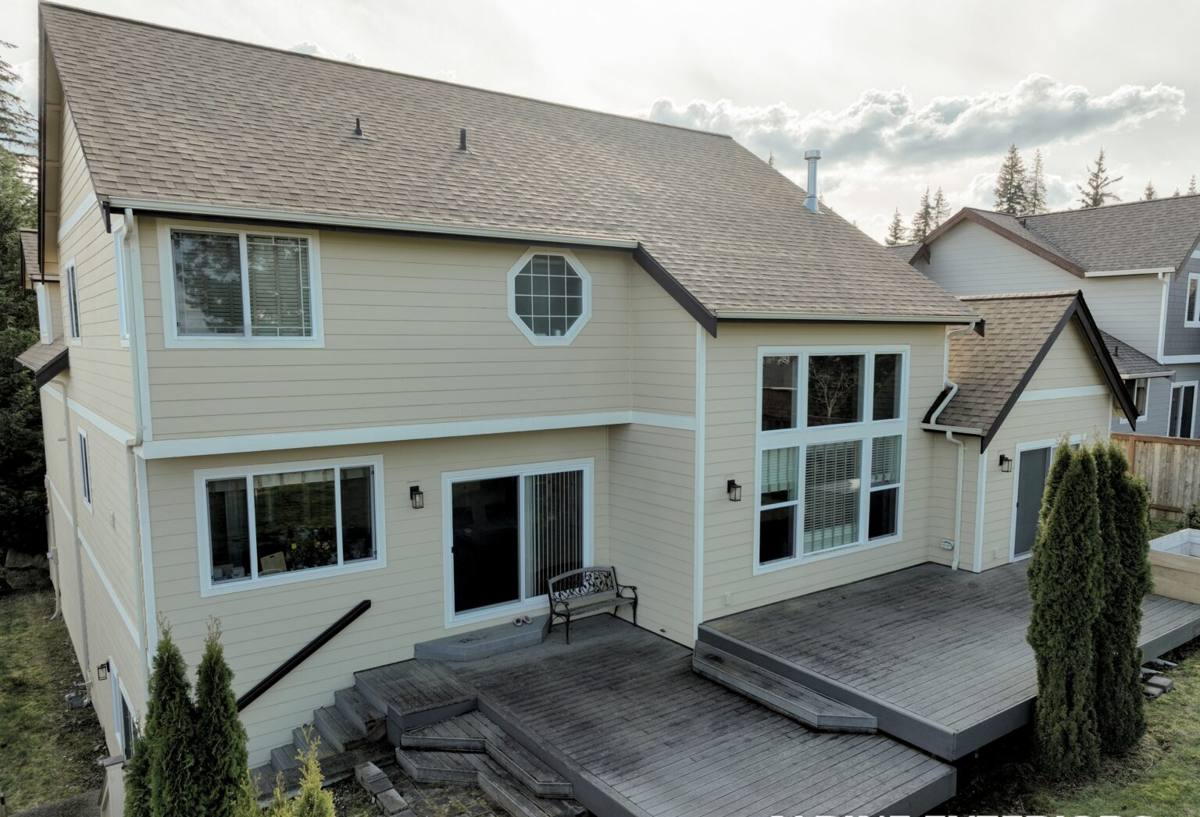
How Everson's Climate Actually Changes What a Deck Needs
Driving rain and standing moisture
Whatcom County doesn't just get rain — it gets long stretches of it, often coming in sideways during fall and winter storms. On a deck, that means water gets driven into joints, fastener holes, and the seam where the deck meets the house, not just onto the flat surface where it can run off. In the valley around Everson, ground moisture also lingers longer after storms because the soil doesn't drain as quickly as it would on a slope. That combination punishes any weak point in flashing, framing, or footing depth.
A long moss season
Between the shade from mature trees common in this area and the sheer number of damp, low-light days each year, moss and algae get a long runway to establish themselves on any surface that stays wet. Moss holds moisture against wood and against composite decking alike, and it turns a deck slick and dangerous underfoot long before it does structural damage. Material choice and airflow design matter a lot more here than they would in a drier climate.
Salt-tinged, humid air
Marine air moving in from the Sound carries salt and moisture further inland than people expect, and it accelerates corrosion on fasteners, brackets, and any exposed metal hardware. Combined with the constant humidity, it's a slow but steady attack on anything that isn't rated for exterior, corrosion-resistant use.
What Goes Into a Deck Built to Actually Last Here
A deck is only as good as the parts nobody sees once it's finished. Here's what we treat as non-negotiable on every build:
- Footings set below frost depth and sized for the soil. In low-lying, moisture-heavy ground, undersized or shallow footings shift over time, which is what causes a deck to feel bouncy or lean years later.
- Proper ledger board flashing. Where a deck attaches to the house is the single most common failure point we see on older decks in this region — water gets behind an unflashed or poorly flashed ledger and rots the rim joist and sheathing from the inside out.
- Corrosion-resistant fasteners and connectors. Standard hardware corrodes fast in this climate. We use stainless or coated fasteners and structural connectors rated for exterior, high-moisture use.
- Joist tape and proper spacing. Sealing the tops of joists before decking goes down keeps water out of end grain, which is where rot almost always starts first.
- Drainage planning underneath. On flatter valley lots, we grade and plan under-deck drainage so water doesn't just pool beneath the structure after every storm.
Choosing the Right Decking Material for This Climate
There's no single "best" decking material — there's a best material for your budget, your maintenance appetite, and how much shade and moisture your specific lot deals with. Here's how the common options actually perform in Whatcom County conditions:
| Material | Moisture Resistance | Moss/Algae Behavior | Maintenance | Typical Lifespan |
|---|---|---|---|---|
| Pressure-treated wood | Good if sealed and maintained | Prone to moss in shaded areas | Annual cleaning and periodic sealing | 15–20 years |
| Cedar | Naturally moisture-resistant | Needs regular cleaning to prevent moss | Sealing every 1–2 years | 15–25 years |
| Composite decking | Excellent, won't rot | Can still grow surface moss without cleaning | Occasional washing, no sealing | 25–30+ years |
| PVC decking | Excellent, fully synthetic | Low, but not immune in deep shade | Minimal — occasional washing | 25–30+ years |
We're upfront about the trade-offs. Wood costs less upfront but asks more of you every year in cleaning and sealing — skip that upkeep in a climate like this and it shows fast. Composite and PVC cost more initially but remove most of the moisture-related maintenance burden, which matters a lot in a valley that stays damp as long as this one does. Neither is "wrong" — it depends on how much yearly maintenance you actually want to do.
A note on cost-driving factors
Beyond the decking material itself, a few things move the price of a deck project more than people expect: height above grade (railings and stairs add cost fast), the size and complexity of footings needed for the soil, whether the ledger connects to a wall that needs remediation before it's sound, and how much site access equipment has for excavation and material delivery.
Our Deck Building Process
- On-site assessment. We walk the actual lot, check drainage patterns, sun/shade exposure, and how the deck will tie into the house.
- Design and material selection. We talk through honest trade-offs between wood and composite/PVC options based on your budget and how much upkeep you want.
- Permitting. We handle the permit process for the build, including footing and structural requirements that apply locally.
- Footings and framing. This is where we spend the extra time — proper depth, flashing, and hardware that's rated for this climate, not the cheapest option that happens to fit.
- Decking, railing, and finish work. Installed with attention to fastener spacing and airflow underneath to slow moss growth.
- Final walkthrough. We go over how to maintain whatever material you chose, so you're not guessing a year in.
Signs an Existing Deck Is Losing the Fight Against Moisture
If you've got an older deck in the Everson area, a few warning signs are worth taking seriously before they become safety issues:
- Boards that feel soft, spongy, or spring back slowly underfoot
- Dark staining or streaking, especially near the ledger board or fastener heads
- Moss or algae that returns within weeks of cleaning
- Visible rust bleeding from screws, nails, or metal connectors
- Any wobble, movement, or gap that's opened up where the deck meets the house
- A musty smell coming from underneath the deck structure
Any one of these on its own might be minor. Several together usually mean moisture has already gotten past the surface, and it's worth having someone look at the framing, not just the decking boards.
Permits and Local Considerations
Deck projects in and around Everson typically require a building permit, particularly for anything attached to the house or built above a certain height, and there are standard requirements around guardrail height, stair geometry, and footing depth that inspectors check. Because Everson sits in a river valley with soil conditions that vary from lot to lot, footing requirements can differ even between neighboring properties. We handle the permit process as part of the job so you're not left navigating it alone, and we build to code as a floor, not a ceiling — the goal is a deck that passes inspection and still holds up long after the inspector's gone.
Maintenance That Actually Matters in This Climate
Whatever material you choose, a short list of maintenance habits does most of the work in a climate like this:
- Sweep debris and standing leaves off the deck regularly, especially in fall — trapped organic matter holds moisture and feeds moss
- Clean moss and algae off the surface at the first sign of it, before it spreads and gets slick
- Check and reseal wood decking on the schedule it actually needs, not just when it looks dry
- Inspect fasteners and hardware yearly for rust or loosening
- Keep gutters and downspouts near the deck clear so runoff isn't dumping directly onto or under the structure
- Make sure under-deck drainage stays clear of debris that can block water flow
Why Hiring a Crew That Already Works in Everson Matters
A deck built by someone unfamiliar with this specific valley's soil, drainage, and moss pressure often looks fine on day one and starts showing problems within a couple of wet seasons. We build decks throughout Whatcom County and know how differently a lot near the Nooksack drains compared to higher ground closer to Lynden proper — that shapes footing depth, drainage planning, and material recommendations before a single board goes down. It also means faster response if something needs a look after a hard winter, since we're not driving in from out of the area.
If you're planning a new deck or wondering whether an existing one needs attention, we're happy to take a look and give you a straight answer — no pressure, no upsell. Fill out the form below for a free estimate.