 Lynden Siding
 Siding Built for Ferndale's Coastal Edge of Whatcom County
Ferndale sits closer to the water than most of the towns we work in around Whatcom County, and that changes what a house needs from its exterior. Homes here deal with a combination that inland Whatcom neighborhoods don't see nearly as much: salt-laden air rolling in off Bellingham Bay and the Strait of Georgia, driving rain pushed sideways by winter storms, and a moss and mildew season that can stretch from October well into spring. Siding that works fine forty minutes inland doesn't always hold up the same way here.
We're a local crew that installs siding, roofing, windows, and decks, and we've standardized on one siding product for a reason: James Hardie fiber cement. This page walks through what Ferndale's climate actually does to a home's exterior, how our process is built around that, and why we stopped installing anything else.
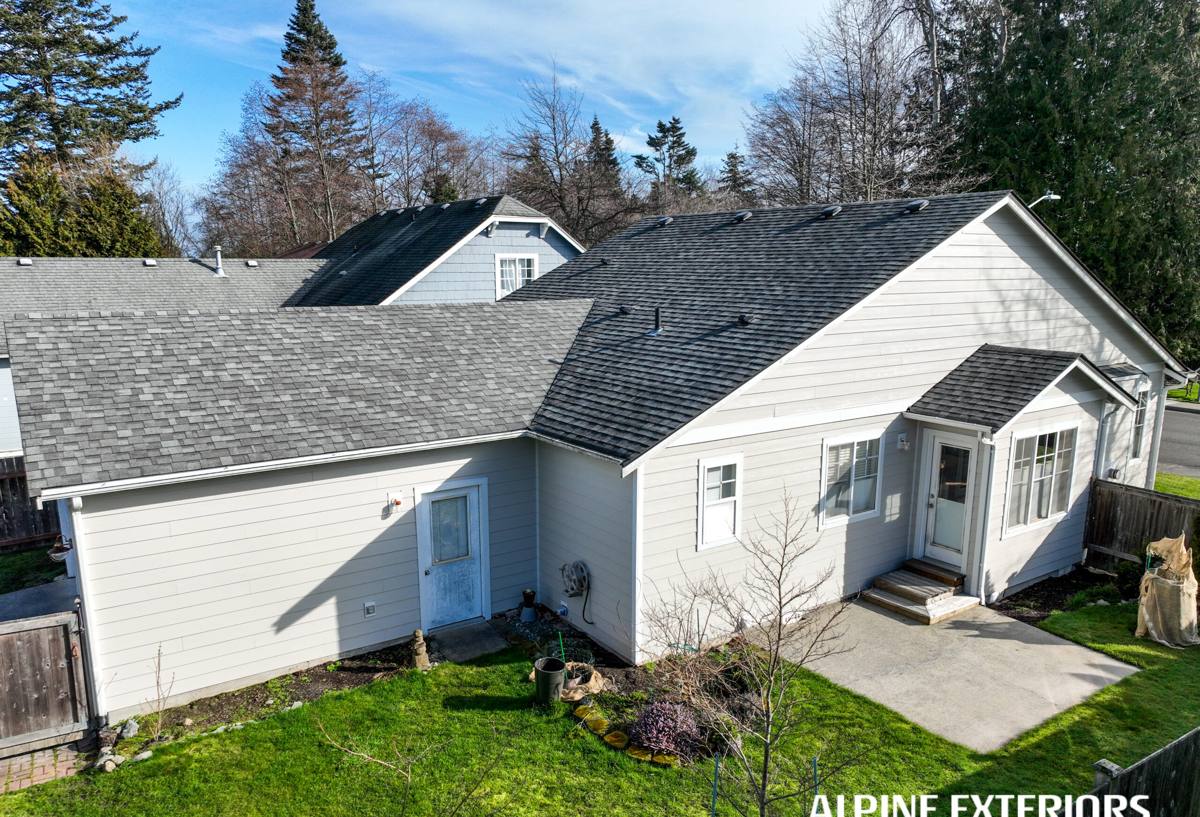
What the Ferndale Climate Does to Siding
Salt Air and Corrosion
Proximity to salt water accelerates corrosion of fasteners, flashing, and any metal trim on a home's exterior. It also affects paint and coatings — salt residue holds moisture against a surface longer than plain rainwater does, which speeds up finish breakdown on lower-quality siding materials. Homes closer to Cherry Point and the shoreline feel this more than homes set back toward the Nooksack River valley, but salt-bearing wind can travel further than people expect, especially during winter storm systems.
Driving Rain
Whatcom County gets a lot of rain, but the wind direction matters as much as the volume. Storms coming off the Strait tend to drive rain sideways into west- and southwest-facing walls, which is exactly the kind of exposure that finds every weak seam, gap, or poorly sealed joint in a siding system. Water that gets behind siding — rather than running off the face of it — is what causes the rot and sheathing damage homeowners don't see until it's expensive.
Moss, Mildew, and Prolonged Dampness
Long stretches of overcast, damp weather mean siding rarely gets a chance to fully dry out between rain events for much of the year. That's ideal growing conditions for moss and mildew, particularly on north-facing walls, under eaves, and anywhere tree cover blocks sun and airflow. Materials that absorb moisture readily give that growth something to root into; materials that don't, resist it far better.
Why We Only Install James Hardie Fiber Cement
We used to install a wider range of siding products. We narrowed to James Hardie because, given what Whatcom County's coastal-influenced weather does to a house over 10, 20, and 30 years, it's the product we're comfortable standing behind. Here's the honest reasoning:
- Non-combustible core. Fiber cement doesn't feed a fire the way wood-based products can, which matters for insurance conversations and long-term peace of mind.
- Moisture resistance. Fiber cement doesn't swell, delaminate, or absorb water the way engineered wood products can when a seal fails or water finds its way behind a panel.
- Factory-applied ColorPlus finish. The color and topcoat are baked on at the factory under controlled conditions, which holds up better against salt air and UV than most field-applied paint jobs, and it comes with its own finish warranty.
- Climate-engineered HZ product lines. Hardie makes region-specific formulations (HZ5 for our zone) engineered around moisture and freeze-thaw behavior rather than a one-size-fits-all product.
- Real, transferable warranty backing. A warranty is only worth something if the company and the product have a long track record — Hardie has both.
To be fair to the alternatives: vinyl is inexpensive and low-maintenance in mild climates, LP SmartSide and other engineered wood products have improved their moisture engineering over the years, and cedar has a look a lot of homeowners love. None of that is wrong. But in a climate with this much sustained dampness and salt exposure, we've seen enough of the long-term trade-offs — moisture-related failures, repainting cycles, warranty gaps, maintenance burden — that we don't feel right selling those products anymore. We'd rather install one thing well than install several things and hope the climate is kind to them.
How Siding Products Compare for a Ferndale Home
| Factor | James Hardie Fiber Cement | Vinyl | Engineered Wood (LP SmartSide) | Cedar |
|---|---|---|---|---|
| Moisture behavior | Does not swell or absorb water | Doesn't absorb water but can warp/crack in temperature swings | Improved but still moisture-sensitive at cut edges and seams | Absorbs moisture, needs regular sealing |
| Salt air resistance | Strong; factory finish holds up well | Fair; can chalk and fade | Moderate; depends on coating maintenance | Weathers/grays without upkeep |
| Fire resistance | Non-combustible | Melts under heat | Combustible (wood-based) | Combustible |
| Maintenance | Low; occasional wash and caulk check | Low but limited repair options | Moderate; repainting and sealed-edge maintenance | High; regular staining/sealing |
| Typical lifespan (installed to spec) | 30+ years | 20-30 years | 20-30 years | 15-25 years with upkeep |
Our Process for Ferndale Homes
Assessment First
We start by walking the exterior and looking at how the specific house sits relative to weather exposure — which walls take the brunt of storm-driven rain, where moss and staining are already showing, whether there's evidence of moisture getting behind the current siding, and what condition the trim, flashing, and window envelope are in. Siding doesn't get installed in isolation from the rest of the exterior; a new siding job on top of bad flashing just hides the problem for a while.
Installation Detail That Matters Here
Correct installation is what makes fiber cement perform the way it's rated to. That includes proper fastener spacing and type (corrosion-resistant, given the salt air), correct clearances at grade and roofline, properly lapped and sealed flashing, and following Hardie's specified gaps and caulking approach rather than treating it like a generic lap siding install. A lot of the failures people associate with any siding product — Hardie included — trace back to installation shortcuts, not the material itself.
Beyond Siding
Because we also handle roofing, windows, and decks, we can flag related issues while we're already on site — a roofline detail that's funneling water onto a wall, a window that's no longer sealing well, or deck ledger flashing that needs attention. Fixing siding without addressing the water source next to it doesn't solve the underlying problem.
Repair, Replacement, or Something in Between
Not every Ferndale home needs a full re-side. We look at:
- Localized moss/mildew staining that can be cleaned and doesn't indicate underlying moisture damage
- Damaged or failing sections that can be repaired or replaced in place without redoing the whole exterior
- Signs of trapped moisture (soft spots, bulging, staining that keeps returning) that point to a larger problem behind the siding
- Full replacement, when the existing siding is past its useful life or the underlying issues are widespread
We'll tell you honestly which category your home falls into rather than defaulting to the biggest job.
What Affects Cost
| Factor | Why it matters |
|---|---|
| Home size and wall complexity | More corners, dormers, and cutouts mean more labor and material waste |
| Current siding removal | Tear-off and disposal of old material adds time and cost versus new construction |
| Underlying repairs | Rotted sheathing, damaged flashing, or trim work found once old siding comes off |
| Product line and profile | Lap, shingle, and panel styles vary in material and labor cost |
| Color program | ColorPlus factory finish options versus field-painted trim |
| Access and site conditions | Fencing, landscaping, and lot layout can affect setup and staging time |
We give real numbers after we've actually looked at the house — broad estimates over the phone tend to be wrong in one direction or the other, and we'd rather be accurate than fast.
Questions to Ask Before Hiring an Exterior Contractor
- Are you licensed and insured to work in Washington, and can you provide proof?
- Do you install to the manufacturer's specific installation instructions, or a generic approach?
- What does your workmanship warranty cover, separate from the manufacturer's material warranty?
- Will the same crew that quotes the job also install it?
- How do you handle unexpected sheathing or moisture damage found after tear-off?
- Can you walk me through why you recommend the specific product and profile for my home?
A local crew that's dealt with Whatcom County's weather season after season will have real, specific answers to these — not generic sales language.
Why a Local Crew Matters in Ferndale
Exterior work in a coastal-influenced climate isn't the same everywhere. A crew that mostly works drier inland regions can install a technically correct siding job that still underperforms here because the details that matter most — flashing laps, fastener choice, caulking approach, ventilation behind the cladding — are exactly the details that get cut when a crew isn't used to accounting for salt air and driving rain. Working throughout Whatcom County means we see how houses in this area actually age, and we build that into how we install and what we recommend.
If you're dealing with aging siding, ongoing moss and staining, or you're just planning ahead for a home in Ferndale, we're happy to take a look and give you a straightforward, no-pressure estimate — no obligation, just an honest read on where your home stands.