 Lynden Siding
 Board & Batten Siding Built for Everson's Wet Side of Whatcom County
Everson sits in one of the wettest corners of Washington, where marine air pushes inland, rain settles into the valley for days at a time, and shaded north walls stay damp long after a storm has passed. Homeowners here choose board and batten siding for its clean, vertical lines and farmhouse character, but the look is only half the story. In this climate, board and batten is also a moisture-management system — and if it's not installed correctly, the same rain and moss pressure that makes the region beautiful will also be what finds the gaps in a poorly built wall.
This page covers what board and batten siding needs to hold up on an Everson home, what a correct installation actually involves, and how our process is built around the realities of driving rain and a long moss season rather than around a generic national spec.
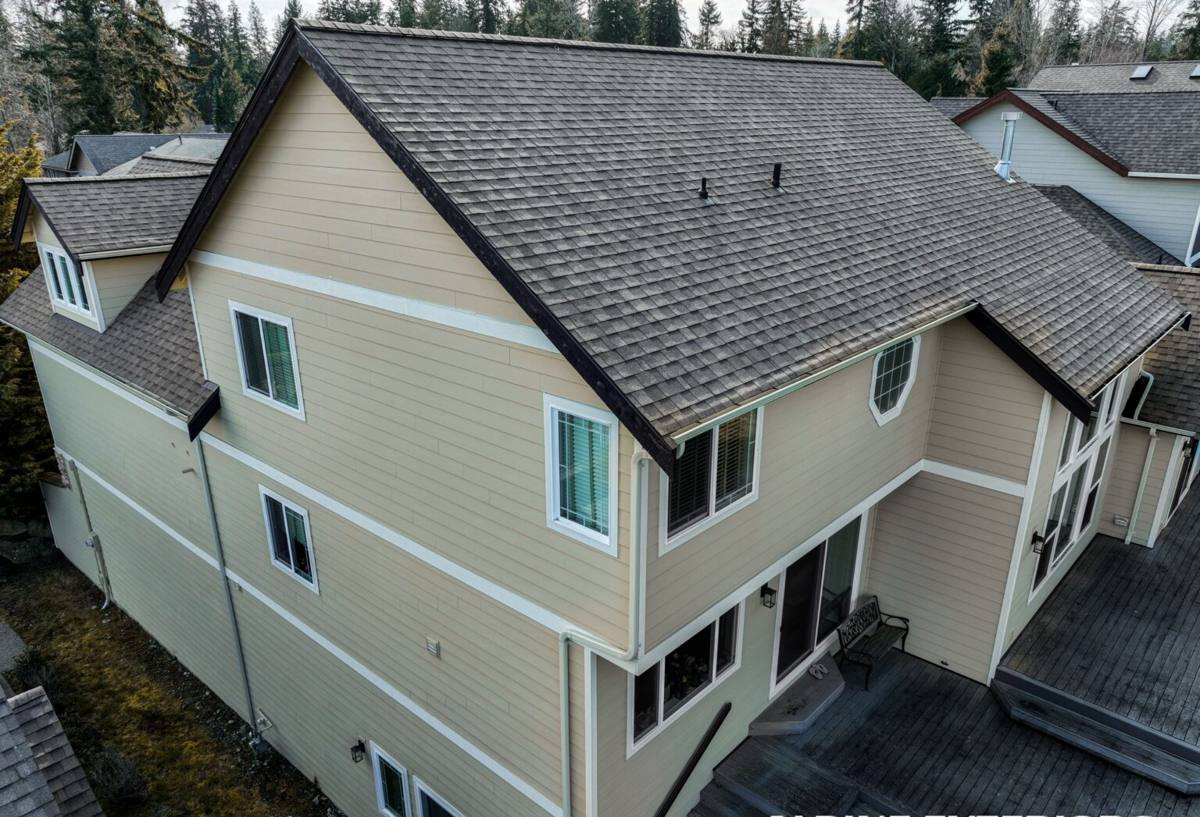
What Everson's Climate Demands From a Vertical Siding System
Board and batten relies on vertical boards or panels with narrow strips (battens) covering the seams. That design is attractive, but every seam and every batten is a place where water can be driven sideways by wind before it ever gets a chance to run down and off the wall. In a climate with long stretches of driving rain and short, mild summers that never fully dry out a wall assembly, three things matter more than they would in a drier region:
- Drainage behind the siding — a wall that can shed bulk water and let trapped moisture escape, rather than trapping it against the sheathing
- Consistent, correct fastening — boards and battens fastened into solid backing, not just into sheathing, so wind-driven rain doesn't work fasteners loose over time
- Material that tolerates repeated wet-dry cycling — Whatcom County's siding rarely gets a long dry season to fully recover before the next wet stretch begins
Moss is the other constant. North-facing walls, areas under mature trees, and anywhere airflow is limited will grow moss and algae on almost any siding material given enough shaded, damp seasons in a row. The question isn't whether moss will try to grow — it's whether the siding material and finish resist it, and whether the wall assembly lets moisture dry out before moss has a chance to take hold.
Why Some Board and Batten Installations Fail Early
Most early siding failures we see on vertical siding walls trace back to the same handful of causes: no rainscreen gap behind the siding, battens face-nailed with an inconsistent pattern, missing or undersized flashing at window and door heads, and butt joints that weren't properly backed or sealed. None of these are dramatic mistakes — they're shortcuts that don't show up as a problem for a year or two, then show up as staining, soft trim, or a batten that's started to bow.
What a Correct Board & Batten Job Involves
A properly built board and batten wall in this climate is a system, not just a fastening pattern. The components work together:
- Weather-resistive barrier installed shingle-fashion so every layer sheds water downward and outward
- Rainscreen furring or a drainage mat creating a gap between the barrier and the siding so bulk water and vapor can drain and dry
- Flashing at every penetration — window and door heads, hose bibs, light fixtures, and any point where the wall is interrupted
- Vertical boards fastened into framing at manufacturer-specified spacing, not just into sheathing
- Battens fastened to align with the framing beneath, covering seams cleanly without trapping moisture behind them
- Factory-finished or properly primed and sealed cut edges, since a raw, unsealed cut edge is one of the fastest ways moisture gets into fiber cement or any wood-based panel
Skipping the rainscreen gap is the single most common corner cut on board and batten jobs, because it's invisible once the siding is up and it doesn't cost the installer anything on installation day. It's also the detail most likely to determine whether a wall is still performing well in fifteen years.
James Hardie Board & Batten: What We Install
We install James Hardie fiber cement board and batten systems exclusively. That's a deliberate standard, not a default. Hardie's vertical siding panels are engineered for the Pacific Northwest through its HZ10 product line, which is formulated for regions with sustained moisture exposure rather than dry, hot climates. The panels carry a factory-applied ColorPlus finish, which means the color coat is baked on before the material ever reaches Everson, giving it more consistent UV and moisture resistance than a field-applied paint job.
Just as important: fiber cement is non-combustible. In a region where wildfire smoke and dry-season fire risk have become a real seasonal concern even on the wet side of the state, that's not a marketing point — it's a material property that matters to insurers and to homeowners.
Why We Don't Install Vinyl, LP SmartSide, or Other Board and Batten Materials
Vinyl board and batten is inexpensive and easy to install, but it flexes with temperature swings, and in sustained wind-driven rain it's more dependent on a perfect installation to keep water from working behind panel edges. Engineered wood products like LP SmartSide perform reasonably well when kept sealed and dry, but they're wood-based at the core, which means any breach in the finish — a cut edge, a fastener hole, a hairline crack — gives moisture a path into a material that can swell and deteriorate faster than fiber cement once it's wet. Primed spruce and cedar board and batten look excellent when new, but both require an ongoing maintenance commitment — recoating, caulking, and inspection — that most homeowners underestimate until the finish starts to fail on the shaded, moss-prone sides of the house.
We're not saying these products can't be installed correctly. We're saying that after years of doing this work in Whatcom County's climate, we standardized on one material system we can stand behind for the long term, and that's James Hardie fiber cement.
Our Process for an Everson Board & Batten Project
The process is the same whether it's a full re-side or a single accent wall, which is a common use for board and batten — many Everson homeowners use it as a feature material on a gable, entry, or porch section rather than the whole house.
| Step | What Happens |
|---|---|
| On-site assessment | We check existing sheathing, framing condition, and moisture history before quoting anything |
| Written estimate | Scope, product line, color, and rainscreen/flashing details spelled out in writing, no surprise change orders |
| Prep and barrier work | Remove old siding as needed, repair any damaged sheathing, install weather-resistive barrier and flashing |
| Rainscreen installation | Furring or drainage mat installed to create the drainage gap behind the siding |
| Board and batten install | Vertical panels and battens fastened to spec, seams and edges sealed per manufacturer requirements |
| Final walk-through | We review the finished wall with the homeowner before calling the job complete |
Cost Factors for Board & Batten Siding in Everson
Every project is different, but the price of a board and batten job is driven by a consistent set of factors rather than by guesswork:
| Factor | Why It Matters |
|---|---|
| Full re-side vs. accent wall | Whole-house jobs have more linear footage but better per-foot efficiency; accent walls cost more per square foot due to setup and detail work |
| Existing wall condition | Rotted sheathing or old moisture damage found during tear-off adds repair work before siding can go on |
| Wall height and access | Two-story gables and steep-site homes take longer and require more scaffolding or lift work |
| Trim and detail complexity | Corner boards, window trim, and transitions to other materials add labor |
| Color and finish selection | Standard ColorPlus color options price differently than custom or premium finishes |
We provide a written estimate before any work starts, and we walk through these factors so a homeowner understands exactly what's driving the number.
Maintenance Checklist for Board & Batten in a Wet Climate
Fiber cement is low-maintenance, not no-maintenance. A short annual routine keeps a board and batten wall performing the way it's supposed to through Everson's wet stretches:
- Rinse siding annually, especially shaded and north-facing walls, to slow moss and algae buildup before it takes hold
- Check caulking at trim, window, and door transitions once a year and re-caulk any cracked or separated joints
- Keep gutters clear so overflow doesn't run down the wall face during heavy rain
- Trim back vegetation and tree limbs that shade walls and trap moisture against the siding
- Inspect the bottom edge of the siding near grade for soil or mulch buildup that traps moisture against the material
- Address any small paint chips or fastener issues promptly rather than letting them sit through a wet season
Why Hiring a Crew That Already Works in Everson Matters
Board and batten looks straightforward from the curb, but the difference between a wall that looks good for two years and one that performs for decades is almost entirely in details a homeowner can't see once the siding is up — the rainscreen gap, the flashing behind the trim, the fastening into framing rather than just sheathing. A crew that already works across Whatcom County knows how the Nooksack valley's rain patterns and shaded lots behave differently than siding installed on a dry, open lot elsewhere in the state, and builds the wall assembly accordingly rather than following a one-size-fits-all national spec.
If you're considering board and batten for an Everson home, we're happy to walk the property, look at the existing wall condition, and put together a straightforward, written estimate. There's no pressure and no obligation — just a clear look at what your home actually needs.