 Lynden Siding
 Deck Replacement in Everson: Built for Whatcom County Weather
Everson sits in that stretch of Whatcom County where the Nooksack lowlands meet marine weather rolling in off the Salish Sea. Homes here deal with a longer wet season than most of the country, damp ground conditions for much of the year, and enough salt-laden air drifting inland to accelerate corrosion on anything metal. A deck built without those specifics in mind will look fine for a few years and then fail from the inside out — usually in the framing and fasteners, long before the surface boards show obvious damage.
We work on decks throughout Lynden and the surrounding communities, including Everson, and the pattern is consistent: decks built to a generic spec, without attention to local drainage, ledger flashing, and fastener corrosion resistance, need replacement 10 to 15 years sooner than they should. This page is about what a deck replacement actually involves when it's done for this specific climate, and what to expect if you're considering one for your Everson property.
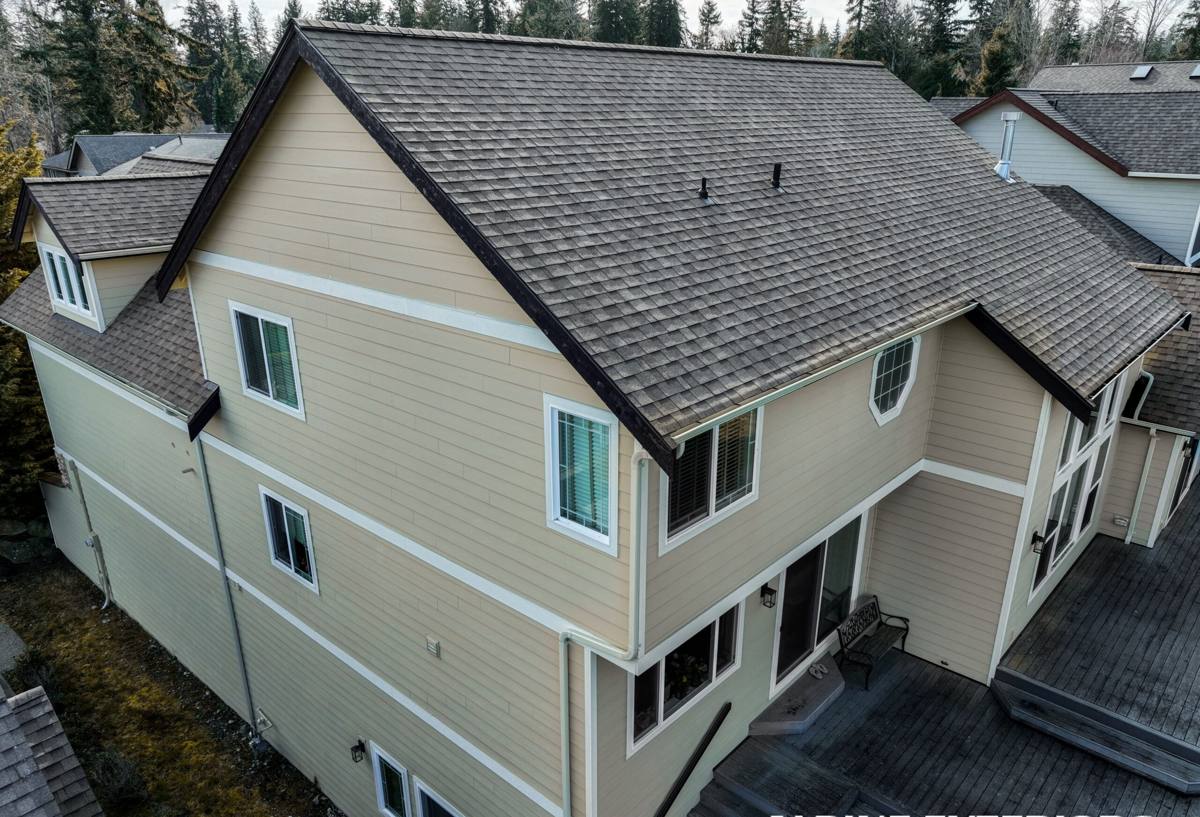
Why Decks Wear Out Faster Here
Driving Rain and Standing Moisture
Whatcom County doesn't just get a lot of rain — it gets sustained, wind-driven rain that pushes water sideways into ledger boards, stair stringers, and any horizontal surface that isn't properly sloped or flashed. Combined with our long stretches of overcast, low-evaporation weather, wood that would dry out in a sunnier climate stays damp for days or weeks at a time. That's the exact condition rot fungi need to establish themselves.
Salt Air and Fastener Corrosion
Everson is inland enough that people don't always think about salt air, but Whatcom County's proximity to Puget Sound and the Strait of Georgia means airborne salt does travel with the marine weather systems that dominate our forecast. Over years, that accelerates corrosion in standard fasteners, joist hangers, and any galvanized hardware that isn't rated for coastal-adjacent exposure. Corroded hardware is one of the most common hidden failure points we find when we open up an old deck — the boards can look salvageable while the connections holding the whole structure together are compromised.
The Long Moss Season
Moss and algae growth on deck surfaces isn't just cosmetic. In our climate, moss holds moisture against the wood or composite surface for extended periods, and on stairs and ramps it becomes a genuine slip hazard for a good chunk of the year. A deck design that ignores drainage and airflow underneath the structure will grow moss faster and hold it longer than one built with those factors in mind.
Repair, Refresh, or Replace: How to Tell
Not every tired-looking deck needs to come out. But there's a point where patching individual boards or re-staining stops being a good use of money, and a full replacement is the more honest answer. Here's what we actually check before recommending one over the other:
- Soft or spongy spots when you walk the deck, especially near the house or stair landings
- Rust streaking or visible corrosion on joist hangers, bolts, or ledger fasteners
- Gaps or separation where the deck ledger meets the house siding or rim joist
- Persistent moss or dark staining that returns within weeks of cleaning
- Wobble or movement in the railing posts when pushed firmly
- Wood that probes soft with a screwdriver an inch or more into the surface
- Stair stringers that flex or show splitting at the cut notches
- A deck older than 15-20 years that has never had the framing inspected, only the surface refinished
If most of what you're seeing is surface graying or a few loose boards, a repair or resurfacing may be the right call. If we're finding soft framing, corroded hardware, or a ledger connection that isn't flashed correctly, replacement is the responsible recommendation — patching around structural problems just delays the cost and adds risk.
What a Correct Deck Replacement Actually Involves
A deck replacement is more than swapping old boards for new ones. Done right, it starts below the surface:
Ledger and Flashing
The ledger board — where the deck attaches to the house — is the single most common failure point in Pacific Northwest decks, and it's where we spend the most attention. Proper flashing at this connection keeps water from getting behind the siding and into the house's rim joist, not just the deck's own framing. This is also where a lot of older or budget-built decks cut corners, and it's usually invisible until there's already damage.
Footings and Framing
We check footing depth and condition against current code requirements, since older decks in this area were sometimes built with undersized or shallow footings that don't hold up to freeze-thaw cycles and saturated soil. Joists, beams, and posts get sized and spaced to current load requirements — not just matched to whatever was there before.
Fasteners and Hardware
Given the corrosion factors specific to this region, we use hardware rated for the moisture and salt exposure our decks actually see, not the minimum standard hardware that might be fine in a drier inland climate. This is a small cost difference at installation and a large difference in how long the structure lasts.
Drainage and Airflow
Proper spacing between boards, grading beneath the deck, and clearance for airflow underneath all reduce how long moisture sits against the structure — which directly affects how fast moss and rot take hold.
Decking Material Options for Everson Homes
There's no single right answer here — it depends on budget, how much maintenance you want to take on, and how the deck will be used. We'll walk through the honest trade-offs for your situation, but here's the general comparison for our climate:
| Material | Moisture Performance Here | Maintenance | Typical Lifespan |
|---|---|---|---|
| Pressure-treated wood | Good if sealed and maintained; vulnerable if neglected | Annual cleaning, periodic re-staining/sealing | 15-25 years with upkeep |
| Cedar | Naturally rot-resistant but still needs sealing in our rain volume | Regular sealing to keep natural resistance intact | 15-20 years with upkeep |
| Composite decking | Excellent — doesn't absorb water or rot | Occasional washing to control surface moss/algae | 25-30+ years |
| PVC/vinyl decking | Excellent — fully moisture-resistant | Low; periodic washing | 25-30+ years |
Composite and PVC decking cost more up front, but in a climate with this much sustained moisture, the reduced maintenance burden and longer lifespan usually make up the difference over time. We'll still install quality wood decking when that's what a homeowner wants — the framing and flashing underneath matter more to longevity than the surface material either way.
Our Deck Replacement Process
- On-site assessment. We inspect the existing deck's framing, ledger connection, footings, and hardware condition, not just the visible surface, and give you a straight answer on repair versus replacement.
- Design and material selection. We go over decking material, railing style, and layout options based on your budget and how you use the space.
- Permitting. Deck replacements in Whatcom County typically require a building permit, especially for structural work involving footings and framing. We handle that process as part of the job.
- Demolition and disposal. The old deck comes out cleanly, and we haul away the debris.
- Framing and structural work. New footings, framing, ledger flashing, and hardware go in to current code and to the standards this climate actually requires.
- Decking, railing, and stairs. Surface material and railings are installed with proper spacing and fastening for drainage and long-term stability.
- Final walkthrough. We go over the finished deck with you, including basic maintenance guidance specific to the material you chose.
Permits and Local Considerations
Whatcom County generally requires a permit for deck construction or replacement when the structure is elevated or involves new footings, and setback rules can apply depending on your property's zoning and its proximity to lot lines. Requirements can vary by exact location and whether the deck is attached to the house, so we confirm specifics for your Everson property before work begins rather than assuming. Skipping this step is a common shortcut some contractors take, and it can create problems at resale or during a future insurance claim.
Why Hire a Crew That Already Works Everson
Everson isn't a huge market on its own, and plenty of contractors will quote a deck job here without much sense of how the local ground conditions, drainage patterns, and weather exposure differ from a drier or more sheltered site. We already work this area as part of our regular Lynden and Whatcom County service territory, so we're not guessing at footing depth for saturated clay-heavy soil, or treating salt-air corrosion as an afterthought. That familiarity shows up in fewer surprises during construction and a deck that's actually built for where it sits, not for a generic spec sheet.
Keeping Your New Deck Ahead of Moss Season
Once your new deck is in, a little seasonal attention keeps it performing the way it should:
- Sweep debris and standing leaves off the surface regularly through fall and winter
- Rinse or lightly scrub visible moss and algae before it has a chance to establish, especially on stairs
- Check that gaps between boards stay clear of debris so water keeps draining properly
- Inspect railings and stair connections once a year for movement or loosening
- For wood decking, keep to a sealing schedule rather than waiting until graying is obvious
A deck built correctly for this climate needs far less intervention than one that was cut corners on — but no deck in Whatcom County is entirely maintenance-free, and setting expectations honestly up front is part of doing the job right.
If your deck in Everson is showing its age or you're planning a replacement, we're happy to take a look and give you a straightforward, no-pressure assessment. Use the form below to request a free estimate, and we'll walk the site with you and talk through what your options actually are.