 Lynden Siding
 Siding Built for Sumas, Not Just Installed There
Sumas sits right up against the Canadian border in northeast Whatcom County, tucked between the Nooksack River valley and the foothills. It's a small, tight-knit community, and homes here take a beating that homeowners further inland don't always deal with. Between the marine-influenced weather rolling in off the Salish Sea, the driving rain that Whatcom County is known for, and a moss season that can stretch for months, exterior siding in Sumas has to work harder than siding almost anywhere else in the state. We install James Hardie fiber cement siding exclusively, and Sumas is exactly the kind of place that explains why.
This page covers what local homes are up against, how our siding process works for the Sumas area, and why we standardized on one product system instead of offering a menu of options.
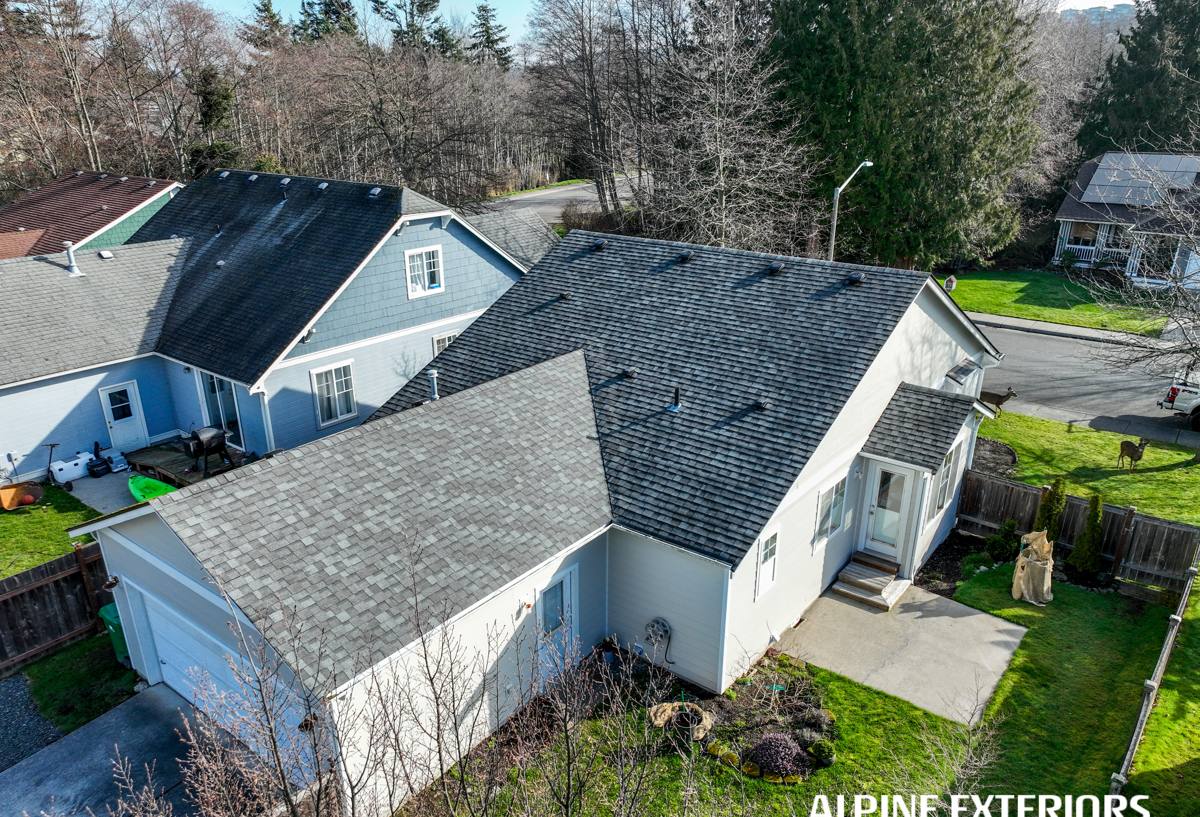
What the Sumas Climate Does to a House
Salt Air and Moisture
Whatcom County's proximity to Puget Sound and the Strait of Georgia means a steady dose of salt-laden, moisture-heavy air moves through the region even well inland. That moisture works its way into seams, fastener holes, and any place where a siding product's outer finish has started to fail. Over years, it's less about a single storm and more about constant, low-grade exposure that never really lets a wall assembly dry out completely.
Driving Rain
Rain in this part of Washington doesn't just fall — it comes in sideways during winter storm systems, driven by wind off the valley. That means siding isn't just shedding water off a vertical surface; it's fighting wind-driven moisture that gets pushed up under laps, around trim, and into any gap that wasn't sealed correctly. Products that swell, wick, or delaminate when they take on water don't hold up well under those conditions over a full Pacific Northwest winter.
Moss and Organic Growth
Whatcom County's long wet season, mild temperatures, and tree cover create ideal conditions for moss, algae, and mildew to take hold on north-facing walls, shaded elevations, and anywhere siding stays damp for extended stretches. Once organic growth gets established on a porous or absorbent siding surface, it holds moisture against the substrate and accelerates whatever damage is already happening underneath.
Why We Only Install James Hardie
We used to get asked why we don't offer vinyl, LP SmartSide, or a cheaper fiber cement alternative alongside Hardie. The honest answer is that we made a decision as a company to stand behind one product system that we've seen perform, rather than install several products with very different track records and call it customer choice.
What Fiber Cement Gets Right
James Hardie siding is non-combustible fiber cement — cellulose fiber, sand, and cement formed under pressure. It doesn't absorb water the way wood-based or wood-composite products can, and it doesn't support moss and mildew growth the way porous or organic-based sidings do. That matters directly in a climate like Sumas sees, where siding stays damp for long stretches at a time.
ColorPlus Factory Finish
Most Hardie siding we install uses the ColorPlus finish system — the color is baked on at the factory under controlled conditions, rather than field-painted on site. That finish is engineered specifically to resist fading and hold up under UV and moisture exposure, which reduces the repainting cycle homeowners would otherwise be on with site-finished siding.
Climate-Engineered HZ5 Product Line
Hardie makes region-specific formulations under its HZ (HardieZone) system, and the HZ5 line is engineered for colder, wetter climates like the Pacific Northwest. That's a meaningful distinction — it means the product going on a home in Sumas isn't a generic national spec, it's built for exactly the freeze-thaw cycles, rain volume, and humidity this area sees.
Warranty Structure
James Hardie backs its siding with a long, transferable limited warranty, and the ColorPlus finish carries its own separate finish warranty. Warranty terms and transfer conditions can change, so we always walk homeowners through the current documentation rather than quoting numbers from memory — but the structure itself, backed by a major national manufacturer, is part of why we trust the product.
Comparing What Sumas Homeowners Are Weighing
| Factor | James Hardie Fiber Cement | Vinyl | Wood-Based / Composite (LP, Cedar) |
|---|---|---|---|
| Moisture behavior | Doesn't absorb or swell; resists moss and rot | Doesn't absorb, but can warp and gap, letting water behind it | Absorbent substrate; vulnerable if finish or sealant fails |
| Fire resistance | Non-combustible | Combustible, can melt or deform under heat | Combustible |
| Finish longevity | Factory-baked ColorPlus finish, long fade resistance | Color molded through, but can chalk and fade over time | Field-applied paint/stain needs regular recoating |
| Local climate fit | HZ5 line engineered for PNW conditions | Generic formulation, not region-specific | Performance depends heavily on maintenance discipline |
| Typical maintenance | Occasional wash, repaint on a much longer cycle if ever | Low, but cracks/fades over decades | Regular repainting or resealing, moisture monitoring |
We're not going to tell you vinyl or wood siding is junk — both have legitimate uses and plenty of homes wear them fine in drier climates. What we will say is that for the specific combination of salt air, driving rain, and extended moss season that Sumas and the rest of Whatcom County deal with, we've made the call that fiber cement is the product we're willing to put our name behind.
How the Job Works for a Sumas Home
Assessment and Inspection
Every project starts with a walk-around of the existing exterior — checking for moisture intrusion, soft spots, moss buildup, flashing condition around windows and rooflines, and how the current siding is performing. In a border community like Sumas, we're also looking at how the house sits relative to prevailing wind and rain exposure, since orientation makes a real difference in how hard a wall gets hit over a winter.
Moisture Management First
Siding is only as good as what's behind it. Before any new panel goes up, we address water-resistive barrier, flashing details around windows, doors, and penetrations, and any trim or transition points where water has historically found its way in. Skipping this step is one of the most common reasons siding — of any brand — fails early.
Installation to Manufacturer Spec
James Hardie publishes specific installation requirements — fastener type and spacing, clearances above grade and roofing, gaps at butt joints, and caulking details. Warranty coverage depends on the product being installed to that spec, not just nailed up in a general sense. That precision is part of why we treat installation as a craft, not a fast pass.
Roofing, Windows, and Decks in the Same Scope
Beyond siding, we handle roofing, windows, and decks, which matters in a place like Sumas where the same moisture and weather pressures hit every exterior system on the house. A siding job that ignores a failing roof edge or a window that's letting water behind the wall assembly isn't solving the actual problem — we look at the exterior as one connected system.
Why a Local Crew Matters Here
Sumas isn't a large market, and it's easy for it to get treated as an afterthought by companies based well south in the county or over in Bellingham. A crew that actually works this corner of Whatcom County regularly understands the wind exposure along the valley, how moss behaves on the shaded sides of homes near the tree line, and how winter storms tend to move through. That local familiarity shows up in the details — where extra flashing attention matters, which elevations need the most moisture consideration, and how a house should be sequenced for weather during the job itself.
What to Check Before Hiring a Siding Contractor
- Confirm they're licensed and insured to do exterior work in Washington, and ask to see current coverage
- Ask specifically which siding products they install and why — a contractor who installs everything usually isn't specialized in any one system
- Ask how they handle moisture barrier and flashing detail, not just the visible siding panel
- Get a written scope that specifies product line, fastening method, and manufacturer spec compliance
- Ask how they sequence work around weather, especially during the wetter months
- Confirm whether roofing, window, and trim issues will be identified and addressed as part of the same project
Cost Factors for a Sumas Siding Project
| Factor | Why It Affects Cost |
|---|---|
| Home size and elevation count | More square footage and complex rooflines mean more material and labor |
| Existing siding removal | Tear-off and disposal of old material adds time versus a bare wall |
| Moisture or rot repair | Sheathing or framing repairs found during tear-off are addressed before new siding goes on |
| Trim and detail work | Corner boards, window trim, and transitions add labor beyond flat wall panel |
| Product line and finish | Different Hardie lines and ColorPlus color options carry different material costs |
| Access and site conditions | Steep lots, tight setbacks, or limited equipment access can affect labor time |
We don't publish blanket per-square-foot pricing because every home's condition and scope is different — the only way to give an honest number is to look at the house.
Get an Honest Look at Your Home
If your Sumas home's siding is showing moss, soft spots, fading, or gaps that let moisture in, we're glad to come take a look. We'll tell you straight what we see, what we'd recommend, and why — no pressure, no upsell into products we don't stand behind. Request a free estimate below and we'll get a local crew out to walk the property with you.