 Lynden Siding
 Vinyl Siding: What It Gets Right
We'll start with the honest part: vinyl siding didn't become the most common siding material in America by accident. It's inexpensive to buy, fast to install, never needs painting, and for a homeowner on a tight budget it can be a reasonable way to cover a house. If your only goal is the lowest sticker price on a re-side, vinyl will usually win that comparison. We're not going to pretend otherwise.
But price at installation is only one part of the real cost of siding a home. Once you factor in how a product performs over 20, 30, or 40 years in a specific climate — and Whatcom County's climate is not gentle on exterior materials — the calculus changes. That's the conversation we have with every homeowner who asks us to quote vinyl, and it's why we simply don't install it.
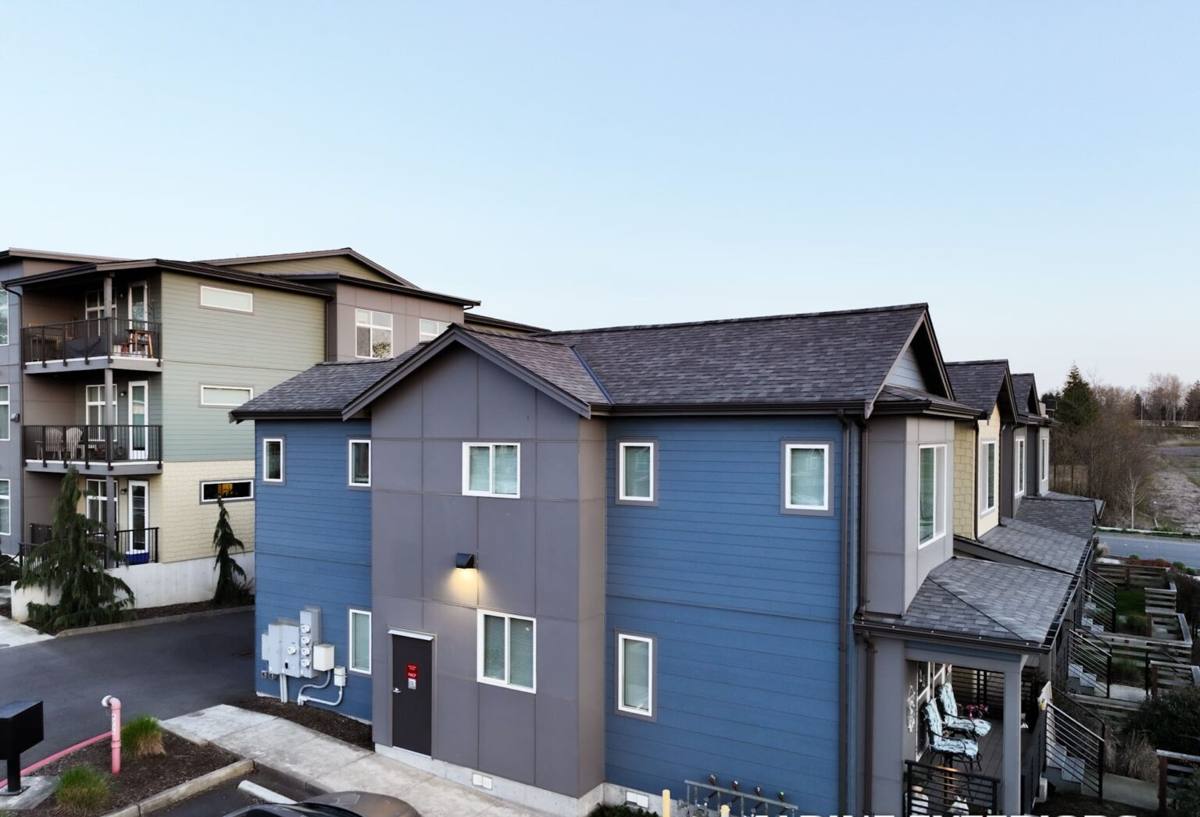
Why We Don't Install It on Lynden and Whatcom County Homes
This isn't a marketing position — it's a standard we set for our own crews. We install James Hardie fiber cement siding exclusively, on every job, in every neighborhood we work in from Lynden out toward Bellingham Bay and the rest of Whatcom County. We made that call after years of doing tear-offs and repair calls on vinyl-clad homes and seeing the same failure patterns repeat themselves, year after year, in this specific climate. When a product keeps generating the same service calls, that tells you something about how it holds up here, not just how it looks on the shelf.
How Lynden's Climate Works Against Vinyl
Driving Rain and Moisture Behind the Panels
Vinyl siding isn't a true weather barrier — it's a rain screen that relies on drainage and a housewrap system behind it to manage water. In theory, water that gets behind the panels drains back out through weep holes and gaps. In practice, on a home exposed to the kind of driving, wind-blown rain Whatcom County sees for much of the year, water finds its way behind vinyl more often than most homeowners realize. Because vinyl panels aren't rigid and interlock loosely, wind-driven rain can push moisture past the laps, especially on wall sections with less overhang protection or on gable ends that catch weather head-on.
Once moisture is behind the panel, vinyl itself won't rot — but the sheathing, housewrap, and framing behind it can. And because vinyl hides what's happening behind it so well, moisture problems often go undetected for years, surfacing only as soft trim, mold smell in a wall cavity, or a rotted sill plate during an unrelated remodel.
Moss, Algae, and the Maintenance Cycle
Lynden's long, wet, overcast stretches — often lasting from fall through spring — create ideal conditions for moss and algae growth on north-facing and shaded walls. Vinyl's textured, slightly porous surface gives spores something to grip, and because vinyl can't be pressure-washed aggressively without cracking or blowing out seams, cleaning it safely is a slower, gentler process than most homeowners expect. Left alone, that green-black staining works into the surface over a season or two and becomes very difficult to fully remove.
Salt Air and Long-Term Fading
Whatcom County's proximity to Bellingham Bay and the Salish Sound means many homes in the area deal with a degree of salt-laden air, particularly on breezy days. Salt exposure accelerates UV breakdown of vinyl's color pigment, and vinyl doesn't have a factory-baked finish the way fiber cement does — the color is mixed into the material itself, and it visibly chalks and fades with age. South- and west-facing walls typically show it first, and once a wall has faded unevenly, there's no repainting your way back to a uniform look, since paint doesn't bond well to vinyl over the long term.
Installation Sensitivity Most Homeowners Never See
Oil-Canning and Wavy Walls
Vinyl panels are thin and flexible by design, which is exactly what allows them to expand and contract with temperature swings without cracking. The trade-off is a visual one: uneven wall sheathing, minor framing irregularities, or panels nailed even slightly too tight will show up as a rippled or "oil-canning" wave across the wall — especially visible in low, raking sunlight. It's one of the most common vinyl complaints we hear about on other contractors' installs, and it's often impossible to fully correct without a full re-side.
Nailing Pattern and Expansion Gaps
Vinyl has to be hung loose, with nails centered in the slots and small expansion gaps left at every butt joint and corner post, so the panel can move as temperatures change through the year. It's a simple concept but an easy one to get wrong under production pressure, and a panel nailed too tight will buckle the first time it heats up in direct sun. We've torn off enough over-nailed vinyl jobs to know how often that installation detail gets rushed.
Impact Resistance and Cracking
Vinyl becomes noticeably more brittle in cold weather. A stray branch, a ladder set against the wall, or a thrown object that would leave nothing on fiber cement can crack or shatter a vinyl panel outright, particularly during a cold snap. Because manufacturers regularly update color runs, an exact color match for a single replacement panel a few years down the road is not guaranteed — sometimes the closest available option is visibly different, and the repair ends up more noticeable than the damage.
Vinyl vs. Fiber Cement: A Side-by-Side Look
| Factor | Vinyl Siding | James Hardie Fiber Cement |
|---|---|---|
| Moisture behind panel | Loose-fit rain screen; leaks can go undetected | Rigid panel, tighter install tolerances, engineered drainage details |
| Color | Mixed into material; fades and chalks, can't be repainted long-term | ColorPlus factory finish baked on, backed by a separate finish warranty |
| Cold-weather durability | Becomes brittle, cracks on impact | Non-combustible, holds up to impact across temperature ranges |
| Moss and algae | Textured surface holds growth; gentle cleaning only | Harder, denser surface resists staining, cleans more easily |
| Wall appearance | Prone to oil-canning on imperfect walls | Rigid panel lies flat regardless of minor wall irregularities |
| Fire rating | Combustible, can melt or ignite | Non-combustible material |
| Typical lifespan before replacement | 20-30 years, often less in exposed coastal areas | 30-50+ years with proper maintenance |
Why We Standardized on James Hardie Fiber Cement
Built for This Climate
James Hardie makes HZ5 products specifically engineered for the wetter, more humid climate zones the Pacific Northwest falls into. That's not a marketing label — it affects the formulation and moisture resistance of the board itself. Given Whatcom County's rain totals, moss season, and salt-air exposure, that's the version of the product we want on a Lynden home.
ColorPlus Factory Finish
Instead of color mixed into the material, Hardie's ColorPlus finish is baked onto the board in a controlled factory environment, in multiple coats, before it ever reaches the jobsite. It resists fading and chipping far better than field-applied paint, and touch-up product is available to match your specific color years later — something vinyl simply can't offer once a color run changes.
A Warranty That Transfers
Hardie backs its siding with a strong, transferable limited warranty — a real asset if you sell the home down the road, and a sign of how confident the manufacturer is in the product's long-term performance when installed to spec. Correct installation matters for any siding warranty to hold, which is why we follow Hardie's fastening, clearance, and flashing details on every job rather than cutting corners for speed.
What to Ask Any Siding Contractor Before You Sign
- Ask what siding material they install by default, and why — not just what's cheapest.
- Ask how they handle moisture management behind the siding, including housewrap and flashing details.
- Ask whether the crew is factory-trained on the specific product they're installing.
- Ask what the manufacturer's warranty actually covers, and whether it's transferable if you sell the home.
- Ask how the product has performed on homes they've serviced in Whatcom County specifically, not just in general.
- Get the ground clearance, fastening pattern, and caulking plan in writing before work starts.
If you're weighing siding options for a home in Lynden or anywhere else in Whatcom County, we're happy to walk your property, point out what your current siding is telling us, and give you a straight answer on what it would take to do the job right. Reach out for a free, no-pressure estimate — there's no obligation, and no pressure to choose a product that isn't built for what this climate throws at it.