 Lynden Siding
 Roofing in Everson Means Building for Water, Not Just Weather
Everson sits in Whatcom County, tucked along the Nooksack River corridor east of Lynden, and the roofs out here take a beating in a way that's easy to underestimate until you're the one climbing a ladder to look at the damage. This part of Washington doesn't get dramatic storms very often — it gets something harder to plan for, which is months of steady, driving rain, damp air that never fully clears, and long stretches of shade under fir and cedar cover that keep roof surfaces wet long after the rain stops. Add in the coastal-influenced moisture that rides inland through the county, and you get a roofing environment that punishes shortcuts.
A new roof installation here isn't just about picking shingles and nailing them down. It's about managing water at every layer — the underlayment, the flashing, the ventilation, and the roof deck underneath — so the whole system sheds moisture instead of trapping it. Homes in Everson that get a rushed or underspecified roof job tend to show it within a few years: soft spots at the eaves, moss creeping up from the north-facing slopes, and premature granule loss on shingles that were never rated for this much sustained wet exposure.
What "Long Moss Season" Actually Means for a Roof
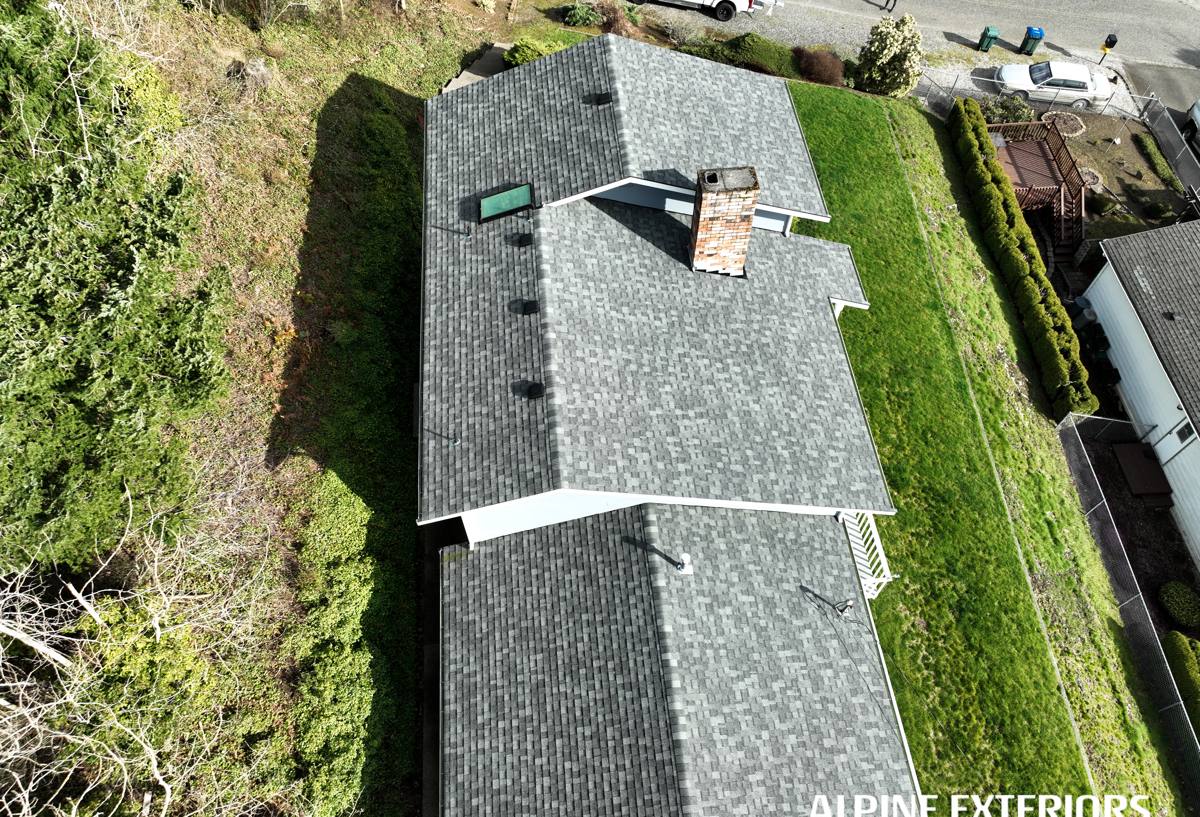
Whatcom County's moss season isn't a few weeks in spring — it's most of the year. Cool, damp air combined with shaded rooflines gives moss spores exactly what they need to take hold, and once moss establishes itself, it doesn't just sit on top of the shingles. It works its way under the shingle tabs, lifts them slightly, and holds water against the roof deck long after the surface looks dry. That's how a cosmetic moss problem becomes a structural one.
Why This Matters at Install Time, Not Just at Maintenance Time
A correct new roof installation in Everson accounts for moss risk from the start — not as an afterthought. That means paying attention to slope orientation, keeping ventilation paths clear so the roof deck can dry between rain events, and choosing shingle products with proven algae and moss resistance rather than the cheapest option on the shelf. It also means being honest with homeowners about which roof sections (usually north-facing, shaded slopes) will need more attention over the life of the roof, regardless of what's installed.
Signs a Home Needs a New Roof, Not Another Patch
Roof repairs make sense when the damage is localized and the roof still has useful life left. A full replacement makes sense when the underlying system — deck, underlayment, flashing — has been compromised broadly enough that patching one spot just shifts the problem somewhere else. In our experience working Whatcom County roofs, these are the signs that point toward replacement rather than repair:
- Granules collecting heavily in gutters, signaling the shingles' waterproofing layer is breaking down
- Multiple soft or spongy areas on the roof deck when walked, not just one isolated spot
- Persistent moss or dark streaking across large sections despite cleaning
- Daylight visible through the attic roof boards, or water staining on attic sheathing
- Shingles curling, cupping, or losing their seal in more than one area
- The roof is already past 20-25 years old and has had more than one round of repairs
If a home is only showing one or two of these, a targeted repair may still be the right call. We'll tell you that honestly rather than pushing a full replacement that isn't needed yet.
Choosing the Right System for This Climate
There's no single "best" roofing material for every home — the right choice depends on the roof's exposure, the home's structure, and the homeowner's budget and timeline. Here's how the main options typically compare for a wet, moss-prone Whatcom County property:
| Material | Moss & Moisture Resistance | Typical Lifespan | Cost Tier |
|---|---|---|---|
| Standard 3-tab asphalt | Lower — minimal algae resistance, seals can fail early in wet shade | 15-20 years | Lowest |
| Architectural (laminate) asphalt | Good, especially with algae-resistant granules | 25-30 years | Mid |
| Metal roofing (standing seam) | Excellent — sheds water fast, little surface for moss to grip | 40-50+ years | Highest upfront |
| Synthetic/composite shingle | Good to very good, varies by product | 30-50 years | Mid-high |
For most Everson homes, architectural asphalt with strong algae resistance hits the right balance of upfront cost and long-term performance. Metal is worth serious consideration on homes with heavily shaded, moss-prone slopes, or for owners planning to stay long-term and wanting to minimize future roof work altogether.
What a Correct Installation Actually Involves
The shingles are the part everyone sees, but they're the last layer installed and arguably not the most important one. A roof that holds up in this climate depends on what happens underneath:
Tear-Off and Deck Inspection
We remove the existing roofing down to the deck rather than installing over old layers. This lets us actually see the plywood or plank sheathing underneath, replace any sections that have soft spots or rot, and confirm the deck is solid before anything new goes down. Skipping this step is how hidden rot gets sealed in under a brand-new roof.
Underlayment
Given how much sustained wet weather this area sees, we install a full synthetic or ice-and-water underlayment system rather than the bare minimum — particularly at eaves, valleys, and any low-slope sections where water sits longer.
Flashing
Flashing around chimneys, skylights, vent pipes, and roof-to-wall transitions is where most leaks actually start, not in the middle of a shingle field. We install new flashing as part of every roof replacement rather than reusing old pieces that have already flexed and corroded.
Ventilation
Balanced intake and exhaust ventilation keeps the attic and roof deck at a consistent temperature and lets moisture escape instead of condensing under the roof surface. In a climate this damp, poor ventilation is one of the fastest ways to shorten a new roof's life — it contributes directly to moss growth, deck rot, and premature shingle aging.
Our New Roof Installation Process
- On-site assessment — we inspect the current roof, attic, and ventilation from the ground up, not just a drive-by look
- Written estimate — clear scope, materials, and pricing before any work is scheduled
- Material selection — we walk through the tradeoffs above based on your roof's exposure and budget
- Permitting — handled on our end where required, so there's no gap in coverage or inspection
- Tear-off and deck repair — old roofing removed, deck inspected and repaired as needed
- Underlayment, flashing, and shingle installation — installed to manufacturer specification, not shortcuts
- Ventilation check — intake and exhaust confirmed balanced for the home's attic volume
- Cleanup and final walkthrough — magnetic sweep for nails, debris hauled off, and a final review with the homeowner
Questions Worth Asking Before Hiring Any Roofer
Whatcom County has no shortage of roofing crews, and not all of them are set up to do this kind of work correctly in wet-climate conditions. Before signing anything, it's worth asking:
- Are you licensed and insured in Washington State, and can you provide proof?
- Will this be a full tear-off, or are you proposing to install over the existing roof?
- What underlayment system are you using, and where specifically will ice-and-water protection go?
- How will you handle ventilation — is there a plan, or is it an afterthought?
- What does the workmanship warranty cover, separate from the manufacturer's material warranty?
- Who pulls the permit, and who's responsible if an inspection turns up an issue?
- Do you have current experience working in this specific area, in this specific climate?
Why It Matters That We Already Work in Everson
A roofing crew that mainly works drier climates, or one that's new to Whatcom County, doesn't always account for how much this area's dampness and moss pressure change the math on ventilation, underlayment, and material choice. Crews that already know this region tend to build in the right margins from the start — the right underlayment coverage at eaves and valleys, ventilation sized for a genuinely wet climate, and material choices that hold up against moss rather than just looking good on install day.
That local familiarity also shows up in smaller, practical ways: knowing which slopes on a typical Everson property tend to stay shaded and wet longest, understanding the permitting process for the area, and being upfront about which parts of a roof will need more attention down the road regardless of what's installed. None of that comes from a brochure — it comes from doing this work in this specific climate, repeatedly, and paying attention to what actually holds up.
Ready for a Straight Answer on Your Roof
If you're not sure whether your Everson home needs a full new roof or just targeted repairs, we're happy to take a look and give you an honest read — not a sales pitch. Fill out the form below for a free, no-pressure estimate, and we'll walk you through exactly what we see and what we'd recommend.