 Lynden Siding
 Siding in Deming, Washington
Deming sits along the Nooksack River in the foothills east of Lynden, where the valley narrows and the tree cover thickens as the land climbs toward Mount Baker. It's a different environment than the open farmland closer to town. Homes here spend more of the year in shade, sit closer to moving water and dense timber, and stay damp longer after every rain. That combination is hard on exterior materials, and it shapes almost every recommendation we make when we're out at a property in this part of Whatcom County.
We install and service siding, roofing, windows, and decks for homeowners throughout the Lynden area, and Deming is a regular stop for us. This page covers what the climate actually does to a house out here, how we approach siding work in this kind of setting, and why we've standardized on one product line rather than offering a menu of options.
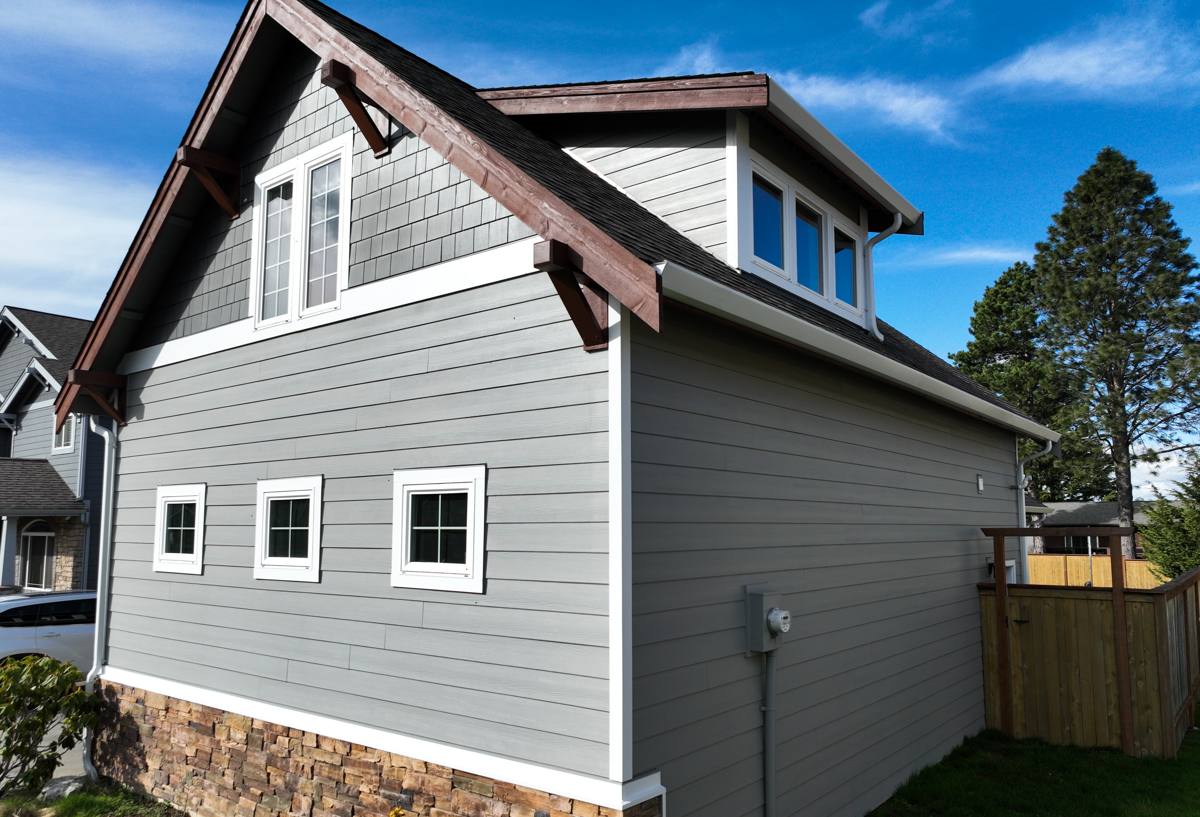
What the Climate Does to a House in Deming
Shade and Moisture That Doesn't Let Go
Whatcom County as a whole deals with driving rain, long stretches of overcast weather, and enough marine influence that even inland towns feel it. Deming adds another layer: forest canopy and river-valley terrain that keep the air cooler and damper than in open country. Siding on a shaded, tree-lined lot dries out much slower after a storm than siding on a south-facing wall in the open. Materials that can tolerate a rainy climate in general terms can still struggle when they're wet more often than they're dry.
Moss and Organic Growth
Long moss season is one of the defining features of siding maintenance in this part of the county, and it's more pronounced under tree cover. Moss, algae, and lichen need moisture and shade to establish, and Deming properties often have both in abundance. Once organic growth gets a foothold on a wall, it holds water against the surface, which accelerates whatever damage the substrate is already prone to — swelling, delamination, or paint failure, depending on what the siding is made of.
Debris and Physical Wear
Wooded lots also mean more falling debris — needles, cones, branches, and the occasional larger limb during winter windstorms. Siding on a house tucked among trees takes more physical abuse over its lifetime than siding on an exposed lot, even if the exposed lot sees harder wind-driven rain. Both conditions matter, and a well-built house needs a siding system that holds up to both.
Why We Only Install James Hardie Siding
We get asked fairly often why we don't offer vinyl, LP SmartSide, or other engineered wood products alongside Hardie. The honest answer is that we've seen how each of those materials performs in Whatcom County's climate over time, and we'd rather stand behind one product we trust completely than offer a range that includes options we'd hesitate to warranty in good conscience.
Vinyl siding is affordable and low-maintenance in mild, dry climates, but it isn't rigid, and in the kind of persistent damp Deming sees, it doesn't hold paint (it isn't painted to begin with, which limits color options long-term) and can warp or become brittle at the seams over the years. Engineered wood products like LP SmartSide use treated wood strand technology that resists moisture better than old-style hardboard, but they're still wood at the core — if a seal fails, caulking cracks, or water finds its way behind a panel in a shaded, slow-drying spot like a wooded Deming lot, moisture can get into the substrate and cause swelling or rot from the inside, where it's hard to catch early.
James Hardie fiber cement doesn't have that vulnerability. It's made from sand, cement, and cellulose fiber — there's no wood core to swell, rot, or feed organic growth. It won't ignite, it doesn't need to be re-caulked and repainted every few years, and the factory-applied ColorPlus finish is baked on and warrantied against fading and peeling, which matters on a shaded lot where growth and grime already make walls harder to keep clean.
Product Lines We Use
| Hardie Product | Best Fit For |
|---|---|
| HardiePlank lap siding | Traditional look, most common choice for full re-sides |
| HardiePanel vertical siding | Board-and-batten style, accent walls, shop/outbuilding matching |
| HardieShingle | Gable accents, craftsman-style detailing |
| HardieTrim | Corners, fascia, and window/door trim that won't rot where siding meets other materials |
Hardie's HZ5 product formulation, engineered for cooler, wetter climate zones, is the version we spec for this area — it's built with this exact combination of rain and humidity in mind.
Our Process for Deming Homes
1. On-Site Assessment
Every job starts with a walk-around, not a drive-by estimate. On a wooded or shaded lot we're specifically checking for existing moss and algae growth, soft spots or delamination on current siding, condition of the house wrap or building paper underneath, and how water is actually moving off the roofline and gutters onto the walls below.
2. Tear-Off and Substrate Check
Once old siding comes off, we inspect the sheathing underneath. On a damp, shaded property this step matters more than usual — hidden rot behind old siding is more common here than on an open, sun-exposed lot, and it needs to be addressed before anything new goes up.
3. Weather Barrier and Flashing
Correct house wrap, flashing at every window and door, and proper drainage planes behind the siding are what actually keep water out over the long run — the siding itself is the last line of defense, not the only one. This is also where a lot of lower-bid jobs cut corners, and it's the step that matters most in a climate like Deming's.
4. Installation to Manufacturer Spec
James Hardie's warranty is tied to installation done to their published specifications — correct fastener spacing, proper clearances from grade and roofline, and correct joint treatment. We install to that standard on every job, which is part of why the manufacturer warranty stays intact.
5. Final Walkthrough
We walk the finished job with the homeowner before we consider it done, covering care basics and what to expect in the first year.
Roofing, Windows, and Decks Face the Same Climate
Siding doesn't work in isolation — a roof, gutters, windows, and even a deck all interact with how water moves around a house, and on a shaded Deming lot they're all fighting the same moss and moisture. A roof that's shedding water properly and gutters that are actually clearing debris protect the siding below them. Windows with failed seals let moisture track down into wall assemblies behind good siding. Decks built low to the ground under tree cover deal with the same rot and moss pressure as walls. We handle all four so that the whole exterior gets evaluated as one system rather than four separate problems.
Cost Factors for a Deming Siding Project
| Factor | Why It Affects Cost |
|---|---|
| Access and site conditions | Wooded, sloped, or riverside lots can add setup and material-handling time |
| Existing substrate condition | Rot or moisture damage found during tear-off adds repair work before new siding goes on |
| Siding profile and trim complexity | Multiple accent materials, gables, and detailed trim take more labor than a simple lap job |
| House size and story count | More square footage and higher walls mean more material and more staging/scaffolding |
| Paint/color selection | Factory ColorPlus finishes are included in Hardie pricing but reduce future repainting cost over the life of the siding |
Maintenance Checklist for Homes Under Tree Cover
- Rinse siding annually, especially on north-facing or shaded walls where moss and algae establish first
- Keep gutters clear of needles and leaf litter so water doesn't overflow onto siding below
- Trim back branches and brush that keep siding in constant shade or in direct contact with the wall
- Check caulking around windows, doors, and trim joints once a year for cracking or gaps
- Look for green or black staining at panel seams and butt joints — an early sign of trapped moisture
- Have a professional inspect the wall assembly if you notice soft spots, bulging, or a persistent musty smell near an exterior wall
Why a Local Crew Matters
A crew that works across Lynden, Whatcom County, and the surrounding foothill communities knows the difference between a siding problem caused by open-field wind-driven rain and one caused by a shaded, slow-drying river-valley lot like the ones common around Deming. That distinction changes how we flash a wall, where we recommend extra attention to drainage, and how aggressively we push maintenance timelines. It's the kind of judgment that comes from doing this work repeatedly in this specific climate, not from a general national playbook.
If you're dealing with aging siding, visible moss buildup, or you're just planning ahead for a home in the Deming area, we're happy to take a look. Reach out for a free, no-pressure estimate — we'll walk the property with you and give you a straight read on what your exterior actually needs.