 Lynden Siding
 Metal Roofing for Everson Homes
Everson sits east of Lynden along the Nooksack River, in the same wet, marine-influenced stretch of Whatcom County that gets driving rain off the Sound, long gray stretches with almost no drying time, and a moss season that can run most of the year on a shaded roof. Homes out here take a beating that roofs in drier parts of the state never have to deal with. Metal roofing is one of the more sensible answers to that climate, but only when it's specified and installed correctly for local conditions. This page covers what that actually means for a home in Everson — not a generic rundown of metal roofing everywhere.
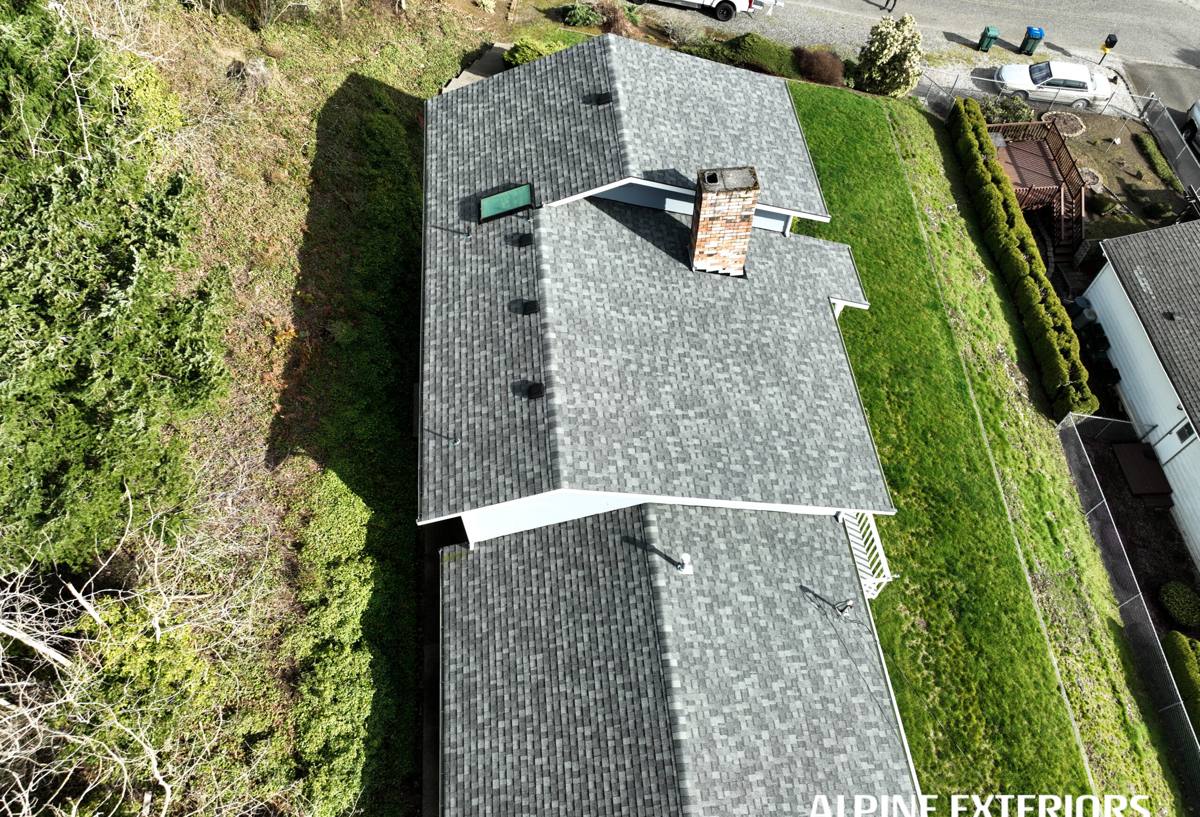
What Whatcom County's Climate Does to a Roof
Three things drive most of the roofing problems we see out here, and they compound each other:
Salt Air
Whatcom County's proximity to Puget Sound means a low but steady level of salt-laden air moves through the region, even well inland. Salt accelerates corrosion on any exposed metal — fasteners, flashing, gutters, and unprotected steel edges. It's not dramatic or fast, but it's constant, and it's the reason coating quality and fastener selection matter more here than they would in a dry inland climate.
Driving Rain
Rain in this region doesn't just fall straight down — wind-driven rain gets pushed sideways under laps, around penetrations, and into any gap a roof system leaves open. A roof that would shed water fine in a calm rain event can leak here if the underlayment, flashing, and seam details aren't built for wind-driven water specifically.
Long Moss Season
Shaded, north-facing, and low-slope sections of roof in this area can stay damp for weeks at a stretch. That's exactly what moss and algae need to establish. On asphalt shingles, moss works its way under the tabs and lifts them. On a properly installed metal roof, moss has almost nothing to grip — but debris buildup in valleys and around penetrations still needs to be kept in check, or organic matter holds moisture against the panel finish longer than it should.
Why Metal Roofing Makes Sense Here
Metal isn't the right fit for every home or every budget, but for the specific conditions Everson deals with, it has real advantages over asphalt:
- Sheds wind-driven rain more effectively when seams and laps are engineered for it, rather than relying on gravity and granule friction alone
- Gives moss and algae almost no foothold compared to a granular shingle surface
- Handles the freeze-thaw and saturation cycles of a wet winter without the granule loss and mat degradation that ages asphalt roofs early
- Typically outlasts one, sometimes two, asphalt roof replacements over its service life
- Sheds snow load quickly when the region does get a cold snap, reducing weight stress on the structure
The trade-off is upfront cost and the fact that a metal roof only performs the way it should if the installation details — fastening pattern, flashing, underlayment, and ventilation — are done right. A poorly installed metal roof can leak or oil-can just like a poorly installed shingle roof can fail. The material isn't magic; the installation is what earns its reputation.
Panel Types We Install
Not every metal roofing product performs the same in a wet, salt-influenced climate. Here's how the main options compare for a home in this area:
| Panel Type | How It Sheds Water | Fastener Exposure | Best Fit |
|---|---|---|---|
| Standing Seam | Concealed, mechanically or clip-fastened seams — strongest resistance to wind-driven rain | Fasteners hidden under the seam, minimal corrosion exposure | Full roof replacements, homes wanting the longest low-maintenance lifespan |
| Exposed-Fastener Panel | Through-fastened at the panel face — relies on washered screws staying tight and sealed | Fasteners visible and exposed to weather; need periodic inspection | Budget-conscious projects, outbuildings, shops, some accessory roofs |
| Stone-Coated Steel | Interlocking panels with a textured stone-chip finish that mimics shingle or tile profiles | Fasteners largely concealed under overlapping panels | Homeowners who want a metal roof's durability with a traditional roofline appearance |
For most full roof replacements in this climate, we lean toward standing seam or stone-coated steel because concealed fasteners remove the long-term maintenance item that exposed-fastener systems carry — checking and re-sealing screws every few years isn't something most homeowners want to keep on their calendar.
What a Correct Installation Actually Involves
The panels themselves get most of the attention, but the layers underneath and around them are what actually keep water out over the long run:
Underlayment
A high-temperature synthetic or self-adhered underlayment goes down first, with extra layers at eaves, valleys, and any low-slope transitions where wind-driven rain is most likely to find a way in.
Flashing and Penetrations
Every chimney, vent pipe, skylight, and wall transition needs custom-fitted flashing, not a generic boot stretched to fit. This is where the majority of metal roof leaks actually originate, and it's where careful workmanship matters more than the panel spec.
Fastening
Fastener type, spacing, and torque all affect how a panel handles expansion and contraction through temperature swings, plus how well it resists wind uplift in a storm. Over- or under-driven screws are a common source of early leaks on exposed-fastener systems.
Ventilation
Metal roofs need proper intake and exhaust ventilation underneath, both to manage condensation on the panel's underside and to keep the attic from trapping the moisture this region's air already carries.
Our Process for Everson Projects
- On-site assessment — we look at roof slope, existing decking condition, moss and moisture patterns, and any problem areas around penetrations or valleys
- Honest scope and panel recommendation — based on your roofline, budget, and how the home is exposed to wind and rain, not a one-size-fits-all pitch
- Tear-off and deck inspection — old roofing comes off and the decking gets checked for rot or soft spots before anything new goes down
- Underlayment and flashing installed to spec — extra attention at eaves, valleys, and every penetration
- Panel installation — fastened and sealed to manufacturer spec, with seams and laps run correctly for this region's wind-driven rain
- Final walkthrough — we go over the finished roof with you before we consider the job done
Cost Factors for a Metal Roof in This Area
Metal roofing costs more upfront than asphalt shingles, and the final number depends on more than just square footage:
| Factor | Why It Matters Here |
|---|---|
| Panel type | Standing seam typically costs more than exposed-fastener panel due to labor and material; stone-coated steel falls in between |
| Roof complexity | Valleys, dormers, and multiple roof planes all add flashing work — common on older Whatcom County homes |
| Existing deck condition | Years of moisture exposure can mean rot repair is needed before new roofing goes down |
| Underlayment upgrade | Higher-grade, self-adhered underlayment at eaves and valleys costs more but pays off in a climate this wet |
| Tear-off vs. overlay | Most metal roof installations in this region should be a full tear-off, given how much moisture can already be trapped under old roofing |
We'll walk through actual numbers for your specific roof during an estimate — broad online ranges rarely account for the condition of what's already up there.
Maintenance Checklist for a Wet-Climate Metal Roof
A correctly installed metal roof is low-maintenance, not no-maintenance. A short seasonal check keeps it that way:
- Clear leaves, needles, and debris out of valleys and around penetrations, especially heading into fall
- Check that gutters and downspouts are flowing freely so water isn't backing up against roof edges
- Look for any moss or algae starting to build where debris has collected, and clear it before it holds moisture against the finish
- Visually check exposed fasteners (if you have an exposed-fastener panel) for backing out or rust staining
- After any major windstorm, do a quick visual check for lifted panel edges or damaged flashing
Why a Crew That Already Works This Area Matters
Roofing manufacturers write their installation specs for average conditions across the whole country. A crew that only works occasionally in Whatcom County will follow that generic spec. A crew that works Lynden, Everson, and the surrounding communities regularly knows where this specific climate pushes past the generic spec — where extra underlayment at a valley is worth the material cost, where a flashing detail needs to be tighter because of how wind-driven rain actually hits a given roof orientation here, and which panel choices hold up against years of damp, shaded conditions rather than just looking right on install day. That local pattern recognition is the difference between a metal roof that performs for its full expected lifespan and one that needs early repairs.
If you're weighing a metal roof for your home in Everson, we're happy to take a look and give you a straightforward assessment — no pressure, no inflated urgency, just an honest read on your roof and what it actually needs. Fill out the form below to request a free estimate.