 Lynden Siding
 Siding in Blaine: Built for Salt Air and Coastal Weather
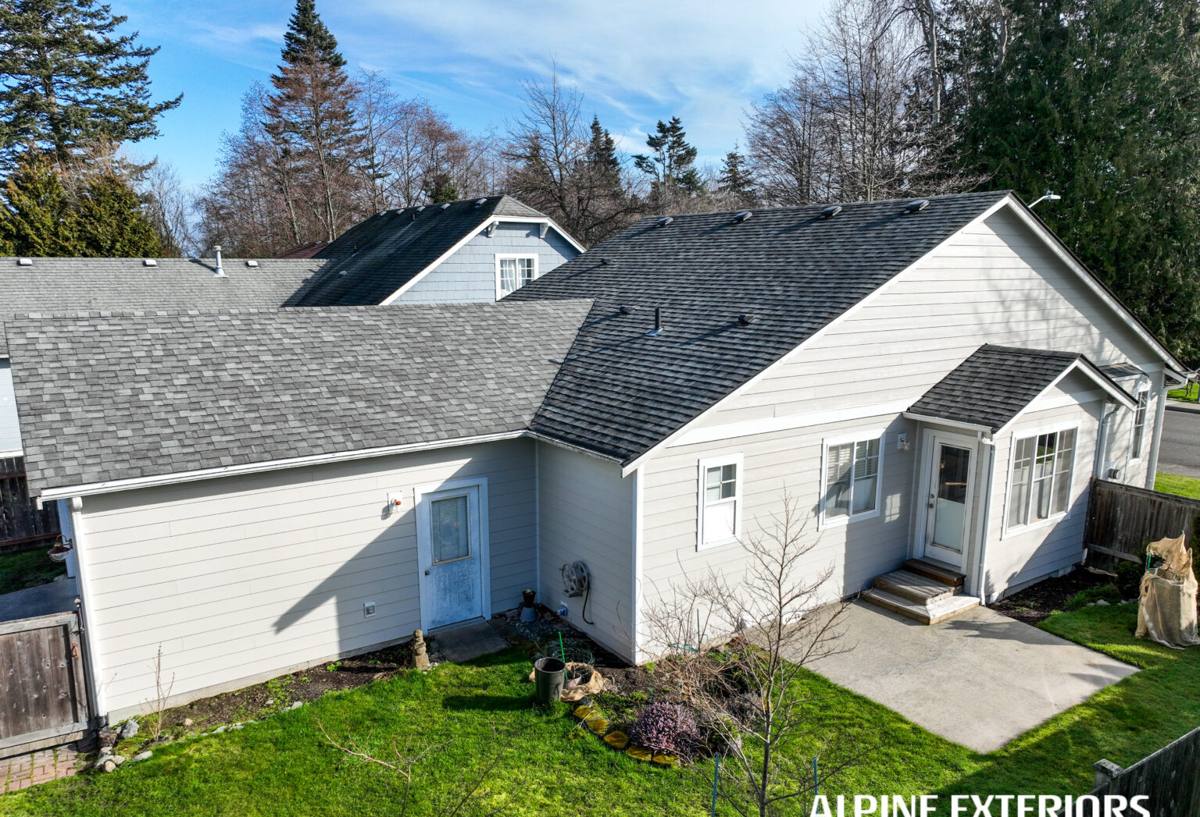
Blaine sits right on the water at the northwest corner of Whatcom County, and that location shapes what siding has to deal with here. Homes close to Semiahmoo Bay and Drayton Harbor take on salt-laden air that most inland Lynden and Ferndale properties never see. Add in wind-driven rain rolling off the Strait of Georgia and a long, damp moss season that stretches from fall through spring, and you have a climate that is genuinely harder on exterior materials than the county average. We install James Hardie fiber cement siding throughout Whatcom County, and Blaine is one of the areas where the case for it is easiest to make in plain terms: the siding on a coastal home needs to shrug off moisture and salt exposure for decades, not just look good on install day.
What Salt Air Actually Does to a House
Salt air doesn't just corrode metal fasteners and flashing faster — it also carries moisture that settles into porous or absorbent siding materials and stays there longer than it would a few miles inland. Wood-based products (cedar, primed spruce, and engineered wood siding like LP SmartSide) rely on their factory coatings and field-applied paint to keep that moisture out. Near the water, those coatings work harder and wear faster. Salt residue on the surface also holds humidity against the material overnight, which is exactly the kind of slow, repeated wetting that shortens the life of anything with wood fiber in it.
Why Moss Season Is a Real Design Problem Here
Blaine's moss season isn't just cosmetic. Moss and algae hold water against a wall for months at a time on north-facing elevations and shaded siding runs that don't get direct sun to dry out between rains. On wood-based siding, that constant dampness is what eventually leads to soft spots, delamination, or paint failure at butt joints and lower courses. On fiber cement, moss and algae still grow — nothing stops that entirely in this climate — but the substrate underneath isn't feeding on that moisture the way an organic material can. That's a meaningful difference over a 20- or 30-year ownership window, and it's a big part of why we don't install products that ask a coastal homeowner to fight that battle every year with pressure washing and repainting.
Wind-Driven Rain and Installation Detail
Rain that comes in sideways off the water finds every gap in a siding system that a vertical rain never would. Lap siding installed with correct overlaps, properly flashed windows and doors, and a functioning weather-resistive barrier behind it handles that fine. Siding installed to a builder-grade minimum — tight caulk joints doing the work that flashing should be doing, or nailing patterns that don't account for expansion — is where driving rain finds its way behind the cladding. This is true of any siding material, but it matters more in Blaine than in a sheltered inland yard, because the exposure is higher and the margin for installation error is smaller.
Why We Standardized on James Hardie
We install James Hardie fiber cement exclusively — not vinyl, not LP SmartSide, not Cemplank or Allura, not primed spruce or cedar. That's a deliberate call, not a lack of options. Fiber cement is non-combustible, holds up to sustained moisture exposure without swelling or rotting, and James Hardie's ColorPlus factory finish is baked on and warranted separately from the substrate, so it isn't relying on a field-applied paint job to survive salt air and UV. Hardie also engineers regional product lines (HZ5 for the Pacific Northwest) specifically for climates with sustained moisture exposure, which is exactly Blaine's profile. We're not going to tell a homeowner that cedar or engineered wood siding is a bad product across the board — cedar has real appeal and LP SmartSide has genuine engineering behind it — but for a house exposed to salt air and driving rain, we don't think either is the right long-term answer, and we'd rather stand behind one product installed correctly than offer five and hedge.
What James Hardie Gets You
- A cement-based substrate that doesn't absorb and hold moisture the way wood fiber does
- A factory-applied ColorPlus finish with its own separate warranty, so color and substrate aren't relying on the same coat of paint
- Non-combustible material — a real consideration in Washington's increasingly active wildfire seasons, even on the coast
- HZ5 product engineering built for freeze-thaw and high-moisture Pacific Northwest conditions
- A transferable limited warranty that adds resale value if you sell the home
Roofing, Windows, and Decks — The Rest of the Envelope
Siding doesn't work in isolation. We also handle roofing, windows, and decks, and on a coastal Blaine property those systems interact more than people expect. A roof with worn flashing at a wall intersection will feed water directly behind new siding no matter how well the siding itself is installed. Windows with failing seals let wind-driven rain track down into the wall cavity along the same path salt air is already attacking. Decks attached to the house need flashing and ledger details that keep water from being channeled straight into the siding at the connection point. When we scope a siding job here, we look at the whole envelope, not just the cladding, because in this climate the failures usually show up at the transitions between systems.
Common Trouble Spots on Blaine Homes
| Area | What Salt Air / Rain Exposure Does | What We Check |
|---|---|---|
| North and west-facing walls | Slower drying, heavier moss and algae buildup | Siding condition, existing coating failure, moisture readings |
| Window and door flashing | Wind-driven rain finds gaps in poor flashing details | Head flashing, kick-out flashing, sealant condition |
| Deck ledger connections | Water channeled into the wall at the attachment point | Ledger flashing, gap spacing, fastener corrosion |
| Lower siding courses | Splash-back moisture and salt residue accumulation | Clearance from grade or hardscape, material condition |
| Roof-to-wall intersections | Step flashing failure lets water behind siding | Flashing integrity, counterflashing, sealant |
What a Siding Project Looks Like in Blaine
Most jobs start with a walk-around to look at what's actually happening on the walls now — moisture damage, coating failure, moss buildup patterns, and whether the underlying sheathing and weather barrier are sound. If we're re-siding over existing wood siding that's failed, that often means addressing whatever moisture got trapped behind it before Hardie goes up. We install with the fastening patterns, joint treatment, and clearances James Hardie specifies for HZ5 conditions, because those specs exist for exposures like this one. Flashing at every window, door, and roof intersection gets tied into the weather barrier correctly rather than sealed over with caulk as a substitute.
A Practical Homeowner Checklist Before You Call Anyone
- Note which walls show the heaviest moss or algae — usually the ones that dry slowest
- Look for soft spots, bubbling paint, or dark staining near the bottom courses and around windows
- Check whether siding is in direct contact with a deck, patio, or grade (clearance matters near salt air)
- Ask any contractor for their James Hardie installation certification, not just general siding experience
- Get a written scope that specifies flashing details, not just "siding replacement"
Why a Local Whatcom County Crew Matters
A crew that works across Whatcom County sees the difference between a Lynden interior lot and a Blaine waterfront exposure regularly enough to plan for it — different flashing attention, different expectations for how fast moss returns, different conversations about maintenance. That's not a knock on any general contractor; it's just what repeated local exposure teaches you. We're not driving in from out of the area to bid a job and leave — being local means we're the ones a Blaine homeowner calls back in five years if something needs attention, and that accountability shapes how carefully we install the first time.
Cost Factors for a Blaine Siding Project
Every project is different, but a few factors consistently move the number more than others on coastal jobs specifically:
| Factor | Why It Matters Here |
|---|---|
| Extent of hidden moisture damage | Sheathing repair adds cost but can't be skipped if it's found |
| Number of window and door openings | Each one needs correct flashing detail, which is labor-intensive |
| Wall height and access | Multi-story coastal homes often need more scaffolding/lift time |
| Trim and color selection | ColorPlus factory finishes vary somewhat by profile and color |
| Tear-off vs. re-side | Full removal of failed wood siding takes more time than a straightforward re-side |
We don't quote a number without seeing the house, but we'll walk you through what's driving the estimate line by line, not just hand you a total.
Ready to Talk About Your Home
If you're dealing with moss buildup, failing paint, or soft siding on a Blaine home, or you're planning ahead before a small problem turns into a bigger one, we're happy to take a look. There's no pressure and no cost to get an honest read on what your siding needs — request a free estimate using the form below.