 Lynden Siding
 Siding in Maple Falls: Built for the Foothills, Not Just the Forecast
Maple Falls sits up in the Whatcom County foothills on the way toward Mt. Baker, and the exterior of a house here takes a different kind of beating than a house closer to town. The elevation is a little higher, the tree canopy is thicker, and the sun has a harder time reaching a lot of walls for a lot of the year. Add in the driving rain and long, damp stretches that define this part of the Pacific Northwest, and you've got a climate that's genuinely tough on exterior building materials — not dramatic, just relentless.
We're a local siding, roofing, window, and deck contractor working throughout the Lynden and Whatcom County area, and Maple Falls is part of our regular service territory. We install one siding product: James Hardie fiber cement. This page explains why that matters specifically for homes in this area, and what to expect if you're looking at a siding project here.
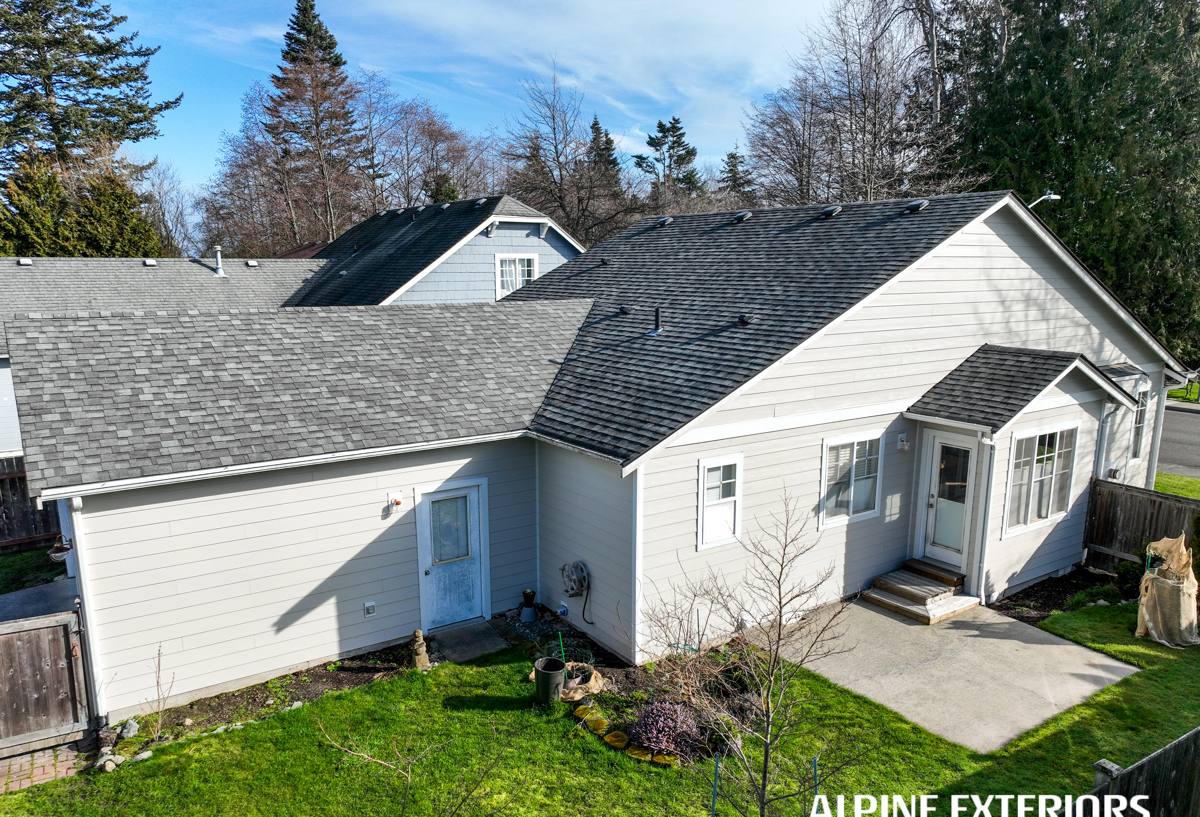
What the Maple Falls Climate Actually Does to a House
Every part of Whatcom County deals with a long wet season, but the specifics change depending on where you are. Closer to the water, homes deal with salt-laden marine air working into seams and fasteners. Up in Maple Falls, the marine influence off the Salish Sea is still present in the humidity, but the bigger local factor is shade. Heavy tree cover keeps a lot of siding wet longer after it rains, because sun and wind — the two things that actually dry a wall — don't reach it the way they would on an open lot.
The Big Three for This Area
- Driving rain: Wind-driven rain off the foothills doesn't just wet a wall, it pushes moisture into laps, corners, and any gap in the caulking or flashing.
- Extended shade and humidity: Tree-covered lots and north-facing walls stay damp for days after a storm passes, which is exactly the environment moss, algae, and mildew need.
- Long moss season: In the shadier parts of Maple Falls, moss and lichen growth isn't a once-a-year cleaning issue — it's close to year-round, and it holds moisture against whatever surface it's growing on.
None of this is unusual for the area. It's just the reality of building and maintaining a house in a wooded, higher-rainfall pocket of Whatcom County, and it's why the siding material matters more here than it might in a drier climate.
Why We Only Install James Hardie
We used to get asked about vinyl, LP SmartSide, and other fiber cement brands like Cemplank and Allura. We made a decision a while back to install only James Hardie products, and it comes down to how these materials actually perform over years of exposure to shade, moisture, and moss — not marketing claims.
What Matters in a Wet, Shaded Climate
| Factor | Why It Matters in Maple Falls |
|---|---|
| Moisture resistance | Fiber cement doesn't swell, rot, or delaminate the way wood-based products can when moisture sits against them for extended periods. |
| Non-combustible material | Wildfire risk in the wooded foothills is a real consideration for insurance and peace of mind; Hardie's fiber cement composition doesn't burn like wood-based siding. |
| Factory finish (ColorPlus) | A baked-on factory finish holds up to repeated wet-dry cycles and UV exposure better than field-applied paint, and it resists the kind of fading and chalking that shows fast under tree cover. |
| Dimensional stability | Hardie panels expand and contract far less than wood-based alternatives, so caulked joints and seams stay tighter over time — fewer entry points for moisture. |
| Warranty structure | Hardie backs its products with a strong, transferable limited warranty, which also protects resale value if the home changes hands. |
We're not going to tell you every other siding product is junk — plenty of them are reasonable materials used in the right conditions. But for a climate that stays wet and shaded as long as this one does, we don't think it's honest to install something we know will need more maintenance, more caulk touch-ups, and more risk of moisture problems down the road. James Hardie is the product we're willing to warranty our workmanship behind.
How We Install for This Specific Climate
The product is only half the equation. In a high-moisture, low-sun environment like Maple Falls, installation details are what actually keep water out of the wall assembly over the long run.
What Correct Installation Looks Like Here
- Proper water-resistive barrier and flashing at every window, door, and penetration — the details that matter most when rain is wind-driven rather than falling straight down
- Correct fastener spacing and placement per Hardie's engineering specs, not shortcuts that void the warranty
- Rainscreen or adequate gap where the site calls for it, so siding can dry out between wet spells instead of staying saturated against the sheathing
- Butt joints and seams sealed and caulked to manufacturer spec, since these are the first places moss and moisture find a way in
- Attention to grade and drainage at the base of walls, especially on sloped or tree-shaded lots where water doesn't always run off the way it should
A lot of siding failures we see on older homes in shaded, rural lots aren't failures of the material — they're failures of installation or of using a product that simply wasn't suited to the exposure. Getting the details right the first time matters more here than in a drier neighborhood, because a mistake has more time and moisture to become a real problem.
Moss, Algae, and Long-Term Maintenance
Homeowners in Maple Falls generally already know moss is part of life here. The question is how much work it takes to manage on your siding, and how much damage it does if you don't.
What to Expect and Do
- Expect some moss and algae growth on shaded walls and north-facing exposures, especially under tree cover — this is normal for the area, not a sign of a bad install
- A soft wash (not a high-pressure wash) once a year or two on the shadiest sides keeps growth from building up and holding moisture against the surface
- Trim back branches and vegetation that keep siding in constant shade or drip water directly onto walls where possible
- Check caulked joints, trim, and corner boards periodically — these are the first places to show wear before the siding field itself does
- Factory-finished ColorPlus siding resists staining better than field-painted materials, which keeps moss and algae from getting a foothold as easily
Fiber cement doesn't stop moss from growing — nothing short of full sun exposure does that — but it doesn't rot or degrade from the moisture the way wood-based products can, which is the real long-term risk in a climate like this.
Roofing, Windows, and Decks: The Same Exposure, the Same Standard
Siding rarely fails in isolation. On a wooded, shaded property, the roof, windows, and any deck or outdoor structure deal with the same rain, shade, and moss pressure as the walls. We handle all four because they're connected — a roof leak or a failed window flashing can undermine even a well-installed siding job, and a deck built without the local climate in mind will show it fast.
When we're on site for a siding estimate in Maple Falls, we'll flag anything we notice on the roof, trim, or window flashing that could undercut the siding work, even if it's not what you called about. It's a more useful estimate than one that only looks at the walls.
What a Siding Project in Maple Falls Involves
Typical Process
- On-site inspection and estimate — we look at sun exposure, drainage, existing moisture damage, and the condition of trim, flashing, and any rot at the base of walls
- Material and color selection from Hardie's HZ product lines and ColorPlus palette, matched to the home and the amount of shade it gets
- Removal of old siding and inspection of the sheathing underneath — this is often where hidden moisture damage from a previous product shows up
- Installation of water-resistive barrier, flashing, and Hardie panels or lap siding to manufacturer spec
- Final trim, caulking, and cleanup, with a walkthrough before we consider the job done
Cost Factors to Expect
| Factor | How It Affects Scope |
|---|---|
| Home size and complexity | More corners, gables, and trim detail mean more labor and material |
| Condition of existing sheathing | Hidden rot or moisture damage found during tear-off adds repair work before new siding goes on |
| Access and site conditions | Wooded lots, slopes, and limited driveway access can affect staging and labor time |
| Siding profile and color | Hardie offers multiple plank widths, panel styles, and ColorPlus finishes at different price points |
| Trim and detail work | Corner boards, window trim, and fascia detail add to both material and labor |
We don't publish blanket pricing because every property here is different — a shaded, sloped lot with mature trees is a different job than an open one, even at the same square footage. A walk-through estimate is the only honest way to scope it.
Why a Local Crew Matters for This Area
A contractor who only works in flatter, more open parts of Whatcom County can miss things that are second nature to a crew that regularly works the foothills — how much longer a north wall under fir trees stays wet, where moss tends to build up fastest, how drainage behaves on a sloped, wooded lot. We work throughout the Lynden area and into communities like Maple Falls regularly enough to know what these homes actually deal with, not just what the spec sheet says they should handle.
That local familiarity shapes real decisions on a project — where we push for extra flashing detail, where we recommend a rainscreen gap, and where we tell a homeowner honestly that a lighter color or different exposure plan will hold up better under their specific tree cover.
If you're considering new siding, or want a second opinion on your roof, windows, or a deck while we're out, we're happy to take a look. Fill out the form below for a free, no-pressure estimate.