 Lynden Siding
 Siding Built for Laurel's Corner of Whatcom County
Laurel sits in one of the quieter, more rural stretches of Whatcom County, where farmland, tree cover, and older homesteads mix with newer construction spreading out from Lynden and Bellingham. It's a great place to own a home, but it's not an easy place to be a home's exterior. Between the seasonal fog that settles into low ground, the near-constant fall and winter rain, and salt-laden air drifting in off the Puget Sound corridor, siding here works harder than siding almost anywhere else in the state.
We're based in Lynden and have spent years working exteriors throughout this part of the county, including Laurel. We're not a national franchise cycling through Whatcom County on a job-by-job basis — this is where we live, and the homes we build back are the same ones we drive past every week.
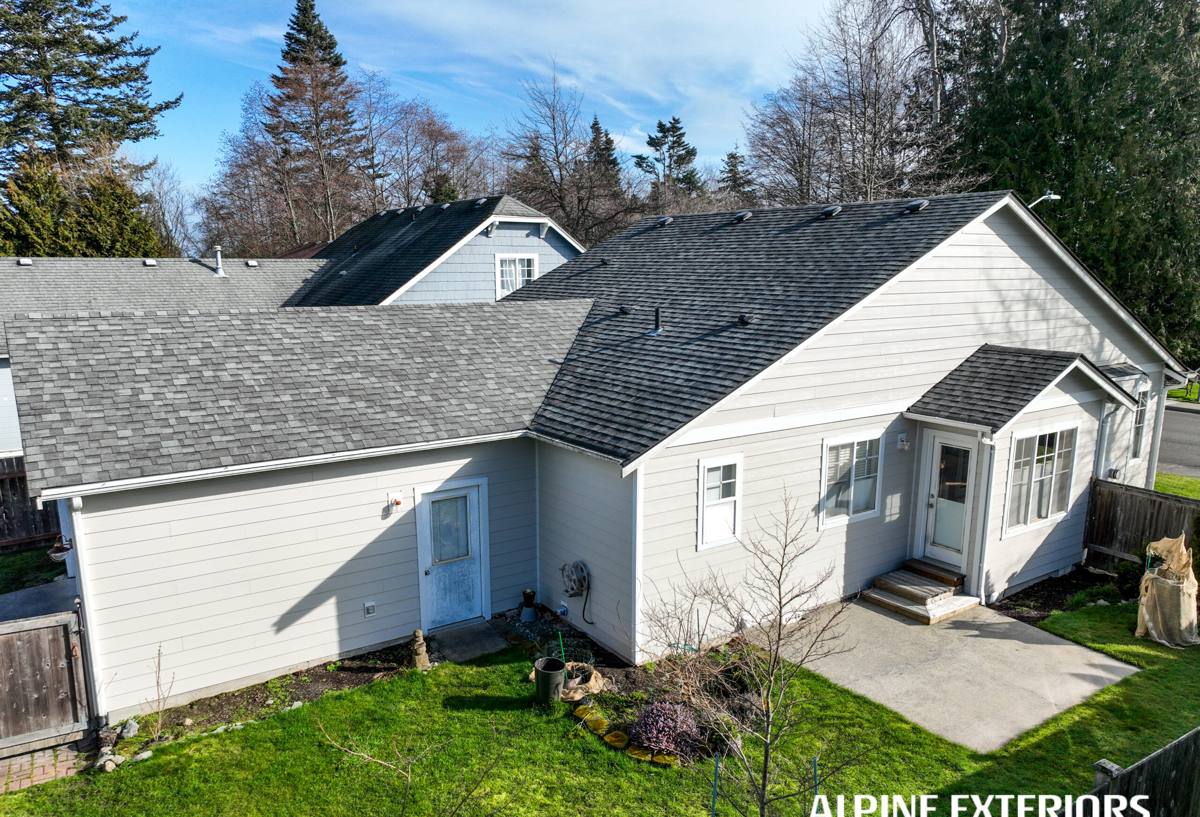
What Laurel's Climate Actually Does to a House
Every region has a story to tell about why its houses fail early, and Laurel's story has three main characters: moisture, salt, and moss.
Driving Rain
Whatcom County doesn't just get a lot of rain — it gets a lot of wind-driven rain, especially during fall and winter storm systems that push in from the Strait of Georgia and the Sound. Wind-driven rain doesn't fall straight down where gravity and good flashing can manage it; it gets pushed sideways into seams, laps, and fastener penetrations. Siding that isn't dimensionally stable, or that wasn't installed with the right gaps and clearances, starts absorbing that moisture instead of shedding it.
Salt Air
Laurel isn't waterfront, but it's close enough to the Sound and the Strait that salt-laden air still reaches inland on a regular basis, carried by the same weather systems that bring the rain. Salt air accelerates corrosion on fasteners, trim, and any metal flashing components, and it interacts with certain siding coatings in ways that plain freshwater exposure doesn't. Homes further from the water get a lighter dose than homes right on the coast, but over ten or twenty years, it adds up.
Moss and Prolonged Dampness
Whatcom County's growing season for moss and algae is long — often eight or nine months out of the year, given our overcast, damp conditions. Moss doesn't just sit on siding; it holds moisture against the surface, works into laps and seams, and creates a damp microclimate that's ideal for rot if the underlying material and installation aren't up to the job. North-facing walls and anything shaded by trees, which is common on the more wooded lots around Laurel, see this the worst.
Why We Only Install James Hardie Fiber Cement Siding
We made a decision a long time ago to install one siding system across every job we take, and that's James Hardie fiber cement. We don't install vinyl, LP SmartSide, Cemplank, Allura, or bare cedar and spruce siding, even though all of those products have a place in the broader market. For a climate like Laurel's, the trade-offs of those alternatives — moisture sensitivity, coating limitations, or the ongoing maintenance that wood-based products demand — aren't trade-offs we're willing to put our name behind.
James Hardie fiber cement is non-combustible, dimensionally stable in wet-dry cycling, and available in climate-engineered HZ formulations built specifically for the wetter regions of the Pacific Northwest. The factory-applied ColorPlus finish is baked on under controlled conditions, which gives it far better resistance to fading and to the kind of coating failure that salt air and UV exposure cause over time on field-applied paint. It also comes with a strong, transferable manufacturer warranty — something that matters a lot to homeowners in Laurel who may sell in the next decade and want that protection to carry over.
Standardizing on one product also means our crews aren't relearning installation details from job to job. Every flashing detail, every clearance, every fastening pattern is second nature because it's the only system we run.
How We Approach a Siding Job in Laurel
The process itself doesn't change much from house to house, but the details we pay attention to are shaped by what we know about this area specifically.
- On-site assessment. We look at the existing siding, sheathing, and any signs of moisture intrusion — especially around windows, at ground contact points, and on north- or west-facing walls that take the worst of the driving rain.
- Water management review. Before any new siding goes up, we evaluate house wrap, flashing, and drainage. In a climate like Laurel's, a rain-screen gap behind the siding isn't optional — it's the difference between siding that dries out after a storm and siding that stays damp for days.
- Removal and prep. We strip old siding, address any rot or damaged sheathing we find underneath, and correct flashing details at windows, doors, and rooflines before anything new goes on.
- Hardie installation to manufacturer spec. Correct fastener placement, gapping, and caulking joints matter enormously here — most of the early siding failures we see on older homes trace back to installation shortcuts, not the product itself.
- Final detailing. Trim, caulking, and touch-up work are finished to a standard that holds up to inspection, not just a walk-by glance.
Beyond Siding: Roofing, Windows, and Decks
Siding rarely fails in isolation. A leaking roofline, a failing window flashing, or a rotting deck ledger board can all send moisture into a wall system regardless of how good the siding itself is. Because we also handle roofing, window replacement, and deck construction, we can look at a Laurel home's exterior as one connected system rather than a series of unrelated repairs.
This matters most at transition points — where a roof meets a wall, where a deck attaches to the house, where a window sits in a wall opening. These are the spots where water intrusion actually starts, and where a contractor who only does siding might miss the real source of a problem.
Signs a Laurel Home Might Need New Siding
- Visible warping, buckling, or gaps between siding panels or boards
- Soft or spongy spots when you press on the siding, especially near the ground or under windows
- Persistent moss or algae growth that keeps coming back after cleaning
- Peeling, bubbling, or chalky paint on wood or older composite siding
- Rising energy bills that suggest the wall assembly is no longer insulating or sealing properly
- Visible rust streaking from fasteners or flashing components
- Interior signs like musty smells, staining, or soft drywall near exterior walls
What Affects Siding Costs on a Laurel Project
| Factor | Why It Matters Here |
|---|---|
| House size and wall complexity | More corners, dormers, and gables mean more cutting, flashing, and labor time |
| Condition of existing sheathing | Rot repair found during tear-off is common on older homes exposed to years of driving rain |
| Siding profile chosen | Lap, shingle, and panel styles all install differently and carry different material costs |
| Trim and detail work | Corner boards, window trim, and fascia detailing add labor but also protect against water entry |
| Access and site conditions | Rural lots, tree cover, or difficult driveway access can affect scaffolding and staging time |
We don't quote off a square-footage rule of thumb over the phone. Every Laurel property we've looked at has its own combination of these factors, and an honest number only comes from actually walking the house.
Why It Helps to Hire Local
A crew that works Whatcom County year-round knows what a Laurel winter does to an exterior because we've seen it firsthand, not from a regional training manual. We know which wall orientations take the worst weather, how long moss season really runs here, and what correct water management looks like in a climate that rarely gives siding a long stretch to fully dry out. That local knowledge shows up in the details — the ones that determine whether siding lasts fifteen years or fifty.
We're also not going anywhere. If a warranty question comes up five or ten years down the road, you're calling a company that's still local, still reachable, and still standing behind the work.
Get a Straight Answer on Your Laurel Home
If your siding is showing its age, or you're just not sure what condition it's really in underneath the moss, we're happy to take a look. We'll give you an honest read on what's going on and what it would take to fix it right — no pressure, no inflated scare tactics. Fill out the form below to schedule a free estimate.