 Lynden Siding
 An Honest Question Homeowners Ask Us
Almost every siding estimate we write in Lynden gets compared to something else the homeowner already priced out, and LP SmartSide comes up more than any other product. It's a reasonable question to ask, because SmartSide has a real following in the Pacific Northwest and a lower sticker price than fiber cement. We used to install it. We don't anymore. This page explains what SmartSide does well, where it runs into trouble in Whatcom County's climate, and why every siding job we take on today goes out with James Hardie instead.
We're not writing this to talk down a competitor's product. LP SmartSide is engineered by people who understand wood science, and it solves real problems that plain cedar and spruce never did. Our position is narrower than "SmartSide is bad" — it's that after years of installing and repairing it, we decided the trade-offs weren't worth carrying forward on new work in this specific climate.
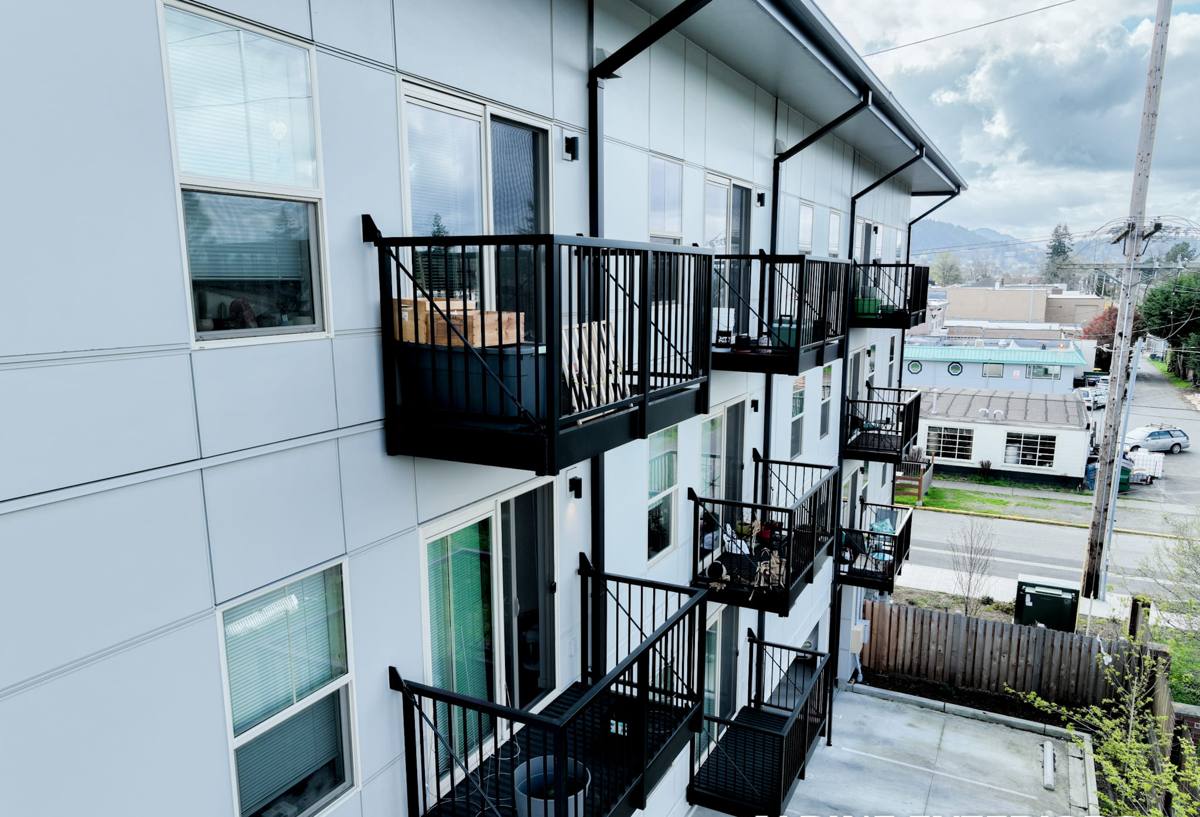
What LP SmartSide Actually Is
SmartSide is an engineered wood product, not solid lumber. Wood strands are bonded with resin under heat and pressure, then treated with a zinc borate preservative for insect and fungal resistance, and finished with a factory primer (or, on some product lines, a factory topcoat). It comes in lap siding, panels, and trim, and it installs faster than fiber cement because it's lighter and cuts more easily with standard woodworking blades.
What It Gets Right
- Lighter weight means faster installation and lower labor cost than fiber cement.
- The zinc borate treatment gives real resistance to termites and fungal decay compared to untreated wood.
- It takes paint well and has a wood grain texture that reads as traditional lap siding.
- Cost per square foot installed is typically lower than James Hardie.
If a homeowner in a drier climate wants a wood-look product on a tight budget, SmartSide is a legitimate option. Our concerns are specific to how it performs here, not a blanket claim that it fails everywhere.
Why Whatcom County's Climate Changes the Math
Lynden sits in a part of Whatcom County that gets a long wet season, driving rain off the Strait of Georgia and Puget Sound weather systems, and enough shade and moisture around mature trees and fence lines to grow moss on almost anything that holds water. None of that is unusual for western Washington, but it matters more for engineered wood products than it does for products with no wood content at all.
Engineered wood siding is still wood at its core. It's dimensionally stable and treated, but the strand board substrate will absorb moisture if water gets past the surface and stays in contact with it long enough. In a dry inland climate, an installation flaw might sit for years without consequence. In a climate where siding faces driving rain for months at a stretch and rarely gets a long stretch to fully dry out, the same flaw shows up faster — usually as edge swelling, soft spots at butt joints, or paint failure where moisture is wicking in from behind.
The Moss Factor
Moss itself doesn't attack siding chemically, but it holds moisture against the surface far longer than open air would. On the shaded, north-facing walls we see on a lot of Lynden lots — behind mature Douglas fir, along fence lines, in the gap between houses — moss and algae growth is constant. Any siding product benefits from being cleaned periodically, but a product that's vulnerable to sustained moisture contact needs that maintenance done more consistently, not just when it's convenient.
The Core Problem: Cut Edges and Caulk Dependency
SmartSide ships from the factory with primer or finish on the face and back of the board, but every field cut — every window, corner, and butt joint — exposes raw substrate that has to be sealed on site. LP's own installation instructions require field-applied sealant or paint on cut ends before installation, and manufacturer warranty coverage depends on that step being done correctly, on every cut, every time.
That's a lot of quality control to depend on for warranty protection. A crew working fast on a tract of homes, in the rain, under deadline pressure, is exactly the scenario where a sealed edge gets missed. And once a cut edge is left unsealed and it's behind the siding, nobody sees it again until moisture has already found its way in — swelling the edge, telegraphing through the paint film, or loosening a joint.
Ongoing Caulk Maintenance
Because SmartSide relies on caulked joints and painted end cuts for its moisture defense, that sealant has a service life. Caulk shrinks, UV exposure breaks it down, and homes exposed to driving rain for a good part of the year put more stress on those joints than homes in a drier region. Manufacturers of engineered wood siding generally recommend inspecting and re-caulking joints on a recurring cycle — not a one-time install-and-forget product.
Installation Sensitivity Is the Real Cost
The installed price of SmartSide is lower than fiber cement mainly because the material is easier to handle. But "easier to handle" doesn't mean "easier to install correctly." The margin for error is actually tighter, because every cut end, every fastener pattern, every flashing detail either protects the substrate or exposes it. Fiber cement is far more forgiving of a fastener slightly out of place or a joint that's a little tight, because the material itself doesn't absorb and swell the way wood strand does.
We found that doing SmartSide right, in this climate, meant slowing crews down to double-check every cut edge and every joint — which erodes the labor savings that made the product attractive in the first place. At that point we were spending Hardie-level care on a product with wood-level vulnerability, and that math didn't make sense to keep offering to homeowners.
Side-by-Side: SmartSide vs. James Hardie
| Factor | LP SmartSide | James Hardie Fiber Cement |
|---|---|---|
| Core material | Engineered wood strand (OSB-based) | Cement, sand, and cellulose fiber |
| Combustibility | Combustible (wood-based) | Non-combustible |
| Cut-edge exposure | Must be field-sealed at every cut | Not moisture-reactive at cut edges |
| Finish | Factory primer; field paint typically required | Factory ColorPlus finish available, baked on |
| Insect/rot resistance | Zinc borate treatment | Not applicable — no organic wood content |
| Typical repaint cycle | Every 7-10 years | 15+ years with ColorPlus finish |
| Manufacturer warranty | Prorated, install-dependent | Non-prorated, transferable options available |
| Installed cost | Lower | Higher upfront |
The upfront cost gap is real, and we tell every homeowner that up front. What the table doesn't show is the labor and material cost of re-caulking joints, repainting on a shorter cycle, and repairing any spots where moisture got behind the material over a 20-30 year ownership window — which is the window most Lynden homeowners actually care about.
Warranty Structure: Read the Fine Print
Most engineered wood siding warranties are prorated and conditioned on documented, correct installation — including that every cut edge was sealed per the manufacturer's instructions. If a claim comes up years later, proving that every joint was treated correctly at install time is difficult, and prorated coverage means the payout shrinks the older the siding gets. James Hardie's fiber cement warranties are structured differently because the failure modes they're written around — moisture wicking through an unsealed cut, substrate swelling — aren't a factor with a cement-based product in the first place.
We'd rather sell a homeowner a product backed by a warranty structure that matches how it actually fails, or doesn't fail, than a product where the warranty depends on documentation nobody will have a decade from now.
Why We Standardized on James Hardie
Once we stopped installing SmartSide, we didn't replace it with the cheapest fiber cement option — we standardized on James Hardie specifically because its HZ5 product line is engineered for climates like ours, with freeze-thaw and moisture cycling in mind. It's non-combustible, which matters more each wildfire season even on the wet side of the state. The ColorPlus factory finish holds color and resists fading and chipping far longer than field-applied paint, which means fewer repaint cycles over the life of the home. And because the material has no organic wood content, cut edges and joints don't carry the same moisture-driven failure risk that drives most of the maintenance calls we used to get on engineered wood installs.
None of that makes Hardie maintenance-free — no siding is. But it means the maintenance a Lynden homeowner signs up for is realistic to keep up with, rather than a recurring caulk-and-repaint cycle that competes with everything else on a homeowner's to-do list.
Questions to Ask Any Contractor Proposing Engineered Wood Siding
- Will every field cut be sealed with the manufacturer-specified product before installation, and how is that documented?
- What is the manufacturer's warranty structure — prorated or non-prorated, and what installation records does a future claim require?
- What is the recommended re-caulk and repaint interval, and is that built into the estimate you're comparing?
- How is the siding detailed at grade, around windows, and at butt joints to keep water from tracking behind the material?
- Has the crew installed this specific product in a similarly wet, moss-prone climate, and can they explain how they adjusted their process for it?
If a contractor can't answer those clearly, that's worth knowing before the material choice gets locked in.
Get a Straight Answer for Your Home
Every home in Lynden faces the weather a little differently depending on tree cover, exposure, and how close it sits to standing moisture and shade. We're glad to walk your property, look at your current siding condition, and give you a straightforward comparison — no pressure, no upsell script — so you can decide what makes sense for your home and your budget. Reach out for a free estimate and we'll give you the same honest breakdown we just laid out here, applied to your specific house.