 Lynden Siding
 Asphalt Shingle Roofing for Everson Homes
Everson sits along the Nooksack River in Whatcom County, close enough to the water and the Salish Sea's marine air that its weather pattern shares a lot with the rest of this corner of Washington: frequent rain, stretches of damp air that don't fully clear for days, and mild temperatures that let moss and algae grow on a roof almost year-round. Add in wind-driven rain that comes in sideways more often than straight down, and a shingle roof here works harder than the same roof would in a drier inland climate.
Asphalt shingle roofing remains one of the most practical choices for Everson homes when it's specified and installed correctly for this climate. It's not automatically the right fit just because it's the most common roofing material in the country — the difference between a shingle roof that lasts its full rated life here and one that fails early almost always comes down to what's underneath the shingles and how the details were handled on install day. This page covers what that actually means for a home in Everson.
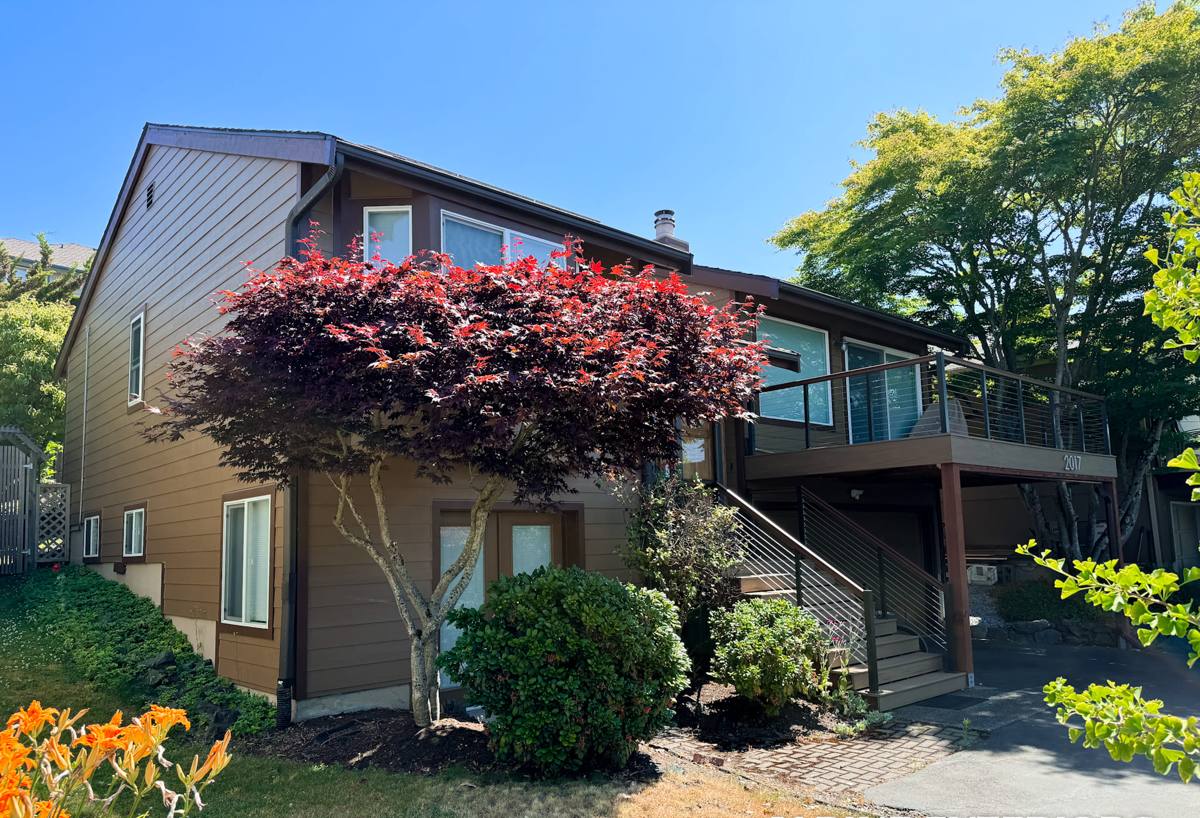
What Salt Air, Rain, and Moss Do to a Shingle Roof Here
Sustained Moisture, Not Just Rainfall Totals
A roof in Everson doesn't just get rained on — it stays damp longer between rain events than a roof would in a drier climate. Shaded slopes, north-facing planes, and anything near trees hold moisture for days at a time. Asphalt shingles that stay saturated more often age faster than the same product installed on a sun-exposed, well-ventilated roof, because the granule layer and asphalt mat underneath both degrade faster under repeated wet-dry cycling than under simple heat exposure.
Moss and Algae Growth
Moss doesn't just sit on top of a shingle roof — it holds water against the surface, works its way under shingle tabs and edges, and over a few seasons can lift shingles enough to let water underneath. Once moss is established on a shaded slope, it tends to come back after a simple wash unless the roof also has decent airflow and sun exposure, or moss-resistant granules built into the shingle itself.
Wind-Driven Rain
Storms moving through this part of Whatcom County regularly push rain sideways rather than straight down. That matters most at roof valleys, chimney flashing, vent pipe boots, and anywhere two roof planes meet — exactly the places where a rushed installation cuts corners, and exactly the places where a correctly built roof is designed to shed that kind of directional water load.
Salt-Influenced Air and Metal Components
Everson isn't right on the coastline, but this part of Washington still carries salt-influenced marine air inland more than homeowners expect. Over years, that air accelerates corrosion on unprotected fasteners, flashing, and any exposed metal roofing components. It's a slower process than what a beachfront home deals with, but it's real, and it's a reason to spec corrosion-resistant hardware rather than whatever's cheapest.
What a Correct Asphalt Shingle Roof Includes
The shingle itself is the part homeowners see and compare, but it's a small piece of what actually determines how the roof performs over 20-plus years in this climate. On every asphalt shingle roof we install in Everson, that means:
- Synthetic or felt underlayment rated for sustained moisture exposure, not a bare minimum-code product
- Ice-and-water shield at eaves, valleys, and any other spot where water and debris naturally collect
- Properly lapped, sealed flashing at every valley, chimney, skylight, and roof-to-wall transition
- Balanced intake and exhaust ventilation so moisture in the attic has somewhere to go instead of condensing on the roof deck from underneath
- Corrosion-resistant fasteners and metal flashing components, given the marine-influenced air this area sees
- Shingles rated for the wind exposure this area actually experiences, with the manufacturer's specified nailing pattern — not a faster, looser one
None of this adds significant cost relative to the shingles themselves. Skipping it is almost always what turns a roof rated for 25-plus years into one that's leaking or losing shingles in year twelve.
Choosing an Asphalt Shingle Product for This Climate
Not all asphalt shingles are built the same, and the right product for an Everson roof depends on the roof's pitch, sun exposure, and how much shade it gets from surrounding trees.
| Shingle Type | Moss & Moisture Behavior | Typical Maintenance | Realistic Lifespan Here |
|---|---|---|---|
| 3-tab (standard) shingle | Adequate on sun-exposed slopes; less margin for error on shaded areas | Regular moss checks, especially on north-facing slopes | 15-20 years |
| Architectural (dimensional) shingle | Heavier mat holds up better to sustained moisture; moss-resistant granule options available | Periodic moss removal, gutter checks | 25-30 years |
| Impact-resistant architectural shingle | Same moisture performance as standard architectural, with added durability against debris impact | Same as architectural | 25-30 years |
| Algae-resistant (copper/zinc granule) shingle | Granules actively resist algae and moss growth on shaded slopes | Lower moss-related maintenance | 25-30 years |
For most Everson homes with any meaningful tree shade, we lean toward algae-resistant architectural shingles — the upfront cost difference is modest, and it directly addresses the specific problem this climate causes. On a fully sun-exposed roof with little tree cover, that trade-off matters less.
How We Approach a Shingle Roofing Job in Everson
Inspection and Honest Assessment
Before we talk materials or price, we look at the existing roof — age, how much of the surface is affected by moss or damage, whether the deck underneath has any moisture-related soft spots, and how the roof is currently ventilated. That assessment determines whether the honest recommendation is a repair, a partial re-roof, or a full replacement.
Tear-Off and Deck Inspection
On a full re-roof, we remove the existing roofing down to the deck rather than layering over it. That's the only way to actually see the condition of the sheathing underneath, catch soft spots or rot before they're covered up again, and confirm the deck can properly hold fasteners for the new roof.
Underlayment and Flashing First
The underlayment, ice-and-water shield, and flashing go in before a single shingle is laid, and they're what actually keep water out when wind drives rain into a valley or against a chimney. This is the stage most likely to get rushed on a corner-cutting install, and it's the stage we spend the most care on.
Ventilation Check
We check and correct attic ventilation as part of the job, not as an afterthought. A new roof installed over poor ventilation still traps moisture underneath, which shortens the life of the new shingles from the deck side rather than the weather side.
Shingle Installation to Manufacturer Spec
Nailing pattern, exposure, and starter course placement follow the manufacturer's published specifications for the wind rating this area needs — not a faster pattern that technically holds until the first real windstorm.
Final Walkthrough
We walk the finished roof with you, cover what maintenance (if any) it needs going forward, and make sure you understand what's covered under both the manufacturer's material warranty and our workmanship warranty.
Signs an Everson Roof Needs Attention
- Moss buildup on shaded or north-facing slopes that returns quickly after cleaning
- Granules collecting in gutters or piling at the base of downspouts
- Curling, cupping, cracking, or missing shingles, especially after a windstorm
- Water staining on interior ceilings near exterior walls, chimneys, or skylights
- Daylight visible through the roof deck from inside the attic
- Soft spots or noticeable sagging when the roof is walked
- Flashing that looks lifted, rusted, or missing sealant
Any single item on that list is worth a professional look before another wet season passes. Caught early, most of these are a repair. Left alone, several of them compound into a full tear-off sooner than the shingles' rated life would suggest.
Repair, Partial Re-Roof, or Full Replacement
We don't default to recommending full replacement just because it's the larger job. The right call depends on the roof's age relative to its rated life, how much of the surface is affected, whether the deck has moisture damage, and how many repairs it's already had. A localized leak on an otherwise sound roof is usually a straightforward repair. Moss-related damage spread across multiple slopes on a roof already near the end of its service life, or a deck with soft spots from long-term moisture intrusion, is usually more honestly addressed with a full replacement than another round of patchwork that won't hold through the next wet season.
Why a Crew That Already Works Everson Matters
A roofing crew that works this part of Whatcom County through every season has seen how moss, wind-driven rain, and marine-influenced air actually behave on real roofs over years — not just how a shingle performs on a manufacturer's data sheet. That experience shows up in specific decisions: which roof orientations in Everson need extra ice-and-water shield because of tree shade and slow drying, how much ventilation a given attic actually needs versus the code minimum, and which flashing details are worth the extra time on install day so a callback isn't waiting two winters down the road. It also means you're working with a crew that already understands this area's weather instead of one applying a one-size-fits-all approach built for a different climate.
Beyond the Roof
Roofing is one piece of what we do in Everson — we also handle siding, window replacement, and deck construction, and the same climate that wears on a roof wears on the rest of a home's exterior. If a roofing job turns up moisture damage at a wall-to-roof transition, aging trim, or siding that's no longer doing its job, we can address it as part of the same conversation instead of sending you to track down a second contractor.
If you're weighing a repair against a replacement, or just want an honest read on where your roof stands, we're glad to take a look. Reach out for a free, no-pressure estimate using the form below.