 Lynden Siding
 Abbotsford Sits Right in Our Backyard
Abbotsford is close enough to our Lynden shop that it functions like a next-door service area rather than a distant job site. We're a short drive from the border crossing, and we regularly run crews and material up into the Fraser Valley for siding, roofing, window, and deck work. That proximity matters more than it might seem — it means faster response for estimates, easier scheduling around weather windows, and a crew that isn't treating an Abbotsford home as an unfamiliar one-off.
Whatcom County and the Fraser Valley share the same weather system. The rain that soaks Lynden the same week soaks Abbotsford. A siding product or installation detail that holds up on one side of the line generally holds up on the other. We don't change our standards crossing the border — we bring the same product, the same crew, and the same installation practices to every job.
Working Across the Border
Serving a Canadian address as a Washington-based contractor takes some extra logistics — scheduling material and crew movement, coordinating around crossing times, and being upfront with homeowners about timelines that account for it. We handle that planning on our end so it isn't something the homeowner has to manage. If you're getting quotes, it's worth asking any contractor directly how they handle cross-border logistics before you commit — vague answers here are a red flag.
What the Climate Does to Siding in This Area
The Fraser Valley and Whatcom County both sit in a corridor that pulls in marine-influenced air off the Salish Sea, funnels moisture up against the foothills, and holds onto it. The practical result for a home's exterior is a long stretch of the year where siding rarely gets a chance to fully dry out.
- Driving rain: Wind-driven storms push water sideways into siding, not just down onto it, which stresses seams, laps, and any spot where fasteners or trim break the surface.
- Moss and algae season: Shaded walls, north-facing elevations, and anything near mature trees or fences stay damp long enough for moss and mildew to take hold — often for eight months or more out of the year.
- Salt-tinged marine air: Air moving inland off the coast carries moisture and mild salinity that accelerates corrosion on fasteners and finishes not rated for it, and slowly breaks down paint films that aren't built for the exposure.
- Temperature swings: Cool, wet nights followed by warmer days mean siding expands and contracts constantly, which is hard on materials that aren't dimensionally stable.
None of this is unusual for the Pacific Northwest — it's just relentless. Siding here isn't tested by one bad storm; it's tested by ten months a year of dampness with no real recovery period.
Why We Only Install James Hardie Fiber Cement
We install James Hardie siding exclusively. We don't install vinyl, LP SmartSide, Cemplank, Allura, primed spruce, or cedar. That's a deliberate standard, not a lack of options, and it's worth explaining why.
What Wood-Based and Engineered Wood Products Face Here
Cedar and primed spruce are organic materials — they absorb moisture, and in a climate where siding rarely fully dries, that moisture cycling leads to swelling, warping, and rot at seams and end cuts over time, even with good paint maintenance. LP SmartSide is an engineered wood product that resists moisture better than raw wood, but it's still wood-based at its core, and any breach in the factory coating (a scratch, a poorly sealed cut edge, a fastener error) gives moisture a path in. In a climate this wet, that margin for installation error matters.
What Vinyl Trades Away
Vinyl siding is inexpensive and low-maintenance in the sense that it doesn't need painting, but it's a thin plastic product that flexes with temperature, can crack in cold snaps, fades under UV exposure over years, and doesn't offer the fire resistance or the solid, substantial feel that fiber cement does. It's a reasonable product for some budgets and climates — it's just not the standard we choose to build to.
Why Hardie Fiber Cement
James Hardie siding is fiber cement — sand, cement, and cellulose fiber — which means it doesn't rot, doesn't feed moss the way wood substrates can, and isn't a fuel source in a wildfire the way wood siding is. Hardie's HZ5 product line is engineered specifically for the wet, temperate climate zone that includes the Pacific Northwest, addressing moisture and moss resistance at the manufacturing level rather than leaving it entirely to maintenance. The ColorPlus factory finish is baked on under controlled conditions, which holds color and resists fading and chipping far better than a field-applied paint job, and it carries a strong transferable warranty when installed to spec. It costs more upfront than vinyl and can cost more than engineered wood — but in this climate, we've made the call that it's the product worth standing behind.
Siding Is One Piece — We Also Do Roofing, Windows, and Decks
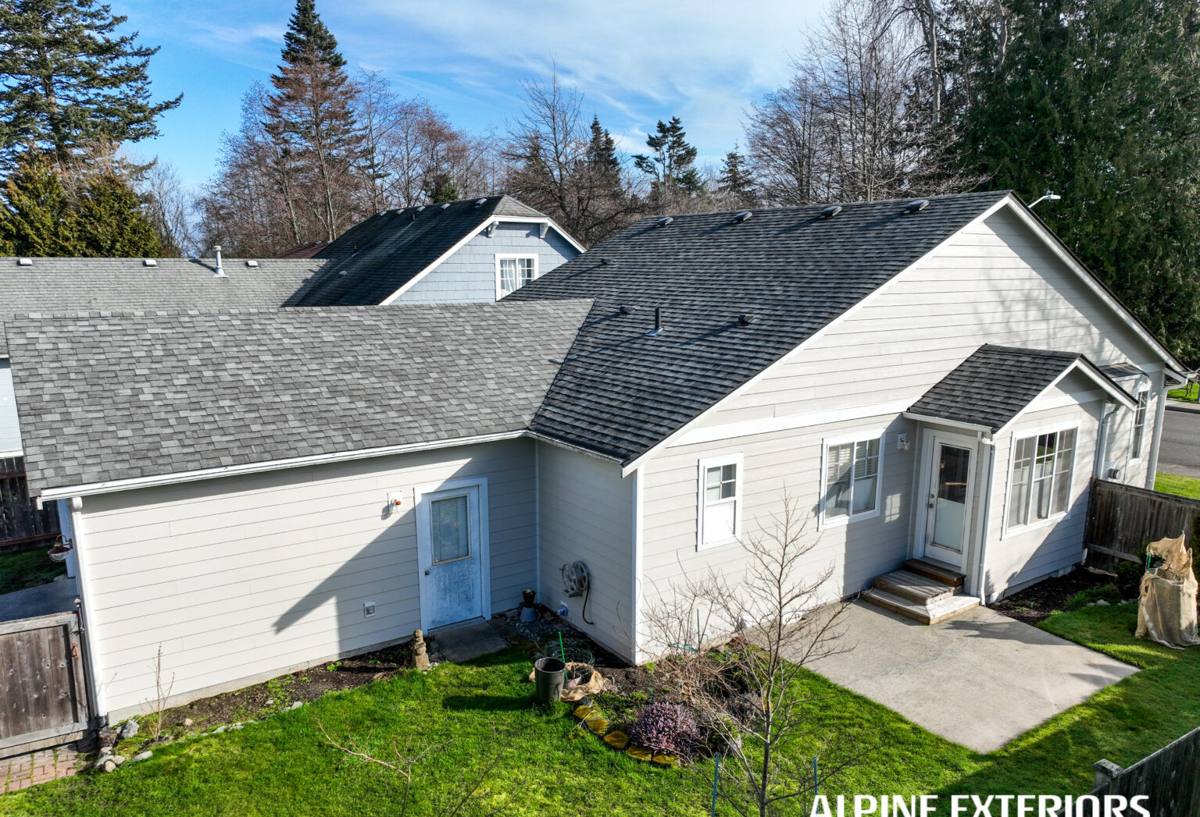
A home's exterior works as a system. Siding, roofing, windows, and decks all interact at flashing lines, transitions, and penetrations, and problems in one often show up as damage in another — a bad roof-to-wall flashing detail can rot siding from behind, a failed window seal can wick moisture into the wall assembly, and a deck ledger attached without proper flashing can rot the rim joist and the siding around it.
Because we handle all four trades, we look at an Abbotsford home's exterior as a whole rather than quoting siding in isolation and hoping the roofer or window installer got their side right. That matters in a climate where water finds every gap over time.
Signs an Abbotsford Home May Need New Siding
- Persistent moss or dark streaking on shaded or north-facing walls that comes back shortly after cleaning
- Soft spots, visible warping, or delamination on wood-based siding
- Paint that's peeling, bubbling, or needing repainting more often than every 5-7 years
- Cracking at siding seams, corners, or around window and door trim
- Visible gaps or separation where siding meets flashing, trim, or the foundation line
- Rising energy bills that suggest the wall assembly isn't sealing the way it should
Any one of these on its own might just need a repair. Several at once, especially on a home with wood-based or aging siding, usually means the exterior is past the point where patching makes sense.
Comparing Siding Options for This Climate
| Material | Moisture Behavior Here | Maintenance | Typical Lifespan |
|---|---|---|---|
| Cedar / primed spruce | Absorbs moisture; prone to swelling and rot at seams and cuts | Regular repainting/staining, ongoing caulk and repair | 15-25 years, shorter with poor maintenance |
| Vinyl | Doesn't rot but flexes and can crack in cold; doesn't address moss on the wall behind it | Low, but limited repair options if damaged | 20-30 years, fading over time |
| LP SmartSide (engineered wood) | Better than raw wood but still vulnerable if the factory coating is breached | Moderate; touch-up needed at damaged edges | 25-30 years with intact coating |
| James Hardie fiber cement | Non-organic; doesn't rot; HZ5 engineered for wet climates | Low; occasional wash, no repainting with ColorPlus | 30-50 years with correct installation |
What Correct Hardie Installation Looks Like
Fiber cement performs the way it's rated to only when it's installed to Hardie's specifications — this is where a lot of long-term problems actually start, even with a good product.
Key Installation Details
- Proper clearances: Siding held above grade, decks, roofing, and hardscaping per Hardie's minimum gaps, so water isn't wicking up from below.
- Correct fastening: Nailing patterns, fastener type, and embedment set to spec — over-driven or under-driven fasteners are a common failure point.
- Flashing and house wrap integration: Proper weather-resistive barrier and flashing at every window, door, and penetration so water sheds outward rather than getting trapped behind the siding.
- Sealed and painted cut edges: Factory finish protects the face of the board, but field cuts expose raw material that needs to be sealed per Hardie's instructions.
- Proper joint and seam treatment: Butt joints and corners detailed to shed water rather than trap it, especially important on the wall orientations that take the most driving rain.
A crew that skips or rushes these details can turn a 30-50 year product into one with problems in under ten years. This is a big part of why we treat installation as seriously as product selection.
Questions Worth Asking Before You Hire Anyone
- Are you certified or specifically trained to install the product you're proposing?
- What clearance and flashing details will you use around windows, decks, and grade lines?
- Is the warranty backed by the manufacturer, the installer, or both — and what voids it?
- Can you walk me through how you'll handle cut edges and seams before finish is applied?
- How do you coordinate siding work with roofing, window, or deck work happening on the same home?
Get an Estimate
If you're weighing siding, roofing, window, or deck work on a home in Abbotsford, we're glad to come take a look. There's no pressure and no cost to get a straight assessment of what your exterior actually needs and what it would take to do it right. Use the form below to request a free estimate.