 Lynden Siding
 Storm Damage Roof Repair for Everson and the Lynden Area
Everson sits in the Nooksack River valley just south of Lynden, in a part of Whatcom County where open farmland, river-bottom moisture, and Pacific storm systems all meet. Roofs out here don't usually fail because of one dramatic event. They fail because wind, driving rain, and a moss season that can run eight months or longer wear down the same weak points year after year, until a storm finally pushes water through. When we get a storm damage call in Everson, we're rarely looking at a roof that was fine last week. We're usually looking at a roof that was already compromised and just met the storm that found the gap.
This page is about that specific job: identifying and repairing storm damage on homes in and around Everson, done in a way that holds up through the next wet season instead of just patching what's visible today.
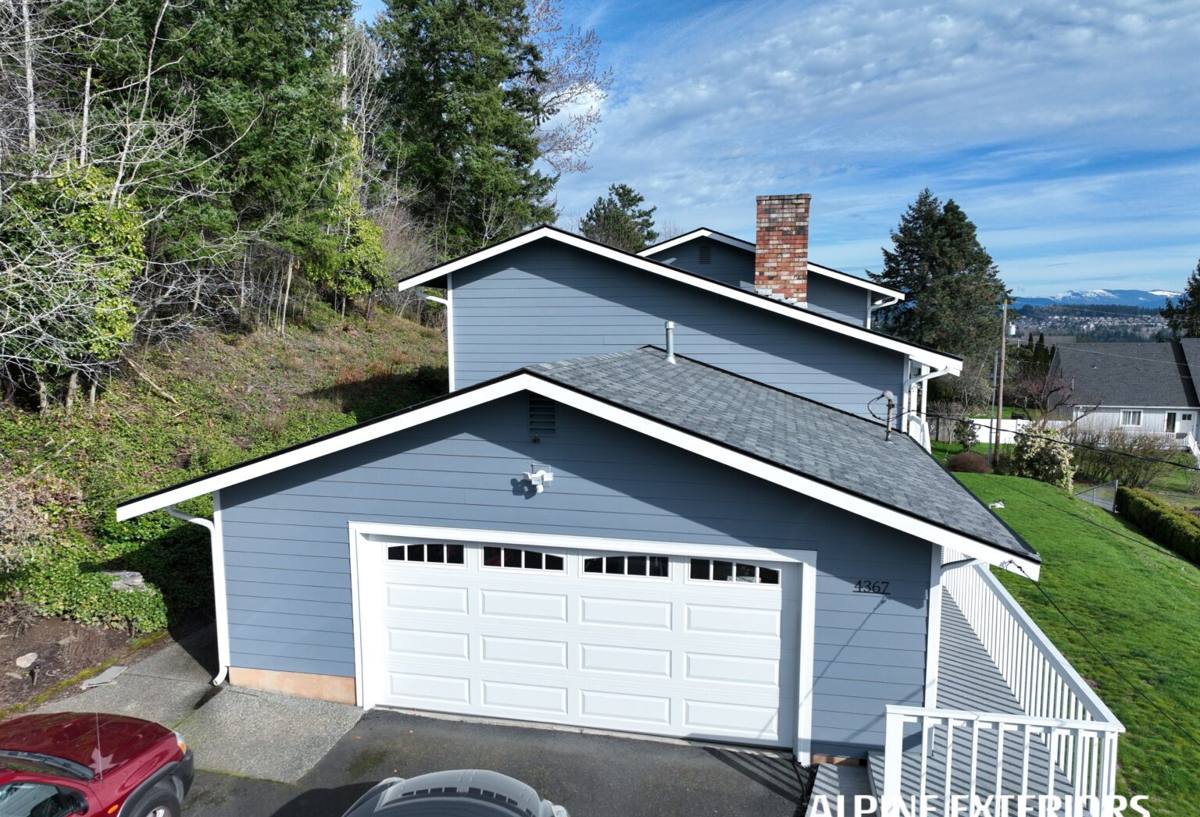
What Actually Damages Roofs Here
Wind and wind-driven rain
Whatcom County doesn't see hurricanes, but it does see strong frontal systems moving in off the water, and open farmland around Everson gives wind less to slow it down than a wooded or built-up area would. Wind alone often isn't the problem — it's wind combined with heavy rain, which drives water sideways and up under shingle edges, ridge caps, and flashing that would shed a normal vertical rain just fine.
Moss and prolonged moisture
Our long, mild, wet stretch of the year means moss has months to establish itself on north-facing slopes and shaded valleys of the roof. Moss holds moisture against shingles, lifts shingle edges as it grows, and channels water sideways instead of letting it run off — so a roof with heavy moss is already primed to leak the next time a storm hits it hard.
Debris and branch strikes
Mature trees on rural and semi-rural lots around Everson mean branches and limbs coming down in wind events. A direct hit can crack or puncture shingles and decking outright; near-misses often just bruise or loosen shingles in ways that aren't obvious until a leak shows up weeks later.
Salt air and metal fatigue
We're inland compared to the immediate coast, but marine air still reaches into Whatcom County, and it accelerates corrosion on exposed fasteners, flashing, and gutter metal over time. Corroded flashing is one of the most common places we find storm-triggered leaks starting.
Why So Much Storm Damage Starts at the Roof-to-Siding Connection
As a siding contractor, we spend as much time looking at where the roof meets the wall as we do at the shingles themselves — and that's usually the right place to look after a storm. Wall flashing, kick-out flashing at roof-to-wall intersections, and the siding courses just above the roofline are where wind-driven rain gets forced sideways and finds its way behind the cladding. A homeowner looking up at the roof from the ground often sees nothing wrong, because the actual failure is happening a few inches lower, at the transition most roofing-only crews don't spend much time on.
This is the piece we watch for that a roofer working in isolation, or a siding crew that never deals with the roof deck, can each miss on their own. Storm damage repair done right treats the roof and the wall as one connected system, not two separate trades that happen to be next to each other.
What a Correct Storm Damage Repair Involves
A repair that actually solves the problem — instead of covering the visible damage and leaving the entry point intact — generally includes:
- Tracing water stains or interior leaks back to their real entry point, which is often several feet from where the stain appears
- Checking decking underneath damaged shingles for soft spots, delamination, or rot before any new material goes down
- Replacing damaged flashing (step flashing, counter-flashing, kick-out flashing, valley flashing) rather than just resealing it with caulk
- Matching shingle or roofing material as closely as possible in type, weight, and color to the existing roof
- Inspecting and cleaning gutters and downspouts, since a clogged or damaged gutter during a storm sends water straight up under the roof edge
- Checking the siding courses and trim immediately above and below any roofline repair for water intrusion or hidden damage
Skipping any of these steps is how a homeowner ends up paying for the same "storm damage" twice.
Our Process, Start to Finish
1. Inspection
We walk the roof and the exterior walls, not just one or the other. We're looking for the storm's entry point, not only the spot where water showed up inside the house.
2. Documentation
We photograph and note the specific damage we find — cracked or missing shingles, lifted flashing, saturated decking, damaged gutters — so you have a clear record of what happened and why it needs the repair we're recommending.
3. Written scope and estimate
You get a plain-English explanation of what's damaged, what needs to be repaired versus replaced, and what it will cost, before any work starts.
4. The repair
We remove and replace damaged materials down to sound decking, install new flashing where the old flashing failed, and tie the repair back into the surrounding roofing and siding correctly rather than just patching over the hole.
5. Final check
We walk the completed repair with you, confirm gutters and downspouts are clear and functioning, and point out anything else on the roof or exterior worth keeping an eye on going forward.
Repair or Replace? How We Make That Call
Not every storm-damaged roof needs to be replaced, and not every "small leak" is actually small once you're inside the decking. Here's generally how we think through it:
| Factor | Leans toward repair | Leans toward replacement |
|---|---|---|
| Extent of damage | Isolated to one slope or section | Multiple slopes affected, or widespread moss/wear |
| Roof age | Roof is well within its expected service life | Roof is already near the end of its expected life |
| Decking condition | Decking is sound once exposed | Decking shows rot or repeated soft spots |
| Shingle match | Close match available for a clean patch | Discontinued or badly weathered shingles, patch would stand out |
| Repair history | First real issue on this roof | This is a recurring leak in the same area |
We'll tell you honestly which side of that table your roof falls on. A repair that's going to fail again within a year or two isn't a favor to you, and we'd rather lose a smaller job than sell you one that doesn't hold.
Materials We Use for Storm Repairs
Underlayment
On any repair where decking is exposed, we install synthetic underlayment rather than relying on what was there originally, since it holds up better to the extended damp periods common here between the actual repair and the shingles going back on.
Flashing
We use corrosion-resistant flashing material appropriate to the application — step flashing at wall intersections, proper kick-out flashing where a roof edge meets a sidewall, and valley flashing sized for real Pacific Northwest rain volume, not the minimum a shingle warranty requires.
Shingles and roofing material
We match your existing roofing as closely as the manufacturer's current lineup allows. When an exact match isn't possible because a product line has changed or discontinued, we'll walk you through the closest realistic options rather than guessing and hoping it blends in.
Storm Damage and Insurance
Many storm damage repairs in this area do end up going through homeowners insurance. Our documentation — photos, a written scope of damage, and a clear explanation of cause — is built to be useful for a claim, and we're glad to walk through what we found with you or your adjuster. We don't handle the claim itself, but we won't leave you guessing about what's actually wrong with the roof either.
What to Check After a Storm (From the Ground)
You don't need to get on the roof yourself, and we'd rather you didn't. From the ground or a window, it's worth checking for:
- Shingle pieces or granules in the yard or gutters after a wind event
- Visible gaps, lifted edges, or discoloration along roof lines or valleys
- Sagging or overflowing gutters during rain
- New water stains on ceilings or exterior walls, especially near where a wall meets the roofline
- Moss buildup that's noticeably thicker on one slope than the rest of the roof
- Any tree limbs resting on or hanging over the roof after a storm
None of these guarantee active damage, but any of them is a reasonable enough reason to have someone take a closer look before the next storm finds the weak spot for you.
Why Hire a Crew That Already Works in Everson
Storm damage repair isn't generic work. A crew that already knows this stretch of Whatcom County knows what moss season does to a roof by February, knows how open farmland around Everson channels wind differently than a sheltered lot closer to town, and knows that the roof-to-siding connection is where the real damage usually hides. That's the difference between a repair that covers the symptom and one that actually stops the leak. We're not driving in from out of the area to make a quick patch — this is the region we work in, and we're the ones you'll call if something comes up again next winter.
If a recent storm has you wondering about your roof, or you've just noticed something that doesn't look right, we're happy to take a look. Estimates are free, there's no pressure to move forward, and you'll get a straight answer about what's actually going on. The form below is the easiest way to get started.