 Lynden Siding
 Window Installation in Everson, Washington
Everson sits in the Nooksack River valley, in a part of Whatcom County where marine weather off the Salish Sea meets farmland and river-bottom humidity. That combination is hard on windows. Homes here deal with long stretches of driving rain, damp air that lingers into the afternoon, and a moss season that can run most of the year on shaded elevations. Windows that were installed without the right flashing and sealing details eventually let that moisture in, and once it's behind the siding or under the sill, it does damage you can't see until the trim starts to soften or paint starts to bubble.
We install windows in Everson and the surrounding Lynden area regularly, and the failures we get called out to fix follow a pattern: it's rarely the window unit itself that fails first. It's the installation — a missing sill pan, house wrap that wasn't lapped correctly over the nailing flange, or caulk used as the only line of defense instead of proper flashing. Get the installation right and a decent window will outlast the house's next few paint jobs. Get it wrong and even a premium window will leak.
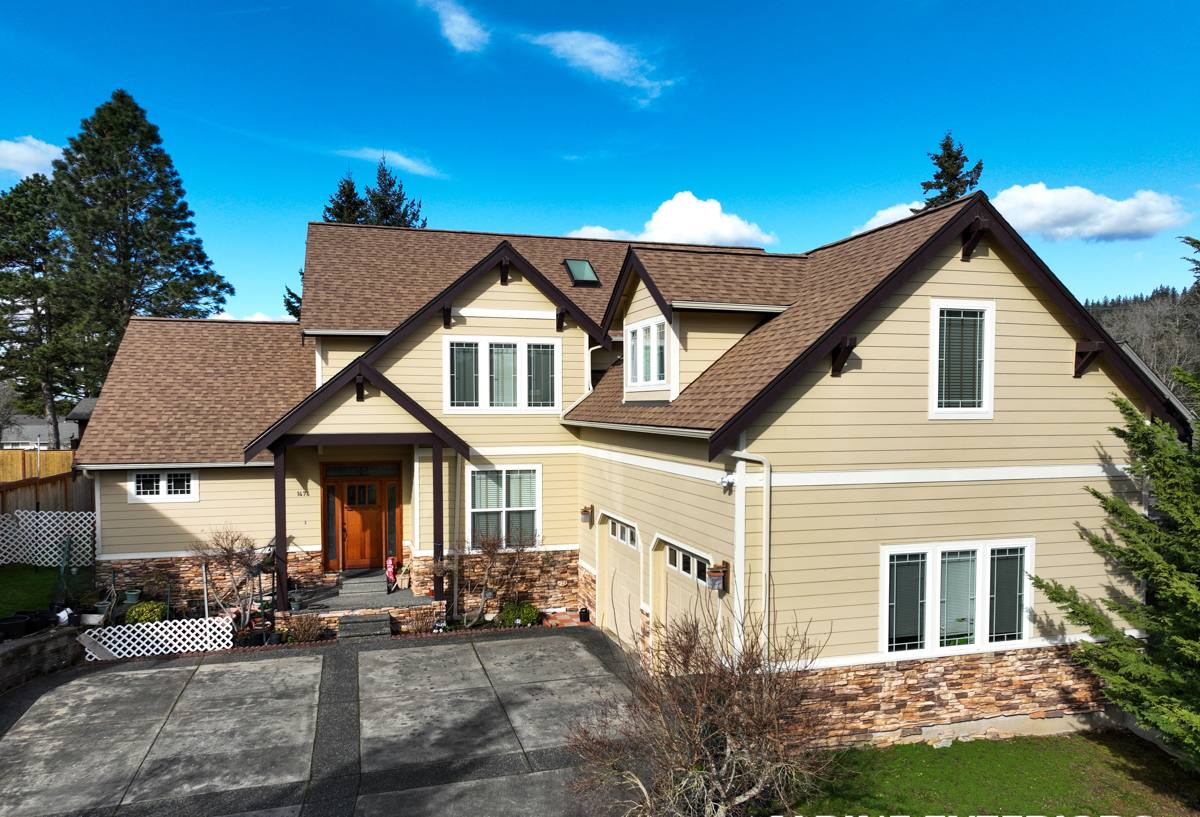
Why Everson's Climate Is Hard on Windows
A few things about this area work against older or poorly installed windows specifically:
- Driving rain: wind-driven storms push water sideways into wall assemblies, not just straight down — this is exactly the condition standard flashing details are designed to handle, and exactly the condition that exposes a shortcut installation.
- Prolonged dampness: river-valley humidity and shaded lots mean wood trim and sills stay wet longer after a storm than they would in a drier climate, giving rot and mold more time to take hold.
- Moss and algae growth: north-facing walls and anything under tree cover can stay damp enough to grow moss around window frames and sills, which holds moisture against the wood or trim even longer.
- Temperature swings: cold snaps followed by wet, mild stretches stress seals and glazing over time, especially on older single-pane or early double-pane units.
None of this means Everson homes need anything exotic — it means the basics have to be done correctly, every time, with no skipped steps.
Signs a Window Needs Replacing, Not Just Repair
Before we talk installation, it's worth knowing what actually justifies a full replacement versus a repair or re-caulk. Look for:
- Fogging or a permanent haze between the panes — the seal on the insulated glass unit has failed and can't be fixed, only replaced
- Soft or spongy wood at the sill or the bottom corners of the frame, often with paint that's bubbling or peeling in that same spot
- Visible daylight or a noticeable draft around the frame when the window is closed and locked
- Difficulty opening, closing, or latching that isn't fixed by cleaning the tracks
- Moss or dark staining building up on the sill or in the corners of the exterior trim
- A noticeable difference in the room's temperature near the window compared to the rest of the house
If you're only seeing one or two of these and the frame itself is sound, a repair may be enough. Once you see wood damage at the sill or frame, replacement is almost always the more honest recommendation — repairing rotted wood around a window that's about to be replaced anyway is money spent twice.
Common Issues in Older Everson Homes
Many homes in and around Everson are older farmhouses or homes built before current flashing standards were common practice. In those homes, the most frequent problem isn't the original window — it's that the opening was never properly flashed to begin with, so water has been finding its way behind the siding for years, often without visible damage inside the home until it's fairly advanced. When we replace a window in one of these homes, checking the condition of the framing and sheathing around the opening is a required step, not an optional upsell.
What a Correct Installation Actually Involves
A window installation done right is a sequence, not a single step, and skipping any one of these is where leaks start:
- Remove the old unit and inspect the opening. We check the sill, jambs, and header for rot, soft spots, or existing water damage before anything new goes in.
- Repair or replace damaged framing. Any compromised wood gets cut out and replaced — installing a new window into a rotten opening just hides the problem behind a new frame.
- Install a sill pan flashing. This creates a sloped, sealed drainage plane at the bottom of the opening so any water that does get past the window has a way out, instead of soaking into the framing.
- Set the window level, plumb, and square. A window that's slightly out of square will bind, won't seal evenly, and puts uneven stress on the frame over time.
- Flash the sides and top correctly shingled. Each layer of flashing tape or building paper overlaps the one below it, so water is always directed outward and down — never trapped behind the next layer.
- Insulate the gap between the frame and the rough opening. Done with a low-expansion foam or backer rod and sealant, not packed so tight it bows the frame.
- Seal and finish the exterior trim. Caulk is the last line of defense here, not the first — it's sealing an already-flashed assembly, not doing the flashing's job for it.
This is also why we don't rely on caulk-only "recaulk and reglaze" fixes as a long-term answer for a window that's already showing sill damage. Caulk is a maintenance item that needs to be renewed; flashing is a permanent drainage system. On an aging or already-damaged opening, sealant alone just delays the same failure.
Our Process for an Everson Window Installation
1. On-Site Assessment
We walk the exterior and interior of each window being considered, check for existing moisture damage, and talk through which windows genuinely need replacement versus repair. We measure for accurate, code-appropriate sizing rather than assuming a like-for-like swap will fit correctly.
2. Straightforward Estimate
You get a written estimate that covers the window units, installation labor, any framing repair we can already see is needed, and disposal of the old units. If we find additional rot once we open the wall, we stop and talk to you before proceeding — no surprise charges after the fact.
3. Installation
Most single-window replacements are completed in a day; full-home replacements are scheduled around Everson's weather so we're not flashing an opening during an active storm. We protect your interior and landscaping during the work.
4. Final Walkthrough
We test every window we install — opening, closing, locking, and checking the seal — before we consider the job done, and walk you through anything specific to that window's care.
Choosing the Right Window for This Climate
There's no single "best" window brand or material for every home — the right choice depends on your home's age, exposure, and budget. Here's how the common options compare for a wet, marine-influenced climate like Whatcom County's:
| Frame Material | Moisture Resistance | Maintenance | Typical Fit |
|---|---|---|---|
| Vinyl | Very good — won't rot or corrode | Low — occasional cleaning | Most replacement projects; strong value |
| Fiberglass | Excellent — very stable in wet/dry cycles | Low | Higher-end replacements, larger openings |
| Wood (clad exterior) | Good if the exterior cladding is intact; vulnerable where clad is damaged | Higher — exterior clad needs monitoring, interior wood needs periodic finishing | Homes prioritizing a traditional interior wood look |
| Aluminum | Fair — prone to condensation without thermal breaks | Low | Less common in residential retrofits here due to condensation risk |
For most Everson homes, vinyl or fiberglass frames make sense because they don't absorb water or rot, which removes one entire failure mode this climate is hard on. Clad-wood windows can look great and perform well too, as long as the cladding stays intact — we'll tell you honestly if a given product or style is a poor match for a particularly exposed wall.
What Affects the Cost
Every home is different, but these are the main factors that move the price up or down on a window installation project:
| Factor | Why It Matters |
|---|---|
| Number of windows | Per-window cost typically drops on larger jobs due to shared labor and setup |
| Framing condition | Rotted sills or jambs require repair before a new window can be properly flashed |
| Window size and type | Larger units, custom shapes, and operable styles (casement, sliding) cost more than standard double-hung |
| Frame material | Vinyl is typically the most affordable; fiberglass and clad-wood cost more upfront |
| Access and story height | Second-story or hard-to-access windows take longer and may need additional equipment |
| New construction vs. retrofit | Replacing within an existing opening is usually simpler than resizing an opening |
We'll always tell you up front, in writing, why a job costs what it costs — including if framing repair pushes the price up mid-project.
Why a Crew That Works Everson Regularly Matters
Window installation isn't complicated in theory, but the details that keep water out are easy to skip and hard to inspect once the trim is back on. A crew that works this specific area regularly knows what to check for in older Everson-area farmhouses, understands how the local rain and river-valley humidity actually behave against a wall assembly, and isn't guessing at flashing details from a manual written for a drier climate. That local, repeated experience is what shows up ten years later as a window that still seals — or doesn't.
We're not the cheapest option if the low bid skips the sill pan or shingled flashing to save an hour of labor. We'd rather explain why that step matters than have you call us back in three years about a soft spot under the sill.
Ready for an Estimate?
If you're dealing with drafty, fogged, or aging windows anywhere in Everson, we're happy to take a look and give you a straightforward, no-pressure estimate — including an honest opinion on whether repair or replacement makes more sense for your specific windows. Use the form below to get started.