 Lynden Siding
 What Board and Batten Actually Is
Board and batten is one of the oldest siding patterns in the Pacific Northwest — wide vertical boards with narrow strips (battens) covering the seams between them. It started as a practical way to keep barns and farmhouses weathertight with minimal material, and it's stuck around because the vertical lines read as clean, modern, or classic depending on how you finish it. In Lynden and the surrounding Whatcom County farm country, you'll see it on everything from century-old outbuildings to brand-new custom builds.
The look is simple, but the material underneath it matters more than most homeowners realize. Traditional board and batten was solid wood, which meant every seam, every batten edge, and every board face was a place moisture could get in and swell, cup, or rot. Modern board and batten siding solves the look without the wood problem — but only if you build it with a material engineered to stay flat and dimensionally stable through wet Pacific Northwest winters.
The Hardie Products Behind the Look
We install this style exclusively with James Hardie fiber cement, and there are a few ways to build it depending on the home and the budget:
HardiePanel Vertical Siding + Battens
Large fiber cement panels installed vertically, with wood or Hardie trim battens fastened over the seams at regular intervals. This is the classic board and batten approach and the most common one we install in Lynden.
Hardie Artisan Vertical Siding
A thicker, more dimensional panel product with a deeper, more authentic board profile — designed for homes where the siding is a real design feature, not just a weather barrier. It carries a longer warranty than standard Hardie panel products.
Individual Board Reveal Systems
For a more custom, higher-end look, individual fiber cement boards can be installed with spaced reveals instead of continuous panels. This costs more in labor but gives the most authentic individual-board appearance.
In every case, the battens and trim are Hardie or Hardie-compatible trim boards — never dissimilar wood trim fastened directly against fiber cement panels, which creates a moisture and expansion mismatch at the seams.
Why It Fits Whatcom County Homes
Board and batten reads as farmhouse, craftsman, or modern depending on color and proportion, which is part of why it's popular from downtown Lynden out to the county's rural properties. A dark, saturated ColorPlus finish with narrow battens reads modern. A lighter, warmer tone with wider board spacing reads more traditional farmhouse. It also pairs well as an accent — many homes we work on use board and batten on a gable end or entry feature wall against a lap-sided body, which breaks up a large elevation without looking busy.
The vertical lines also do something practical: they shed water fast. On a flat wall, water runs straight down the boards to the bottom of the wall instead of pooling in horizontal laps, which is a real advantage during the driving rain this area gets from fall through spring.
Standing Up to Salt Air, Rain, and Moss
Whatcom County siding takes a specific kind of beating: salt-laden air moving in off the Strait, long stretches of driving rain, and a moss and algae season that can run most of the year on shaded, north-facing walls. Board and batten siding has more seams and more trim-to-panel transitions than plain lap siding, so the material choice at those seams matters even more here than on a standard elevation.
| Material | Behavior in salt air | Behavior in driving rain | Moss/algae resistance |
|---|---|---|---|
| Solid wood boards | Corrodes fasteners faster near coastal air; needs frequent refinishing | Seams and end grain absorb water; prone to cupping and rot | Low — organic material feeds growth |
| Vinyl board and batten | Doesn't corrode, but can chalk and fade | Sheds water but panels can warp or bow with heat/cold cycling | Moderate; growth sits on the surface |
| LP SmartSide vertical panel | Engineered wood core is moisture-sensitive at cut edges and seams | Requires strict caulking and touch-up discipline at every seam | Moderate, dependent on maintenance |
| James Hardie fiber cement | Non-organic, doesn't corrode or feed decay | Dimensionally stable; won't swell or cup at seams | Better resistance; factory finish sheds and cleans easier |
Fiber cement isn't magic — moss and algae can still grow on any siding surface exposed to shade and moisture, including Hardie. What it doesn't do is feed the growth or degrade from it the way wood-based products can over years of repeated wet-dry cycling.
Color and Finish Options
Board and batten lives or dies on color, because the vertical pattern shows every shadow line. We recommend ColorPlus factory finish over field painting for this style specifically, for a few reasons:
- Factory finish is baked on and cured before the panels ever reach the jobsite, so battens and panels match perfectly — field-painted seams can show slight variation over time as they weather differently.
- ColorPlus finish carries its own finish warranty separate from the substrate warranty, covering peeling, chipping, and cracking.
- Touch-up paint is formulated to match the exact ColorPlus color, so repairs from a ladder strike or debris impact don't require repainting a whole wall.
- Darker board and batten colors — a popular choice right now — hold up better under ColorPlus's baked finish than they typically do under field-applied paint, which fades faster in direct sun exposure.
Lighter and mid-tone colors are the lower-maintenance choice for west- and south-facing walls that get full sun; darker colors look sharp but should go on walls with some tree cover or a north/east exposure where fading is less of a factor.
Installation Details That Actually Determine How It Ages
Board and batten fails at the details, not the panel itself. Almost every problem we get called out to fix on other contractors' board and batten work traces back to one of these:
- Batten fastening pattern — battens need to be face-nailed into framing or blocking behind the panel seam, not just tacked to the panel itself, or they'll work loose in wind.
- Panel-to-batten gap — a small gap behind each batten allows the wall to breathe and drain instead of trapping moisture against the panel face.
- Ground clearance — Hardie's minimum clearance from grade, decks, and roof lines has to be maintained, especially since board and batten runs vertically all the way to the bottom trim.
- Flashing at every horizontal transition — window heads, belly bands, and roof-to-wall intersections need proper flashing behind the panel, not just caulk at the surface.
- Correct fastener type and spacing — per James Hardie's published fastening schedule for the specific product and local wind exposure, not a generic nail pattern.
- Rainscreen or drainage gap — a furred-out installation lets bulk water drain instead of sitting against the weather barrier, which matters more in a high-rainfall climate like ours.
Any contractor installing board and batten should be able to walk you through each of these before they start. If they can't explain their flashing plan or fastening schedule, that's worth pausing on.
Where Board and Batten Works Best
Full-elevation board and batten looks great on farmhouse and modern builds, but it's not the only way to use it. Common approaches we see requested around Lynden:
- Full board and batten on the whole home for a clean farmhouse or modern exterior.
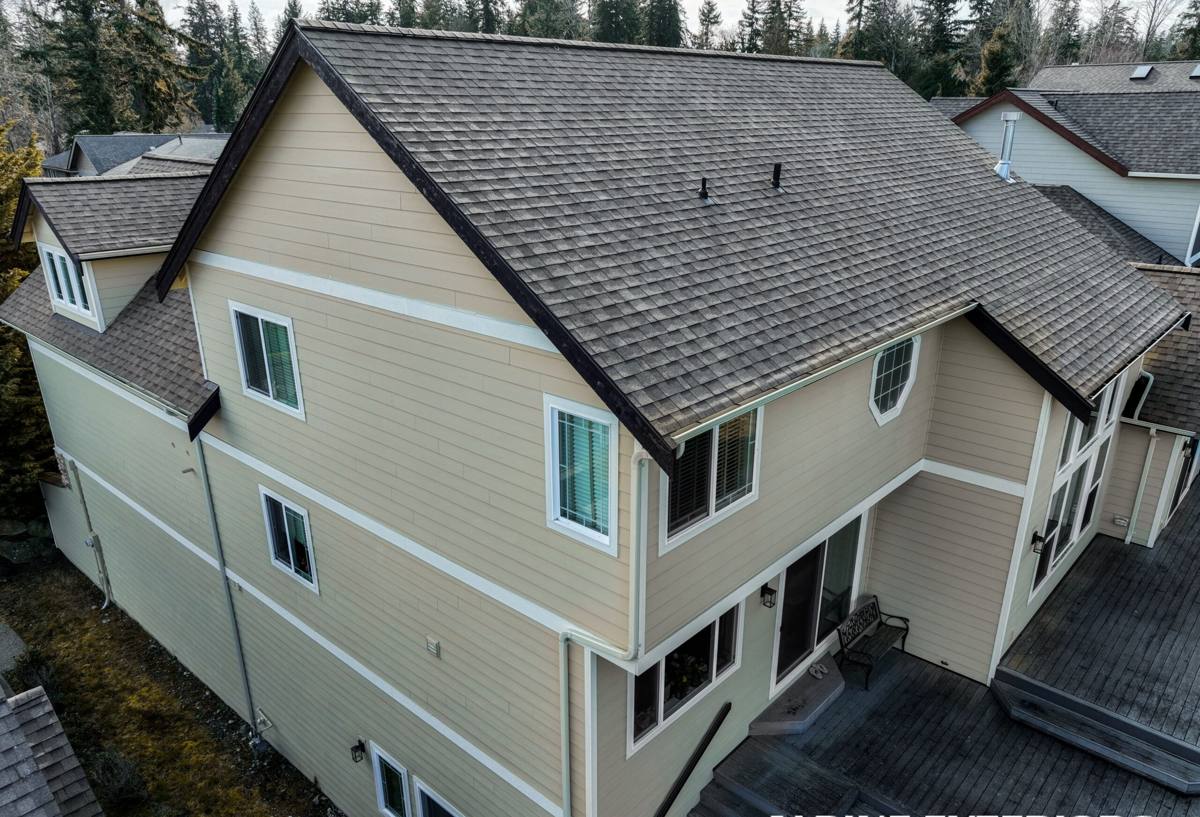
- Board and batten on gable ends and dormers with lap siding on the main body — a very common Pacific Northwest combination.
- Board and batten as an entry or porch accent wall against a different Hardie siding profile elsewhere on the home.
- Board and batten on outbuildings, shops, and barns to match a farmhouse-style main residence.
Mixing profiles works well specifically because it's all the same Hardie material system — panels, trim, and lap all expand and contract together and take the same ColorPlus finish, so transitions age evenly instead of one section weathering differently than another.
What This Costs to Plan For
Board and batten typically runs somewhat higher than standard lap siding installation because of the extra trim material and labor at every batten seam. Exact pricing depends on the home's size, wall complexity, and whether you're doing a full elevation or an accent application, but the factors that move the number are consistent:
| Factor | Effect on cost |
|---|---|
| Full-home vs. accent-only application | Full elevation costs more in material and labor than a gable or entry accent |
| Panel system vs. individual board reveal | Individual boards cost more in labor than a batten-over-panel system |
| ColorPlus factory finish vs. field paint | ColorPlus costs more up front but reduces long-term repainting cost |
| Wall complexity (windows, dormers, roof lines) | More cuts and flashing details increase labor time |
| Tear-off of existing siding | Removal and disposal of old material adds to the project scope |
We'll walk your specific home and give you a number based on what's actually there — not a generic square-footage estimate that ignores your roofline and window count.
Get a Straight Answer for Your Home
Board and batten is a strong style choice for a lot of homes in this area, but it's not automatically the right fit for every elevation, and the installation details matter more with this pattern than with standard lap siding. If you're weighing board and batten against other siding styles, we're happy to walk your property, talk through where it would and wouldn't work, and give you a straightforward, no-pressure estimate — just fill out the form below.