 Lynden Siding
 Everson's Climate Is Harder on Siding Than It Looks
Everson sits along the Nooksack River in the farmland belt between Lynden and Sumas, and that low, damp river-valley setting creates its own microclimate. Moist air moves inland off the Sound and settles into the valley, where it lingers against tree lines, barns, and homes longer than it does on higher, more exposed ground. Add Whatcom County's long, gray rainy season and you get siding that stays wet for days at a stretch rather than drying out between storms.
That combination — driving rain, salt-tinged marine air working its way up the valley, and a moss season that can run from October through April — is exactly the kind of exposure that separates siding systems that hold up for decades from ones that quietly fail behind a coat of paint. Vinyl, untreated wood, and lower-grade composite panels all have a documented weak point in conditions like this: moisture that gets behind the cladding and has nowhere to go. We built our whole business around avoiding that failure mode, which is why Everson is a market where the product choice matters as much as the installation.
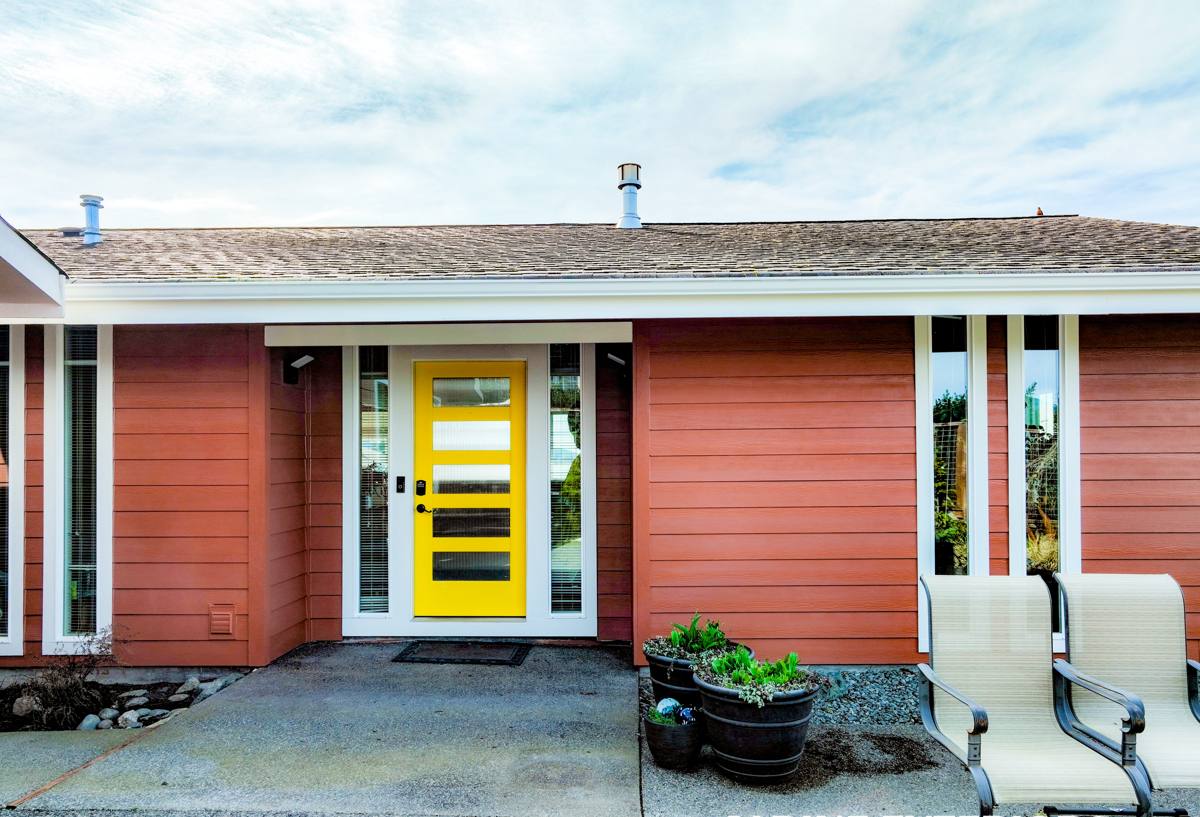
Signs an Everson Home Needs Replacement, Not Another Patch
Most homeowners call us after noticing one obvious problem, but siding failure is rarely limited to the spot you can see. A proper inspection almost always turns up more. Watch for:
- Soft or spongy spots when you press on the siding, especially near the bottom courses and around window trim
- Paint that keeps failing in the same spots within a year or two of repainting
- Persistent green-black moss or algae staining that comes back within weeks of cleaning
- Visible warping, cupping, or panels that no longer sit flush against the wall
- Rising energy bills with no other explanation, which often points to a compromised weather barrier
- Interior signs — musty smells, peeling paint, or discoloration on interior walls that back up to exterior siding
If you're only seeing one or two of these, a targeted repair might genuinely be enough. But once moss staining is chronic and paint failure keeps repeating in the same locations, that's usually moisture already working behind the cladding — and patching the surface without addressing what's underneath just delays a bigger repair bill.
What a Correct Siding Replacement Actually Involves
Siding replacement is not a cosmetic swap. Done right, it's a full rebuild of the wall's moisture-management system, and skipping any one layer undermines the rest.
Tear-Off and Sheathing Inspection
Once the old siding comes off, we inspect the sheathing underneath for rot, delamination, or soft spots — this is the step that catches problems the old siding was hiding. In a river-valley climate like Everson's, we routinely find at least some sheathing damage on homes over 20 years old, particularly at lower wall sections and anywhere the original flashing was undersized or missing.
Weather-Resistive Barrier and Flashing
A new weather-resistive barrier goes on before a single piece of new siding, with proper overlap and taped seams so water sheds down and out rather than working its way behind the wall. Flashing at windows, doors, and any horizontal trim gets rebuilt to current standards — this is the single most common shortcut we see in older installations, and it's usually the reason a house that's only 15-20 years old already has rot behind the siding.
Fastening and Field Cutting to Spec
James Hardie publishes specific fastening patterns, clearances, and field-cutting requirements for a reason: siding installed outside those specs voids the manufacturer's warranty and behaves differently in wet climates. Correct nail placement, proper gaps at trim and foundation lines, and factory-cut edges (rather than field-cut edges left unsealed) all affect how the product handles years of standing moisture.
Why We Install Only James Hardie Fiber Cement
We don't install vinyl, LP SmartSide, Cemplank, Allura, primed spruce, or cedar, and in a climate like Everson's that's a deliberate call, not a brand preference. Each of those alternatives has a real trade-off that shows up faster here than in a drier region:
- Vinyl can warp and gap in temperature swings and doesn't stop moisture from reaching the wall behind it — it just hangs in front of whatever's already there.
- Wood-based composite and engineered wood products perform well when kept perfectly sealed, but any breach in that seal lets moisture into the wood fiber, and repeated wet-dry cycling is where they lose ground fastest.
- Primed spruce and cedar are real wood — they need consistent refinishing and are the most exposure-sensitive of all the common choices; in a valley climate with a long moss season, the maintenance burden is significant.
James Hardie fiber cement is non-combustible, dimensionally stable in wet and dry cycles, and doesn't feed mold or moss the way wood fiber can. The ColorPlus factory finish is baked on under controlled conditions, which holds color and resists the chalking and peeling that field-applied paint eventually shows in high-moisture climates. Hardie also engineers specific product lines (HZ5, for example) for colder, wetter regions, and backs the material with a strong transferable warranty — which matters most in a house that will pass through more than one owner over its life.
Our Process for Everson Projects
Because we already work throughout Whatcom County, an Everson job follows the same sequence as every other one we run — no shortcuts because a house is a few miles further from our home base:
- On-site inspection of existing siding, trim, and any visible moisture damage
- Sheathing and structural check once old siding is removed, with photos and a straightforward explanation of anything we find
- Weather barrier and flashing installed to current standards, not just matched to whatever was there before
- James Hardie panels or lap siding installed to manufacturer fastening and clearance specs
- Trim, caulking, and paint touch-up at seams, with a final walkthrough before we consider the job done
We size crews and schedules around actual weather windows rather than fighting the rain — in a valley that holds moisture longer than surrounding higher ground, timing the tear-off and barrier stages around dry stretches is part of doing the job right, not an excuse.
Cost Factors for Everson Siding Replacement
Every home is different, but the same handful of variables drive most of the cost difference between projects:
| Factor | Why It Matters |
|---|---|
| Extent of sheathing repair | Rot found behind old siding adds material and labor before new siding can even go on |
| Home size and wall complexity | Dormers, multiple gables, and cut-up wall lines take more time than a simple rectangular footprint |
| Siding profile (lap, shingle, panel) | Different Hardie profiles carry different material and labor costs |
| Trim and accessory scope | Full trim replacement costs more upfront but keeps flashing and paint life consistent across the whole exterior |
| Access and site conditions | Fencing, landscaping, and multi-story sections affect staging time and equipment needs |
We won't quote a number without seeing the house — anyone who does is guessing, and a guess isn't useful to you once tear-off reveals what's actually underneath.
A Pre-Estimate Checklist for Homeowners
Before we come out, a little of your own observation helps us give you a more accurate first conversation:
- Note which sides of the house show the worst moss, staining, or paint failure — usually the north- and west-facing walls in this valley
- Check for soft spots by pressing gently along the bottom few feet of siding, especially near downspouts
- Look at window and door trim for gaps, cracked caulk, or discoloration
- Have any past repair or repaint dates handy, even rough ones
- Mention any known interior moisture issues on exterior-facing walls
Why a Crew That Already Works in Everson Matters
Siding is a climate-specific trade. A crew that mostly works drier inland regions doesn't build the same instinct for how quickly moisture problems show up in a river-valley setting, or how long a moss season really runs here. Working throughout Whatcom County means we see the same valley conditions repeatedly — where moisture tends to collect, which wall orientations take the worst of the weather, and what a correctly built wall system needs to hold up against it year after year. That familiarity shows up in the small decisions on a job site, not just the big ones.
If your Everson home is showing early signs of siding wear — or you're simply planning ahead rather than waiting for a problem — we're happy to take a look and walk you through what we find. There's no cost and no pressure to a first estimate, just a straightforward look at your home's exterior and an honest read on what it actually needs.