 Lynden Siding
 What ColorPlus Finish Actually Is
Before picking a color, it helps to understand what you're actually buying. James Hardie's ColorPlus Technology is not paint applied on a job site. It's a multi-coat finish baked onto the fiber cement board at the factory, cured under controlled heat, then backed by a separate finish warranty from the substrate warranty. That distinction matters more in Whatcom County than almost anywhere else in Washington, because our siding takes a beating from three directions at once: salt-laden air off Bellingham Bay and the Strait of Georgia, long stretches of driving, sideways rain, and a moss and algae season that can run eight or nine months out of the year on north-facing walls.
A factory finish cures evenly, at a consistent thickness, in a controlled environment. A field-painted board — whether it's primed fiber cement, primed spruce, or a repaint down the road — cures at whatever temperature and humidity happen to exist outside that day, which in Lynden usually means damp. That's the core reason we sell and install ColorPlus rather than primed boards that get painted after installation.
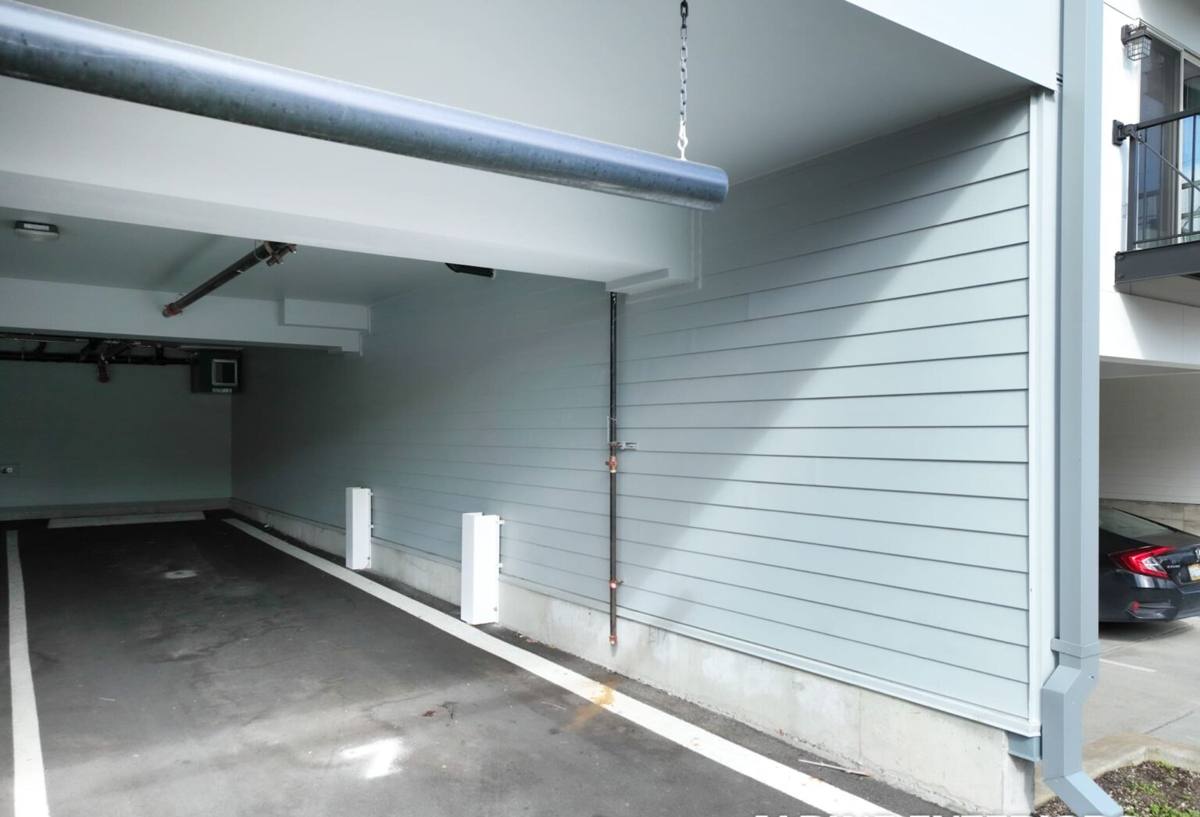
Why Factory Finish Matters in This Climate
Whatcom County sits in a spot where marine moisture, coastal salt exposure, and heavy annual rainfall combine. Homes closer to the water or in open exposure catch more wind-driven salt spray; homes tucked under trees or facing north catch more sustained dampness and moss. Both conditions attack a finish the same way over time: they find the weak points — thin spots, lap joints, cut edges — and that's where peeling, chalking, and color fade usually start first.
ColorPlus is engineered specifically to resist UV fading and to shed moisture better than field-applied paint, and Hardie backs the finish with its own warranty terms separate from the board itself. That doesn't mean the finish is invincible — cut edges still need to be sealed with Hardie's touch-up product during installation, and caulking still needs maintenance — but it starts from a much stronger baseline than a board that gets its only protective coat after it's already hanging on your wall in Lynden's weather.
Moss and Algae Considerations
No exterior finish is moss-proof. What differs is how a surface handles cleaning. ColorPlus finishes tolerate routine soft washing (garden hose and mild detergent, or a gentle low-pressure rinse) without stripping color the way a thinner field coat can after a few cleanings. If your lot has heavy tree cover or faces north away from direct sun, plan on an annual rinse regardless of which color you choose — but know the finish underneath can take it.
How the ColorPlus Palette Is Organized
Hardie's ColorPlus lineup is built around a curated palette rather than an unlimited custom-match system, and that's intentional. Every color in the collection has been tested for UV stability and finish performance on fiber cement specifically, which is different from picking any shade off a paint fan deck. The palette generally breaks into a few practical categories:
- Neutral field colors — whites, warm grays, and greiges that work as the dominant body color on most homes
- Deeper statement colors — navy, charcoal, deep green, and similar tones used as full-body colors on modern or craftsman-style homes
- Warm earth tones — tans, browns, and muted reds that read well against evergreen landscaping, which is most of Whatcom County
- Trim whites — a small set of whites specifically formulated to pair with the body colors and resist yellowing
Because the palette is curated rather than infinite, one of the most useful things a contractor can do is bring physical ColorPlus samples to your house rather than relying on a screen or a printed swatch. Fiber cement color reads differently than paint on primer, and it reads differently again under Pacific Northwest overcast light than it does under a showroom light.
Statement vs. Blended Approach
Most homes in the Lynden area land in one of two design directions. A blended approach uses a muted body color that sits quietly against the landscape, with a single trim color for contrast — this is the more common, lower-maintenance-looking choice on traditional and farmhouse-style homes. A statement approach uses a deeper or more saturated body color with crisp white or black trim, common on newer modern-farmhouse and craftsman builds going up around Whatcom County. Both hold up equally well structurally — the choice is purely aesthetic and resale-driven.
Undertones Under Northwest Light
Western Washington's soft, diffused, often overcast light shifts how undertones read compared to sunnier climates. Grays with a blue or green undertone can look flatter and cooler here than they would under direct sun; warm grays and greiges with a hint of brown or taupe tend to hold their character better under our typical cloud cover. This is one more reason to view large-format samples, ideally propped against your actual siding wall, at different times of day before committing.
Matching Trim, Roof, and Accents
Color decisions rarely happen in isolation. Roof color, stone or brick accents, window frame color, and even the deep greens of regional landscaping all interact with your siding choice. A few practical rules of thumb:
- Warm-toned roofs (brown, weathered wood shakes, terracotta blends) generally pair better with warm body colors than cool grays
- Black or dark charcoal roofs — increasingly common on newer Whatcom County builds — pair well with almost any body color but look sharpest against whites, warm grays, and deep statement colors
- Stone or brick accents should be sampled alongside the siding color, not matched from memory — undertones clash more often than homeowners expect
- Window frames in black or bronze read as more modern; white frames read more traditional and are more forgiving with a wider range of siding colors
ColorPlus vs. Field-Applied Paint
Here's how the two approaches actually compare on the factors that matter over the life of the siding:
| Factor | ColorPlus (Factory Finish) | Field-Applied Paint |
|---|---|---|
| Cure conditions | Controlled heat and humidity, consistent every board | Whatever the weather is that day on site |
| Coverage consistency | Multiple coats, uniform thickness | Depends on applicator technique and number of coats |
| Warranty | Separate finish warranty from Hardie | Typically covered only by the paint manufacturer, if at all, and often shorter |
| Repaint interval | Long interval before repainting is needed | Often needs repainting on a shorter cycle in wet coastal climates |
| Install-day dependency | Finish is done before the board ever leaves the plant | Quality depends heavily on install-day weather and crew |
What the ColorPlus Warranty Actually Covers
Hardie backs ColorPlus with a finish warranty that runs separately from the substrate (the fiber cement board itself) warranty. In practice this means the finish — color retention, resistance to peeling and cracking — is warrantied on its own terms, and it's transferable if you sell the home, which matters in a market like ours where buyers are increasingly asking what siding a house has and how it's been maintained. Warranty coverage assumes correct installation, including sealing cut edges and using Hardie-approved caulk and touch-up paint at seams and penetrations — which is why installation quality is just as much a part of "choosing a color" as the swatch itself. A beautiful color installed wrong will still fail at the joints first.
Practical Tips for Choosing Your Color
- View large physical samples outdoors, not on a screen — fiber cement finish reads differently than digital renderings
- Look at samples in both overcast and direct light, since Whatcom County skies vary week to week
- Hold the sample against your actual roof, trim, and any stone or brick you're keeping
- Consider how the color will look after a season of rain runoff staining near rooflines and gutters
- Ask whether the color is available in the specific product line and plank width you're installing, since not every color is offered across every profile
- If you're near open water or exposed to prevailing wind, factor in that lighter, warmer neutrals tend to hide water spotting better than very dark, flat colors
Where Color Choice Meets Correct Installation
A ColorPlus finish is only as good as the installation underneath it. Field-cut edges need factory touch-up sealant applied the same day they're cut — an exposed raw edge is the single most common place a finish starts to fail early, especially with our rain volume. Fasteners need to be set correctly so they don't blow through the finish. Caulking at trim and penetrations needs to be the right product, applied correctly, and maintained over time. None of this shows up on a color swatch, but it's the difference between a ColorPlus finish that looks the same in fifteen years and one that starts showing wear at the seams in five.
Get a Second Opinion on Color, No Pressure
Picking a siding color is a bigger decision than most homeowners expect, and it's worth seeing real ColorPlus samples against your own home's roof, trim, and light before committing. We're happy to bring samples out, walk the exterior with you, and give you a straightforward estimate — no pressure, no sales script, just a local contractor's honest read on what will hold up and look right on your home.