 Lynden Siding
 Acme's Climate Is Harder on Siding Than It Looks
Acme sits in the wooded, low-lying river valley country east of Lynden, where the Nooksack River drainage and the surrounding foothills create a microclimate that's noticeably wetter and shadier than the open farmland closer to town. Tree cover is heavier here, homes tend to sit closer to the tree line, and that combination means less direct sun hitting exterior walls, longer drying times after rain, and a moss and algae season that can run nearly year-round on north- and east-facing elevations.
Whatcom County as a whole deals with a long wet season driven by marine air pushing in off the Salish Sea and Georgia Strait. That same weather pattern — the one responsible for the salt-laden air along the coast and the driving, sideways rain that hits siding at an angle instead of just running down it — is what feeds the moisture load that eventually reaches inland communities like Acme. By the time that system works its way into the valley, it's less about salt exposure and more about sustained dampness: siding that stays wet longer, trim that never fully dries between storms, and paint or caulking that fails years before it would in a drier climate.
None of this means Acme homes are doomed to rot and moss — it means the exterior products and installation details matter more here than they would somewhere drier. That's the lens we bring to every siding, roofing, window, and deck project we take on in the area.
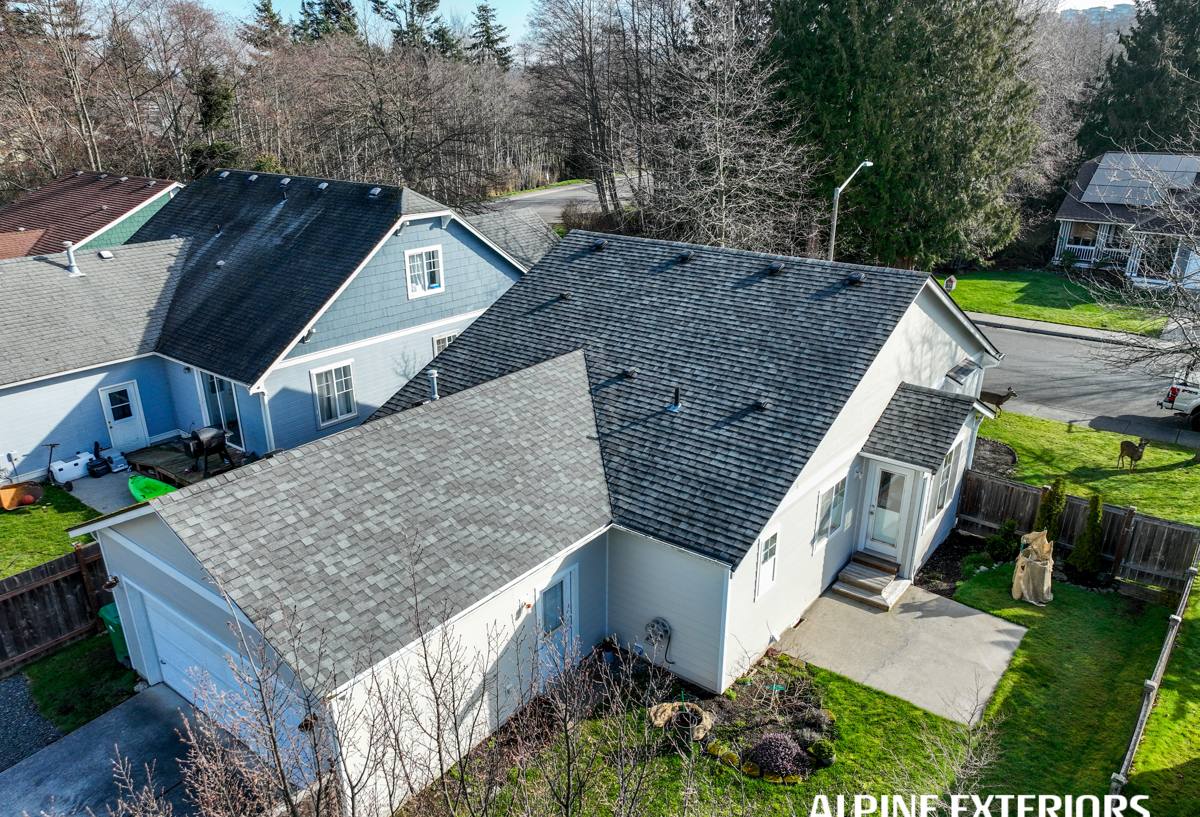
What We Do for Homeowners in Acme
Lynden Siding Installer handles the full exterior envelope, not just siding. Most Acme jobs fall into one of these categories:
- Siding replacement and repair — full re-sides, storm and moisture damage repair, and rot remediation on homes where the existing siding has failed
- Roofing — replacement and repair, often bundled with siding work since both systems need to shed the same rain
- Windows — replacement windows installed and flashed correctly against the new siding, which matters more in a wet climate than the window itself
- Decks — construction and rebuilds designed to handle standing moisture and shade in a forested lot
These trades overlap more than people expect. Siding failure often starts at a window opening or a roof-to-wall transition where flashing was cut corners on years ago. A crew that only does one of these trades tends to treat the others as "not my problem." We don't have that luxury, and we don't want it — we'd rather fix the actual water path than reside over it.
Why We Install Only James Hardie Fiber Cement Siding
We made a deliberate decision to stop installing anything other than James Hardie fiber cement siding, and we explain that decision honestly to every homeowner who asks — including the ones who came in wanting vinyl or a cheaper composite.
Vinyl siding is inexpensive and low-maintenance in the sense that it doesn't need painting, but it's a plastic product that expands, contracts, and can warp or crack in temperature swings, and it doesn't hold up well to the kind of persistent moisture and shade Acme sees — algae and moss find a foothold in the panel laps and stay there. LP SmartSide and similar engineered wood products perform reasonably well when installed and maintained exactly to spec, but they're wood-based, and wood-based siding is only as good as its ongoing maintenance schedule — caulking, painting, and cut-edge sealing that has to happen on time, every time, or moisture gets into the substrate. Cemplank and Allura are both legitimate fiber cement products, technically similar to Hardie in composition, but we standardized on one manufacturer so we can guarantee installation detail, flashing methods, and warranty terms are consistent across every job — and we chose the one with the deepest regional track record and factory finish system. Primed spruce and cedar are beautiful natural materials, but bare wood in a climate this wet is a maintenance commitment few homeowners actually keep up with, and the failures we get called out to repair most often start with a wood product that went a season or two past its repaint window.
James Hardie fiber cement is non-combustible, dimensionally stable in wet-dry cycling, and available in HZ product lines engineered for specific climate zones — the HZ5 line is built for the kind of freeze-thaw and moisture exposure the Pacific Northwest sees. It comes factory-finished with ColorPlus technology, which means the color is baked on before installation rather than field-painted, so there's no fresh paint film sitting exposed to rain in year one. It carries a strong transferable warranty when installed to Hardie's specifications, which protects the homeowner even if the house changes hands.
What Hardie Doesn't Solve on Its Own
We want to be straight about this: no siding product, including Hardie, fixes bad flashing, poor drainage planes, or trim details that trap water. Fiber cement is far more forgiving of Acme's moisture than wood or vinyl, but it still has to be installed with proper house wrap, flashing at every penetration, and correct gapping and fastening. A great product installed wrong will still fail. That's why installation quality gets its own section below instead of getting glossed over.
How Hardie Handles Acme's Moisture and Moss Conditions
Fiber cement's core advantage in a shaded, wet valley like Acme is that it doesn't rely on a surface paint film to keep water out. The material itself is a cement composite — it doesn't swell, delaminate, or rot the way wood-based products can when they stay damp for extended periods. Moss and algae still land on any exterior surface exposed to shade and moisture, Hardie included, but because the substrate underneath is inert, surface growth is a cleaning issue rather than a structural one. On a wood-based product, the same growth sitting against a damp surface for months can be the beginning of a rot problem underneath the paint.
The ColorPlus factory finish also matters more in low-sun areas than people expect. Field-applied paint needs a certain amount of dry, warm weather to cure properly, and homes tucked under tree cover don't always get long enough dry stretches for that to happen reliably. A factory-cured finish sidesteps that problem entirely.
What Correct Installation Looks Like
Most siding failures we're called to diagnose in this area trace back to installation shortcuts, not the product itself. On every Hardie job we do, the details that matter most in a wet climate include:
- A continuous, properly lapped water-resistive barrier behind the siding, with no gaps at seams or penetrations
- Flashing at every window, door, and roof-to-wall intersection, installed so water sheds outward and down, never behind the barrier
- Correct fastener placement and spacing per Hardie's installation guide, which affects both warranty coverage and long-term panel performance
- Proper clearance between siding and grade, decks, and roof lines so panels aren't sitting in standing water or snow load
- Caulking only where Hardie's specifications call for it — over-caulking joints that are designed to allow drainage can trap moisture instead of shedding it
This is also where hiring a crew that specializes in one product pays off. A crew that installs several different siding brands is, by definition, not deeply fluent in any single manufacturer's specifications. We install Hardie exclusively, so these details aren't a checklist we consult — they're the way we already work.
Comparing Siding Options for a Climate Like Acme's
| Material | Moisture Performance | Maintenance | Fire Resistance | Typical Lifespan |
|---|---|---|---|---|
| James Hardie fiber cement | Excellent — inert substrate, doesn't rot or swell | Low — factory finish, occasional cleaning | Non-combustible | 30+ years to warranty limit |
| Vinyl | Fair — doesn't rot but can warp; moisture collects in laps | Low but limited repair options | Combustible, can melt/deform | 20-25 years typical |
| LP SmartSide / engineered wood | Good if maintained; vulnerable at cut edges and joints | Moderate to high — repainting, caulk upkeep | Combustible | 20-30 years with upkeep |
| Cedar / primed spruce | Fair — natural wood movement, absorbs moisture | High — regular repainting/staining required | Combustible | Varies widely with maintenance |
This table reflects general product behavior, not guarantees — actual performance always depends on installation quality and how consistently a homeowner keeps up with whatever maintenance a given material requires.
Roofing, Windows, and Decks in the Same Wet Conditions
Because Acme's climate problem is really a water-management problem, we look at the whole exterior when we're on a property, not just the walls. A roof with aging flashing will feed water down behind good siding just as easily as bad siding will. Windows installed without proper head flashing create a leak path regardless of how good the siding around them is. Decks built low to shaded, damp ground without adequate drainage or rot-resistant materials tend to be the first thing on a property to show wear.
When we quote a siding job in Acme, we'll flag anything we see on the roof, windows, or deck that's likely to undermine the new siding down the road — not to upsell unnecessary work, but because there's no point installing a 30-year siding system behind a roof that's going to start leaking in five.
Signs Your Acme Home's Exterior Needs a Look
- Dark green or black streaking on siding that returns quickly after cleaning
- Soft or spongy spots when you press on wood-based siding or trim
- Paint that's peeling, bubbling, or chalking heavily on shaded sides of the house
- Visible gaps, warping, or buckling in siding panels
- Moss buildup on roofing that's spreading onto adjacent siding or fascia
- Musty smell or visible staining on interior walls near exterior corners
Why a Local Crew Matters Here
A siding crew that mostly works drier inland climates or dense urban lots doesn't necessarily think about shade cycles, moss pressure, or the way rain moves through a forested valley the way a crew working Whatcom County day in and day out does. We size flashing details, drainage gaps, and even scheduling around the reality that Acme homes dry out slower than homes a few miles away in open farmland. That's not a marketing point — it changes how we sequence a job and what we flag during an inspection.
If you're dealing with moss, moisture damage, aging siding, or you're just planning ahead for a home in the Acme area, we're happy to take a look and give you a straight assessment — no pressure, no obligation. Fill out the form below to schedule a free estimate.