 Lynden Siding
 Roof Repair Built for Everson's Weather, Not Just Any Weather
Everson sits close enough to the Nooksack River bottomland and the broader Whatcom County weather pattern that roofs here take a different kind of beating than roofs thirty miles inland. You get moist marine air moving up from the Salish Sea, long stretches of low-intensity rain that can last for days, and shaded, tree-lined lots that never quite dry out between storms. Add in the salt-tinged air that reaches this far into the county on a west wind, and you have a climate that is genuinely hard on roofing material, even material that's rated well and installed correctly.
Roof repair in Everson isn't a generic service we happen to also offer here. It's a specific job shaped by how this town's roofs actually fail: moss buildup that traps moisture against shingles, flashing that corrodes faster than the shingles around it, and valleys that stay wet long after a storm has passed everywhere else. If you're searching for roof repair as an Everson or Lynden homeowner, you're dealing with one or more of those problems, not a hypothetical one.
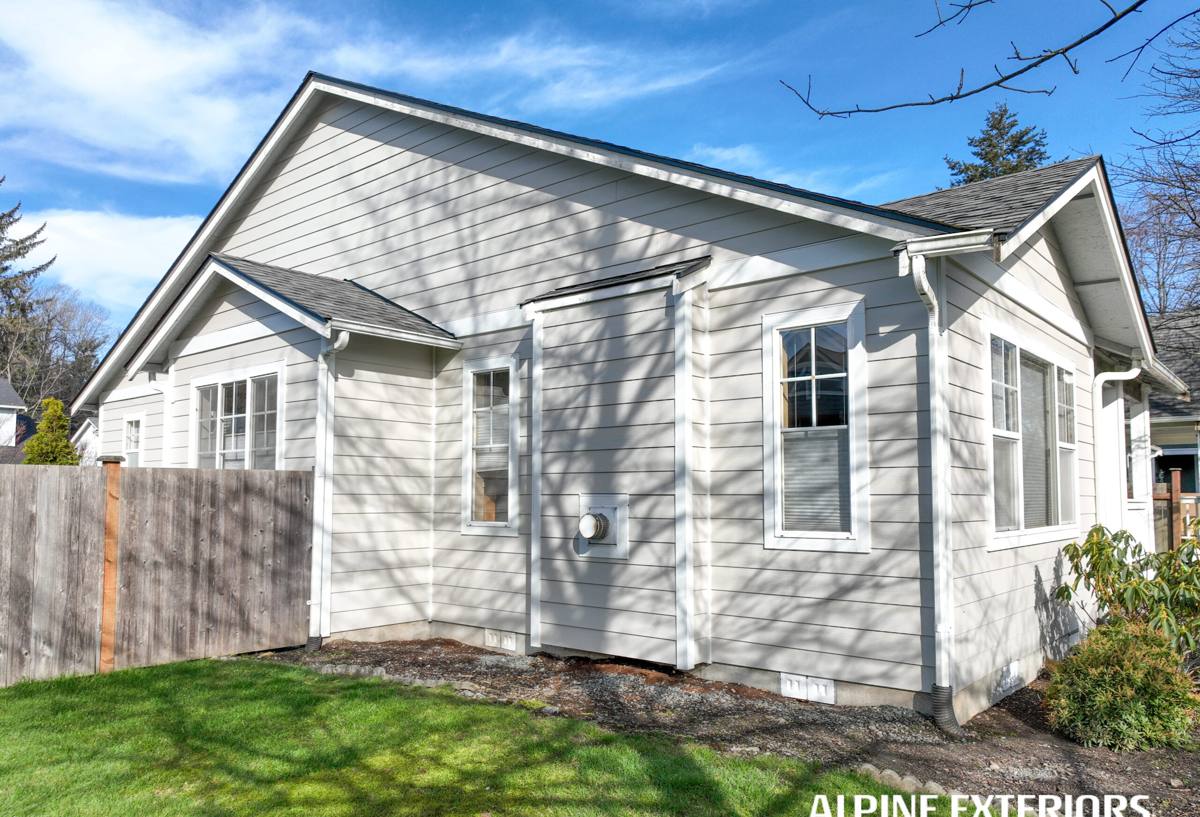
What Everson's Climate Actually Does to a Roof
Moss Season Is Longer Here Than People Expect
Whatcom County's moss season isn't a two-month nuisance — on shaded, north-facing roof slopes it can run most of the year. Moss doesn't just sit on top of shingles looking bad. It holds water against the granule surface, works its way under shingle tabs and around nail heads, and lifts shingle edges just enough for wind-driven rain to get underneath. A roof that looks "mossy but fine" from the ground is very often already losing material underneath the moss.
Driving Rain Finds the Weak Points
Straight-down rain is easy on a roof. Driving rain, pushed sideways by wind off open farmland or the river valley, is what actually causes leaks. It gets pushed up under shingle laps, around chimney and vent flashing, and into any gap that a calmer climate would never expose. Most of the repair calls we run in Everson trace back to a spot that was fine in dry weather and only leaks when the wind is blowing rain sideways.
Salt Air Accelerates Metal Corrosion
Everson is inland, but Whatcom County's salt air still reaches this far, especially riding in on sustained westerly weather. Metal flashing, nail heads, gutter fasteners, and exposed roofing hardware corrode faster here than they would in a dry inland climate. Corroded flashing is one of the most common single causes of a roof leak we find that isn't obvious from a ground-level look at the shingles themselves.
Signs an Everson Home Needs Roof Repair, Not a Full Replacement
Not every leak or stain means a new roof. A big part of doing this job honestly is telling you when a repair is the right call and when it isn't. Signs that usually point to a repair:
- A ceiling stain that appears only during heavy, wind-driven rain and not during light rain
- Visible moss concentrated in one or two shaded areas rather than across the whole roof
- Cracked, curling, or missing shingles limited to one slope or one section
- Rusted or lifted flashing around a chimney, skylight, or vent pipe
- Granules collecting in gutters after a storm, but the shingle mat underneath is still intact
- A roof that is under 15-20 years old with isolated damage rather than widespread wear
If instead you're seeing sagging decking, widespread shingle failure across every slope, or a roof that's already past its expected service life, we'll tell you that plainly rather than patching something that needs full replacement. Recommending an unnecessary repair, or a repair where replacement is the honest answer, doesn't serve you and it doesn't serve us either.
What a Correct Roof Repair Actually Involves
A proper repair is not just swapping the shingle that's obviously damaged. Given how this region's roofs fail, a correct job usually includes:
- Inspection beyond the visible damage. We check the area around the reported problem, not just the problem itself, since moisture in this climate tends to travel before it shows up as a stain.
- Moss and debris removal from the work area. Repairing over moss just traps the same moisture problem under new material.
- Flashing assessment. Given how often corroded or improperly seated flashing is the real cause of a leak here, we check flashing condition any time we're repairing a roof, even if the shingles are what prompted the call.
- Underlayment check where shingles are removed. If underlayment is compromised, replacing shingles over it without addressing that is a short-term fix.
- Matching materials where possible. We use materials that match your existing roof's type and, where reasonably available, its color and profile, so a repair doesn't stand out as an obvious patch.
- Proper re-sealing and fastening to current manufacturer installation standards, not just enough to stop the immediate leak.
Repair vs. Replacement: How We Help You Decide
| Factor | Leans Toward Repair | Leans Toward Replacement |
|---|---|---|
| Roof age | Under roughly 15-20 years | At or beyond expected material lifespan |
| Damage pattern | Isolated to one area or slope | Spread across most or all of the roof |
| Decking condition | Solid, no soft spots | Soft, spongy, or visibly sagging |
| Moss coverage | Localized to shaded sections | Widespread across the whole roof surface |
| Leak history | First occurrence or isolated recurrence | Repeated leaks in different spots over time |
This table is a starting point, not a diagnosis. The only reliable way to know which side of the line your roof falls on is a hands-on inspection.
Our Roof Repair Process in Everson
1. On-Site Inspection
We look at the roof from the ground and, where safe and necessary, up close, including the attic side if accessible, since attic moisture and staining often tell us more than the exterior does.
2. Honest Diagnosis and Scope
You get a plain explanation of what's actually wrong, what caused it, and what fixing it correctly involves — before any work starts.
3. Repair Work
We remove damaged material, address the underlying cause (moss, flashing, underlayment, or a combination), install matching material, and re-seal and fasten to standard.
4. Cleanup and Walkthrough
We clear debris from the roof and gutters and walk you through what was done and what to watch for going forward, particularly if moss regrowth is likely given your roof's sun exposure.
Cost Factors for Roof Repair
Every roof repair has its own scope, but a few factors consistently drive cost up or down. We won't quote a number without seeing the roof, but here's what typically moves the price:
| Factor | Effect on Cost |
|---|---|
| Size of the affected area | Larger area, more material and labor time |
| Roof pitch and accessibility | Steeper or harder-to-access roofs take more time and safety setup |
| Extent of hidden damage | Underlayment or decking issues found once shingles are removed add scope |
| Flashing replacement needed | Corroded flashing adds material and labor beyond the shingle repair |
| Material matching | Discontinued or unusual shingle types can take longer to source |
Why Hire a Crew That Already Works in Everson
A roofer who works this specific area regularly already knows what to check first. We know that moss on a north-facing slope in Everson isn't cosmetic, that flashing corrosion shows up sooner here than in drier parts of the state, and that a leak reported only during windy rain almost always points to a driving-rain entry point rather than a straightforward puncture. That local pattern recognition shortens the diagnosis and reduces the chance of a callback for a problem that wasn't fully addressed the first time.
It also means we're not guessing at material choices. We know which flashing details hold up under this climate's combination of moisture and salt air, and which shortcuts tend to fail early here even if they'd be fine somewhere drier. That's less about brand preference and more about matching the repair to the environment it actually has to survive.
Homeowner Checklist: Before You Call for a Roof Repair
- Note when the leak or stain appears — during heavy rain, wind-driven rain, or all the time
- Check the attic (if accessible) for staining, damp insulation, or daylight coming through
- Look at the roof from the ground for visible moss concentration or missing shingles
- Check gutters for granule buildup after the next rain
- Note the approximate age of the roof if you know it
- Avoid walking on the roof yourself — wet moss and shingles are genuinely slick
If you're seeing any of these signs on an Everson or Lynden home, we're glad to take a look and give you a straight answer about what it needs. Reach out for a free, no-pressure estimate through the form below — we'll tell you honestly whether it's a repair, and what that repair should actually involve.