 Lynden Siding
 Why Ferndale Roofs Wear Differently Than Roofs Inland
Ferndale sits close enough to the coast that salt-laden air rides in on the wind and settles on every exposed surface, including your roof. Combine that with the driving rain that comes sideways off Georgia Strait weather systems and the long, damp shoulder seasons that let moss colonize anything shaded or north-facing, and you get a roofing environment that's tougher on asphalt shingles than most manufacturers' warranty language assumes. A shingle rated for a dry inland climate doesn't automatically perform the same way here.
We install and replace asphalt shingle roofs for homeowners in Ferndale and throughout the Lynden area, and we see the same failure patterns over and over: granule loss from moss root systems working into the shingle mat, soft decking under valleys where wind-driven rain got past aging flashing, and ventilation problems that trap moisture in the attic and shorten shingle life from the inside out. None of that is inevitable. It's a function of whether the roof was built for this specific climate or just built to code minimums.
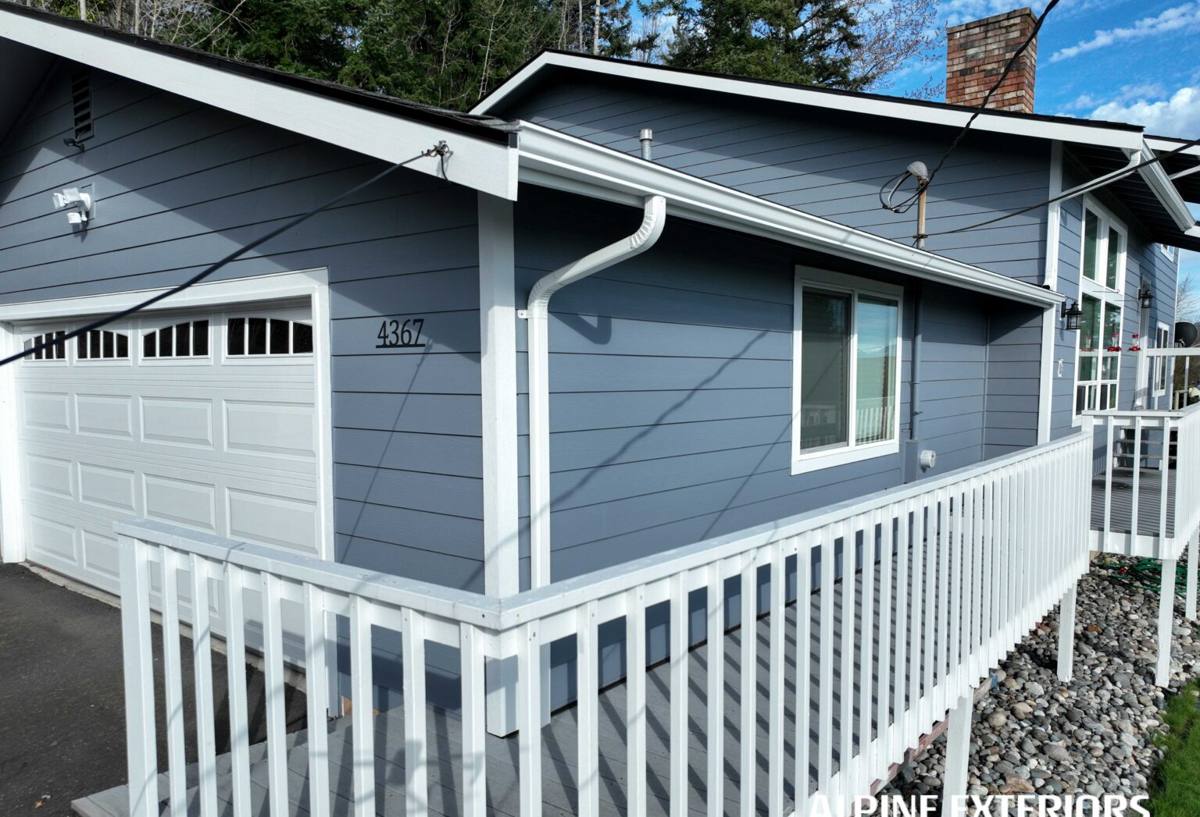
What a Correct Asphalt Shingle Roof Needs In This Climate
Underlayment and Water Protection
Standard felt underlayment is the minimum, not the standard we work to. In a county that sees this much sustained rain, we use synthetic underlayment for its tear resistance and water shedding, and we add self-adhered ice-and-water membrane at eaves, valleys, and any low-slope transition — the spots where wind-driven rain is most likely to work backward under the shingle courses.
Flashing That Actually Sheds Water
Step flashing at walls, apron flashing at roof-to-wall transitions, and properly lapped valley metal matter more here than in drier regions, because driving rain hits these details from angles that gravity-only designs don't anticipate. Reused or rusted flashing is one of the most common causes of hidden leaks we find on tear-offs.
Ventilation That Matches the Attic
Balanced intake and exhaust ventilation keeps moisture from condensing under the deck during our cool, wet winters. An under-ventilated attic in Whatcom County doesn't just risk mold — it shortens the life of the shingles above it by cooking them from underneath in summer and trapping condensation in winter.
Choosing the Right Shingle for a Ferndale Roof
Not every asphalt shingle line handles salt air and moss pressure the same way. The biggest practical differences come down to granule adhesion, algae-resistant granule treatment, and how the shingle profile handles standing moisture.
| Shingle Type | Typical Lifespan Here | Best Fit |
|---|---|---|
| 3-tab | 15-20 years | Budget-driven projects, secondary structures |
| Architectural / dimensional | 25-30 years | Most Ferndale homes — better wind rating and moss resistance |
| Premium/designer architectural | 30+ years | Steep-slope, highly visible roofs, homeowners planning to stay long-term |
We specify algae-resistant (AR) granules on nearly every job in this area, not as an upsell but because untreated granules give moss and algae something to grip within a few seasons of coastal moisture exposure. We also pay attention to wind ratings, since Ferndale's open exposure to weather coming off the water means uplift resistance isn't a theoretical concern.
How Our Installation Process Works
- Roof and attic inspection — we check the deck, ventilation, and existing flashing before quoting anything, so the estimate reflects your actual roof, not a generic number.
- Tear-off and deck repair — old shingles and underlayment come off completely; any soft or delaminated decking gets replaced before anything new goes down.
- Drip edge and ice-and-water membrane — installed at eaves, valleys, and vulnerable transitions first.
- Synthetic underlayment — laid across the full deck for a consistent secondary water barrier.
- Flashing — new step, apron, and valley flashing rather than reusing old metal.
- Shingle installation — starter course, field shingles, and ridge cap installed to manufacturer nailing patterns for full wind-rating compliance.
- Ventilation tie-in — ridge and soffit ventilation checked and corrected as part of the job, not treated as a separate project.
- Final walk-through — we review the finished roof with you and clean up the site completely.
We don't skip steps to hit a lower number, because the steps we'd skip are exactly the ones that keep a Ferndale roof dry through its first few winters.
Moss, Algae, and Salt Air: What Ongoing Care Looks Like
A well-installed shingle roof still needs periodic attention in this climate. Moss and algae aren't cosmetic issues here — moss holds moisture against the shingle surface and its root structure can lift granules over time, while algae staining signals biological growth that can, in shaded or north-facing sections, eventually affect the mat underneath.
- Keep overhanging branches trimmed back so shaded sections of roof get more airflow and sun exposure
- Have gutters cleared regularly — clogged gutters back water up under the eave edge
- Gently remove moss growth with a soft-bristle approach rather than pressure washing, which can strip granules
- Watch for granule buildup in gutters, a sign shingles are shedding their protective surface
- Schedule a periodic roof check, especially after major windstorms off the water
- Inspect flashing around chimneys, vents, and skylights annually — these are the first spots to fail
Signs Your Ferndale Roof Needs Attention
Most roof failures don't announce themselves with a dramatic leak on day one. They show up as small signs that get ignored until the damage spreads to the decking underneath.
- Shingle edges curling or cupping, especially on south- and west-facing slopes
- Dark streaking or heavy moss concentration on shaded sections
- Granules collecting in gutters or at downspout outlets
- Daylight or water staining visible from inside the attic
- Soft spots underfoot on the roof deck near valleys or chimneys
- Missing or lifted shingles after a windstorm
If your roof is showing more than one of these at once, it's usually more efficient to plan a full replacement than to keep patching individual spots — repeated patch repairs on an aging roof rarely add up to good value.
Repair, Replace, or Recover: Making the Right Call
Not every roof problem in Ferndale calls for a full tear-off. We look at the age of the existing roof, the condition of the decking, and whether the damage is isolated or systemic before recommending anything.
| Situation | Typical Approach |
|---|---|
| Isolated flashing leak on an otherwise sound roof | Targeted flashing repair |
| Widespread granule loss, roof under 10 years old | Investigate underlying cause, spot repair if deck is sound |
| Roof at or past its rated lifespan with soft decking | Full tear-off and replacement |
| Chronic moss/algae with visible mat wear | Replacement, usually with AR-granule shingles |
What Affects the Cost of a Shingle Roof Here
We give straight, itemized estimates rather than a single vague number, because the honest answer is that cost depends on specifics we can only confirm on-site.
| Factor | Why It Matters |
|---|---|
| Roof size and pitch | Steeper roofs take longer and require more safety setup |
| Number of layers to remove | Tear-off labor scales with how many existing layers are present |
| Deck condition | Rotted or soft sheathing needs replacement before shingles go down |
| Shingle grade selected | 3-tab, architectural, and premium lines carry different material costs |
| Flashing and ventilation work needed | Correcting old or missing details adds labor but prevents future leaks |
| Roof complexity | Valleys, dormers, and multiple penetrations add time and material |
We'd rather walk you through these factors on-site than quote a number that doesn't hold up once we're on the roof.
Why a Crew That Already Works Ferndale Matters
Roofing crews who mostly work drier, inland markets sometimes underbuild for what Whatcom County actually throws at a roof — lighter underlayment, standard granules instead of AR-treated shingles, minimal ventilation upgrades. We work this specific area regularly, which means we've already seen how moss establishes on local rooflines, how salt air affects fasteners and flashing over time, and which details actually need upgrading versus which are fine as-is. That local pattern recognition shows up in fewer callbacks and a roof that performs the way it's supposed to through its full warranty period, not just the first dry summer.
We're also a local team, which means when a windstorm off the water knocks something loose or a homeowner has a question three years after installation, we're not driving in from out of the area to take a look.
Ready for a Straight Answer on Your Roof
If you're weighing a repair against a full replacement, or just want an honest read on how much life is left in your current shingles, we're happy to take a look. We offer free, no-pressure estimates for Ferndale homeowners — fill out the form below and we'll get back to you with a straightforward assessment, not a sales pitch.