 Lynden Siding
 Why Board & Batten Fits Ferndale's Coastal Climate
Board and batten has become one of the most requested siding styles in Whatcom County, and Ferndale is no exception. The vertical lines read as clean and modern on newer builds, and they also suit the farmhouse and craftsman-style homes common throughout the area. But the look is only half the story. Ferndale sits close enough to the Salish Sea that homes here deal with salt-laden marine air, long stretches of wind-driven rain, and a moss season that can run from late fall well into spring. Any siding installed here has to perform under those conditions for decades, not just look good on installation day.
Board and batten's vertical profile actually has a practical advantage in this climate: the battens create a shadow-lined, ribbed surface that sheds water differently than flat lap siding, and when it's built with a proper drainage plane behind it, it resists the kind of standing moisture that feeds moss and algae. The catch is that "board and batten" describes a look, not a construction method — and in Ferndale's climate, how it's built behind the surface matters more than what it looks like from the street.
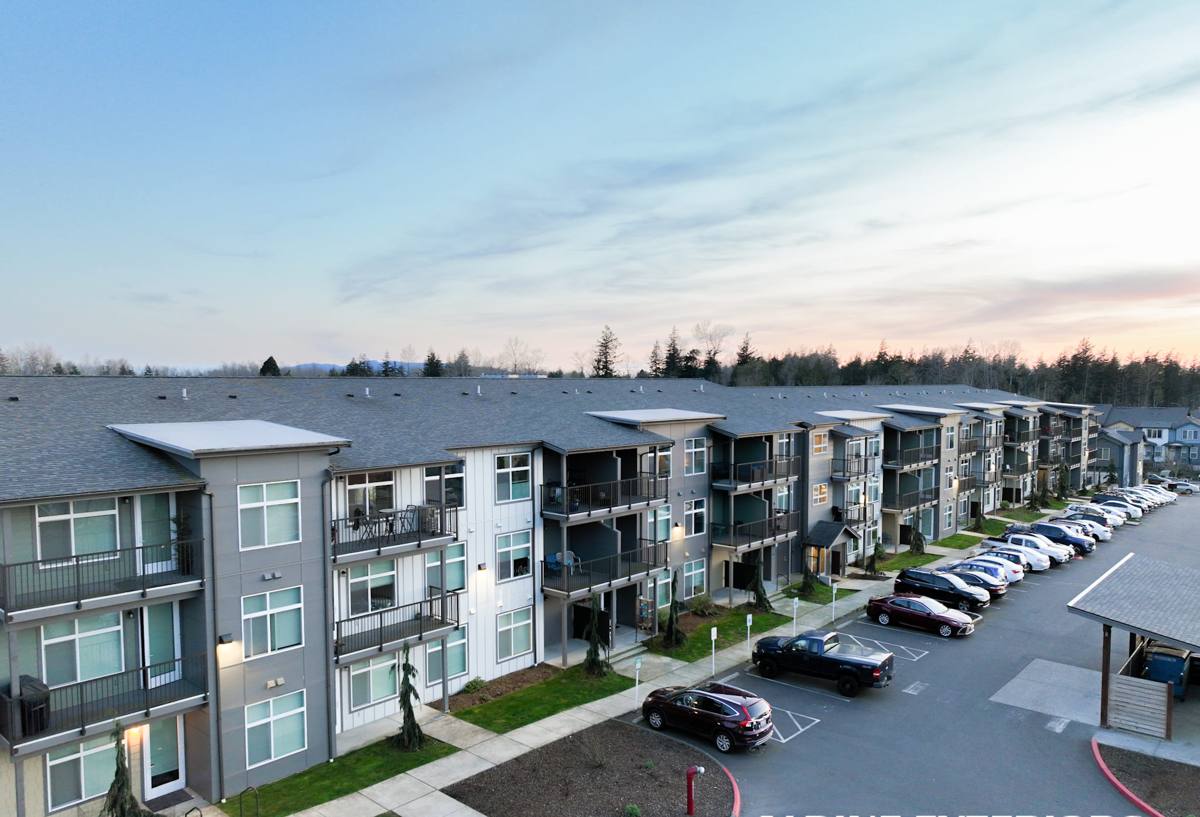
What Salt Air, Driving Rain, and Moss Do to Vertical Siding Over Time
Salt Air and Fasteners
Marine air carries fine salt particles that accelerate corrosion on anything metal — fasteners, flashing, and trim. Siding installed with the wrong fastener type, or without corrosion-resistant flashing at the top of each batten and around penetrations, tends to show rust streaks and fastener failure years before the siding itself would otherwise need attention.
Driving Rain and Wall Assembly
Wind-driven rain off the water doesn't just wet a wall's surface — it pushes moisture sideways and upward under normal gravity-flow assumptions. That means a board and batten wall in Ferndale needs a real drainage gap and building paper or a weather-resistant barrier that can handle intermittent wetting, not just a face-sealed installation that depends on caulk staying perfect forever.
Moss Season and Shaded Walls
North- and east-facing walls, and anything shaded by trees or a neighboring structure, stay damp longer through Whatcom County's wet months. Moss and algae take hold wherever moisture lingers against a porous or poorly ventilated surface. Vertical battens can either help (by channeling water down and away) or make it worse (if battens are tight against the wall with no airflow behind them), depending entirely on how the assembly is detailed.
What a Correctly Built Board & Batten Wall Includes
"Board and batten" can mean several different assemblies, and not all of them hold up the same way in this climate. A correct installation for Ferndale conditions includes:
- A weather-resistant barrier installed shingle-style (upper layers overlapping lower ones) so water is directed out, not trapped in
- A rain screen or drainage gap behind the panel or boards, so any moisture that gets past the surface has somewhere to drain and dry rather than sitting against the wall sheathing
- Corrosion-resistant fasteners and flashing rated for coastal exposure, not standard interior-grade hardware
- Proper flashing and kerfing at window and door heads, so water is diverted around openings instead of running behind the trim
- A consistent batten layout and fastening schedule that accounts for the wider vertical spans typical of this siding style
- Factory-finished material with a sealed, painted face on all cut edges in the field, since exposed raw edges are where moisture intrusion usually starts
Skip any one of these and the siding may look identical for a year or two — the problems that show up later are almost always hidden behind the surface, not visible from the curb.
Why We Only Install James Hardie Board & Batten
Board and batten is available in several materials, and we get asked about most of them. We install James Hardie fiber cement exclusively, and it's worth explaining why, honestly, rather than just stating it as a rule.
Vinyl Board & Batten
Vinyl is inexpensive and low-maintenance in the sense that it never needs painting, but it's also a thin, flexible material that expands and contracts significantly with temperature swings. In a marine climate with persistent damp and salt exposure, seams and fastener slots are where problems concentrate over time, and there's no repainting a faded panel — the whole run has to be replaced.
LP SmartSide and Primed Wood Products
Engineered wood and primed spruce board and batten can look excellent when new, but the substrate is wood-based, meaning any sustained moisture intrusion — the exact risk this climate presents — can lead to edge swelling and softening that isn't always visible until it's advanced. That risk is manageable in drier regions; it's a harder bet to make a few miles from the water in Whatcom County.
Cedar Board & Batten
Real wood board and batten is a classic look with genuine appeal, but it comes with a real maintenance commitment — periodic refinishing, vigilance against rot and insect damage, and higher long-term upkeep costs, especially in a climate this wet for this much of the year.
Other Fiber Cement Brands
Products like Cemplank and Allura are also fiber cement and share some of Hardie's core advantages. We standardized on James Hardie specifically because of its ColorPlus factory-applied finish (which resists fading and chipping better than field-applied paint), its HZ5 product engineering for Pacific Northwest moisture exposure, and a warranty structure and market track record we're comfortable standing behind on every job we sign our name to.
Our Board & Batten Installation Process
Every project follows the same sequence, adjusted for the specific wall conditions on your home:
- Assessment — We inspect existing siding, sheathing, and any trouble spots (soft sheathing, prior water staining, inadequate flashing) before quoting the job, not after tearing into it.
- Tear-off and sheathing check — Old siding comes off and the sheathing underneath gets inspected and repaired as needed. This is the step that reveals whether previous siding was actually keeping water out.
- Weather barrier and drainage plane — A properly lapped weather-resistant barrier goes on, followed by a rain screen or furring system so the wall can drain and dry behind the finished surface.
- Flashing at every penetration — Windows, doors, vents, and any other wall penetration get flashed before the siding goes up around them.
- Hardie board and batten installation — Panels and battens are installed to manufacturer fastening specifications, with all field-cut edges sealed and painted.
- Trim, caulking, and final inspection — Corner trim, caulking at appropriate joints (not as a substitute for proper flashing), and a final walkthrough close out the job.
Cost Factors for Board & Batten Siding
Board and batten typically costs somewhat more per square foot than standard lap siding, mainly due to labor — installing individual battens takes more time than running horizontal panels. The table below covers the main variables that move the price on a Ferndale project.
| Factor | Why It Matters |
|---|---|
| Home size and wall complexity | More corners, gables, and dormers mean more cuts, more flashing detail, and more labor hours |
| Existing wall condition | Sheathing repair or replacement, if water damage is found during tear-off, adds cost but is not optional to skip |
| Batten spacing and pattern | Tighter batten spacing uses more material and more fastening labor than a wider layout |
| ColorPlus vs. field-painted finish | Factory-applied ColorPlus finish costs more upfront but eliminates a repainting cycle for years |
| Access and site conditions | Steep lots, limited staging area, or multi-story walls affect labor time and equipment needs |
We provide itemized, written estimates so you can see exactly what's driving the number on your specific home rather than a generic per-square-foot figure.
Maintaining Board & Batten in a Salt Air, Moss-Prone Climate
James Hardie siding is low-maintenance, not no-maintenance. In Ferndale's conditions, a short seasonal routine goes a long way:
- Rinse the exterior once or twice a year, focusing on shaded and north-facing walls where salt residue and organic buildup collect fastest
- Check gutters and downspouts before the wet season so overflow isn't running down the siding face
- Keep vegetation trimmed back from the walls to maintain airflow and sun exposure, which discourages moss
- Watch caulked joints around windows and doors for cracking or separation and have them addressed promptly
- Address any moss or algae growth early with a gentle, non-pressure-washer method — high-pressure washing can drive water behind panels and battens
Why Hiring a Crew That Already Works Ferndale Matters
Board and batten's clean vertical look hides a lot of decisions that don't show up until years later: how the drainage plane was built, what fasteners were used, how penetrations were flashed. A crew that already works throughout Whatcom County and understands what this specific stretch of coastal climate does to a wall assembly over time isn't guessing at those details — they're building to the conditions your home actually faces, not to a generic spec sheet. That's the difference between board and batten siding that still looks and performs well after a decade of Ferndale winters, and siding that needed early repairs no one saw coming.
If you're considering board and batten siding for a home in Ferndale, we're happy to walk the property, look at your existing walls, and put together a straightforward, no-pressure estimate — just fill out the form below to get started.