 Lynden Siding
 Why Ferndale Roofs Wear Differently Than Roofs Inland
Ferndale sits close enough to the Strait of Georgia and Bellingham Bay that salt-laden air is a daily fact of life for homes here, not an occasional coastal storm event. Add Whatcom County's long wet season, near-constant driving rain off the water, and the deep shade many Ferndale lots carry from mature evergreens, and you get a roofing environment that ages materials faster than what you'd see on a dry-side Washington home. Fasteners corrode sooner. Moss gets a longer runway to establish itself. Underlayment and flashing details that would be "good enough" in a drier climate start to matter a lot more.
We're a Lynden-based crew, and Ferndale is well within our regular service area — we're not driving in from Seattle or subcontracting the job out. That matters for a roof, because the contractor who installed it should be the same one you call if something needs a look five years later.
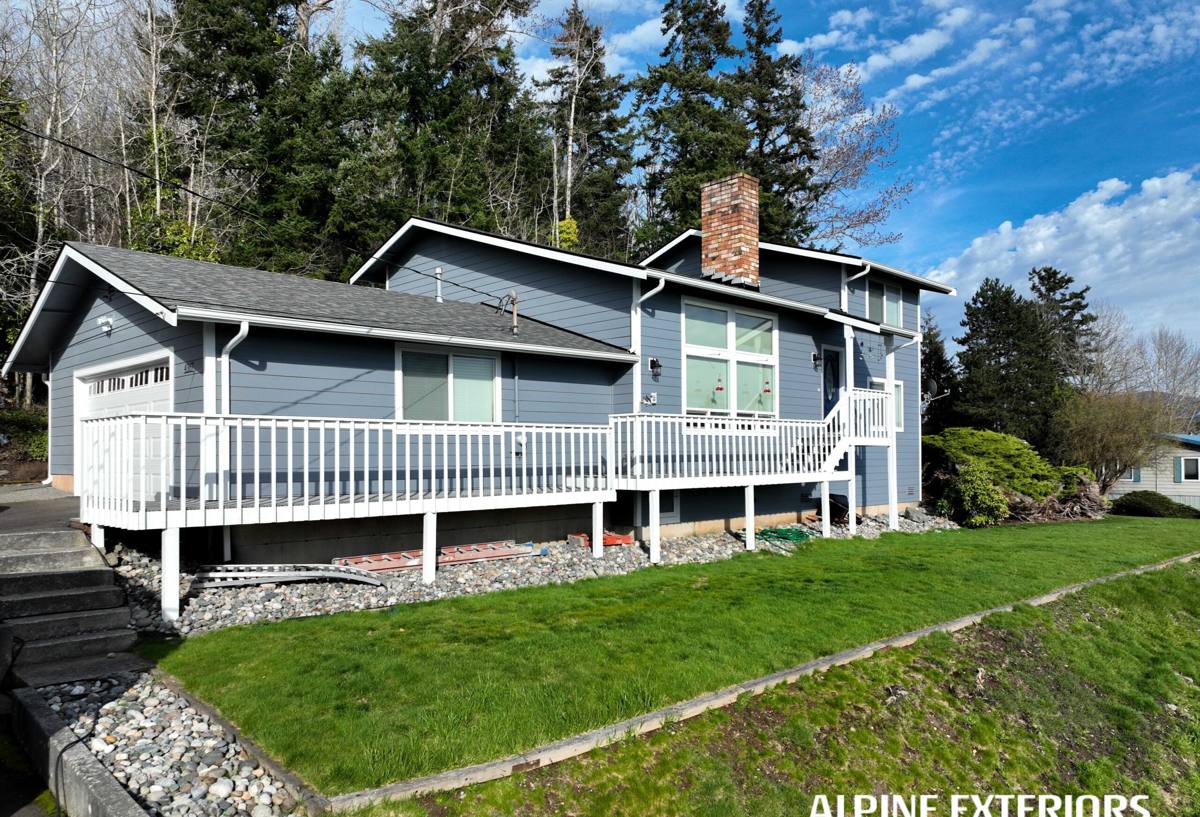
What a New Roof in Ferndale Actually Needs to Hold Up
A correct new roof installation for this area isn't just "shingles and nails." It's a system, and every layer has a job to do against the specific conditions Ferndale throws at it.
Corrosion-Resistant Fasteners and Flashing
Salt air accelerates corrosion on standard fasteners and thin flashing metal. We spec fasteners and flashing rated for coastal exposure rather than whatever is cheapest at the yard — the cost difference is small relative to the labor of redoing flashing work later, and flashing failures are one of the most common causes of roof leaks in this region.
Underlayment That Handles Wind-Driven Rain
Driving rain off the water doesn't just fall straight down — it gets pushed sideways under shingle tabs and around penetrations. A synthetic underlayment with proper lap and fastening, plus self-adhered ice-and-water membrane at eaves, valleys, and roof-to-wall transitions, gives the roof a real second line of defense instead of relying on the shingles alone to keep water out.
Ventilation Sized for a Shaded, Damp Climate
Under-ventilated attics trap moisture, and trapped moisture under a shingle roof in a wet climate is a slow path to sheathing rot and premature shingle failure from underneath. We calculate intake and exhaust ventilation based on the actual attic square footage rather than eyeballing it, which is a step that gets skipped more often than it should.
Moss and Debris Management Built Into the Design
Shaded lots and long wet winters mean moss and organic debris are an ongoing maintenance reality, not a one-time problem. Good roof design — proper slope transitions, clean valleys, gutters that actually keep pace with the roof's water volume — reduces how much moss and debris can build up and buys homeowners more time between cleanings.
How We Approach a Ferndale New Roof Project
The process is the same discipline on every job, adjusted for the specific house and lot.
1. On-Site Assessment
We walk the roof and the attic, not just the roof. Deck condition, existing ventilation, evidence of past leaks, moss growth patterns, and how the house sits relative to tree cover and prevailing wind all factor into the plan before we quote anything.
2. Material Selection Conversation
We'll talk through options honestly — including trade-offs, not just upsells. If a product carries a maintenance burden or moisture-behavior risk we don't think is a good fit for a shaded, high-moisture Ferndale lot, we'll say so and explain why, rather than installing something we don't stand behind.
3. Tear-Off and Deck Inspection
Full tear-off lets us actually see the deck, not guess at its condition from the attic side. Any soft or water-damaged sheathing gets replaced before anything new goes down — installing a new roof over a compromised deck just guarantees an earlier second roof.
4. System Installation
Underlayment, ice-and-water membrane at vulnerable areas, flashing, ventilation components, then the roofing material itself, installed to manufacturer spec so the warranty is actually valid — not just installed to "look right" from the ground.
5. Final Walkthrough
We walk the finished roof with the homeowner, cover what maintenance (if any) it needs, and make sure gutters and downspouts are tied in correctly to actually move the water the new roof sheds.
Roofing Material Options for Ferndale Conditions
| Material | How It Handles Salt Air & Moisture | Moss Resistance | General Lifespan Range |
|---|---|---|---|
| Architectural asphalt shingle | Good with proper corrosion-resistant fasteners and flashing | Moderate — benefits from algae-resistant granules | 25–30 years |
| Standing seam metal | Very good when coated and fastened correctly for coastal exposure | High — sheds moss more readily due to slick surface | 40–60 years |
| Composite/synthetic shingle | Good — resists moisture absorption better than wood | Moderate to high depending on product | 30–50 years |
| Cedar shake | Requires diligent maintenance in this climate to manage moisture retention | Low without regular treatment and cleaning | 20–30 years with upkeep |
None of these are wrong choices in the abstract — the right one depends on the home's design, the budget, and how much ongoing maintenance a homeowner wants to take on. We'll give you a straight answer on what we'd put on our own house in your situation.
What Drives Cost on a New Roof Installation
Every roof quote is specific to the house, but the same handful of factors move the number up or down on nearly every Ferndale project we look at.
- Roof size and complexity — square footage, plus the number of valleys, hips, dormers, and penetrations
- Deck condition — how much sheathing replacement is needed once tear-off exposes the deck
- Material choice — asphalt, metal, and composite options carry different material and labor costs
- Pitch and access — steeper roofs and difficult-access lots take longer and require more safety setup
- Ventilation and flashing upgrades — bringing an older roof's ventilation and flashing up to current standards
- Tree cover and site cleanup — heavily wooded lots often need more debris management during and after the job
We'd rather walk your roof and give you real numbers than quote a range that doesn't mean much either way.
Signs a Ferndale Roof Is Due for Replacement, Not Another Repair
Homeowners often call us for a repair and find out a full replacement is actually the more honest recommendation. A few signals we look for:
- Granule loss heavy enough that shingles look bald in patches, especially on south- and west-facing slopes
- Curling, cracking, or missing shingles across multiple areas rather than one isolated spot
- Persistent moss growth that keeps returning within a season or two of cleaning
- Soft spots or sagging visible from the ground or felt when walking the roof
- Daylight visible through the roof deck from inside the attic
- Repeated leaks in different locations rather than one recurring spot
- A roof approaching or past the upper end of its material's expected lifespan
If a repair genuinely makes sense for your situation, we'll tell you that instead of pushing a full replacement — a roof that has years of honest service left doesn't need to be torn off early.
Why a Crew That Already Works Ferndale Is Worth Choosing
Roofing crews that only pass through Ferndale occasionally don't build the same working knowledge of how local conditions actually behave on real houses — which slopes see the worst wind-driven rain, which lots hold moisture longest under tree cover, which older neighborhoods tend to have specific deck or ventilation quirks. Being based in Lynden and working Whatcom County regularly means we're not learning the area on your roof. We're also a lot easier to reach if a question comes up after the job is done, because we're not driving back from somewhere two counties away.
Local presence also means accountability. A roofing warranty is only as good as the contractor standing behind it, and a crew with a real, findable local base has more reason to get the details right the first time.
Maintenance That Actually Extends a New Roof's Life Here
A correctly installed roof still benefits from basic upkeep in this climate, and it's worth knowing what actually helps versus what's optional.
- Keep gutters clear so water isn't backing up under eave edges, especially during fall leaf drop and winter storms
- Have moss treated or removed before it builds up thick enough to hold moisture against the roofing material
- Trim back overhanging branches where practical to reduce shade, debris, and physical abrasion on the roof surface
- Schedule a visual check after major windstorms, which are common along this stretch of the county
- Address small flashing or sealant issues promptly rather than waiting for them to become interior leaks
None of this requires a service contract — it's mostly common sense applied consistently, which is often the difference between a roof that hits its full expected lifespan and one that doesn't.
Get a Straight Answer on Your Ferndale Roof
If your roof is showing its age, dealing with recurring moss, or you just want an honest read on where it stands, we're glad to come take a look. The estimate is free, there's no pressure attached to it, and you'll get a straight answer about whether you need a new roof, a repair, or nothing at all right now. Use the form below to get in touch.