 Lynden Siding
 Energy-Efficient Windows in Ferndale: What This Climate Adds to the Equation
Ferndale sits closer to Bellingham Bay and the open water of the Salish Sea than our home base in Lynden, a few miles inland in the Nooksack River valley. That difference matters more than it might seem for a window project. The same marine air that keeps winters mild here also carries salt, humidity, and near-constant moisture that push harder on a window's hardware, seals, and glass than a drier inland climate would. Add in wind-driven rain and a moss season that can run most of the year on shaded walls, and a window in Ferndale is doing more work than the same window would in a milder, drier part of the country.
Energy efficiency and durability aren't separate conversations here — they're the same conversation. A window that's losing heat through a poor seal or a thin frame is usually also a window that's letting moisture, drafts, and condensation into the house the same way. We work Ferndale regularly out of our Lynden base, and an energy-efficient window project here has to be built around this specific climate, not a generic efficiency checklist written for a different part of the country.
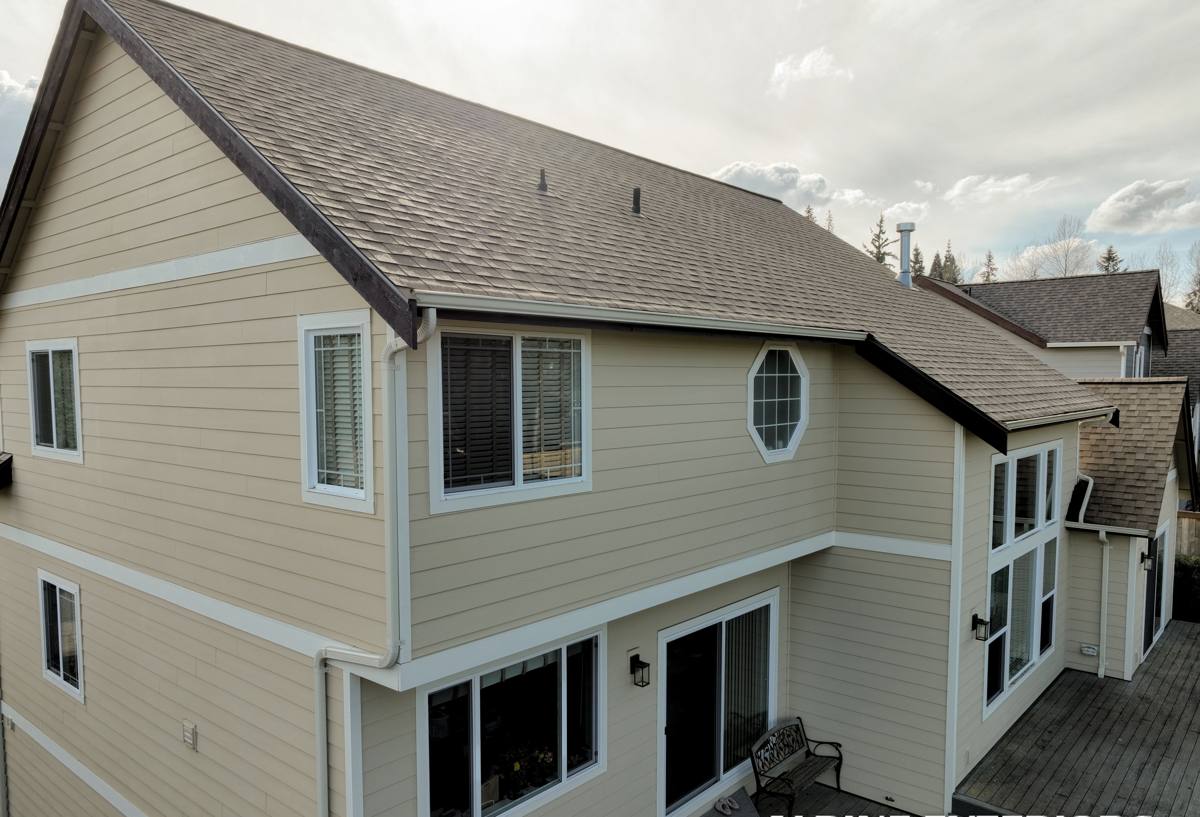
What "Energy-Efficient" Actually Means in a Window
"Energy-efficient" gets used loosely in window marketing, but it's really made up of a handful of measurable ratings, and understanding them is the difference between buying a window that performs and buying one that just carries an efficient-sounding label.
U-Factor
U-factor measures how well a window resists heat flow — the lower the number, the better it insulates. This is the single most important rating for a marine, heating-dominated climate like ours, where the goal most of the year is keeping heat inside rather than keeping it out.
Solar Heat Gain Coefficient (SHGC)
SHGC measures how much solar heat passes through the glass. In a climate with as little direct winter sun as Whatcom County gets, a moderate SHGC that still lets in some free solar warmth on the clear days we do get is usually a better fit than the very low SHGC glass built for hot, sun-heavy climates.
Low-E Coatings and Gas Fills
Low-emissivity (Low-E) coatings are a microscopically thin layer applied to the glass that reflects heat back into the room without noticeably darkening it. Combined with an inert gas fill — usually argon — between panes, a Low-E, gas-filled double-pane window closes most of the performance gap with triple-pane at a lower cost, which is why it's the standard efficiency package we build most projects around here.
Warm-Edge Spacers
The spacer separating the panes of glass at the edge of the sealed unit affects both efficiency and condensation resistance. Older metal spacers conduct heat and cold straight through, creating a cold edge that fogs and eventually fails faster in a humid climate. Warm-edge spacer technology reduces that conductive path and holds up better under the temperature swings and humidity this area sees.
Why Efficiency and Moisture Control Are the Same Problem Here
In a drier climate, an inefficient window mostly shows up as a higher heating bill. In Ferndale, it shows up as condensation, mildew, and slow damage to the wall around the window too. Cold glass and cold frame surfaces meet warm, humid indoor air constantly through our wet season, and if a window's U-factor and edge performance aren't holding the interior surface temperature up, that difference condenses as moisture on the glass, the frame, and eventually the sill and trim around it.
Salt-carrying marine air adds a second layer to this. Hardware, screen frames, and lower-grade fasteners corrode faster here than they would farther inland, and corrosion on moving parts is often what causes a window to stop sealing tightly years before the glass unit itself fails. A window built with efficiency in mind but ordinary hardware finishes will often lose its energy performance from the hardware outward, well before the insulated glass gives up.
Frame Material: Efficiency and Durability Together
The frame is roughly a quarter to a third of a window's total surface area, and both its insulation value and how it holds up to sustained moisture matter for a project meant to perform for decades, not just look good on installation day.
| Frame Material | Insulation Value | Behavior in Salt Air & Moisture | Relative Cost |
|---|---|---|---|
| Vinyl (multi-chambered) | Good; hollow chambers trap air well | Won't rot or corrode; performance depends on weld and seam quality | Low to moderate |
| Fiberglass | Very good; low conductivity, dimensionally stable | Excellent; resists moisture and corrosion, holds finish well | Moderate to high |
| Wood, clad exterior | Very good natural insulator | Vulnerable at joints and sills without diligent upkeep in a wet climate | High |
| Aluminum, non-thermally-broken | Poor; conducts heat and cold directly | Prone to interior condensation and corrosion in salt-influenced air | Low |
We generally steer energy-efficient projects in this area away from non-thermally-broken aluminum. That's not because it's a bad product for every application, but because a frame that conducts cold straight through works against the whole point of an efficiency upgrade, and it's also the frame type most likely to show condensation and corrosion first in a climate this humid. Vinyl and fiberglass cover the large majority of efficiency-focused replacements we do in Ferndale, and we'll walk through the real trade-off between them for your specific home and budget rather than defaulting to one.
Installation Details That Make or Break the Rating
A window's U-factor and SHGC are tested at the factory, on the unit alone. They don't account for how it's installed, and installation is where most of a window's real-world efficiency is won or lost.
Air Sealing
The gap between the window frame and the rough opening needs to be filled with a low-expansion foam or backer rod and sealant designed for that gap, not stuffed with fiberglass batting alone, which does little to stop air movement. A window with an excellent U-factor installed with poor air sealing around the frame will still feel drafty and perform closer to a mediocre window.
Flashing and Sill Pans
The same flashing and sill pan details that keep wind-driven rain out of the wall also keep moisture from undermining the insulation and air sealing around the frame over time. A pitched sill pan, correctly lapped head flashing tied into the housewrap, and jamb flashing that doesn't rely on caulk alone are standard on every job here, not an upgrade.
Full-Frame vs. Insert Replacement
Insert replacement fits a new window into the existing frame and is faster and less invasive, which works well when that frame is sound and was flashed correctly to begin with. Full-frame replacement removes the old window down to the rough opening and rebuilds the flashing and air sealing from scratch. It costs more and takes longer, but it's the honest recommendation whenever there's already moisture damage at the sill or jambs, since an efficient new window installed into a compromised opening won't perform the way its rating suggests. We'll tell you which situation your home is actually in.
Signs Your Ferndale Home Is Losing Energy Through Its Windows
- Noticeable drafts or a cold zone near a closed window, even without a visible gap
- Condensation or fogging on the interior glass during cold, damp weather
- Fogging or moisture trapped between panes, which signals a failed seal on the insulated glass unit
- Heating bills that feel high relative to the size and age of the home
- Rooms near older or single-pane windows that are noticeably harder to keep at a comfortable temperature
- Visible daylight, cracked caulk, or gaps around the frame from inside the house
- Metal window frames that feel cold to the touch or show frost on the interior in winter
Any one of these on its own is worth a look. Several of them together, especially in a home with original single-pane or early-generation double-pane windows, usually point to a house that's paying for the same heat loss twice — once in the utility bill and again in moisture-related maintenance down the road.
How We Approach an Energy-Efficient Window Project in Ferndale
We start by walking the house and looking at each elevation on its own terms — sun exposure, prevailing wind and rain direction, shade, and the condition of the existing frames and sills — rather than pricing a generic package. A wall that takes direct wind-driven rain off the water needs a different level of flashing attention than a sheltered, tree-shaded wall on the same house, even though both windows might carry the same efficiency rating.
From there we talk through frame material, glass package, and whether the project makes sense as an insert or full-frame replacement, laying out the real trade-offs rather than pushing toward whichever option is easiest to sell. On install day, air sealing, flashing, and sill pan work get the same attention as the window unit itself, because that's what determines whether the rating on the label actually shows up in your utility bill and your comfort inside the house.
Why a Lynden-Based Crew That Already Works Ferndale Matters
We're based a short drive away in Lynden and work Ferndale regularly, which means we already understand how this town's closer proximity to the water changes what a window project needs compared to homes farther inland. That shows up in small, practical decisions — how much corrosion-resistant hardware matters on a given elevation, how a sill pan should be pitched for the amount of wind-driven rain a specific wall actually sees, and which flashing details are worth the extra time so a new, efficient window isn't dealing with moisture problems within a few years of installation. It also means straightforward scheduling and follow-up, since Ferndale is well within our regular service area rather than a special trip.
If your Ferndale home has windows that are drafty, fogging, or just old enough that you're wondering whether an upgrade would pay off, we're glad to take a look and give you a straightforward, honest read on what it actually needs. Reach out using the form below to schedule a free, no-pressure estimate.