 Lynden Siding
 Deck Replacement in Ferndale: Built for Salt Air, Driving Rain, and a Long Moss Season
Ferndale sits close enough to Bellingham Bay and the open, low-lying farmland of the Nooksack lowlands that most homes here deal with a specific combination of exterior stress: salt-tinged air moving in off the water, rain that arrives sideways as often as it falls straight down, and a moss season that can run most of the year on shaded or north-facing surfaces. A deck takes that punishment harder than almost anything else on a house. It has no roof overhead, sits low to the ground where moisture collects, and gets walked on and weighted down the entire time it's absorbing all of it.
A deck that's ten, fifteen, or twenty years old in Ferndale has usually been through a lot more wet-season cycling than the same-age deck would see in a drier, more inland climate. At some point, patching boards and swapping out a rotten post stops being a real fix and starts being a way to delay a job that needs to happen anyway. This page covers how to tell the difference, what a correct deck replacement involves in this climate, and how our process works for a replacement project in Ferndale specifically.
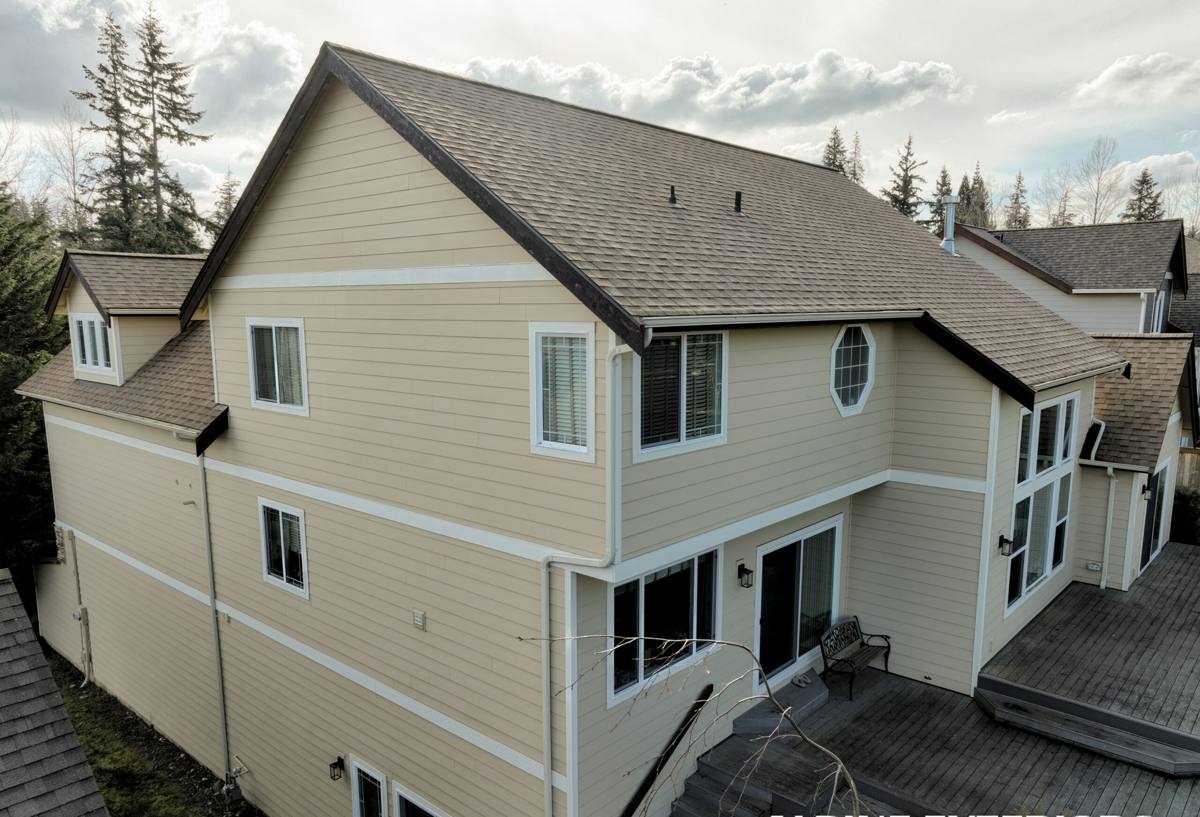
Signs a Ferndale Deck Needs Full Replacement
Not every deck problem calls for tearing the whole thing out. But in this climate, deferred maintenance compounds fast, and a deck showing multiple warning signs at once is usually past the point where spot repairs make sense.
When Repair Still Makes Sense
A deck with isolated damage, one section soft from a localized leak, a handful of boards that cupped or split, a railing post that loosened, can often be repaired without touching the rest of the structure, especially if the framing underneath is still sound. If the problem is contained and the substructure tests solid, repair is usually the more honest recommendation, and we'll tell you that instead of pushing a bigger job.
When Replacement Is the Right Call
Replacement makes sense once the framing itself is compromised, when rot has reached the joists or ledger connection, when multiple structural members are affected rather than one isolated spot, or when the deck is old enough that fixing the visible problems would just delay the same failure somewhere else next season. A deck that's already been re-decked once without addressing an underlying moisture or framing issue is usually a sign that the next fix needs to go deeper.
- Soft, spongy, or spring-feeling boards in more than one area of the deck
- Rot or visible damage at the ledger board where the deck meets the house
- Joists or beams that are soft, cracked, or show fungal decay when probed
- Railing posts that wobble or have pulled away from their connection points
- Fasteners that are heavily corroded, streaking, or backing out of the wood
- Persistent moss or dark staining that returns within weeks of cleaning
- Widespread cupping, warping, or gapping across the decking surface, not just a board or two
What This Climate Does to an Aging Deck
Salt Air and Fastener Corrosion
Homes across Ferndale get a steady dose of salt-laden air off the water, and a deck sits directly in it with no wall or roofline to buffer the exposure. Salt accelerates corrosion in exposed metal, joist hangers, structural screws, railing hardware, post bases, and a corroding fastener loses holding strength well before it looks obviously bad. On a structure people stand and walk on, that's a real safety consideration, not just a maintenance nuisance.
Wind-Driven Rain and Trapped Moisture
Storms here rarely fall straight down. Wind pushes rain sideways, driving it under railings, into ledger connections, and between boards that weren't gapped correctly for drainage in the first place. A deck built without that wind-driven pattern in mind can trap moisture against the framing every time it storms, even if the surface looks like it's shedding water fine on a calm day.
A Moss Season That Runs Most of the Year
Mild temperatures and near-constant moisture give moss and mildew a long growing season across Whatcom County, and a horizontal deck surface holds water longer than a vertical wall does, which makes it one of the first places organic growth takes hold. Shaded decks and north-facing surfaces usually show it first, and any decking material with even slight surface porosity gives moss something to grip.
What a Correct Deck Replacement Involves
Tearing off old decking and screwing new boards down over the same substructure is the fastest way to do a replacement, and it's also the fastest way to end up doing it again in a few years if the framing underneath was already part of the problem. A replacement done right treats the whole structure, not just the visible surface, as part of the job.
Tear-Out and Substructure Inspection
Once the old decking is off, the framing, ledger connection, posts, and footings are fully exposed for the first time in years. That's the point where hidden rot, undersized framing from an older build, or a ledger connection that was never flashed correctly actually gets found, and it's information you don't have until the old decking is gone. We inspect before finalizing scope so the quote reflects what's actually there rather than what we assumed from the surface.
Framing, Fasteners, and Ledger Flashing
Where framing needs replacing, it goes back in sized correctly for the span and load, not just matched to whatever was there before. Fasteners and structural hardware go in at a corrosion-resistant grade suited to salt air exposure, hidden fastener systems keep exposed metal off the walking surface where the decking product supports them, and the ledger board, where the deck ties into the house, gets flashed correctly since that connection is one of the most common places moisture gets into a deck structure over its life.
Choosing Decking Material for the Replacement
A replacement is a natural point to reconsider decking material, especially if the old surface was part of why the deck failed early. The three main categories homeowners weigh are wood, capped composite, and cellular PVC, and the right call usually depends on how much shade and moisture the specific deck sees and how much upkeep the homeowner actually wants to keep up with.
| Material | Handling Salt Air & Moisture | Moss Resistance | Ongoing Upkeep |
|---|---|---|---|
| Cellular PVC | Excellent — no wood fiber to absorb moisture | Strong, smooth non-porous surface | Occasional washing |
| Capped composite | Strong — cap layer resists moisture and staining | Good on most product lines | Occasional washing |
| Uncapped composite | Moderate — some moisture absorption at exposed fiber | Fair; more prone to buildup over time | Periodic cleaning |
| Cedar or pressure-treated wood | Moderate to weak without regular sealing | Fair when sealed and maintained | Regular oiling or sealing |
None of these are wrong choices outright. A wood deck that gets sealed on schedule can hold up fine; it just asks more of the homeowner year after year than a capped composite or PVC surface does. We'll walk through what each option actually costs to own over time, not just to install, before you decide.
Deck Replacement Cost Factors in Ferndale
| Factor | What It Affects | Why It Matters Here |
|---|---|---|
| Substructure condition | How much framing needs replacing versus reusing | Years of wind-driven rain and salt exposure often mean more hidden framing damage than the surface suggests |
| Decking material selected | Material cost and long-term upkeep | Higher moisture resistance generally costs more upfront but less in maintenance over the deck's life |
| Deck size and footprint changes | Total material, labor, and permitting scope | Expanding or reshaping the footprint adds design and permitting steps beyond a like-for-like replacement |
| Ledger and flashing condition | Whether the house-side connection needs rebuilding | A failed ledger flashing is one of the most common hidden problems found once old decking comes off |
| Railing and stair scope | Additional material and labor | Wind exposure near the water can affect railing design and hardware requirements |
| Site access | Labor time and equipment needs | Larger lots, elevated decks, or tree-shaded properties can add setup and disposal time |
Exact numbers depend on the specific deck, which is why we inspect the structure in person before giving a real number instead of quoting off a size estimate alone.
How Our Replacement Process Works
We start with an on-site inspection of the existing deck, checking framing, ledger connection, posts, and footings wherever they're accessible, along with drainage, grade, and how much sun and wind exposure the specific spot actually gets. That inspection is what a real estimate is based on, rather than a flat per-square-foot number that doesn't account for what's actually underneath the old boards.
From there we handle permitting as required for the scope of work, remove and dispose of the old decking and any compromised framing, and rebuild the substructure to current framing and fastening standards before the new decking, railing, and stairs go on. We finish with a walkthrough covering what the material you chose needs going forward, since a PVC deck and a sealed wood deck carry very different maintenance expectations.
- Old decking and railing removed, along with any compromised framing, and hauled off the site
- Ledger connection inspected and re-flashed if it's part of the problem
- Framing replaced or reinforced to current span and fastening standards, not just matched to the old build
- Corrosion-resistant fasteners and hardware used throughout, sized for this climate
- New decking installed with correct gapping for drainage and material movement
- Permits pulled and inspections scheduled where the scope requires them
Why a Local Crew That Already Works Ferndale Matters
A crew that mostly builds and replaces decks further inland can still do competent work, but a Ferndale job comes with variables that show up less often elsewhere in Whatcom County: corrosion-grade fastener requirements from sustained salt exposure, wind loads tied to open, lower-lying terrain with less to break up the wind before it reaches a deck, and a moss season that runs longer here than in more sheltered towns further from the water. Working this area regularly means we're not guessing at those requirements on your project. We've opened up enough old decks in this climate to know which failure patterns show up here specifically, and which framing and fastener details are worth the extra time rather than an upsell.
That familiarity also shows up in the smaller judgment calls made on-site, like where a ledger connection is most likely to have failed first, or which orientation on your specific lot keeps a deck damp longest through the wet season.
Get a Free, No-Pressure Estimate
If your Ferndale deck is showing its age, whether that's a few soft boards or a structure you're not fully trusting anymore, we're glad to take a look and give you a straight answer about repair versus replacement. Reach out using the form below to schedule a free estimate, no pressure and no upsell script.