 Lynden Siding
 Window Installation in Ferndale: Built for This Corner of Whatcom County
Ferndale sits close to the water and to the open, low-lying farmland along the Nooksack River, a combination that puts real stress on anything built into an exterior wall. Salt-tinged marine air moves through the area, rain tends to come in sideways rather than straight down, and mild, damp conditions give moss and mildew a long season to work on anything that stays shaded. Windows sit right at the seam between the inside of a house and all of that weather, so a window installation here either accounts for those conditions from the start or it becomes a source of moisture problems a few wet seasons down the road. The area's housing stock reflects that range too, from older homes closer to the water to newer construction further out, and each end of that spectrum tends to need a slightly different approach to the work.
We work out of Lynden and cover Ferndale as part of our regular Whatcom County service area, which means window installation here isn't an occasional job we take on the side — it's routine work we do often enough to know exactly which details this climate actually tests. This page focuses specifically on window installation for Ferndale homes: what the climate demands, what a correct job involves, and how we approach it.
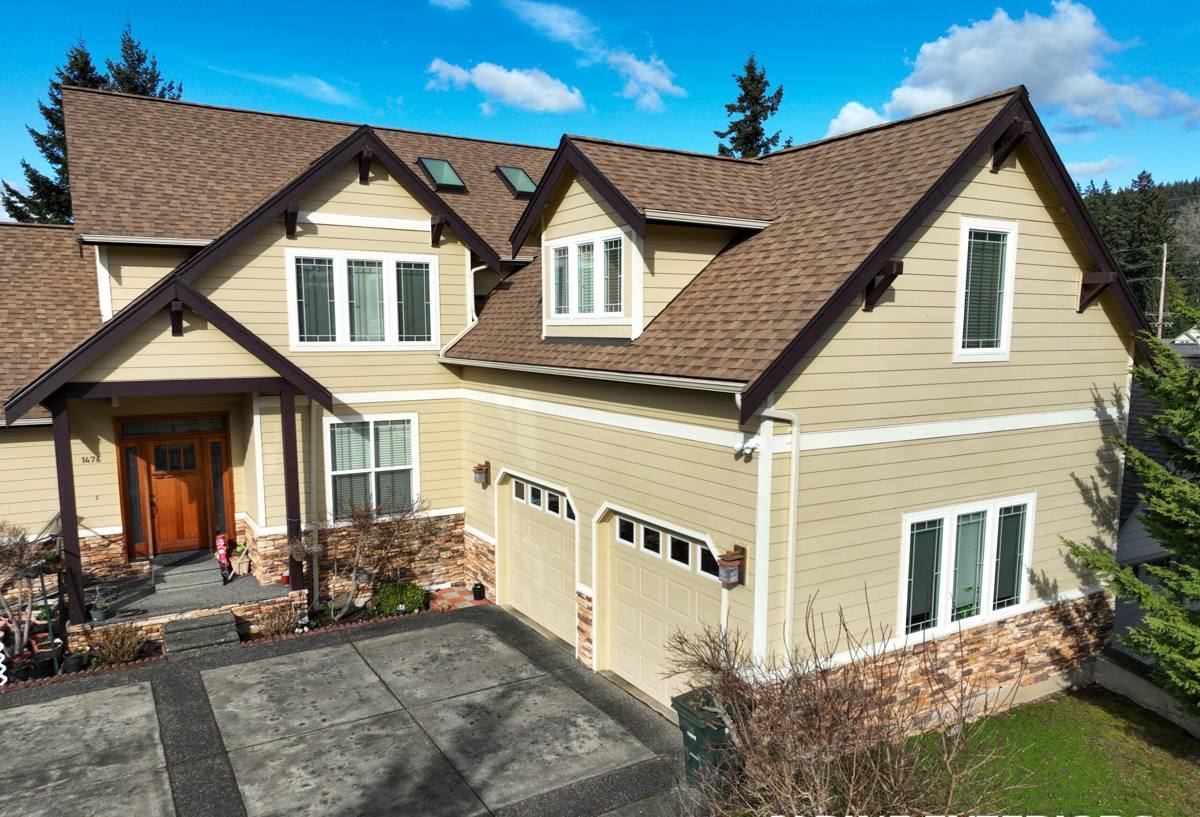
What This Climate Does to a Window Installation
A window is a manufactured product, but how it performs depends heavily on how it's installed, and Ferndale's conditions test that installation harder than a manufacturer's standard guidance usually assumes.
Salt Air and Hardware Corrosion
Even homes set back from the immediate shoreline pick up a steady dose of salt-carrying air moving off the water. Over years, that accelerates corrosion on window hardware, screen frames, and lower-grade fasteners, particularly on elevations facing prevailing weather. It's usually the hardware and fasteners that show wear first, well before the glass or main frame material gives out.
Wind-Driven Rain and Flashing
Rain in this part of the county rarely falls straight down. Wind pushes it sideways into head flashing, jambs, and sill pans, which is a much harder test of the installation than of the window product itself. A quality window installed with rushed or incomplete flashing will still leak; a modest window installed with correct flashing and a properly pitched sill pan usually won't. Most of the water damage we find around existing windows traces back to how the opening was flashed, not to the window brand.
Moss, Shade, and a Long Wet Season
Shaded walls and window sills that don't drain quickly stay damp longer here than they would in a drier climate, and that moisture supports moss and mildew growth and, on wood-framed windows, slow rot at the sill and lower corners. It's a gradual problem that tends to show up first as failing paint or a soft spot underfoot on a sill, long before it's obvious from the outside.
Three Ways a Window Gets Installed — and Which One a Ferndale Home Needs
Not every job is the same kind of installation. New construction, full-frame replacement, and insert replacement each involve different work, different costs, and different implications for how well the finished job handles this climate.
| Approach | What It Involves | Best Suited For | Moisture Consideration |
|---|---|---|---|
| New construction | Window set into open framing before siding and exterior finishes go on, with a nailing fin fastened directly to the sheathing | New builds and additions, or a remodel opened down to the studs | Flashing gets built into the wall assembly from scratch — the cleanest opportunity to get it right |
| Full-frame replacement | Old window and its frame come out entirely, down to the rough opening, and flashing is rebuilt around the new unit | Homes with existing rot, past leaks, or flashing that was never done correctly the first time | Costs more and takes longer, but it's the only honest fix when there's already moisture damage at the sill or jambs |
| Insert replacement | New window fits into the existing, intact frame; exterior trim and siding are largely left undisturbed | Sound, properly flashed existing openings where only the window unit itself has failed | Faster and less invasive, but only sound if the existing flashing behind it was actually done right |
We'll tell you honestly which category your project falls into rather than defaulting to whichever option is faster to sell. On an older Ferndale home, that sometimes means opening things up to find out for certain instead of guessing from the outside, since a previous repair or an old addition doesn't always match what the exterior appears to show.
How We Handle a Window Installation in Ferndale
The process looks similar whether it's a single failing window or a full-house replacement, just scaled to the size of the job:
- We look at the actual openings in person — age, current flashing condition, and whether there's already moisture damage — rather than quoting off photos or square footage alone
- We talk through frame material, style, and full-frame versus insert replacement based on what we find, with honest pros and cons for your specific home
- Windows are ordered to the exact measurements of each opening, since Ferndale's mix of older and newer construction means openings rarely match a single standard size across a whole house
- On install day, the old unit comes out, the opening gets flashed correctly — or the existing flashing gets inspected and corrected if we're doing an insert — and the new window goes in plumb, level, and properly sealed
- We walk the finished work with you before we consider the job done, and stand behind the installation itself in addition to whatever warranty the window manufacturer provides
Lead time on ordered windows varies by manufacturer and by how standard or custom the sizing is, and we'll give you a realistic number for your project rather than a generic estimate before we've measured anything.
The Installation Details That Actually Decide Whether a Window Leaks
The window unit itself is rarely what fails first in this climate. What fails is a shortcut taken during installation that doesn't show up until a wet season or two later. On every job, that means:
- A sill pan pitched to shed water outward instead of letting it pool under the frame
- Head flashing lapped correctly with the housewrap or building paper above the window, so water sheds down and out rather than behind it
- Jamb flashing tied into the surrounding wall assembly, not left to caulk alone
- Weep holes and drainage paths left clear and functional rather than sealed shut during installation
- Corrosion-resistant fasteners and hardware appropriate for sustained salt and moisture exposure
- Insulation and air sealing around the frame that doesn't trap moisture against the framing
None of this adds meaningfully to the cost of the job relative to the window itself. Skipping any of it is what turns a window that should last decades into one that's leaking behind the wall within a few years, often without any visible sign until the damage has already spread.
Frame Material: What Actually Holds Up Here
There's no single correct frame material for every home — budget, sun exposure, and how long you plan to stay in the house all factor in. Vinyl resists moisture well and is the most budget-friendly option, though its long-term performance depends heavily on installation quality at the seams and corners. Fiberglass is dimensionally stable and holds up especially well against sustained moisture and repeated temperature swings, usually at a higher price point than vinyl. Wood, painted or clad, still has real appeal for its appearance, but it demands regular maintenance to keep moisture out at the joints and sill in a climate this wet. Aluminum conducts cold and is more prone to corrosion in salt-influenced air unless it carries a quality finish, so it's worth asking specifically about hardware grade if you're considering it.
We'll walk through the honest trade-offs for your specific home, its exposure, and your budget rather than defaulting to whichever product happens to be easiest to sell.
Signs a Ferndale Window Needs Attention
- Fogging or condensation trapped between panes, usually a failed seal on a double- or triple-pane unit
- Noticeable drafts or a temperature difference near a closed window
- Soft, discolored, or spongy trim and sill material, especially on shaded or weather-facing walls
- A window that's become difficult to open, close, or latch smoothly
- Peeling paint or bubbling finish on wood-framed units
- Visible gaps, cracked caulk, or daylight around the frame from inside
- Water staining on interior wall or ceiling surfaces near a window
Any one of these is worth a professional look. Caught early, most point to a straightforward repair or reseal. Left alone through another wet season, several of them point to damage already spreading into the surrounding wall framing.
Why a Crew That Already Works Ferndale Matters
A crew that installs windows across this part of Whatcom County through every season learns things a spec sheet can't tell you — which wall orientations in Ferndale take the worst of the wind-driven rain, how much pitch a sill pan needs for the amount of water a given elevation actually sees, and which flashing details are worth the extra time on install day so a callback isn't waiting two winters down the road. Working out of Lynden, we're close enough to be responsive and familiar enough with Ferndale's specific exposure to plan the job correctly the first time, rather than applying the same generic approach we'd use somewhere drier and calmer.
That local familiarity also matters when something unexpected turns up mid-project — rot behind an old window, an opening that was never flashed to begin with, framing that's out of square. A crew that's seen those conditions in this area before knows how to adjust the plan without turning a straightforward job into a guessing game.
Beyond Windows
Windows are our focus on this page, but the same climate that wears on a window wears on the rest of the exterior around it. If a window project turns up moisture damage in the surrounding siding, trim, or a roof-to-wall transition that's letting water in above the opening, we can address it as part of the same conversation instead of sending you to find a second contractor for a problem that's really one job.
If you're dealing with a drafty, foggy, or failing window in Ferndale, or you're planning windows for a new build or addition, we're glad to take a look and give you a straightforward, honest read on what it actually needs. Reach out using the form below to schedule a free, no-pressure estimate.