 Lynden Siding
 Why Ferndale's Coastal Climate Wears Out Windows Faster
Ferndale sits close enough to the water that homes here take a different kind of weathering than houses further inland. Salt-laden air off the Salish Sea, wind-driven rain that comes in sideways more often than straight down, and a long, damp moss season all put extra stress on window components that were never designed with that combination in mind. Windows that would last two more decades in a drier climate start showing failure signs early in Whatcom County, and the failure usually starts somewhere you can't see from the curb.
Salt Air and Hardware Corrosion
Salt in the air accelerates corrosion on anything metal — hinges, cranks, balance systems, screws, and low-grade aluminum frames. Once corrosion sets into a window's moving hardware, the sash stops sealing tight even if the glass and vinyl look fine. That's why a window can look presentable from the street and still be letting air and moisture past the weatherstripping.
Driving Rain and Water Intrusion
Wind-driven rain doesn't just hit a window straight on — it pushes up and under trim, sills, and flashing that would keep out a normal vertical rain. If the original installation didn't account for that lateral pressure, water finds its way behind the frame and into the wall cavity long before a homeowner sees a stain indoors.
Moss Season and Hidden Moisture
Western Washington's moss season runs long, and it isn't just a roof and siding problem. Moss and algae build up on horizontal sills, in window wells, and in trim details that stay shaded and damp for months at a time. That buildup holds moisture against wood trim and caulk joints, which shortens the life of both and gives rot a head start in spots that are easy to overlook during a quick visual inspection.
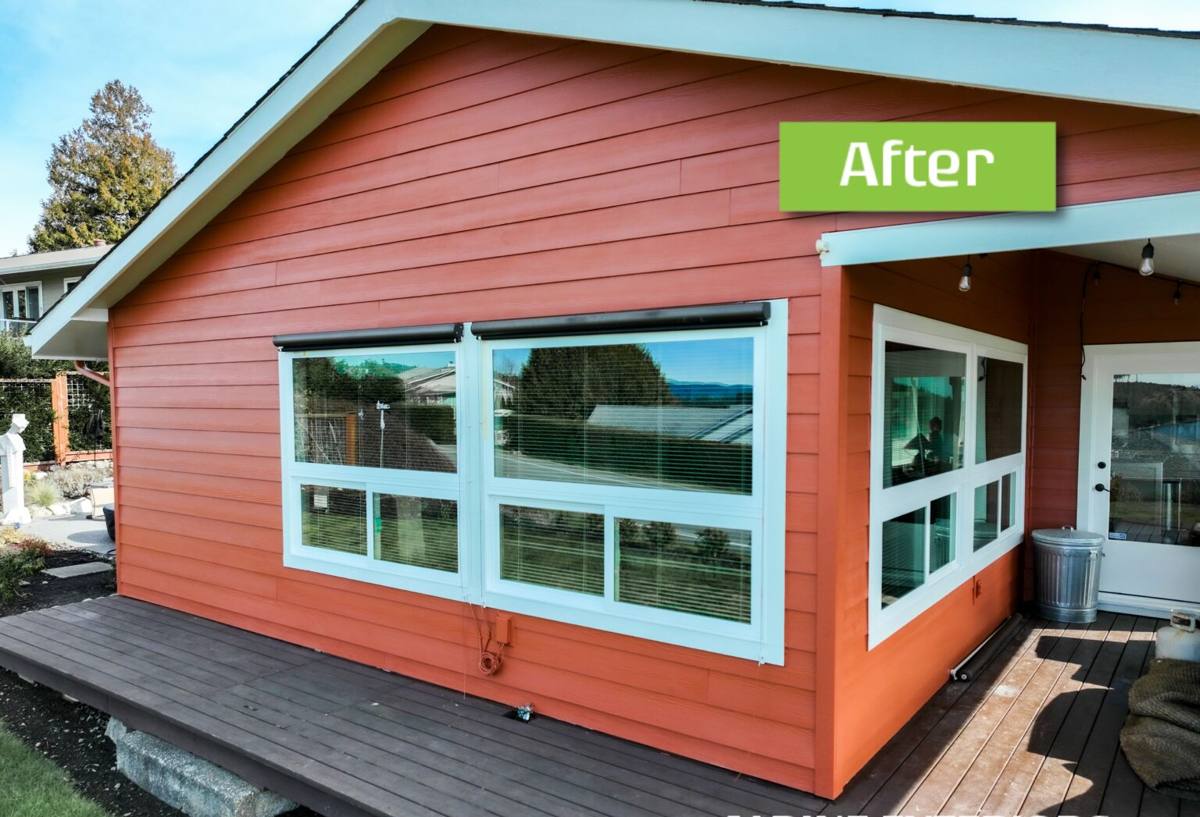
Signs Your Ferndale Home Is Ready for Window Replacement
Most homeowners wait too long to replace windows because the damage develops slowly and out of sight. Here's what we actually look for when we walk a property in Ferndale:
- Soft or spongy wood at the sill, jamb, or trim when pressed with a fingertip
- Fogging or moisture trapped between panes of double-glazed glass
- Windows that are difficult to open, close, or lock, especially after painting or a cold snap
- Visible corrosion or chalky white buildup on aluminum frames or hardware
- Persistent condensation on the inside of the glass during cooler months
- Noticeable draft or cold spot near the window frame even when it's fully closed
- Moss, algae, or dark staining collecting on sills and not washing off with normal rain
- Rising heating bills without any other clear cause
One or two of these on a single window might just need a repair or a re-caulk. Several signs across multiple windows, especially on the sides of the house that take the worst of the coastal weather, usually means it's time to talk about replacement.
What a Correct Window Replacement Job Actually Involves
Window replacement looks simple from the outside — old window out, new window in — but the parts that determine whether a job lasts happen where you can't see them once trim goes back on. In a climate that drives rain sideways and holds moisture in the air most of the year, skipping any of these steps is what leads to a callback in three or five years instead of a window that performs for decades.
Removal and Inspection
We don't just pull the old sash and frame — we open the opening up enough to check the sill, jack studs, and header for rot or moisture damage before anything new goes in. If there's compromised framing behind an old window, sealing a new unit over it just hides the problem for a while.
Flashing and Water Management
This is the step that matters most for a house exposed to driving rain. A correctly flashed opening includes a sloped sill pan, proper integration with the house wrap or building paper so water sheds outward and down rather than behind the cladding, and head flashing that directs water past the window rather than letting it pool.
Insulation and Air Sealing
The gap between the new window frame and the rough opening gets filled with a low-expansion foam or backer rod and sealant designed to stay flexible — not packed with fiberglass batting that compresses and leaves gaps over time. Done right, this is what stops both drafts and condensation issues at the frame edge.
Finish Work
Exterior caulking, trim, and paint or stain get finished with the same materials logic as the rest of the job: products rated for continuous damp exposure, not just what happens to be on the shelf. Interior finish work gets matched to the home's existing trim so the replacement doesn't look like an obvious patch.
Choosing Window Materials for a Damp, Salty Climate
There's no single "best" window material for every home — it depends on budget, the home's style, and how exposed a particular wall is to wind and salt air. Here's how the common options actually perform in Ferndale's conditions:
| Material | How It Handles Salt Air & Moisture | Maintenance | Typical Trade-Off |
|---|---|---|---|
| Vinyl | Doesn't corrode or rust; handles damp coastal air well | Low — occasional cleaning | Fewer custom color and profile options than wood or fiberglass |
| Fiberglass | Very stable in moisture and temperature swings; strong resistance to warping | Low | Higher upfront cost than vinyl |
| Wood-clad | Good if the exterior cladding is fully intact; any breach exposes wood to rot | Higher — cladding and seams need periodic inspection | Best appearance for traditional homes, but least forgiving of installation gaps |
| Bare aluminum | Prone to corrosion and pitting in salt air over time | Moderate to high | Not a material we recommend for this specific climate exposure |
Our general standard for homes with real salt air and wind exposure is vinyl or fiberglass first, wood-clad where the architecture calls for it and the homeowner understands the maintenance commitment, and we steer away from uncoated aluminum frames given how consistently they corrode in this environment.
Energy Performance in a Marine Climate
Whatcom County doesn't see extreme heat or extreme cold most years, but the constant dampness changes what matters most in a window's performance rating. Low-E glass coatings help manage heat loss during the cooler, wetter months without making the home feel closed off. A tight seal and correct installation do more for actual comfort and energy use than chasing the highest possible efficiency rating on paper — a top-rated window installed with gaps in the flashing or insulation will underperform a mid-range window installed correctly.
Condensation is also worth planning for. A well-sealed, properly rated window reduces the temperature difference between the glass surface and the room air, which is what causes moisture to condense on the inside of older, single-pane or poorly sealed windows during Ferndale's cooler, humid stretches.
Our Process, Start to Finish
We keep the process straightforward because homeowners deserve to know what's happening at each stage:
- Walkthrough and assessment — we inspect each window in question, check for hidden moisture or framing damage, and talk through what's actually needed versus what can wait.
- Measurement and product selection — we measure precisely and go over material, glass, and hardware options based on the home's exposure and your budget.
- Installation — removal, framing check, flashing, insulation, and finish work, done in the sequence described above rather than skipped for speed.
- Final walkthrough — we test every operable window for smooth function and a tight seal before we consider the job finished.
Why a Crew That Already Works Ferndale Matters
A contractor who works Whatcom County regularly already knows which walls in a given neighborhood take the worst wind-driven rain, how quickly moss builds up on north- and west-facing trim, and how salt air shows up in hardware failures before it shows up in the glass. That local pattern recognition changes how we flash an opening and which materials we recommend — it's not the same guidance a crew based somewhere inland and drier would give. It also means we're a short drive away if a question comes up after the job is done, not a company passing through the area for one project.
Protecting Your Investment: Maintenance After Install
New windows still need occasional attention in this climate, especially in the first few years while sealant and finishes fully cure:
- Rinse sills and tracks periodically to keep moss and algae from establishing
- Check exterior caulking once a year, particularly after the wettest winter months
- Keep hardware moving with a light, non-gumming lubricant to prevent corrosion from taking hold
- Watch for any new condensation between panes — it signals a seal failure, not a cleaning issue
If you're seeing drafts, fogging, sticking sashes, or trim that stays damp longer than it should, we're happy to take a look and give you a straight assessment of what's needed. Reach out for a free, no-pressure estimate using the form below.