 Lynden Siding
 Why Roofs Take a Beating in Sumas and Lynden
Sumas sits right at the mouth of the Fraser Valley, and that location shapes what a roof out here has to survive. When cold air builds up over the interior of British Columbia in winter, it funnels down through the Sumas Gap and hits homes in Sumas and northern Lynden as a sustained, sometimes hard outflow wind — well before it ever reaches the rest of Whatcom County. That wind, combined with driving rain off the Salish Sea to the west, puts real stress on shingle edges, ridge caps, and flashing that a calmer inland roof would rarely see.
The other half of the equation is moisture. Whatcom County stays overcast and damp for a large part of the year, and that keeps roof surfaces wet or shaded long enough for moss and algae to take hold. On a roof with poor airflow or a north-facing slope shielded from the sun, moss season can effectively run eight or nine months. Moss doesn't just look bad — it holds water against the shingle mat, works its way under tabs and ridge caps, and accelerates granule loss in exactly the spots that are hardest to inspect from the ground.
None of this means a roof in Sumas or Lynden needs to fail early. It means the materials, the ventilation, and the installation details have to be chosen for this specific combination of wind and wet, not for a generic climate zone.
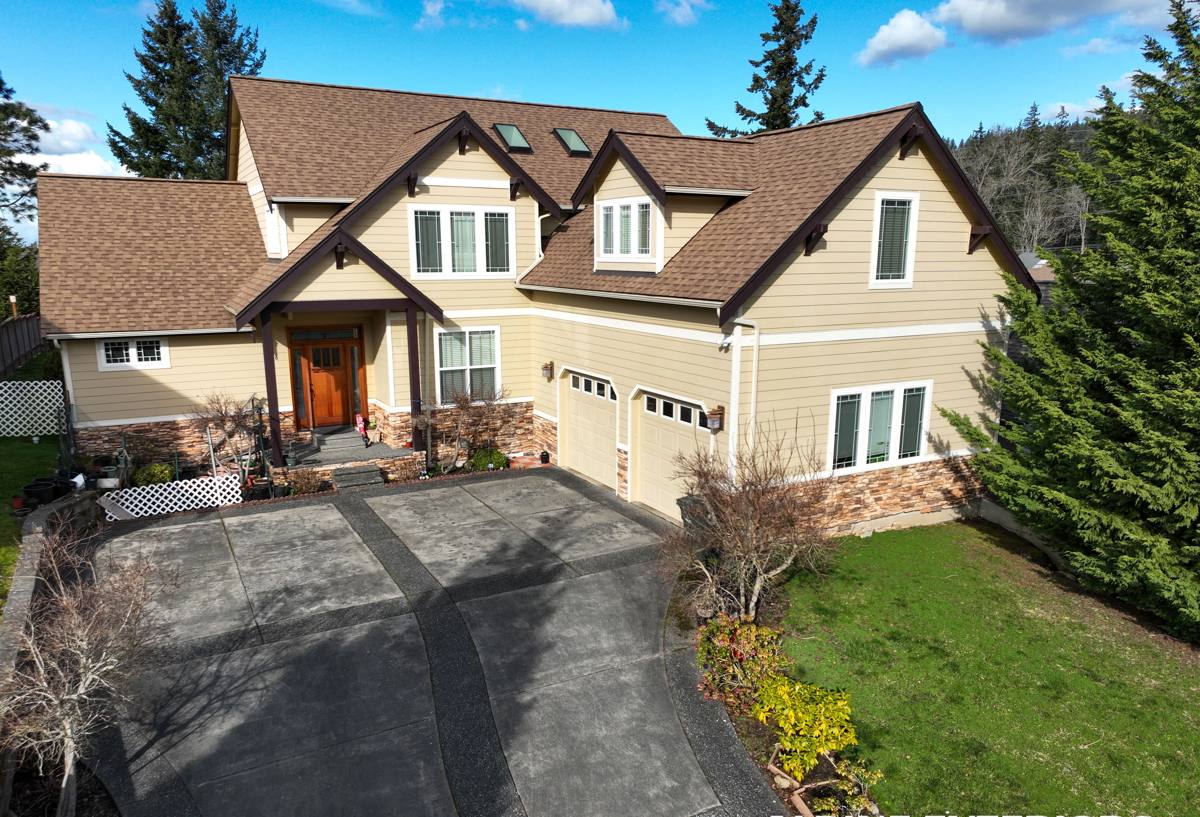
Signs Your Sumas Home Needs a New Roof
Most roofs don't fail all at once — they give warning signs for months or years before a leak shows up inside the house. Worth checking for, or asking a roofer to check for, before you commit to a full replacement:
- Granules collecting in gutters or at downspout outlets, or shingles that look patchy and thin
- Shingle edges curling up or cupping, especially on south- and west-facing slopes
- Moss mats thick enough to hold their shape when you press on them, particularly on shaded north slopes
- Dark streaking or discoloration that doesn't wash off — usually algae, not just dirt
- Soft or spongy spots underfoot, or visible sagging along a ridge or valley
- Daylight visible through the roof deck from inside the attic
- Water stains on ceilings or attic framing near chimneys, valleys, or skylights
- An asphalt roof that's 20-25 years old, regardless of how it looks from the street
One or two of these can sometimes be handled with a repair. Several at once, or any sign of deck damage, usually means the roof has reached the point where patching costs more over time than replacing it correctly.
What a Correct Roof Replacement Actually Involves
Tear-Off and Deck Inspection
A proper replacement starts with removing the old roofing down to the deck — not layering new shingles over old. That's the only way to actually see the plywood or plank sheathing underneath and catch soft, delaminated, or rotted sections before they're buried under a new roof for another 20 years. Any bad decking gets cut out and replaced before anything else happens.
Underlayment and Water Barrier
Given how much driving rain this area gets, underlayment choice matters more here than in drier parts of the state. Self-adhered ice-and-water barrier belongs at eaves, valleys, and around every roof penetration, with synthetic underlayment covering the rest of the field. This is the layer that protects the house if wind ever drives rain up under a shingle tab.
Flashing Details
Flashing around chimneys, skylights, sidewalls, and valleys is where most roof leaks actually start — not in the open field of shingles. New step flashing, counterflashing, and valley metal, installed correctly rather than just caulked over old flashing, is a non-negotiable part of a real replacement.
Ventilation
Balanced intake at the eaves and exhaust at the ridge keeps the attic close to outside temperature and humidity. That matters two ways here: it reduces the moisture buildup that feeds mold and rot in the decking, and it keeps the roof surface drying out faster after the region's frequent rain, which slows moss regrowth.
Choosing a Roofing Material for This Climate
There's no single "right" material for every house — the right choice depends on budget, roof pitch, and how much moss and wind exposure the specific home sees. Here's how the common options stack up for Sumas and Lynden conditions:
| Material | Moss/Algae Resistance | Wind Performance | Typical Lifespan | Upfront Cost |
|---|---|---|---|---|
| Architectural asphalt shingle (algae-resistant) | Good, with copper or zinc granules built in | Strong when properly nailed and rated for the exposure | 25-30 years | Moderate |
| Standard 3-tab asphalt shingle | Fair — more prone to algae staining over time | Lower wind rating than architectural | 15-20 years | Lowest |
| Standing seam metal | Excellent — moss struggles to get purchase | Very strong | 40-50+ years | Highest |
| Cedar shake | Requires regular treatment to resist moss | Moderate, wind-dependent on install | 20-30 years with upkeep | High |
For most homes in Sumas and Lynden, an algae-resistant architectural shingle is the practical middle ground — meaningfully better moss and wind performance than a basic 3-tab, without the upfront cost of metal. Metal earns its cost on steep, high-exposure roofs or for homeowners planning to stay long enough to value the extended lifespan. We'll walk through the honest trade-offs for your specific roof rather than push one product across the board.
Our Roof Replacement Process
- On-site inspection and estimate. We walk the roof, check the attic for ventilation and moisture issues, and give you a clear written estimate — no surprise line items added later.
- Material selection. We go over the options for your roof's pitch, exposure, and budget so you're choosing based on real trade-offs, not a sales pitch.
- Scheduling around weather. Roofing in this climate means watching the forecast closely. We schedule tear-off for a dry window and protect the deck immediately if conditions change mid-job.
- Tear-off and deck repair. Old roofing comes off, the deck gets inspected, and any damaged sheathing is replaced before anything new goes down.
- Underlayment, flashing, and ventilation install. This is the layer of the job that determines whether the roof actually performs in wind and rain — done correctly, not shortcut.
- Final install and inspection. Shingles, panels, or shakes go on per manufacturer specification, ridge and edge details are finished, and we walk the completed roof with you.
- Cleanup. Full site cleanup, including a magnetic sweep for stray nails, before we consider the job done.
Keeping Moss and Moisture From Coming Back
A new roof in Sumas or Lynden will still face the same wet, shaded conditions that aged the old one — the goal is to put the odds back in the roof's favor. Zinc or copper strips near the ridge release trace metal ions with every rain that inhibit moss growth on the slopes below them. Keeping gutters clear so water doesn't back up under the eave edge matters more here than in drier climates, since standing water is one of the fastest ways to rot a deck from underneath. And any overhanging branches that shade a north-facing slope are worth trimming back — sunlight and airflow are still the cheapest moss prevention there is.
None of this replaces proper ventilation and underlayment at install time, but it extends the life of the work considerably.
What Affects the Cost of a Sumas Roof Replacement
Every roof is different, so we don't quote a number until we've actually seen the roof — but these are the factors that move the price up or down:
| Factor | Why It Matters |
|---|---|
| Roof size and pitch | Steeper roofs take longer, need more safety setup, and use more material per square foot of coverage |
| Number of layers to remove | Tearing off two or three old layers costs more in labor and disposal than one |
| Deck condition | Rotted or soft sheathing found during tear-off adds material and labor to replace it properly |
| Material chosen | Standard asphalt, algae-resistant architectural shingle, and metal each carry a different material cost |
| Roof complexity | Valleys, dormers, skylights, and chimneys each add flashing work and installation time |
| Access and site conditions | Steep grades, tight driveways, or difficult staging can add setup time |
We'd rather walk you through these factors on your actual roof than guess at a ballpark that doesn't hold up once we're on the ladder.
Why Local Experience in Sumas and Lynden Matters
A crew that works this specific corner of Whatcom County regularly knows what a roof out here is actually up against — the outflow winds that come through the Sumas Gap, the slopes that hold moss longest, the flashing details that fail first when driving rain hits from the west. That's the kind of knowledge that shows up in the details: where extra ice-and-water barrier goes, which ridge caps need better fastening for wind, which roofs need more attic ventilation than the plan called for. It's also easier to stand behind the work — and behind the warranty — for a house we can drive back to in ten minutes if something ever needs a look.
If your roof is showing its age, or you just want an honest read on how much life it has left, we're happy to take a look. The estimate is free, there's no pressure to commit on the spot, and you can request one using the form below.