 Lynden Siding
 Why Metal Roofing Makes Sense for Sumas Homes
Sumas sits at the edge of Whatcom County, close enough to the Nooksack floodplain and the broader Salish Sea air mass that homes here deal with a specific combination of weather stress: long stretches of driving rain, a moss season that can run from fall through spring, and the kind of damp, salt-tinged air that works its way into fasteners and flashing over time. A roof in this area isn't just shedding water a few times a year — it's under near-constant moisture load for months at a stretch.
Metal roofing holds up well against that pattern when it's installed correctly. It sheds water fast, doesn't give moss the same foothold that asphalt granules do, and doesn't absorb water the way older wood shake or aging composition roofs can. But "metal roofing" covers a wide range of systems and installation quality, and the difference between a roof that lasts three decades in this climate and one that starts leaking in five years almost always comes down to the details of how it went on.
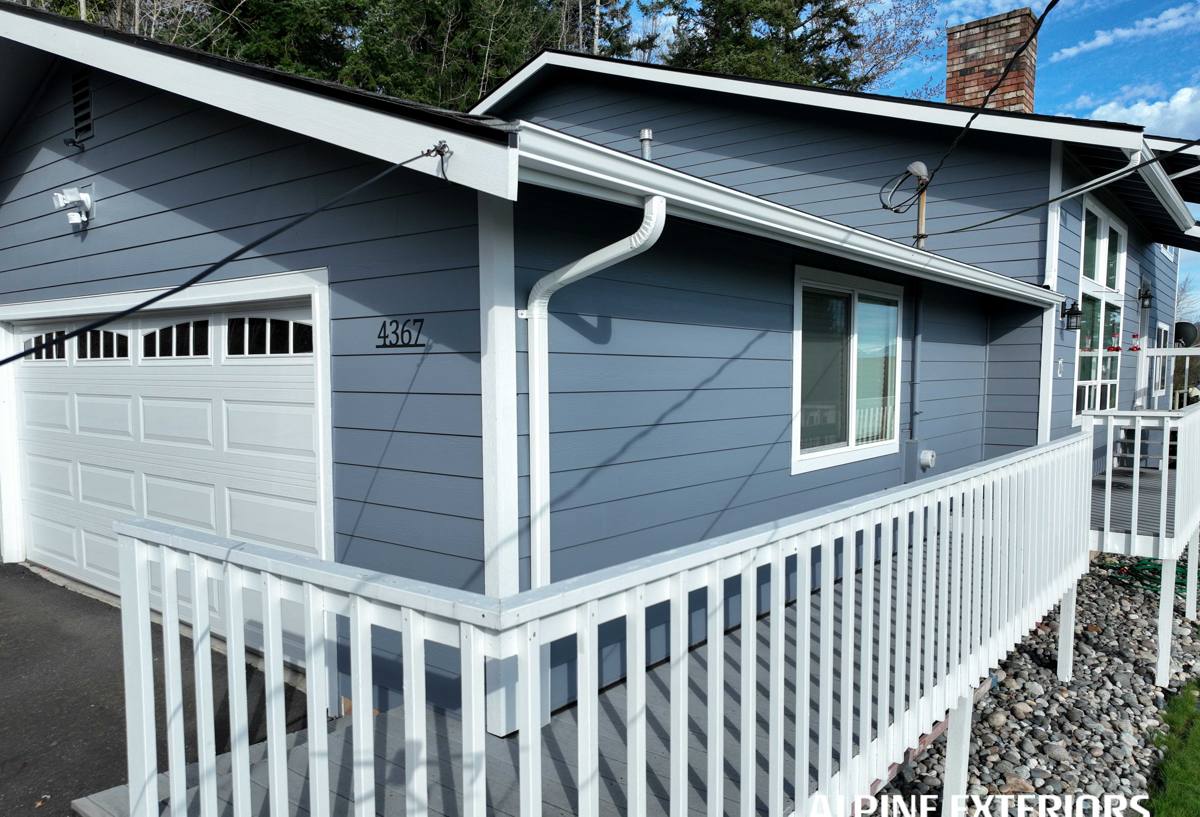
What Sumas Weather Actually Does to a Roof
Driving Rain
Rain in this part of Whatcom County rarely falls straight down. Wind-driven rain pushes water sideways and upward under laps, seams, and flashing that weren't designed or installed with that in mind. A roof detail that would be fine in a calmer climate can leak here if the underlayment, seam laps, and flashing overlaps aren't sized and sequenced correctly.
Moss and Organic Growth
The long, mild, wet stretch of fall through spring gives moss and algae plenty of time to establish on any roof surface that holds moisture or shade. Moss on shingles works its way under tabs and lifts them. On metal, the risk is different — moss tends to gather in valleys, at low-slope transitions, and anywhere debris collects, holding moisture against the panel and its fasteners longer than it should sit.
Salt-Influenced Air
Even away from the immediate coastline, the marine-influenced air common across this region carries enough moisture and trace salinity to accelerate corrosion at unprotected metal edges, exposed fasteners, and cut panel ends. Over years, that's usually where you see the first signs of rust on a metal roof — not across the field of the panel, but at the fastener heads and cut edges that weren't properly sealed or capped.
Choosing the Right Metal Roofing System
Not every metal roof is built the same way, and the right choice depends on the home's roof pitch, budget, and how long the owner wants to go before any maintenance is needed.
| System | How It's Fastened | Best For | Maintenance Load |
|---|---|---|---|
| Standing Seam | Concealed clips under raised seams — no exposed fasteners on the field | Homes wanting the longest maintenance-free stretch | Low — seams and clips aren't exposed to weather directly |
| Exposed Fastener (Corrugated/Ribbed) | Screws driven through the panel face into the deck or purlins | Budget-conscious projects, outbuildings, simpler rooflines | Moderate — fastener washers age and need eventual replacement |
| Metal Shingles/Shakes | Interlocking panels fastened at overlaps | Homes wanting a traditional look with metal's durability | Low to moderate depending on profile |
For most Sumas homes, we lean toward standing seam when the budget allows it, specifically because it removes the exposed-fastener washers that are the first thing to fail under this area's rain and moisture cycle. Exposed fastener systems are still a solid, honest option — they're less expensive and perform well — but the trade-off is that the neoprene washers under each screw eventually harden and need to be checked and replaced over the roof's life. We tell every homeowner this upfront rather than let it surprise them at year twelve.
What a Correct Installation Actually Involves
Deck and Moisture Barrier
Before any metal goes down, the deck gets inspected for soft spots or old moisture damage, and a synthetic underlayment or ice-and-water membrane goes over the full deck — not just the eaves. In a climate where wind-driven rain is normal, relying on the metal panel alone as the only water barrier is how leaks start.
Fastening and Sealant
Fastener spacing, torque, and washer condition matter more on a corrugated or ribbed panel than almost anything else in the install. Over-driven screws crush the washer and stop sealing; under-driven screws back out over time. On standing seam, clip spacing and seam engagement have to account for thermal movement so the panel can expand and contract without stressing the seams.
Flashing at Every Transition
Valleys, sidewalls, chimneys, skylights, and roof-to-wall transitions are where most metal roof leaks actually originate — not the open field of the roof. Correct flashing means proper laps, kick-out flashing where a roof meets a wall above grade, and step flashing tied into the siding correctly, not caulked over as a shortcut.
Ventilation
Metal roofs perform best with proper attic or roof-deck ventilation. Trapped moisture underneath a metal panel, with nowhere to escape, is one of the more common causes of deck rot we find when we tear off an older roof — the metal itself was fine, but the assembly underneath it wasn't allowed to breathe.
Common Problems We Find on Older Metal Roofs in This Area
- Rust starting at exposed fastener heads where washers have hardened or cracked
- Moss and debris buildup in valleys holding moisture against seams
- Flashing that was caulked instead of properly lapped, now cracked and leaking
- Panel fasteners that have backed out slightly from thermal cycling
- Rot in the roof deck under sections with poor or blocked ventilation
- Scratched or damaged panel coating from tree contact or debris, leading to localized corrosion
Most of these are catchable during a roof inspection long before they turn into an interior leak, which is why we recommend a check-up on older metal roofs every couple of years rather than waiting for a stain to show up on a ceiling.
Our Process for a Sumas Metal Roofing Project
- On-site assessment — we look at the existing roof or deck, roof pitch, drainage paths, and any trouble spots specific to the home before quoting anything.
- System recommendation — we walk through standing seam versus exposed fastener versus repair-only options based on the home's condition and the owner's budget and timeline.
- Written estimate — a clear scope of work, materials, and price, with no vague allowances.
- Deck prep and moisture barrier — any soft or damaged decking is addressed before the new system goes down, over a full synthetic underlayment.
- Installation — panels, fasteners, and flashing installed to manufacturer spec and to what this climate actually demands, not the bare minimum.
- Walkthrough and cleanup — we review the finished roof with the homeowner and clear the site of debris and fasteners.
Repair, Recoat, or Replace: What Drives the Decision
Not every metal roof problem means a full replacement. The right call usually comes down to a handful of factors.
| Factor | Leans Toward Repair | Leans Toward Replacement |
|---|---|---|
| Fastener/washer condition | Isolated failures, rest of panel sound | Widespread washer failure across the roof |
| Deck condition | Deck is solid underneath | Rot or soft spots found under panels |
| Age of system | Under 15–20 years, good original install | Original install had known shortcuts or poor detailing |
| Flashing issues | Isolated to one or two transitions | Recurring leaks at multiple points |
| Coating/finish | Surface rust only, coating mostly intact | Coating failure or rust through the panel |
We'll always tell a homeowner honestly when a repair is the right move rather than pushing a full replacement that isn't needed yet. On the other hand, if the underlying deck is compromised, patching the visible symptom without addressing the cause just delays the real cost.
Maintenance Checklist for Sumas Homeowners
- Clear valleys, gutters, and low-slope transitions of leaves and moss buildup at least twice a year
- Have fastener washers checked every few years on exposed-fastener systems, sooner if the roof is over a decade old
- Watch for rust spotting at fastener heads or cut panel edges and address it early rather than waiting
- Trim back tree limbs that drop debris or hold moisture against the roof surface
- Check flashing at chimneys, skylights, and sidewalls after major windstorms
- Confirm attic or roof-deck ventilation isn't blocked by insulation or debris
Why Hire a Crew That Already Works in Sumas
A metal roof installed to a generic spec sheet and a metal roof installed for what this part of Whatcom County actually throws at it are two different jobs, even if the materials on the invoice look identical. Knowing how far to run underlayment past the eaves, how to detail a valley so it doesn't trap moss, and where rust actually starts on a roof that's been through a dozen wet winters comes from working on these roofs locally, not from a manufacturer's install guide alone.
We also know what permitting and inspection expectations look like for roofing work in this part of the county, so there aren't surprises mid-project. And because we're local, a callback for a flashing check or a warranty question doesn't mean waiting on a crew that has to drive in from somewhere else.
If you're weighing a metal roof for a home in Sumas — new construction, a full replacement, or repair on an existing system — we're happy to take a look and give you a straightforward, no-pressure estimate using the form below.