 Lynden Siding
 Siding in the Sumas Area Has a Different Job to Do
Homes near Sumas sit in one of the wetter, damper corners of Whatcom County. The marine air that moves in off the Salish Sea and up through the lowlands doesn't just bring rain — it brings long stretches of saturated humidity, driving wind-blown rain that hits walls sideways instead of straight down, and a moss and algae season that can run eight or nine months out of the year on north- and west-facing walls. Add in the freeze-thaw swings of a Whatcom County winter, and exterior siding here is doing more work than siding on a dry-climate home three states over.
That's the lens we use on every Sumas-area siding job: not "what looks good going up" but "what will still be doing its job in year fifteen." James Hardie fiber cement is the one product we've found holds up to that test without asking the homeowner to babysit it.
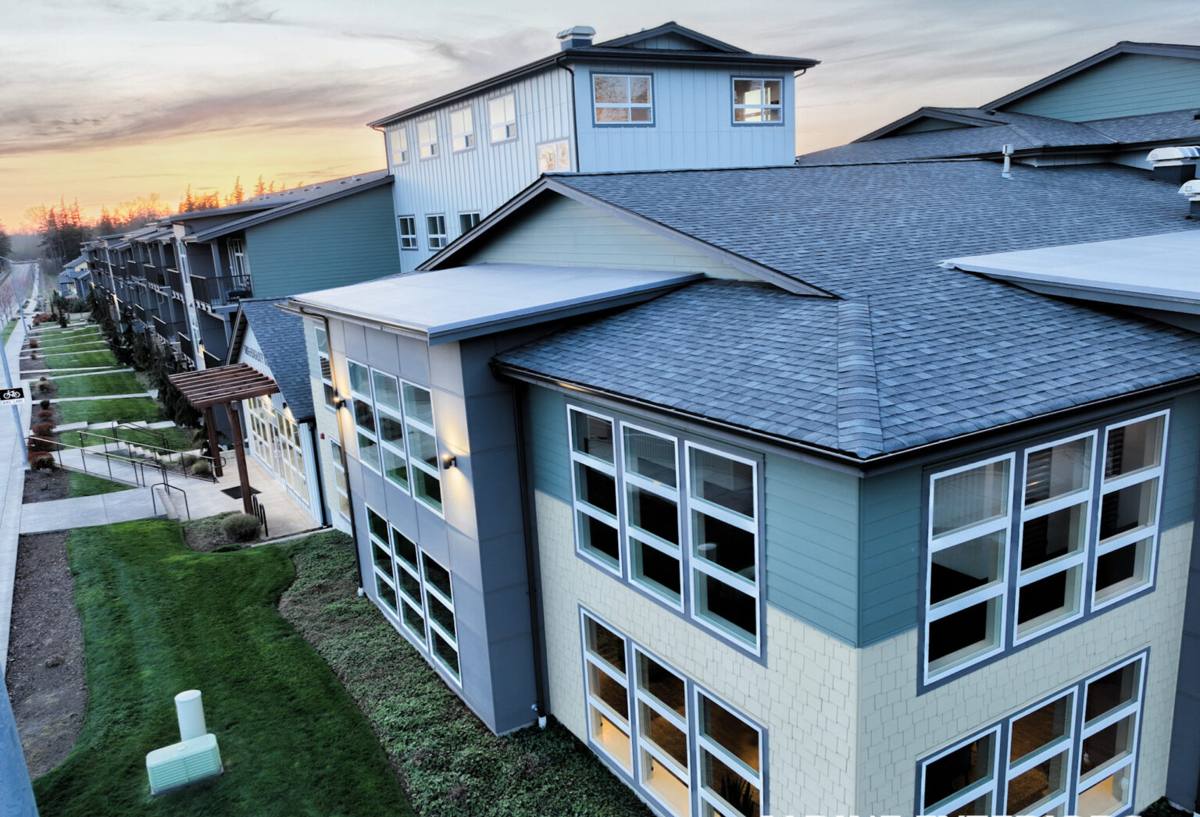
What This Climate Actually Does to a Wall System
Understanding the failure points helps explain why the installation details matter as much as the product choice:
- Driving rain pushes water sideways into laps, seams, and butt joints, not just down the face of the wall.
- Prolonged dampness keeps siding surfaces wet for days at a time, which is exactly the environment moss, algae, and mildew need to establish.
- Freeze-thaw cycling stresses any water that's been trapped behind or inside a siding material, expanding cracks and separations over repeated winters.
- Salt-tinged marine air accelerates corrosion on exposed fasteners and metal trim that isn't rated or protected for it.
- Shaded, tree-lined lots — common on rural and semi-rural Sumas-area properties — slow down drying time after every rain event.
None of this is unique to any one house. It's the baseline condition every wall assembly in this part of Whatcom County has to survive, year after year.
Why Moss Season Is the Real Test
Anyone who's lived here through a Sumas-area winter knows moss doesn't just grow on roofs. Given a porous surface and consistent moisture, it colonizes siding too — especially wood-based products where the surface itself can hold water. A siding material that stays dimensionally stable and doesn't absorb moisture into its face gives moss and algae far less to grab onto, and it's one of the biggest visible differences homeowners notice within the first year or two after a re-side.
What a Correct James Hardie Installation Involves Here
James Hardie siding is only as good as the water management system behind it. In a climate like this, the details around the boards matter at least as much as the boards themselves.
Flashing and Drainage
Every window, door, and horizontal transition needs proper head flashing and a drainage plane behind the siding — a weather-resistive barrier with a rainscreen gap, not siding nailed flat against sheathing. On a house that's going to see this much wind-driven rain, that gap is what lets incidental moisture drain and dry instead of wicking into the wall cavity.
Fastening and Clearances
James Hardie publishes specific fastener patterns, nail types, and minimum clearances — off the ground, off roof lines, off decks and patios — and those numbers exist because moisture wicking at the bottom edge of a board is one of the most common failure points on any fiber cement job. Skipping them to save an hour of labor is the single most common corner-cutting we see on re-side jobs we get called to fix.
Caulking and Joint Treatment
Butt joints and trim transitions need to be treated as water-shedding details, not just cosmetic seams. In a wetter climate, an under-caulked or poorly backed joint shows up as a stain or a soft spot within a few winters, not a decade.
Why We Install Only James Hardie, and Why It Fits This Area
James Hardie fiber cement is non-combustible, dimensionally stable, and factory-finished with its ColorPlus coating system, which is baked on and cured before the boards ever leave the plant. That matters here in three specific ways:
- It doesn't absorb water into its face the way wood-based or wood-fiber products can, which directly reduces the moss and algae problem described above.
- It's engineered in climate-specific HZ formulations built around exactly the kind of moisture exposure and freeze-thaw cycling this region sees, rather than a one-size-fits-all formula.
- The factory finish holds its color and resists the streaking and fading that field-applied paint struggles with under constant damp-then-dry cycling.
We don't install vinyl, LP SmartSide, Cemplank, Allura, primed spruce, or cedar. Each of those products has legitimate strengths, but somewhere in their maintenance burden, moisture behavior, or long-term warranty structure, we found a trade-off we weren't willing to put on a customer's home in a climate this consistently wet. James Hardie is what we've standardized on because it's the product we can install once and stand behind for decades, not the one that needs the most explaining later.
How Our Process Works on Sumas-Area Homes
- On-site assessment — we look at existing siding, trim, and moisture history specific to the home's exposure and lot conditions, not a generic checklist.
- Sheathing and moisture barrier check — anything soft, stained, or compromised gets addressed before new siding goes up, not covered over.
- Rainscreen and flashing installation — the water management layer goes in correctly the first time, since it's the part nobody sees once the job is done.
- James Hardie installation to manufacturer spec — correct fastener pattern, clearances, and joint treatment throughout.
- Final detail pass — trim, caulking, and touch-up finishing, plus a walkthrough so the homeowner knows what was done and why.
Comparing Siding Options for This Climate
| Material | Moisture Behavior Here | Moss/Algae Resistance | Long-Term Upkeep |
|---|---|---|---|
| James Hardie fiber cement | Dimensionally stable, doesn't swell or rot | Strong — low surface absorption | Occasional wash; factory finish holds color for years |
| Vinyl | Doesn't rot but can warp/crack in temperature swings | Moderate — moss can still cling to grooves and laps | Low upkeep but limited repair options if damaged |
| Cedar | Absorbs moisture, prone to swelling and rot without diligent upkeep | Weak — natural wood surface invites growth | Regular refinishing/sealing required |
| LP SmartSide (wood-strand) | Engineered but still wood-based; edge sealing is critical | Moderate, dependent on coating integrity | Coating and edge maintenance over time |
This isn't a claim that the alternatives fail outright — plenty are installed successfully elsewhere. It's a reflection of which trade-offs matter most in a climate that stays wet as long as this one does, and why our crew standardized on one product instead of offering all of them.
What to Look for When Hiring a Siding Contractor Here
Whatcom County has no shortage of contractors willing to hang siding. Fewer of them build the water management system behind it correctly, and fewer still work this specific area regularly enough to know how it behaves through a full wet season. Before hiring anyone for a Sumas-area re-side, ask:
- Do they install a rainscreen/drainage gap, or nail siding directly to the weather barrier?
- Can they explain James Hardie's fastener and clearance requirements without looking them up?
- Do they inspect and address sheathing condition before covering it, or just re-side over existing problems?
- Are they familiar with this area's moss and moisture patterns specifically, not just siding in general?
- Is their warranty tied to correct installation, or just to the material itself?
Why Local Experience in This Area Matters
A crew that regularly works Sumas-area homes has already seen how north walls hold moisture longer, which lots stay shaded and damp into midsummer, and where wind-driven rain hits hardest on a given lot orientation. That's not something you learn from a spec sheet — it's what separates a siding job that looks right on install day from one that's still performing correctly in year ten.
Maintenance Once It's Installed
James Hardie siding is low-maintenance, not no-maintenance. In this climate, that means an annual rinse-down to keep moss and algae from establishing on shaded faces, a periodic check of caulked joints and trim, and prompt attention to anything that looks like a new stain or soft spot. None of that is heavy lifting — it's a fraction of what cedar or unsealed wood-based siding demands, but it's still worth doing on a regular schedule rather than waiting for a visible problem.
If you're planning a siding project on a Sumas-area home, we're happy to walk the property, look at your specific exposure and existing conditions, and talk through what correct installation looks like for your home. There's no cost and no pressure — just use the form below to request a free estimate.