 Lynden Siding
 Decks Built for Sumas's Wet, Moss-Prone Climate
A deck in Sumas has to earn its keep every day of the year, not just on the handful of sunny weekends we get in July and August. Whatcom County sits under a steady parade of Pacific storm systems that push moist, salt-tinged marine air inland across the county, and Sumas gets its full share of driving rain, low winter sun, and long stretches where wood surfaces simply never fully dry out. Add in the moss season that can run from October well into April, and you have a climate that is genuinely hard on outdoor structures. A deck built without that reality in mind will show algae staining in its first winter, soft spots in its boards within a few years, and structural problems at the framing level not long after that.
Building decks correctly for this specific environment isn't about using fancier materials for their own sake. It's about understanding exactly where water goes when it hits a deck, how long moisture sits on different surfaces, and where moss and mildew get their foothold first. That's the lens we bring to every custom deck we build for Sumas homeowners.
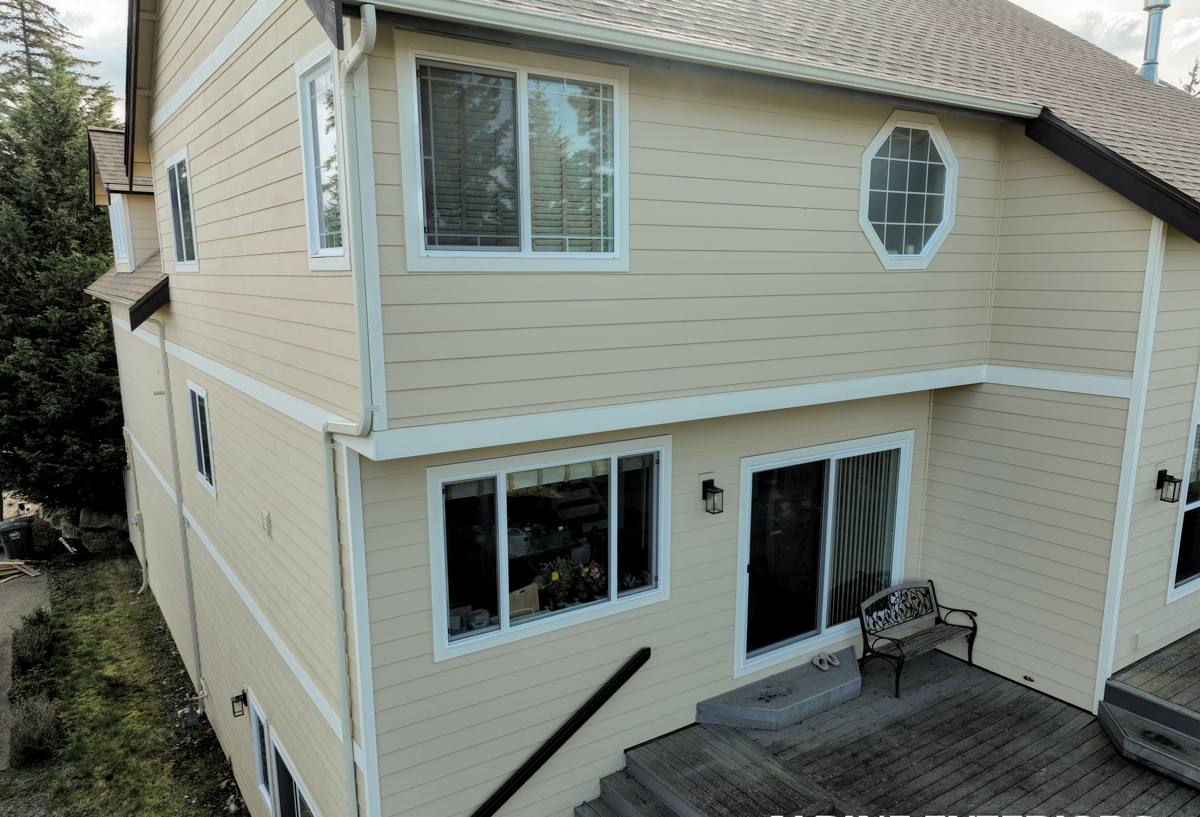
What a Deck in This Area Actually Needs
Drainage Comes First
More decks fail from water management problems than from any other cause. Flat or poorly sloped deck surfaces hold standing water after our long rain events, and that standing water is exactly what feeds moss and accelerates rot in both wood and composite substructures. A properly built deck sheds water off the surface and away from the house, with gaps and slope calculated in at the framing stage, not corrected after the fact.
Sun Exposure and Shade Patterns
Sumas properties vary a lot in how much direct sun a deck actually gets, especially with mature trees and taller fencing common in the area. Shaded decks stay damp longer after rain, which means they need extra attention to airflow underneath and between boards. South and west-facing decks dry out faster but take more direct weathering from UV and temperature swings. We look at your specific site before recommending a material or a board spacing, because a one-size answer doesn't hold up here.
Soil and Ground Contact
Whatcom County ground stays saturated for long stretches of the wet season. Footings, posts, and any structural wood near grade need to be installed and protected with that in mind, or you end up with the kind of hidden rot that isn't visible until a board or post gives way.
Decking Material Options, Honestly Compared
There's no single "best" decking material for every Sumas home — it depends on your budget, how much upkeep you want to do, and how the deck sits relative to sun and rain exposure. Here's how the common options actually compare in this climate:
| Material | Moisture Behavior | Maintenance | Typical Lifespan Here |
|---|---|---|---|
| Pressure-treated wood | Resists rot when properly sealed and maintained; absorbs water if coating fails | Annual cleaning, re-sealing every 2-3 years | 15-20 years with upkeep |
| Cedar | Naturally rot-resistant but softer; still needs sealing in this rainfall | Regular cleaning and periodic sealing | 15-20 years with upkeep |
| Composite decking | Doesn't absorb water into the board itself; still needs surface cleaning to prevent moss and mildew film | Periodic washing, no sealing or staining | 25-30+ years, manufacturer-dependent |
| PVC decking | Fully water-resistant board material | Low; occasional washing | 25-30+ years, manufacturer-dependent |
We install both quality wood and composite/PVC systems, and we'll walk you through the real trade-offs for your specific deck rather than pushing whatever's easiest to sell. Wood costs less upfront and can be beautiful, but it asks for ongoing attention. Composite and PVC cost more upfront and pay that back in lower maintenance over the deck's life. What matters most is that whichever material you choose gets installed the right way for our climate — proper gapping, proper fastening, and proper substructure protection.
What Correct Deck Construction Involves
Footings and Framing
Everything starts below the surface. Footings need to be sized and set to code depth for our soil and frost conditions, and ledger board attachment to the house has to be flashed correctly — this is one of the most common failure points we find on older decks in this area, where water gets behind an improperly flashed ledger and rots the rim joist it's attached to.
Joist Spacing and Board Fastening
Joist spacing needs to match the decking material you're using; composite and PVC boards often call for tighter spacing than solid wood to prevent sagging over time. Fastener choice matters just as much — corrosion-resistant hardware rated for ground contact and continuous moisture exposure is not optional in Whatcom County, it's baseline.
Gapping and Airflow
Board-to-board gapping controls how fast water drains off the surface and how much airflow gets underneath the deck to dry out the framing. Too tight, and you trap moisture; too wide, and the deck feels unfinished and can be uncomfortable underfoot. We set gapping based on the specific material and your site's sun and rain exposure.
Railings, Stairs, and Code
Railing height, baluster spacing, and stair geometry are all governed by code for good reason — they're the parts of a deck most tied to safety. We build to current code requirements as a matter of course, not as an upsell.
Common Deck Problems We See on Whatcom County Homes
- Moss and algae buildup on boards and stairs that were never sloped or gapped for drainage
- Soft, spongy decking near the house where a ledger board was flashed poorly or not at all
- Rusted or corroding fasteners that stain boards and weaken over time
- Railing posts that have loosened because of rot at the base, often hidden under trim
- Composite boards installed with wood-spec joist spacing, leading to visible sag between joists
- Understructure rot from debris buildup between boards that traps moisture against the framing
Most of these problems trace back to a deck that was built fast, without accounting for how much rain and shade this area actually sees over a full year. They're preventable with the right build from the start, and many are repairable if caught before they spread into the framing.
Our Process, From Estimate to Finished Deck
- On-site assessment: we look at your yard's drainage, sun exposure, existing structure (if it's a rebuild), and how you actually plan to use the space.
- Material and design conversation: we go over material options, sizing, and layout honestly, including what each choice will mean for upkeep down the road.
- Written estimate: a clear scope and price before any work begins, with no surprise add-ons for basics like proper flashing or code-required railings.
- Permitting: we handle the permitting process where required so the deck is built and inspected to code.
- Construction: footings, framing, decking, and railings built in sequence with attention to the drainage and fastening details covered above.
- Final walkthrough: we go over the finished deck with you, including basic care guidance specific to the material you chose.
What Affects the Cost of a Sumas Deck Project
| Factor | Why It Matters |
|---|---|
| Size and footprint | More square footage means more footings, framing, and decking material |
| Material choice | Wood costs less upfront; composite and PVC cost more but need less long-term maintenance |
| Height and stairs | Elevated decks need more substantial framing, additional railings, and stair construction |
| Site access | Difficult access for equipment and material delivery can add labor time |
| Existing structure | Rebuilds may need old framing removed and disposed of, or ledger repair before new construction starts |
| Permitting requirements | Larger or elevated decks typically require permits and inspections, which factor into timeline and cost |
We put together a written estimate specific to your property rather than quoting off a generic price list, because the factors above genuinely change the scope of the work.
Keeping Your Deck in Good Shape Between Visits
- Sweep leaves and debris off the deck surface regularly, especially in fall when they trap moisture against the boards
- Clean moss and algae off the surface at least once a year, ideally before winter sets in
- Check railings and stair connections periodically for looseness
- Keep gutters and downspouts near the deck clear so water isn't dumping directly onto it
- Re-seal wood decking on the schedule appropriate to your product, typically every two to three years
- Trim back vegetation that shades the deck excessively or holds moisture against the framing
Why It Matters to Hire a Crew That Already Works in Sumas
Deck-building advice that works in a dry climate doesn't automatically transfer to Whatcom County. A crew that mainly works other regions may not think twice about footing depth for our soil conditions, flashing detail for our rainfall totals, or gapping choices that account for our moss season. We work on homes throughout Lynden and the surrounding Sumas area regularly, which means we're not guessing at how a deck needs to be built to hold up here — we're applying what we've already seen work and what we've already seen fail on decks just like yours, in this exact climate.
If you're planning a new deck or need to replace one that's showing its age, we're happy to come take a look and put together a free, no-pressure estimate. There's no obligation, and we'll give you an honest read on your options before you decide anything.