 Lynden Siding
 Storm Damage Roof Repair for Sumas Homes
Sumas sits in the far northeast corner of Whatcom County, close enough to the foothills that weather systems tend to stall and dump rain longer than they do closer to the water. When a windstorm or heavy squall comes through, homeowners here often end up with the same short list of problems: lifted or torn shingles, bent or creased ridge caps, flashing pulled loose around chimneys and vent pipes, and gutters packed with debris that back water up under the roof edge. None of that is dramatic to look at from the ground, which is exactly why it gets missed until it turns into a ceiling stain or a soft spot in the decking.
We're a Lynden-based crew, and Sumas is part of our regular service area — not a place we drive out to once and never see again. That matters with storm work specifically, because a repair that looks fine the day it's finished can fail in the next storm if it wasn't tied into the roof system correctly. We come back to this area often enough to know how these roofs age and what actually holds up.
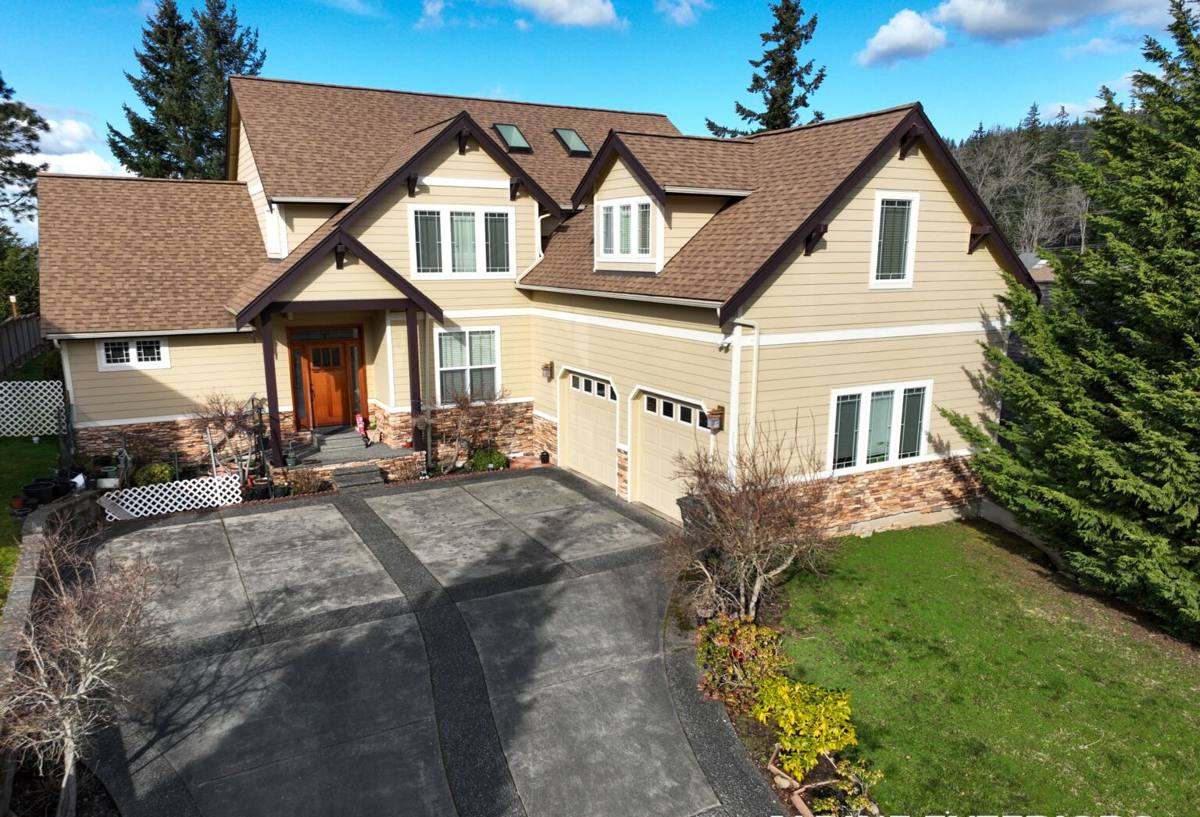
How Whatcom County Weather Wears Down a Roof
Roof damage around here rarely comes from one big event. It's the accumulation of a few specific conditions that repeat every year.
Wind-driven rain
Storms moving through this part of Washington often bring rain sideways, not straight down. That pushes water up under shingle tabs, around step flashing, and into any gap that a calm-weather roof would never notice. A roof that's fine in a light rain can still leak in a wind-driven one if the flashing details are even slightly off.
A long moss season
Whatcom County's damp, mild stretch from fall through spring is long enough that moss gets a real foothold on north-facing slopes and shaded roof sections. Moss holds moisture against the shingle surface far longer than open air would, and it lifts shingle edges as it grows — which is exactly where wind gets a grip during the next storm. A lot of the "storm damage" we're called out for started as moss damage that a storm simply finished off.
Marine-influenced, salt-tinged air
Being inland doesn't fully insulate a roof from the moisture-loaded, salt-influenced air that moves through the broader Puget Sound and Whatcom County region. Over years, that air contributes to faster corrosion on exposed metal — nail heads, flashing edges, gutter fasteners — which is one more reason storm damage tends to show up first at metal-to-shingle transitions rather than in the middle of a roof field.
What Storm Damage Actually Looks Like
Most homeowners assume storm damage means missing shingles you can spot from the driveway. Often it's quieter than that. Here's what we check for on every storm call in Sumas:
- Shingle tabs that are lifted, creased, or torn but still nailed down — easy to miss from the ground
- Granule loss showing up as gritty buildup in gutters or downspout splash areas
- Flashing around chimneys, skylights, and vent pipes pulled away from the surface it seals against
- Bent or dented ridge cap and hip shingles from wind uplift
- Soft or spongy decking felt underfoot near valleys or eaves — a sign water has already gotten past the surface layer
- Interior signs: a ceiling stain, a musty smell in an attic, or peeling paint near an exterior wall top
- Debris impact marks — branch strikes or hail bruising that dent the shingle mat without breaking it open
The last two are the ones that cost homeowners the most, because they're invisible until the damage has already spread into insulation or framing.
Quick Patch vs. a Proper Storm Repair
After a storm, it's tempting to just seal whatever is visibly loose and move on. That works for a season, sometimes two, but it usually isn't dealing with the underlying cause. Here's the honest difference:
| Approach | What it addresses | Typical lifespan of the fix |
|---|---|---|
| Surface patch (caulk/sealant over visible gaps) | Only the symptom you can see | One storm season, sometimes less |
| Shingle-and-flashing repair, matched to existing roof | The actual failed component, tied back into surrounding courses | Matches remaining roof life |
| Full storm assessment with decking check | Hidden moisture intrusion, soft decking, compromised underlayment | Prevents repeat calls to the same area |
We'll tell you plainly if your roof only needs the first option — not every storm call needs a full teardown. But we won't recommend a surface patch and call it done if we can see the underlying cause is still there.
What a Correct Storm Damage Repair Involves
A repair that actually holds has a few non-negotiable steps, regardless of how minor the visible damage looks:
- Full roof walk, not just the damaged spot. Wind damage is rarely isolated to one shingle — we check the whole slope and adjacent slopes for related lift or granule loss.
- Decking check at the point of damage. If water has been getting in for more than one storm cycle, we check for soft or delaminated sheathing before covering anything back up.
- Matching materials. We match shingle type, color, and profile as closely as the market allows so a repair doesn't stand out as an obvious patch.
- Correct flashing reinstallation. Step flashing, counter-flashing, and pipe boots get properly integrated with the surrounding shingle courses — not just caulked over.
- Fastener and underlayment check. Any corroded fasteners get replaced, and underlayment gets inspected wherever shingles are pulled up.
- Cleanup and gutter check. Storm debris and dislodged granules get cleared so gutters can drain properly going into the next system.
Our Process for Sumas Storm Calls
When a Sumas homeowner calls us after a storm, here's what to expect:
- Same-window scheduling where possible. Active leaks and exposed decking get priority — we don't leave a home exposed to the next weather system if we can help it.
- An honest on-roof inspection. We walk the roof (weather permitting) rather than assessing from photos or the ground alone, since so much storm damage is only visible up close.
- A written explanation of what we found. You'll get a clear breakdown of what's damaged, what's still sound, and what we'd recommend — in plain language, not a sales pitch.
- A straightforward repair or a documented recommendation for more extensive work if the damage points to a roof nearing the end of its service life.
Insurance Claims and Storm Damage
Many storm repairs in this area are at least partly covered by homeowners insurance, particularly when there's a documented wind event or impact damage. We're not an insurance company and won't promise a claim outcome, but we can provide clear photo documentation and a written scope of damage that you can hand to your adjuster. If you're not sure whether your damage rises to a claim, it's worth having it assessed before you decide — some storm damage is minor enough that a straightforward repair makes more sense than filing.
Why Local Experience in Sumas Matters
Storm damage repair isn't just a shingle-replacement skill — it's knowing how a specific roof has aged under specific conditions. A crew that regularly works Whatcom County roofs recognizes the difference between fresh wind damage and long-term moss deterioration, and between a roof that needs a targeted repair versus one where the repair is just delaying a bigger conversation. We're not guessing at how Sumas roofs hold up over a Whatcom County winter — we see it every storm season.
Being local also means faster response after a storm rolls through, and a crew that's still reachable months later if a repair needs a follow-up look. That accountability is part of what you're paying for as much as the labor itself.
Maintenance That Prevents the Next Storm Call
A few habits go a long way toward keeping storm damage minor instead of major:
| Maintenance step | Why it matters here |
|---|---|
| Annual moss treatment on shaded/north-facing slopes | Prevents shingle lift that gives wind something to grab |
| Gutter cleaning before the fall storm season | Stops water backing up under the roof edge during heavy rain |
| Post-storm visual check from the ground | Catches lifted shingles or displaced flashing early, before the next system hits |
| Periodic flashing inspection | Metal transitions age faster in this climate and are the most common leak point |
Get an Honest Look at Your Roof
If a recent storm left you with a lifted shingle, a stained ceiling, or just a nagging feeling that something's not right up there, it's worth getting it looked at before the next system moves through. We offer free, no-pressure estimates for Sumas homeowners — just fill out the form below and we'll take it from there.