 Lynden Siding
 Deck Replacement for Homes Around Wiser Lake
Wiser Lake sits just outside Lynden, and the homes around it have a lot in common: mature tree cover, lake-facing decks that get used all summer, and older wood structures that have been quietly losing ground to moisture for years. A deck out here works harder than one on a dry, sun-exposed in-town lot. Between the shade off the trees, the humidity coming off the water, and Whatcom County's long wet season, a deck that looks fine from a distance can be structurally tired underneath.
This page is specifically about replacing a deck for a home in the Wiser Lake area — not a generic overview of deck building. We work in this neighborhood regularly, and the issues we run into here are consistent enough that it's worth explaining what actually matters before you spend money on a replacement.
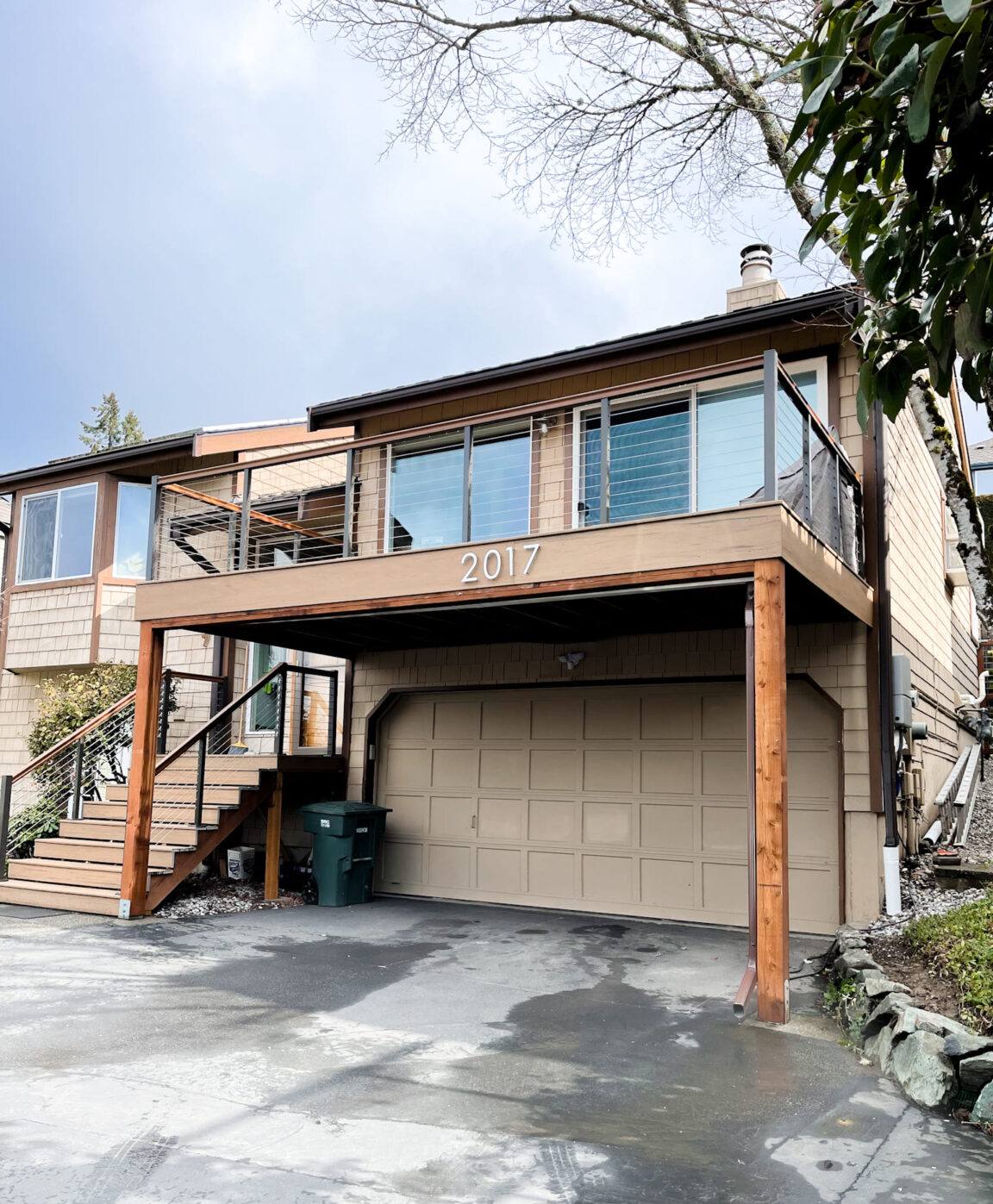
What the Climate Around Wiser Lake Does to a Deck
Whatcom County's climate is defined by long stretches of driving rain, marine air moving in off the Salish Sea, and short summers that don't dry things out as much as people assume. Lake-adjacent lots add their own layer on top of that.
Shade, Moisture, and a Long Moss Season
Trees around the lake block sun for large parts of the day on a lot of decks, which means wet wood stays wet longer after every storm. That combination is exactly what moss, algae, and mildew need to take hold. Once moss establishes on decking boards or in the gaps between them, it holds moisture against the wood around the clock, not just during rain. Over a few seasons that turns into soft spots, surface rot, and slick footing that's a real fall hazard on stairs and ramps.
Ground Moisture and Freeze-Thaw Movement
Ground near the lake tends to stay damp longer into the season than drier lots elsewhere in Lynden. That affects post footings — wood posts set in or near consistently damp soil rot from the bottom up, often well before the visible decking shows any problem. Add in the occasional hard freeze followed by a thaw, and you get soil movement that can rack an old deck frame out of square even if the boards on top still look decent.
Signs Your Deck Has Reached the End of Its Life
Not every deck problem means a full replacement. But there's a point where patching individual boards stops making sense and starts hiding a bigger structural issue. Walk your deck and check for these:
- Soft, spongy, or springy spots when you walk across the boards, especially near the house or in shaded corners
- Visible moss or dark staining that keeps coming back even after cleaning
- Rust streaking or corroded fasteners around joints and railing posts
- Gaps or movement where the deck attaches to the house (the ledger board)
- Wobbly railings or posts that flex more than a firm push should allow
- Wood that's gone gray and fibrous, or that a screwdriver sinks into with light pressure
- Footings or posts you can see are cracked, heaved, or sitting in standing water after rain
If you're seeing two or more of these, especially anything involving the ledger board or footings, that's a structural conversation, not a cosmetic one.
What a Correct Deck Replacement Actually Involves
A deck replacement done right isn't just pulling up old boards and screwing down new ones. The parts you don't see are what determine whether the new deck lasts.
Framing, Footings, and Ledger Attachment
This is where most of the long-term performance of a deck gets decided. Footings need to be sized and set below frost depth, ledger boards need proper flashing so water can't get behind them and into the house rim joist, and joist spacing needs to match whatever decking material is going on top — composite and wood often call for different spacing. On a shaded, damp lot like the ones around Wiser Lake, we also pay close attention to ventilation under the deck, since poor airflow is one of the biggest reasons framing rots out early in this climate.
Choosing Decking Material for a Lake Lot
Material choice matters more here than on a dry, sunny lot because moisture exposure is longer and more constant. There's no single right answer — it depends on budget, how much maintenance you're willing to do, and how the deck gets used.
| Material | Maintenance | Behavior in Shade & Moisture | Typical Lifespan Here |
|---|---|---|---|
| Pressure-treated wood | Annual cleaning, periodic sealing/staining | Prone to moss and surface graying if not maintained; solid if kept up | 15-20 years with upkeep |
| Cedar | Regular sealing to hold color and resist moisture | Naturally more rot-resistant, but still needs care in constant shade | 15-20 years with upkeep |
| Composite | Occasional washing; no staining or sealing | Doesn't rot, but can still grow surface mildew/moss in deep shade if not cleaned | 25-30+ years, manufacturer-dependent |
We don't push one material on every homeowner. Composite costs more up front and pays that back in lower maintenance over time, which is appealing on a shaded lake lot where staining every year or two is a real chore. Wood costs less initially but only holds up if someone stays on top of cleaning and sealing on a schedule — skip a year or two in this climate and you'll see it in the wood.
Our Deck Replacement Process
The process itself isn't complicated, but skipping steps is how decks fail early. Here's how we run a replacement:
- On-site assessment. We check the framing, footings, ledger attachment, and soil/drainage conditions specific to your lot, not just the surface boards.
- Scope and material decision. We walk through material options and what they mean for maintenance and cost over time, given your site's shade and moisture exposure.
- Permit check. We confirm what's required for your specific property before any demo starts.
- Demo and disposal. Old decking, framing, and any compromised footings come out and get hauled away.
- Framing and footing work. New or reinforced footings, proper ledger flashing, and joist layout matched to your decking material.
- Decking, railing, and stairs. Installed to current code, including railing height and baluster spacing requirements.
- Final walkthrough. We go over the finished deck with you before calling the job done.
Permits and Shoreline Considerations Near Wiser Lake
Homes around Wiser Lake often sit in unincorporated Whatcom County rather than inside Lynden's city limits, which can affect which building department a permit runs through and what's required. If your deck is close to the water's edge, shoreline regulations may also come into play depending on setback distance. None of this is something to guess at — we confirm the specific requirements for your parcel before we schedule demo, so there are no surprises mid-project or at final inspection.
What Drives the Cost of a Deck Replacement
There's no honest flat price for a deck replacement — it depends on size, condition of what's underneath, material, and how much of the structure needs to be rebuilt versus reused. The main cost factors are:
- Deck size and whether the footprint is changing or staying the same
- Condition of the footings and ledger — rebuilding a rotted frame costs more than replacing sound framing under old boards
- Material choice — pressure-treated, cedar, and composite all land in different price ranges
- Stairs, railings, and any code-required updates to those
- Site access — tree cover and lake-lot layouts can make demo and material delivery more involved than a straightforward in-town job
- Permit and shoreline review requirements, where applicable
Most full deck replacements land solidly into a multi-thousand-dollar range once demo, framing repair, and materials are accounted for. We'll give you real numbers for your specific deck rather than a generic estimate that doesn't reflect what's actually under your old boards.
Why a Crew That Already Works Wiser Lake Matters
A lot of homes around the lake share the same building era and the same exposure problems, so we've already seen how the framing and footings on similar lots tend to hold up over time. That means fewer surprises once demo starts. Many properties in this unincorporated part of the county also run on septic systems and private wells rather than city utilities, which affects where equipment can be staged and how site access gets planned — not something a crew unfamiliar with the area always thinks to check up front. Being local also means faster response if something needs a follow-up look after the first hard rain of the season, rather than waiting on a crew that has to drive in from out of the area.
A deck replacement is a structural project as much as a cosmetic one. Getting it right the first time — proper flashing, correctly sized footings, material matched to how shaded and damp your lot actually is — is what keeps you from doing this again in ten years instead of twenty-five.
If you're around Wiser Lake and your deck is showing its age, we're happy to come take a look and give you a straight answer on whether it needs full replacement or targeted repair. The estimate is free, there's no pressure, and you can use the form below to get on our schedule.