 Lynden Siding
 Roof Replacement Built for Bellingham's Weather, Not a Generic Climate
Bellingham sits close enough to the water that salt-laden air is a real factor in how a roof ages, and far enough into the Pacific Northwest rain belt that "driving rain" isn't a figure of speech — it's a design condition. Add in a moss season that can run eight or nine months out of the year on shaded, north-facing slopes, and you have a roofing environment that punishes shortcuts. A roof replacement here isn't just about swapping old shingles for new ones. It's about choosing materials and installation details that hold up to wind-driven moisture, resist moss colonization, and shrug off the mild salt exposure that creeps in off Bellingham Bay and the Strait of Georgia.
We work throughout Whatcom County, and Bellingham roofs get their own set of considerations compared to homes further inland in Lynden or up near the foothills. Coastal proximity changes what fasteners, flashing metals, and even underlayment products make sense. A roof replacement done right the first time accounts for all of it.
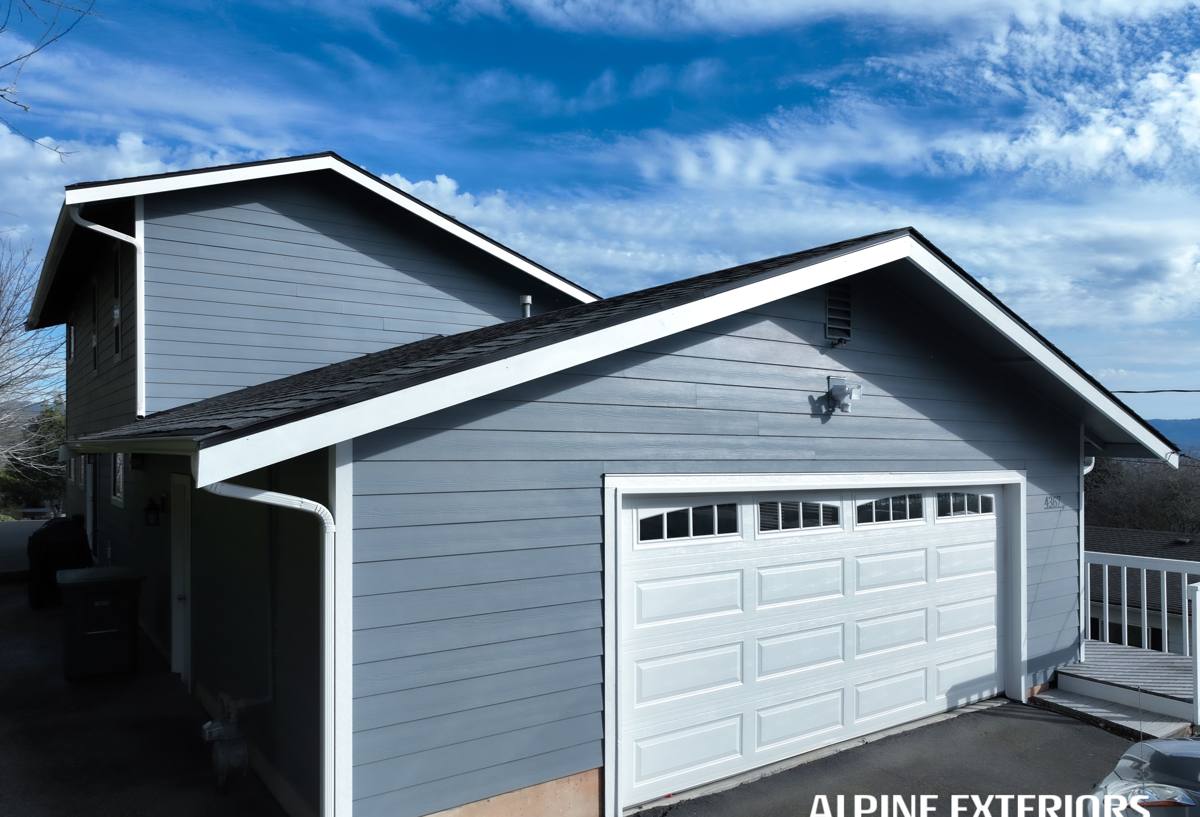
Why Roofs Fail Faster in Bellingham's Climate
Salt Air and Metal Fatigue
Homes within a few miles of the water deal with airborne salt that accelerates corrosion on unprotected or lower-grade metal — flashing, fasteners, vents, and gutter hardware. It's a slow process, but over 15-20 years it adds up, especially on the west- and north-facing exposures that catch the prevailing weather. Correct alloy selection and proper coating on exposed metal components matters more here than it would 50 miles inland.
Driving Rain and Wind-Driven Moisture
Bellingham gets weather systems that push rain sideways, not just down. That means water finds its way into laps, seams, and fastener penetrations that would stay dry in a calmer climate. Standard shingle installations that "just meet code" often skip the extra ice-and-water shield coverage or the enhanced underlayment that actually stop wind-driven rain from working its way under the roof covering at eaves, valleys, and rakes.
Moss: The Slow, Quiet Roof Killer
Moss doesn't just look bad. It holds moisture against the roof surface, lifts shingle edges as it grows, and works its root structure into granule surfaces over time. On shaded roofs — especially those under fir or cedar cover, common throughout Whatcom County — moss can establish within a couple of years of a new roof going on if the roof wasn't designed with moss resistance in mind. Once it's established, cleaning it off aggressively can do more damage than the moss itself.
What a Correct Roof Replacement Actually Involves
A roof replacement is more than removing old material and nailing down new. Here's what should happen on every full tear-off in this climate:
- Complete tear-off to the deck — never a layover — so the sheathing can be inspected and any rot or soft spots repaired before new material goes down
- Deck inspection and repair, replacing any water-damaged or delaminated plywood/OSB sheathing found underneath
- Ice-and-water shield at eaves, valleys, and around all penetrations — extended coverage beyond code minimums given the wind-driven rain exposure
- Synthetic underlayment across the full field for a consistent secondary moisture barrier
- Corrosion-resistant flashing at chimneys, walls, skylights, and roof-to-wall transitions, sized and lapped correctly for the roof pitch
- Balanced ventilation (intake at the eaves, exhaust at the ridge) sized to the attic volume, which controls moisture buildup that feeds both rot and moss growth
- Proper fastener selection and placement — nailing pattern and fastener length matter more in high-wind, high-moisture conditions than most homeowners realize
- Moss-resistant material choice where appropriate for shaded or tree-covered lots
Skipping any one of these doesn't necessarily cause an immediate problem — it causes a problem five, ten, or fifteen years down the road, usually right when the original installer is long gone.
Choosing the Right Roofing Material for a Bellingham Home
There isn't one "best" roofing material for every house — the right choice depends on the roof's pitch, sun/shade exposure, and how long the homeowner plans to stay in the house. Here's an honest comparison of the common options we install and repair in this region:
| Material | Typical Lifespan Here | Moss Resistance | Considerations in This Climate |
|---|---|---|---|
| Architectural asphalt shingle | 25-30 years | Moderate (better with algae-resistant granules) | Good value; needs proper ventilation and algae-resistant granules to slow moss/moisture staining |
| Standing seam metal | 40-50+ years | High | Sheds moisture fast, resists moss well, but requires marine-grade or coated fasteners near the water to avoid premature corrosion |
| Synthetic/composite shake | 30-40 years | Moderate to high | Good option where the look of cedar shake is wanted without the moisture-absorption issues of real wood |
| Cedar shake | 20-30 years with upkeep | Low without regular treatment | Attractive but demands ongoing maintenance in a damp, mossy climate — we'll walk through that maintenance burden honestly before recommending it |
For most Bellingham homes we work on, architectural asphalt with proper ventilation and algae-resistant granules or standing seam metal cover the majority of situations well. We'll talk through your specific roof's exposure and your maintenance appetite before making a recommendation — we're not going to push the same product on every house.
Signs a Bellingham Roof Needs Replacing, Not Just Patching
Not every roof problem means a full replacement. But there's a point where repeated patching stops making financial sense. Watch for:
- Granule loss heavy enough that you can see bare or shiny patches on shingles from the ground
- Shingles curling, cupping, or cracking across large sections rather than one isolated spot
- Moss coverage that returns quickly after cleaning, or moss thick enough to be lifting shingle edges
- Daylight visible through the roof deck from inside the attic
- Recurring leaks in different spots each winter rather than one consistent failure point
- The roof is nearing or past the manufacturer's expected service life for its material and exposure
If a roof is showing two or more of these signs, a replacement conversation is usually more cost-effective than continuing to chase individual repairs.
Our Roof Replacement Process for Bellingham Properties
1. On-Site Inspection and Honest Assessment
We walk the roof (weather permitting) and inspect the attic from inside, looking at ventilation, decking condition, and any moisture staining. We'll tell you plainly whether you need a full replacement or whether targeted repairs make more sense right now.
2. Straightforward Written Estimate
You get a clear scope of work and pricing before anything is scheduled — no vague allowances, no pressure to sign same-day.
3. Material Selection Based on Your Roof, Not a Sales Quota
We'll walk through the tradeoffs between asphalt, metal, and composite options specific to your roof's pitch, sun exposure, and how much shade or tree cover it sits under.
4. Tear-Off, Deck Repair, and Installation
Full removal of old roofing, deck inspection with any necessary sheathing replacement called out and priced transparently, then installation following manufacturer specifications and the moisture-management details this climate demands.
5. Final Walkthrough
We go over the completed roof with you, confirm ventilation and flashing details, and make sure you know what warranty coverage applies and what basic maintenance (like periodic moss checks) will help it last.
Why a Crew That Already Works Bellingham Roofs Matters
A roofing crew that works Whatcom County regularly already knows which details matter here — how much ice-and-water shield coverage this rain pattern actually calls for, which fastener and flashing metals hold up near the water, and how to size ventilation for the moss and moisture conditions specific to shaded coastal lots. That's different knowledge than what a crew coming from a drier inland market brings with them. It also means we're not guessing at permitting requirements or local wind/snow load specifics — we handle those regularly.
Being local also means accountability doesn't end when the crew packs up. If something needs a follow-up look after the first hard windstorm of the season, we're not far away.
What to Ask Before Hiring a Roofing Contractor
Whether you hire us or someone else, a few questions separate a serious contractor from a risky one:
- Are you licensed and insured in Washington State, and can you provide proof?
- Do you perform a full tear-off, or do you install over existing layers?
- What underlayment and ice-and-water shield coverage do you use, and why?
- How do you handle deck repair if rot is found once the old roofing is removed?
- What manufacturer warranty applies, and does your installation qualify for the enhanced/extended version?
- Can you provide a written, itemized estimate before work begins?
If a contractor is vague or evasive on any of these, that's worth paying attention to.
If your Bellingham roof is showing its age or you just want an honest opinion on whether repair or replacement makes more sense, we're happy to take a look. Fill out the form below for a free, no-pressure estimate.