 Lynden Siding
 Windows Built for the Wiser Lake Climate
Wiser Lake sits in a part of Whatcom County that gets the full range of what Northwest weather can throw at a house: long stretches of driving rain off the water, damp air that keeps moss and mildew active most of the year, and cold snaps in the winter that find every gap in an old window frame. Add in the salt-tinged air that moves inland off the Sound on a windy day, and you've got a combination that's tough on window seals, wood sashes, and aluminum frames alike. A window that's rated fine on paper can still underperform here if it wasn't installed with this specific climate in mind.
For homeowners around Wiser Lake and the broader Lynden area, energy-efficient windows aren't just about a lower power bill, though that's real. They're about keeping moisture out of your wall cavities, keeping cold glass from fogging and dripping onto your sills every winter, and keeping a house comfortable without the furnace running constantly from October through April.
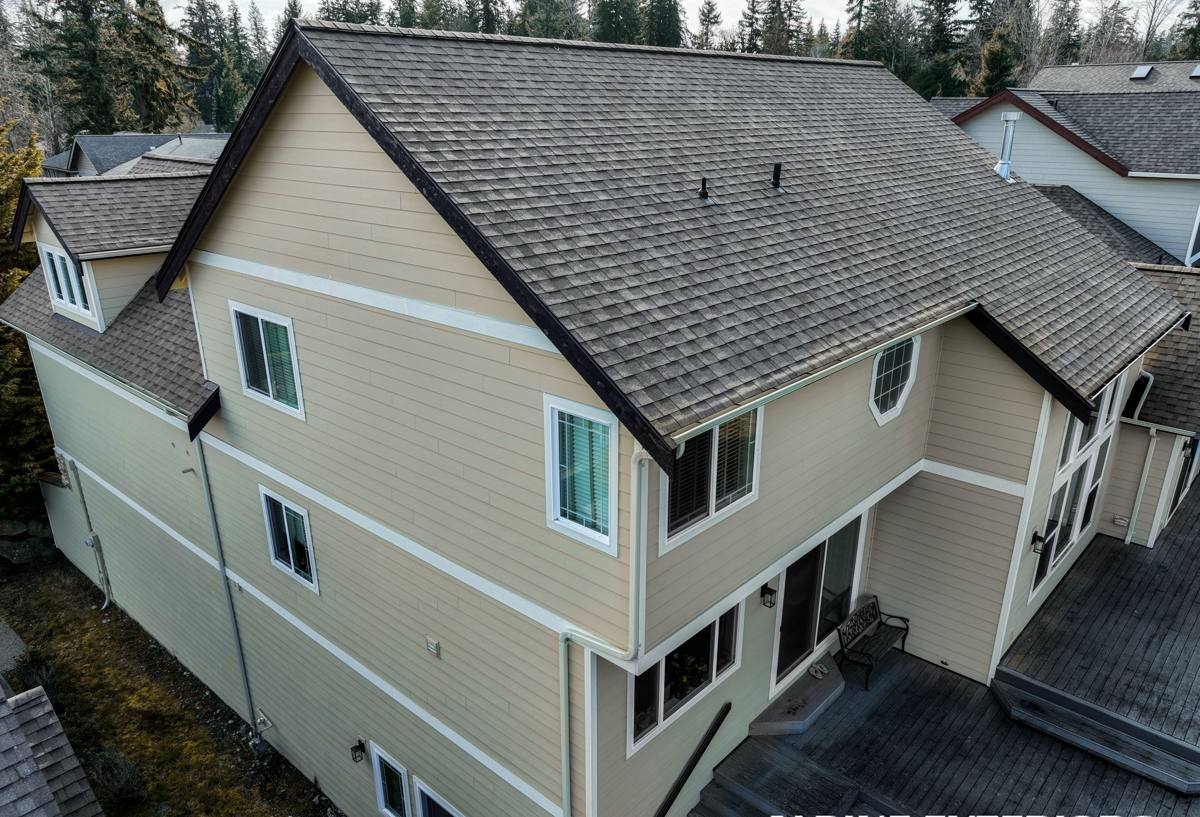
What Local Homes Around Wiser Lake Actually Deal With
Housing stock in this part of the county is a mix — older farmhouses and mid-century homes with original or once-replaced single-pane or early double-pane windows, alongside newer construction that may already have decent glass but sometimes has installation shortcuts that undercut the window's actual performance. We see a few recurring issues on both ends:
- Fogged or "sweating" double-pane glass, which means the seal between the panes has failed and the argon or air gap is gone
- Soft or discolored wood trim and sills from years of rain intrusion around poorly flashed frames
- Visible moss or algae growth on north- and west-facing window trim, a sign that area stays damp longer than it should
- Drafts you can feel with a hand near the frame on a windy day, even with windows that "look" newer
- Aluminum-frame windows from past decades that conduct cold straight through, leaving cold spots on interior walls near the window
None of these are unusual for this climate. They're the predictable result of years of rain and temperature swings working on a window system, especially if the original installation didn't account for how much water this area sees.
What "Energy-Efficient" Actually Means
The term gets used loosely, so it's worth being specific. A genuinely energy-efficient window for a Wiser Lake home is judged on a few measurable factors, all listed on the NFRC label that comes with every code-compliant window:
| Rating | What It Measures | What to Look For Here |
|---|---|---|
| U-Factor | How much heat escapes through the window | Lower is better — look for 0.30 or below for our winters |
| SHGC (Solar Heat Gain Coefficient) | How much solar heat passes through the glass | Moderate is usually right — we don't need aggressive heat rejection like a hot climate does, but excess gain on west-facing windows can still overheat a room in summer |
| Air Leakage | How much air passes through the window assembly | Lower is always better, especially on walls that take direct wind and rain |
| Condensation Resistance | How well the window resists interior fogging in cold, damp conditions | Important here — a poor rating means fogged glass and wet sills all winter |
Glass and frame technology matter, but they're only half the equation. A well-rated window installed with a poor moisture plan will still leak air and let water into the wall assembly over time. Performance on paper and performance in your actual wall are two different things until the installation ties them together.
Frame Material Trade-Offs
| Frame Type | Strengths | Trade-Offs in This Climate |
|---|---|---|
| Vinyl | Good insulating value, low maintenance, budget-friendly | Can expand/contract with temperature swings; quality varies a lot between manufacturers |
| Fiberglass | Very stable dimensionally, strong, holds paint well, excellent insulator | Higher upfront cost than vinyl |
| Wood / Wood-Clad | Classic look, good insulator, common on older or farmhouse-style homes | Needs consistent exterior maintenance to resist our rain and moss; cladding helps but sealing details still matter |
| Aluminum | Strong, slim sightlines | Conducts cold directly into the home unless thermally broken — generally a poor fit for our winters without that feature |
We don't push one material on every home. The right choice depends on your home's style, your budget, and how much exterior maintenance you want to keep up with. What we won't do is install a product where the moisture-management details are weak for this climate, or cut corners on flashing to save time — that's a callback waiting to happen, and it's the homeowner who pays for it in rot repair down the road.
What a Correct Installation Actually Involves
The window itself is maybe a third of the job. The rest is the details that keep water out of your wall for the next twenty-plus years:
- Removing the old window carefully to check the condition of the rough opening, sheathing, and framing underneath — this is where hidden rot or old water damage shows up
- Repairing any damaged framing or sheathing before a new window ever goes in — installing a good window into a bad opening just hides the problem
- Installing a proper weather-resistive barrier and flashing sequence — sill pan flashing, side flashing, and head flashing layered so water sheds outward at every step, shingle-style
- Setting the window level, plumb, and square, then securing it per manufacturer specs so the frame isn't under stress that can crack seals over time
- Insulating the gap between the frame and the rough opening correctly — not overpacked, not left with voids, using a product that won't compress the frame out of square
- Sealing and trimming the exterior with materials and caulk rated for constant weather exposure, not just interior-grade product
- Finishing the interior — trim, sill, and paint or stain to match the rest of the room
Skip or rush any one of these steps and you can end up with a window that's rated well but still lets water behind the siding within a few years. That's the difference between a window that performs for two decades and one that needs attention again in five years.
Our Process for Wiser Lake Homes
We keep the process straightforward because most homeowners just want to know what's happening and when:
- On-site assessment — we look at your current windows, check for signs of water intrusion or frame damage, and talk through what you actually need versus what's optional
- Honest product recommendation — based on your home's exposure, your budget, and what's held up on similar homes in this area
- Accurate measurement — every opening gets measured individually; older homes especially are rarely perfectly square, and assuming otherwise leads to gaps
- Scheduled installation — we plan around the weather where we can, since a dry install window matters for sealing product to cure properly
- Full flashing and sealing per the sequence above — no shortcuts on the parts you can't see once trim goes back on
- Walkthrough and cleanup — we check operation on every window, clean up debris, and make sure you know how to maintain the new windows going forward
Why Local Experience Matters Here
A window contractor who mostly works drier inland climates, or who installs the same way regardless of region, is going to make different assumptions than a crew that works Whatcom County rain and moss season every year. Details like how deep to set flashing, which sealants actually hold up to sustained wet-dry cycling, and how much ventilation gap to leave around a wood-clad frame are things you learn from doing the work here repeatedly — not from a manufacturer's generic install guide.
We also know what Lynden-area building code and permitting expects for window replacement, which matters if you're changing window size or working on a home that falls under local historic or shoreline considerations near the lake. Getting that wrong can mean redoing work or dealing with a failed inspection, both of which cost more time and money than doing it right the first time.
Signs It's Time to Replace, Not Repair
Not every window needs full replacement. Sometimes a reseal, new weatherstripping, or hardware repair solves the problem. Replacement generally makes more sense when you see:
- Fogging between the panes (failed seal — this can't be repaired, only replaced)
- Soft, spongy, or visibly rotted wood at the sill or jamb
- Windows that won't stay open or won't lock securely
- Persistent drafts even after weatherstripping has been replaced
- Single-pane glass anywhere still original to an older home
If you're not sure which category your windows fall into, that's exactly what a walkthrough is for — we'll tell you honestly if repair is the better call for your budget.
Get a Straightforward Estimate
If you're weighing new windows for a home near Wiser Lake, we're happy to come take a look, answer questions about materials and ratings, and give you a clear estimate with no pressure to decide on the spot. Use the form below to request a free estimate.