 Lynden Siding
 Why Abbotsford Windows Wear Out Faster Than You'd Expect
Abbotsford sits in a part of the Fraser Valley that takes weather from two directions at once — salt-tinged air pushing in off the coast, and heavy, wind-driven rain funneling through the valley for months at a stretch. Add a moss season that can linger well past spring on shaded north and west walls, and you've got a climate that's genuinely tough on window frames, sills, and the seals around them. Homes here don't fail because the windows were bad to begin with. They fail because moisture finds a way in, sits, and slowly breaks down materials that were never built to handle sustained exposure.
We've installed and repaired windows on both sides of the border in this stretch of Whatcom County and the Fraser Valley, and the pattern is consistent: the same window style that holds up fine in a drier inland climate will show rot, fogging, or hardware failure years earlier here. That's the starting point for any honest conversation about window replacement in this area — the climate isn't a footnote, it's the main design constraint.
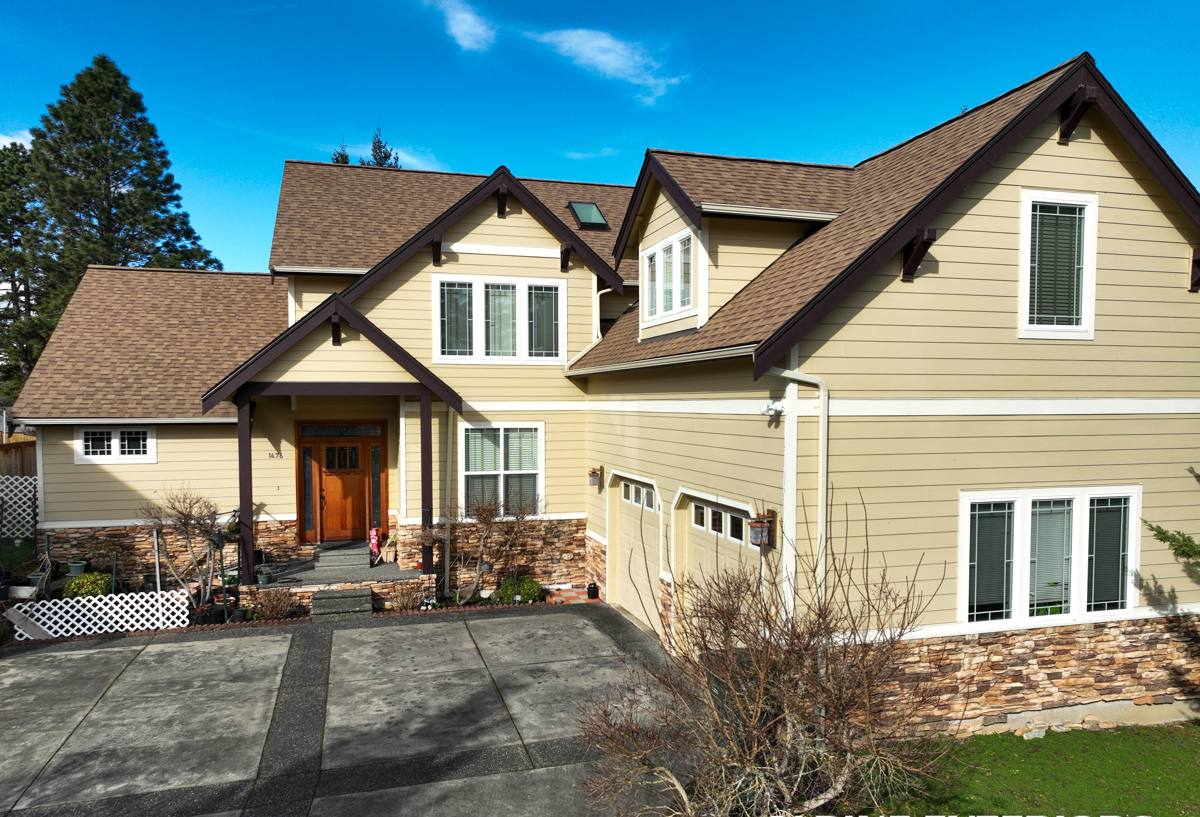
Signs It's Time to Replace, Not Repair
Not every problem window needs full replacement. But in a climate like this, patching a symptom without addressing the underlying moisture path usually just buys a year or two before the same issue returns, often worse. Here's what tells us a window has crossed the line from "repairable" to "replace it."
- Fogging or a visible haze between the panes — the seal has failed and the insulating gas is gone for good
- Soft, spongy, or darkened wood at the sill or bottom corners of the frame
- Persistent moss or algae growth on the frame itself, not just nearby siding or trim
- Windows that are difficult to open, close, or lock — often a sign the frame has swelled or shifted
- Visible daylight or a noticeable draft around the frame when it's closed
- Condensation forming consistently on the interior glass, even in normal humidity
- Peeling or bubbling paint on wood-framed windows, especially on the exterior face
- A noticeable jump in heating costs without any other explanation
If you're seeing one or two of these on an otherwise sound window, a repair may make sense. If you're seeing several, or the same problem keeps coming back, replacement is usually the more honest recommendation — and the more cost-effective one over a five- or ten-year horizon.
What a Correct Window Replacement Job Actually Involves
Window replacement looks simple from the outside — old window out, new window in — but the quality of the job is almost entirely determined by what happens at the rough opening, not by the window unit itself. This is where most callback problems in this climate originate.
Removal and Opening Prep
Once the old window is out, we inspect the framing and sill for hidden rot or moisture staining before anything new goes in. In a region with this much sustained rain, it's common to find soft framing that wasn't visible from inside. Covering that up instead of addressing it is how a new window ends up failing in the same spot within a few years.
Flashing and Weatherproofing
Proper flashing — sill pan, side flashing, and head flashing integrated correctly with the building's weather-resistive barrier — is the single most important step for keeping wind-driven rain out. This is also the step most likely to get rushed on a low-cost job, because it's invisible once the trim goes back on. We don't skip it, and we don't shortcut the order of operations.
Setting, Shimming, and Insulating
The window has to be plumb, level, and square, shimmed correctly at the right load points, and insulated around the perimeter without over-packing the gap, which can bow the frame and cause operational problems later.
Trim and Finish
Exterior trim and caulking are finished with attention to how water sheets off the wall in this climate — not just for appearance, but to direct rain away from seams instead of letting it collect there.
Choosing a Frame Material for This Climate
There's no single "best" window material — the right choice depends on exposure, budget, and how much maintenance you're willing to keep up with. Here's how the common options actually perform in a wet, salt-air, moss-prone climate like this one.
| Material | Moisture Resistance | Maintenance | Typical Lifespan |
|---|---|---|---|
| Vinyl | Very good — won't rot, resists salt air well | Low — occasional cleaning | 20–30 years |
| Fiberglass | Excellent — dimensionally stable, handles moisture and temperature swings well | Low | 30+ years |
| Wood (unclad) | Poor without diligent upkeep — most vulnerable to this region's rain and moss | High — regular painting/sealing required | Varies widely with maintenance |
| Aluminum or wood-clad | Good on the exterior face; interior wood still needs some care | Moderate | 20–30 years |
For most homes in this area, we steer people toward vinyl or fiberglass for the bulk of their windows, simply because unclad wood exposed to this much sustained moisture is a heavier maintenance commitment than most homeowners realize going in. That's not a knock on wood as a material — it's a fair warning about what it costs in upkeep here specifically.
Our Process for Abbotsford, BC Homeowners
- On-site assessment. We look at each window individually — exposure, condition, framing — rather than quoting a blanket price sight unseen.
- Straightforward estimate. You get a clear breakdown of what's being replaced, the materials involved, and the timeline, with no pressure to decide on the spot.
- Scheduling around the weather. Openings are only exposed for as short a window as possible, and we plan around forecasted rain wherever we can.
- Removal, inspection, and proper flashing. Every opening is checked for hidden moisture damage before the new window goes in.
- Installation and finish work. Setting, insulating, trimming, and sealing, done in the order that keeps water out long-term.
- Final walkthrough. We check operation, sightlines, and seals with you before calling the job done.
Why Local Experience in Abbotsford Matters
A window installer who mostly works in drier climates will build to a generic standard. A crew that regularly works this stretch of the Fraser Valley and Whatcom County knows which wall of a house takes the worst wind-driven rain, which rooflines shed water onto which windows, and where moss tends to establish itself first because of shade and airflow patterns. That knowledge changes small decisions — flashing details, sealant choice, where extra attention goes — that a generic install won't account for.
It also matters for troubleshooting existing problems. If a window has been failing repeatedly, the cause is often something specific to the house's exposure, not a flaw in the window itself. Recognizing that pattern comes from having seen it before, on other houses facing the same direction into the same weather.
What Window Replacement Costs — and What Drives the Price
Costs vary based on window size, material, number of openings, and site conditions, so we won't quote a number without seeing the job. What we can tell you honestly is what tends to move the price up or down.
| Factor | Effect on Cost |
|---|---|
| Frame material (vinyl vs. fiberglass vs. wood-clad) | Fiberglass and wood-clad typically cost more than vinyl per unit |
| Hidden rot or framing damage found during removal | Adds labor and material cost, but is far cheaper to fix now than after a new window fails |
| Number of windows done at once | Bundling multiple windows in one visit usually lowers the per-window cost |
| Glass upgrades (double vs. triple pane, low-E coatings) | Increases unit cost but improves comfort and energy performance |
| Access and height (second story, tight clearances) | Can add labor time and equipment cost |
We'd rather walk you through these factors up front than hand you a lowball number that grows once work starts. If budget is a constraint, we can talk through prioritizing the windows in worst condition or worst exposure first, rather than doing every window at once.
After Installation: Keeping Moss and Moisture From Undoing the Work
A correctly installed window in this climate still benefits from a little seasonal attention. It's a small time investment that protects a much larger one.
- Rinse frames and sills periodically to clear salt residue and organic buildup before moss gets a foothold
- Keep gutters and downspouts clear so water isn't sheeting over window heads
- Check caulking annually, especially after a hard winter, and re-seal any cracked sections promptly
- Trim back vegetation that's shading a window and keeping it damp longer than it should be
- Operate locking hardware a few times through the wet season so it doesn't seize up from disuse
If you're weighing whether it's time to replace a window, or a whole set of them, we're happy to take a look and give you a straight answer — including telling you if a repair is the more sensible move. Reach out for a free, no-pressure estimate using the form below.