 Lynden Siding
 Window Replacement Built for Maple Falls Conditions
Homes around Maple Falls deal with a specific mix of weather that most window installers treat as an afterthought: long stretches of driving rain, moisture-heavy marine air rolling in off the Sound, and moss seasons that stretch on for months rather than weeks. None of that is dramatic on its own, but stacked together over years it's exactly the kind of slow, steady exposure that finds every weak point in a window installation — the flashing detail that was skipped, the sealant bead that was too thin, the sill that was never properly sloped. Window replacement here isn't just about swapping old glass for new. It's about making sure the install itself can stand up to a climate that doesn't let up.
We work throughout Whatcom County, and Maple Falls comes with its own set of considerations: older homes with original single-pane or early double-pane units, wood-frame construction that's taken on decades of moisture cycling, and a mix of full-time residences and part-time or vacation properties where a window problem can go unnoticed for a while before someone's around to catch it. A window replacement job done right here accounts for all of that, not just the size of the opening.
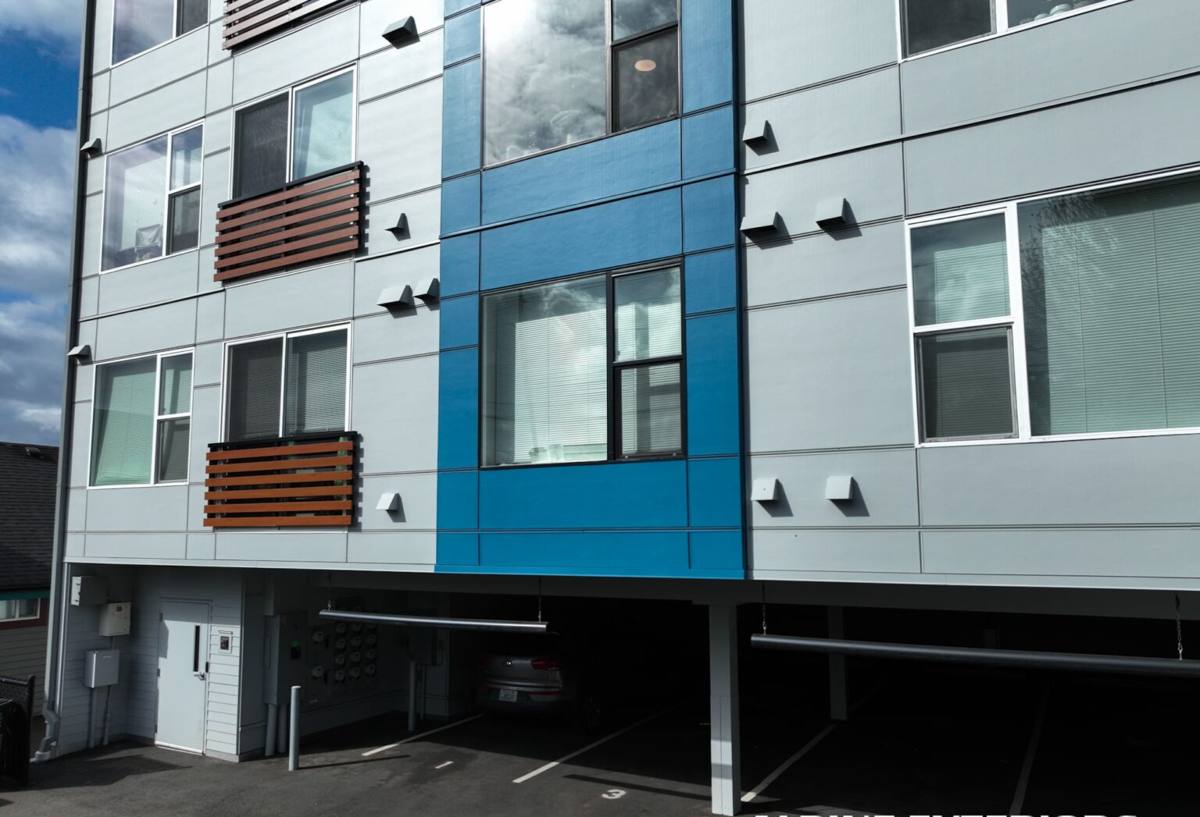
Why This Climate Is Hard on Windows
It helps to understand what's actually working against a window in this part of Whatcom County over time, rather than treating "it's rainy here" as a vague catchall.
Driving Rain and Wind-Driven Moisture
Rain that comes in at an angle, pushed by wind, behaves very differently than rain falling straight down. It gets forced up under trim, into gaps around the frame, and behind siding that isn't properly lapped. A window that was installed without correct flashing sequencing — where each layer overlaps the one below it, shingle-style, so water is always directed outward and down — will eventually let moisture find its way into the wall cavity. That's true whether the window itself is brand new or original to the house.
Marine Air and Constant Humidity
The moisture-laden air common to this part of Washington keeps wood, seals, and hardware perpetually a little damp, even on days without active rain. That kind of steady humidity is harder on materials than an occasional heavy storm, because there's rarely a long dry stretch for anything to fully recover. Wood sashes and sills are especially vulnerable — this is where rot usually starts, quietly, on the inside face of the frame where nobody's looking.
Long Moss Seasons
Moss doesn't just grow on roofs. It takes hold on window sills, in corner joints, and along any horizontal surface near a window where debris and moisture collect. Beyond the cosmetic issue, moss and the organic buildup around it hold water against wood and trim far longer than bare material would, which accelerates rot and finish failure right at the window perimeter.
Signs a Maple Falls Home Needs Window Replacement
- Visible fog or moisture trapped between panes on double-pane units — a sign the seal has failed
- Soft, spongy, or discolored wood at the sill or lower frame corners
- Windows that are difficult to open, close, or lock, especially after damp weather
- Persistent drafts or a noticeable temperature difference near the window even when it's shut
- Paint or finish that keeps bubbling, peeling, or failing in the same spot every year
- Moss or dark staining building up on the sill or exterior trim
- Rising heating bills without a clear explanation elsewhere in the house
- Visible gaps between the window frame and siding or trim
What a Correct Window Replacement Involves
A window replacement is only as good as what happens before, during, and after the glass and frame go in. In this climate, several steps matter more than they might in a drier region.
Assessing the Opening, Not Just the Window
Before anything is removed, we check the condition of the rough opening — the framing, sheathing, and any existing flashing or building paper. If moisture has already gotten into the wall cavity, that needs to be addressed before a new window goes in, not covered up behind it. Installing a new window over a compromised opening just delays the same problem and hides it from view.
Flashing and Water Management
Correct flashing is the single most important part of a window installation in a wet climate, and it's also the part that's easiest to shortcut. Sill pan flashing, properly lapped side and head flashing, and a clear path for any water that does get past the exterior finish to drain back out — these details determine whether a window lasts fifteen years or fifty.
Sealing and Insulation
Gaps around the frame need to be sealed and insulated correctly — not overpacked with expanding foam, which can bow a frame out of square, and not left loose enough to allow air and moisture movement. This is a balance that comes from experience with the specific window types and wall assemblies common in this area.
Frame Material Choices for This Climate
We steer most Maple Falls homeowners toward vinyl or fiberglass frames for their moisture resistance and low maintenance demands. Solid wood windows can still look right on certain homes, but they require a real ongoing maintenance commitment — periodic refinishing, careful attention to any finish failure — to hold up against the amount of moisture this area sees. We'll walk through the honest maintenance trade-offs for any material you're considering rather than just pushing what's easiest for us to install.
Frame Material Comparison
| Frame Material | Moisture Resistance | Maintenance | Typical Fit |
|---|---|---|---|
| Vinyl | High — won't rot, minimal upkeep | Low | Most homes, best value |
| Fiberglass | High — very stable in temperature swings | Low | Larger openings, higher-end replacements |
| Wood | Moderate — depends entirely on upkeep | High | Historic or character homes where owner commits to maintenance |
| Wood-clad | Good on exterior face, wood interior needs care | Moderate | Homeowners wanting a wood interior look with better exterior durability |
Our Process for a Maple Falls Window Replacement
- On-site assessment of existing windows, framing condition, and any signs of prior water intrusion
- Honest recommendation on repair versus replacement, and which frame materials make sense for the specific exposure of each window
- Written estimate covering materials, labor, and any framing repair that's needed before installation
- Careful removal of existing windows with protection for interior finishes and landscaping
- Correct flashing, sealing, and insulation at every opening, installed to shed water outward regardless of wind direction
- Final check of operation, seals, and exterior trim work before we consider the job finished
Cost Factors for Window Replacement
Every home is different, so we won't quote a number without seeing the actual openings, but a few factors consistently drive cost up or down on jobs in this area.
| Factor | Why It Matters |
|---|---|
| Number and size of openings | More and larger windows mean more material and labor |
| Frame material selected | Vinyl is typically most affordable; fiberglass and wood cost more upfront |
| Condition of existing framing | Rotted sheathing or framing found during removal adds repair work |
| Window style | Casement, double-hung, and picture windows vary in installation complexity |
| Access and site conditions | Upper-story windows or difficult access can add time |
As a general rule, straightforward vinyl replacements in an opening with sound framing sit at the lower end of the cost range, while jobs that uncover moisture damage or involve larger, custom-sized openings run higher. We'll always separate out any framing repair cost from the window installation itself so you can see exactly what you're paying for.
Why Local Experience Matters Here
A crew that's already worked on homes throughout Lynden and the surrounding Whatcom County communities has seen how this specific climate behaves against specific building styles — the older wood-frame homes, the mix of construction eras around Maple Falls, and the particular way wind-driven rain hits certain exposures more than others. That's not something you can fully substitute with general installation experience from a drier or more sheltered region. Flashing details that hold up fine somewhere with less wind-driven rain can fail here within a few seasons.
Working locally also means we're not guessing at permit requirements, typical framing conditions, or how a given product line has actually performed on homes nearby over time. When something needs to be right the first time — because redoing a window installation means opening the wall back up — that local track record is worth something real.
Maintaining Your Windows After Replacement
- Clear debris and moss from sills and tracks a few times a year, more often in shaded or north-facing spots
- Check exterior caulking annually and touch it up before gaps let water in
- Keep gutters and downspouts clear so runoff isn't sheeting down across window openings
- Watch for condensation between panes as an early sign of seal failure
- Repaint or refinish wood components before the existing finish fully breaks down, not after
If you're noticing drafts, moisture, or wear on your windows and want a straight answer on whether repair or full replacement makes sense for your Maple Falls home, we're happy to come take a look. Estimates are free, there's no pressure to move forward, and we'll walk you through exactly what we find. Use the form below to get started.