 Lynden Siding
 Why Decks in Laurel Wear Out Faster Than Homeowners Expect
Laurel sits in the same wet, mossy stretch of Whatcom County as the rest of the Lynden area, and that climate is not gentle on outdoor structures. Long stretches of driving rain, damp air carrying salt from the nearby Puget Sound region, and a moss season that can run for months all work against wood and fasteners year after year. A deck that looked fine five years ago can be quietly failing underneath by year twelve or fifteen, even if the surface boards still look serviceable from a distance.
The problem is rarely just the decking surface. It's what's underneath: ledger boards pulling away from rim joists, joist hangers rusting from the inside out, and post bases sitting in standing water because the original build never accounted for how much rain this area actually gets. By the time a deck feels spongy or a railing wiggles, the structural wood has usually been losing integrity for a while. Replacement, done correctly, is the chance to fix all of that at once instead of patching symptoms.
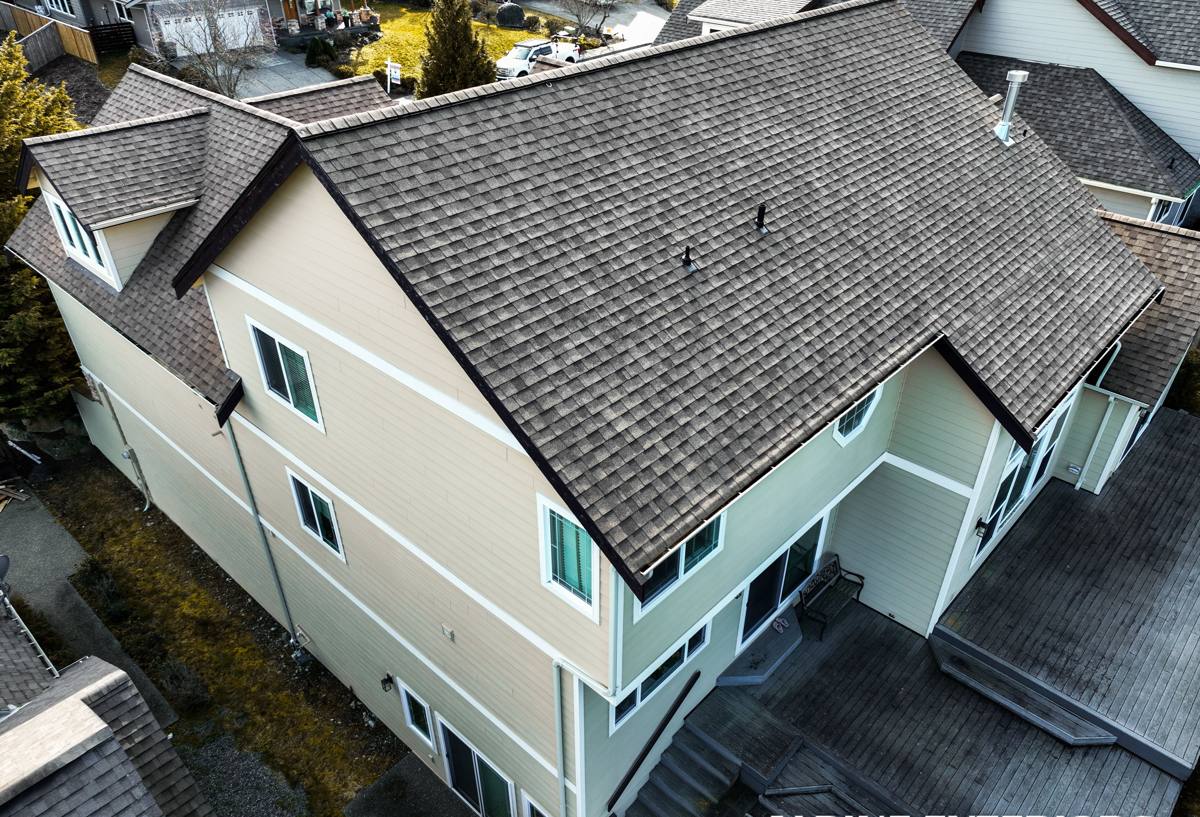
Signs a Laurel Deck Needs Replacement, Not Another Repair
Not every tired-looking deck needs to come out. But there's a point where patching boards is throwing money at a structure that's already compromised. Here's what tells us a full replacement is the smarter call.
- Soft, spongy, or bouncy spots in the decking or framing when you walk across it
- Wood that's gone gray and fibrous, or that splinters and crumbles when probed with a screwdriver
- Persistent moss or algae growth that comes back within weeks of cleaning
- Rust streaking around fasteners, joist hangers, or post brackets
- A ledger board separating from the house, or visible gaps where it meets the siding
- Railings or stair stringers that flex, wobble, or feel less solid than they used to
- A deck that was never properly flashed at the house connection, allowing water behind the siding
If you're only seeing one or two of these and the framing underneath is sound, a repair may still make sense. If several apply, or if the deck is original to a home built more than 20 years ago, replacement is usually the more honest recommendation.
What a Correct Deck Replacement Actually Involves
Structural Framing and the Ledger Connection
The part of a deck that matters most is the part nobody sees once it's finished. Framing lumber needs to be rated for exterior/ground contact where applicable, joists need proper hangers rather than toe-nailed connections, and the ledger board — the piece that attaches the deck to the house — needs correct flashing so water is directed away from the wall assembly instead of into it. This is the single most common failure point we find on older Whatcom County decks: a ledger that was face-nailed or lag-bolted without flashing, quietly rotting the rim joist and the siding behind it for years.
Footings and Post Bases
In ground that stays saturated for much of the winter, footing depth and post base drainage matter more than most homeowners realize. Posts set directly in soil, or bases without a gap to keep wood off standing water, are a leading cause of premature rot at the base of an otherwise sound deck. A proper replacement re-evaluates footing placement and uses post bases designed to keep wood elevated and drained.
Decking Surface and Fastening
Whatever material you choose for the surface, how it's installed matters as much as what it's made of. Proper board spacing allows for drainage and seasonal movement; tight, poorly gapped boards trap moisture and accelerate the exact moss and rot problems this climate already encourages. Fastener choice — hidden clips versus face screws — affects both appearance and how water sheds off the surface.
Choosing a Decking Material for Laurel's Climate
There's no single "best" decking material — there's the right material for how you use the deck, how much upkeep you're willing to do, and what you're comfortable spending. Here's an honest comparison based on how each option actually performs in this region's wet, moss-prone conditions.
| Material | Moisture & Moss Resistance | Maintenance | Typical Lifespan |
|---|---|---|---|
| Pressure-treated wood | Fair — needs sealing to perform well; end grain is vulnerable | Annual cleaning and periodic re-sealing/staining | 10–15 years before major repair or replacement |
| Cedar | Good natural rot resistance, but surface still needs care | Regular cleaning, staining or sealing every 2–3 years | 15–20 years with upkeep |
| Capped composite | Very good — shrugs off moss and standing water on the surface | Occasional washing, no staining or sealing | 25+ years, backed by manufacturer warranty |
| PVC decking | Excellent — fully synthetic, doesn't absorb moisture | Lowest — soap and water cleaning | 25+ years, typically longest warranty |
Wood costs less upfront and has a natural look many homeowners prefer, but it's honest to say it demands the most ongoing attention in a climate like this one — skip a year of sealing and moss gets a foothold fast. Composite and PVC cost more initially but largely remove maintenance from the equation, which is why we see more Laurel-area homeowners moving that direction on replacements, especially for decks that get heavy shade or tree cover where moss is worse.
Framing Material Matters Too
Even homeowners who choose composite or PVC decking should think about what's underneath. Standard pressure-treated framing works, but in consistently damp, shaded yards, upgrading to a more moisture-resistant substructure or ensuring excellent drainage and airflow under the deck extends the life of everything built on top of it.
Our Deck Replacement Process
- On-site assessment. We look at the existing structure, note where rot or damage has already spread, and check the ledger and framing condition — not just the surface.
- Honest scope and estimate. You get a clear picture of what needs full replacement versus what's actually sound, and pricing that reflects real material and labor costs, not a guess.
- Tear-off and disposal. The old deck comes out completely, including any framing that's compromised, and debris is hauled off the property.
- Framing and flashing. New footings, posts, joists, and a properly flashed ledger connection go in first — this is the step that determines how long the new deck actually lasts.
- Decking installation. Boards are installed with correct spacing and fastening for your chosen material, whether that's wood, composite, or PVC.
- Railings, stairs, and finish details. Code-compliant railings and stairs are built or reinstalled, and every connection is checked before we call the job done.
- Final walkthrough. We walk the finished deck with you so you know how it's built and what, if anything, it needs from you going forward.
Permits and Whatcom County Requirements
Deck replacement, especially when it involves new framing, footings, or a deck built above a certain height, generally requires a permit in Whatcom County. Some smaller, ground-level replacements may fall under exemptions, but that depends on the specifics of the project. We handle the permit process as part of the job rather than leaving it for the homeowner to sort out, and we build to the code requirements that apply — including guardrail height, stair geometry, and structural connections — rather than cutting corners that show up as problems at resale or inspection.
Why a Crew That Already Works in Laurel Makes a Difference
Deck problems in this part of Whatcom County tend to follow patterns — a specific type of ledger flashing failure, framing that wasn't rated for how wet the ground stays, moss that keeps coming back because a deck sits under tree cover with poor airflow underneath. A crew that's replaced decks throughout the Lynden and Laurel area has already seen those patterns and knows what to check for before it becomes your problem twice. That's different from a contractor working from a generic checklist without local context.
Local experience also means realistic scheduling around this region's weather windows, familiarity with the county's permitting process, and an understanding that a deck built here needs to be built for the actual conditions it will sit in — not a climate-agnostic standard.
Keeping a New Deck Ahead of Whatcom County's Moss Season
A well-built replacement deck still needs some basic upkeep to get its full lifespan out of this climate. A few habits go a long way:
- Sweep leaves and debris off the surface regularly, especially in fall — trapped organic material feeds moss growth
- Rinse or wash the deck surface a couple of times a year to knock back algae and moss before it establishes
- Keep gutters and downspouts clear so runoff isn't dumping extra water directly onto or under the deck
- Check the ledger flashing and house connection annually for any sign of gapping or water staining
- For wood decks, stay on top of the sealing or staining schedule rather than letting it slide a year or two
- Trim back overhanging branches that keep the deck surface shaded and slow to dry
Get a Straightforward Estimate
If your deck in Laurel is showing soft spots, persistent moss, or just feels like it's on borrowed time, it's worth having someone take an honest look before you decide between repair and replacement. We offer free, no-pressure estimates and will tell you plainly what we find — use the form below to get started.