 Lynden Siding
 Windows Built for Kendall's Weather, Not Just Kendall's Style
Kendall sits close enough to the water and the foothills that homes here take on a specific combination of weather stress: damp, salt-tinged air moving in off Puget Sound, driving rain that comes in sideways during winter storms, and long stretches of gray, moist months that let moss and algae take hold on anything that stays wet too long. Windows are one of the first places that shows up. A window that was installed correctly ten or fifteen years ago in a drier climate might be fine today. A window installed a little too fast, with shortcuts on flashing or sealant, tends to fail early here — and it usually fails quietly, behind the trim, before anyone notices water on the sill.
This page is specifically about window installation for homes in and around Kendall. Not a general "we do windows everywhere" pitch — this is what we've learned installing and replacing windows on homes that sit in this exact stretch of Whatcom County, dealing with this exact weather pattern.
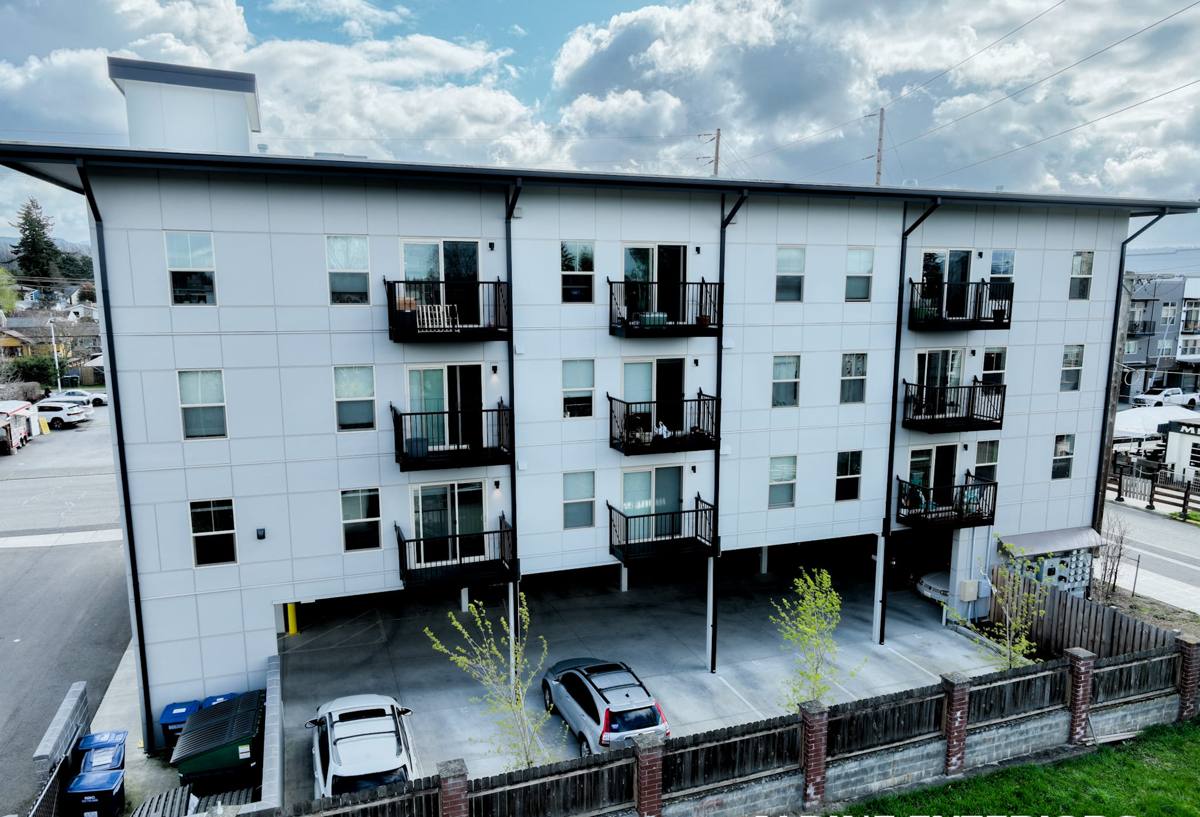
What Salt Air, Rain, and Moss Season Actually Do to a Window
Salt Air and Metal Fatigue
Homes closer to the coast and the lowland areas around Whatcom County pick up trace salt in the air, especially during winter storms. Over years, that salt accelerates corrosion on aluminum window components, screen frames, and hardware that isn't rated for coastal exposure. It's slow damage, which is exactly why it goes unnoticed until a window won't latch properly or a frame starts pitting.
Driving Rain and Wind-Driven Water
Rain that falls straight down is easy to manage. Rain that gets pushed sideways by wind — which happens regularly here — tests a window's weather-stripping and flashing in a way that calm-weather rain never will. This is where most window failures actually start: not through the glass, but around it, where water finds a gap in the flashing or a compressed, worn seal and works its way into the wall assembly.
Moss and Sustained Moisture
Whatcom County's long wet season means anything that holds moisture — window sills, the top of trim boards, low spots in cladding — stays damp for extended periods. That's ideal conditions for moss and mildew growth, and sustained moisture against wood trim or a compromised seal accelerates rot far faster than an occasional rainstorm would on its own.
Signs a Kendall Home Needs a Window Look, Not a Repair
Some window problems are worth patching. Others mean the installation itself has failed and a repair will only buy a little time. Watch for:
- Visible daylight or a draft around the frame when the window is fully closed and latched
- Soft or discolored trim or sill wood, especially at the bottom corners
- Fogging or a permanent haze between double-pane glass — a sign the seal has failed
- Windows that are difficult to open, close, or lock, particularly after a cold snap
- Visible gaps, cracked caulking, or daylight showing between the window frame and siding
- Moss or dark staining building up on the sill or the trim directly below the window
- Higher heating bills without any other clear cause
Any one of these can be minor. Two or three together, especially on the same window, usually means the installation has reached the end of its service life rather than needing a small fix.
What a Correct Window Installation Actually Involves
Flashing Comes Before the Window
The single biggest factor in whether a window lasts is what happens before it's ever set in the opening. Proper flashing — sill pan, jamb, and head flashing installed in the right order, lapped correctly so water sheds outward and downward — is what keeps wind-driven rain out of the wall long after the caulking has aged. Skipping or rushing this step is the most common reason a window that "looks fine" ends up with rot behind it within a few years.
Air Sealing and Insulation Around the Frame
A window opening that's framed a little large needs to be sealed with the right materials — not just stuffed with fiberglass, which does little to stop air movement. Low-expansion foam or backer rod and sealant around the perimeter closes the air gaps that drive both drafts and condensation problems.
Exterior Sealant and Trim Detail
The visible bead of sealant around the outside of a window is the last line of defense, not the first. It needs to be applied to clean, dry surfaces with the right joint width, and it needs to be a product rated for this climate's temperature swings and UV exposure — not something that will crack and separate after a year or two of freeze-thaw cycles.
Proper Fit and Level Set
A window that isn't shimmed level and plumb will operate poorly and stress its own seals over time, which shortens its lifespan regardless of how good the window itself is.
Window Types That Hold Up Well in This Climate
There's no single "best" window for every home, but some materials and glass packages consistently perform better under Whatcom County conditions than others. Here's how the common options compare for a Kendall home specifically:
| Window Type | How It Handles Local Weather | Maintenance |
|---|---|---|
| Vinyl | Good moisture and salt-air resistance, doesn't rot or corrode, stable in this climate's temperature range | Low — occasional cleaning, no painting |
| Fiberglass | Excellent dimensional stability in wet/dry and hot/cold swings, holds paint well if a custom color is wanted | Low to moderate |
| Wood or Wood-Clad | Strong appearance, but exposed wood needs consistent upkeep to resist the moss and moisture cycle here | Higher — regular painting/sealing on any exposed wood |
| Aluminum | Prone to corrosion over time in salt-influenced air unless it's a coastal-rated product | Moderate — watch hardware and frame condition |
We'll walk through glass packages too — double-pane with a low-E coating and the right gas fill is standard for this area's mix of cool, wet winters and warmer summer afternoons. What matters more than the brand name on the window is whether it's installed with the flashing and sealing detail described above; a mid-range window installed correctly will outlast a premium window installed carelessly.
Our Process, Start to Finish
- Walkthrough and assessment — we look at every window in question, check for existing water intrusion or rot, and talk through what you're trying to solve (efficiency, function, appearance, or all three).
- Honest recommendation — we tell you which windows actually need replacing now versus which can wait, and which product fits your home and budget.
- Written estimate — clear pricing, no surprise add-ons buried in fine print.
- Removal and inspection — old windows come out carefully so we can check the framing and sheathing underneath for hidden moisture damage before anything new goes in.
- Proper flashing and installation — done in the sequence described above, not shortcut to save time.
- Interior and exterior finish work — trim, caulking, and cleanup so the job looks right from both sides.
- Final walkthrough — we check operation on every window with you before we consider the job done.
Cost Factors for Window Installation Near Kendall
Every home is different, so we don't quote a blanket price — but these are the factors that actually move the number, so you know what you're paying for when you get an estimate:
| Factor | Why It Affects Cost |
|---|---|
| Number of windows | Straightforward volume — more openings, more material and labor |
| Existing damage behind the window | Rotted framing or sheathing found during removal adds repair work before the new window can go in |
| Window material and glass package | Vinyl, fiberglass, and wood-clad carry different price points; upgraded glass adds cost but improves comfort and efficiency |
| Retrofit vs. full-frame replacement | Full-frame replacement resets the flashing and is often the right call on older homes, but takes more labor than a retrofit |
| Access and window size | Second-story, oversized, or hard-to-reach windows take more time and equipment |
We'll flag any of these that apply to your home during the initial walkthrough, before you commit to anything.
Why a Crew That Already Works in Kendall Makes a Difference
A lot of window problems in this area trace back to installation practices that were fine for a drier climate but don't hold up against sustained coastal-influenced rain and moisture. A crew that regularly works homes in and around Kendall and Lynden already knows to treat flashing and sealing as the priority, not an afterthought, because we've seen firsthand what happens when it's skipped — soft trim, stained sills, and windows that fog or stick within a few years. That local experience shows up in the details: how flashing is lapped, which sealants actually hold up through a Whatcom County winter, and which window products are worth recommending versus which look good on paper but struggle in this specific climate.
If your windows in Kendall are drafty, fogged, hard to operate, or just old enough that you're wondering whether it's time, we're happy to take a look and give you a straight answer — including telling you if a window doesn't need replacing yet. Reach out for a free, no-pressure estimate using the form below.