 Lynden Siding
 Why Bellingham's Climate Is Hard on Exterior Siding
Bellingham sits close enough to Bellingham Bay and the Salish Sea that homes here deal with a combination of stresses most inland siding never sees: salt-laden air moving in off the water, long stretches of driving rain pushed sideways by wind, and a moss and algae season that can run most of the year under the right shade and moisture conditions. Add in Whatcom County's mild but persistently damp winters, and you have an environment where the wrong siding product, or the right product installed carelessly, shows problems fast.
Salt air accelerates corrosion on fasteners and trim metal. Driving rain finds every gap in flashing and caulk instead of just running down the face of the wall. And moss doesn't just look bad — it holds moisture against the siding surface for weeks at a time, which is exactly the condition that causes rot, paint failure, and swelling in products that aren't built to handle it. Any siding decision for a Bellingham home has to account for all three at once, not just one of them.
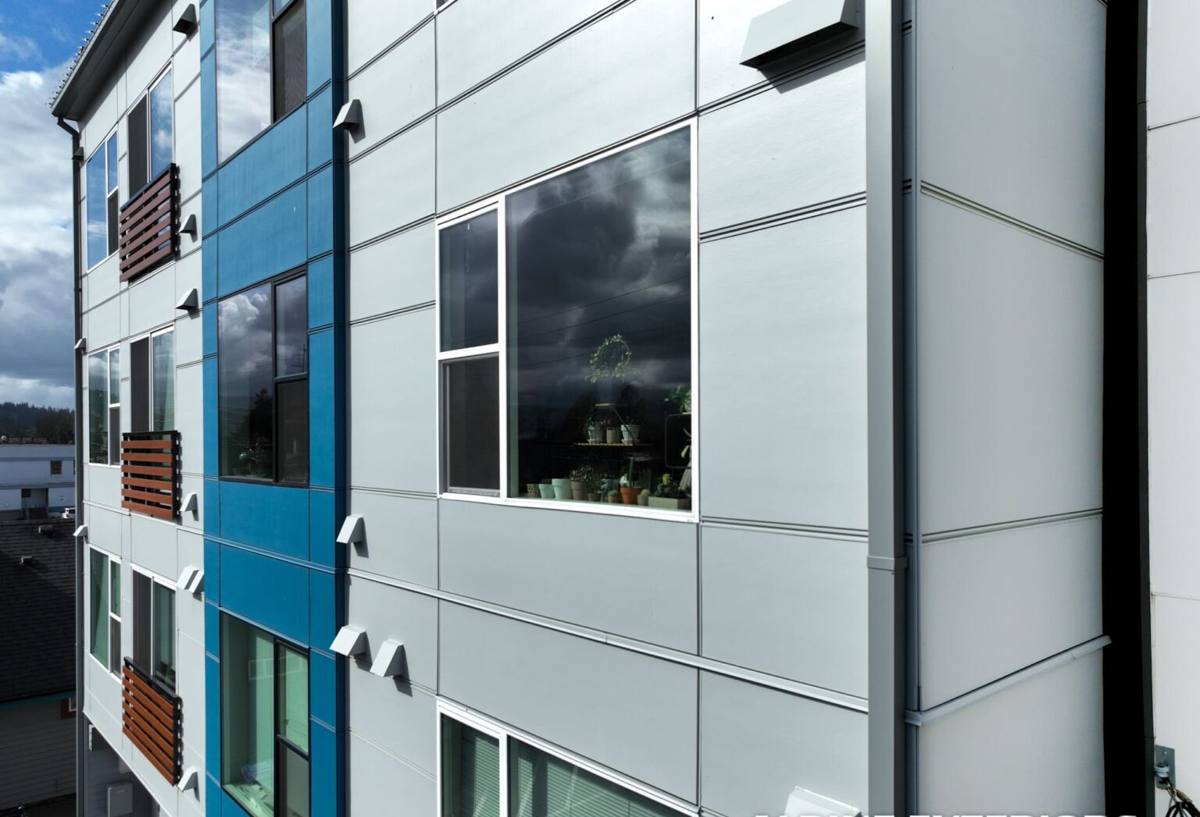
What "Correct" Fiber Cement Siding Actually Requires Here
The Product Has to Match the Climate
Not all fiber cement is engineered the same way. James Hardie makes climate-specific HZ product lines specifically because a house in a dry inland climate and a house near tidal water don't face the same moisture load. For Bellingham and the rest of Whatcom County's marine-influenced zone, that means specifying the HZ5 line, engineered for wet, humid climates with freeze-thaw cycling — not a generic board pulled off the shelf without regard for where it's going.
The Installation Has to Manage Water on Purpose
Fiber cement siding fails less often because of the material itself and more often because of how it was installed. In a climate that throws driving rain at a wall for days at a time, every horizontal joint, window head, and butt seam is a place water will try to get behind the cladding. Correct installation means:
- Proper weather-resistive barrier and rainscreen or drainage gap behind the siding, not siding fastened flush to sheathing
- Factory or field-applied flashing at every window, door, and horizontal transition, lapped correctly with the water-resistive barrier
- Minimum clearance from grade, decks, patios, and roof lines so splashback and standing moisture don't sit against the bottom course
- Fasteners and trim hardware rated for coastal/marine exposure, not standard interior-grade fasteners that corrode under salt air
- Caulked and sealed cut ends and butt joints, especially factory-cut boards trimmed on site
Skip any one of these and the board itself can be top-quality and still fail early — trapped moisture behind fiber cement causes the same rot in the framing and sheathing that any other siding failure would.
Why We Install Only James Hardie
We don't install LP SmartSide, vinyl, Cemplank, Allura, primed spruce, or cedar. That's a standard we hold across every job, not just in Bellingham. James Hardie's fiber cement is non-combustible, holds its factory-applied ColorPlus finish far longer than field-painted alternatives, and comes with a strong transferable warranty when installed by a certified crew to Hardie's own specifications. In a climate that punishes paint and traps moisture the way Whatcom County's does, that combination — the right HZ product, a factory finish that doesn't rely on job-site painting conditions, and a warranty that actually holds up — is why Hardie is what we put on homes in this area.
How Fiber Cement Compares to Other Siding Options in This Climate
| Factor | James Hardie Fiber Cement (HZ5) | Vinyl | Cedar / Primed Wood |
|---|---|---|---|
| Salt air resistance | Strong — non-combustible board, corrosion-rated fasteners used | Can become brittle and discolor faster near salt air | Requires ongoing sealing to resist salt exposure |
| Moisture / moss season | Engineered for wet climates; resists swelling and rot when installed with proper drainage | Won't rot, but traps moisture behind it if installed poorly | Prone to moisture absorption, rot, and moss growth without frequent maintenance |
| Finish longevity | Factory ColorPlus finish, typically holds color for many years | Color molded in but can fade and chalk over time | Needs repainting or restaining every few years |
| Fire resistance | Non-combustible | Combustible | Combustible |
| Warranty structure | Strong transferable manufacturer warranty when installed to spec | Varies widely by manufacturer and product tier | Typically no manufacturer warranty on the material itself |
Our Installation Process for Bellingham Homes
1. On-Site Assessment
We look at the wall's exposure — how much direct salt air and driving rain it takes, how much shade and moisture the north- and west-facing walls hold onto, and where moss has already established itself on the existing siding or trim. That assessment shapes decisions on drainage detailing and trim treatment, not just which Hardie color gets ordered.
2. Tear-Off and Sheathing Check
Old siding comes off and we inspect the sheathing underneath for existing rot or moisture damage before anything new goes up. In a climate where hidden moisture is the real long-term risk, this step matters more than in a dry climate — we're not covering up a problem that will keep working under the new siding.
3. Water-Resistive Barrier and Drainage Gap
A new weather-resistive barrier goes on correctly lapped, with a drainage gap behind the siding so any moisture that does get past the cladding has somewhere to go instead of sitting against the wall.
4. Flashing at Every Penetration
Windows, doors, and any wall penetration get flashed and integrated with the barrier before siding goes on — this is the step driving rain punishes hardest when it's skipped or rushed.
5. Hardie Installation to Manufacturer Spec
Boards are installed with correct fastener spacing, clearance from grade and other surfaces, and sealed cut ends, following James Hardie's published installation requirements — the requirements that keep the manufacturer warranty intact.
6. Final Walkthrough
We walk the finished job with the homeowner, including clearance points and any maintenance items specific to the site's exposure.
Living With Fiber Cement Through Whatcom County's Moss Season
Fiber cement doesn't rot the way wood does, but that doesn't mean it's maintenance-free in a climate this wet. Moss and algae will still grow on any exterior surface that stays shaded and damp long enough, siding included. The difference with correctly installed Hardie is that the board itself isn't being damaged by that growth the way wood siding would be — it's a cosmetic and drainage issue, not a structural one, as long as the installation behind it was done right.
A Simple Seasonal Checklist
- Rinse siding surfaces (especially shaded, north-facing walls) once or twice a year to keep moss and algae from establishing
- Keep gutters clear so overflow isn't running down the siding face during heavy rain events
- Trim back vegetation and tree cover that keeps walls shaded and damp longer than necessary
- Check caulking at trim and penetrations periodically — caulk is the one component that ages faster than the siding itself
- Watch for any staining or discoloration at the bottom course, a sign of splashback or grade clearance issues worth addressing early
What Drives the Cost of a Bellingham Fiber Cement Project
| Cost Factor | Why It Matters Here |
|---|---|
| Existing sheathing condition | Moisture-damaged sheathing found during tear-off needs repair before new siding goes on |
| Wall exposure and drainage detailing | Walls facing prevailing wind and rain need more careful flashing and drainage work |
| Trim and fascia scope | Full trim replacement alongside siding adds cost but keeps the whole envelope consistent |
| Home size and wall complexity | Dormers, multiple stories, and cut-up wall lines add labor beyond straight, simple wall runs |
| Product line and profile | HZ5 boards and specific plank profiles or color choices affect material cost |
We won't quote a number without seeing the house, but these are the factors that actually move a bid up or down — not vague allowances.
Why It Matters That We Already Work in Bellingham
A crew that installs siding across a range of climates has to relearn the local conditions every time. A crew that already works Bellingham and the surrounding Whatcom County area knows which wall orientations take the worst of the driving rain, where moss tends to establish first, and what clearance and drainage detailing actually holds up near the bay versus further inland. That local pattern recognition shows up in fewer callbacks and fewer surprises once the siding has been through its first wet season.
If you're weighing a siding replacement or new construction siding decision for a Bellingham home, we're happy to walk the property, look at your specific exposure, and talk through what correct installation looks like for your walls. Use the form below to request a free, no-pressure estimate.