 Lynden Siding
 Building a Deck That Actually Holds Up in Birch Bay
Birch Bay sits right on the water, and that changes what a deck has to survive compared to a deck built a few miles inland. Salt-laden air off the Salish Sea, driving rain that comes in sideways during winter storms, and a long stretch of the year when everything stays damp enough for moss to take hold — all of that works against wood, fasteners, and footings in ways that don't show up on paper until a few seasons in. A deck built with generic, inland assumptions in Birch Bay tends to show corrosion, soft spots, and slick, moss-covered boards well before it should.
We build decks for homes throughout Whatcom County, and the coastal properties around Birch Bay get their own approach — different fasteners, different flashing details, different material recommendations — because that's what actually holds up here. This page covers what a deck in Birch Bay needs, what a correct build involves, and how our process works from first look to final walkthrough.
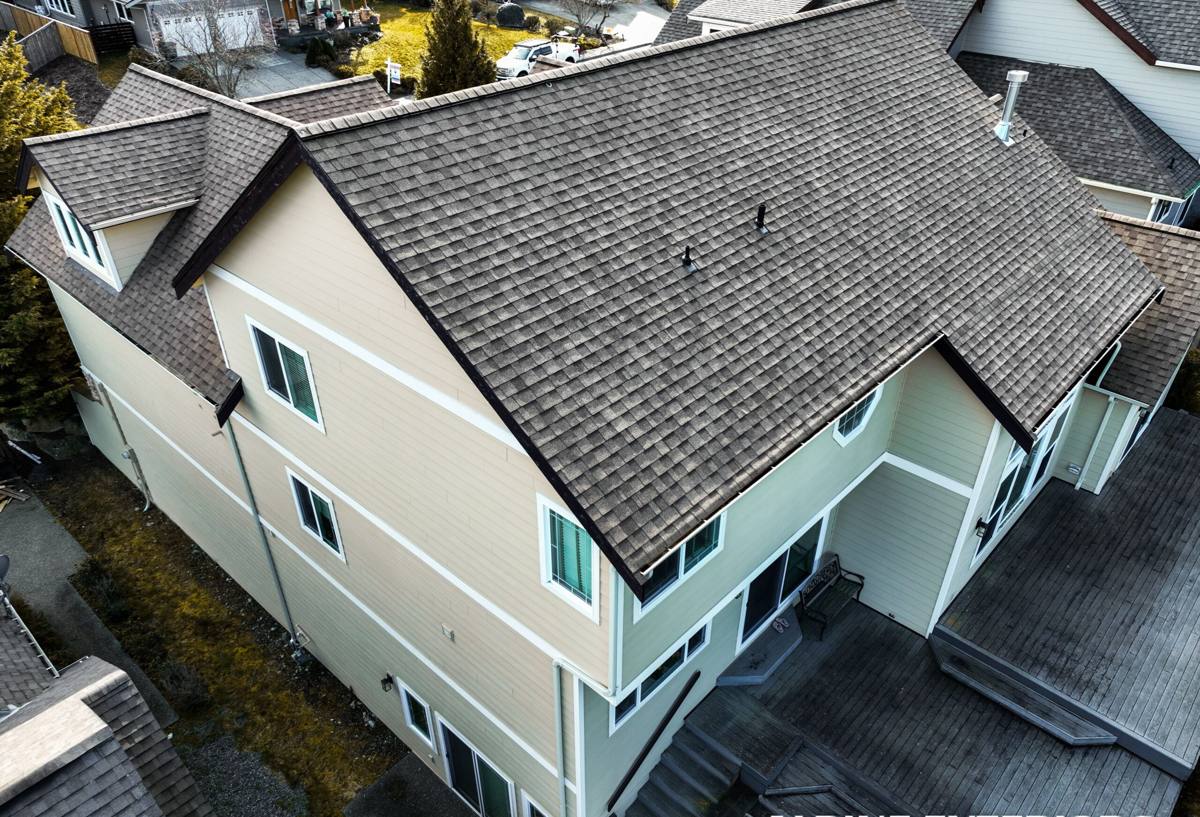
What Salt Air and Coastal Moisture Actually Do to a Deck
It helps to understand the specific stresses at play before talking about how we address them.
Salt Air and Corrosion
Airborne salt from the bay accelerates corrosion on anything metal — nails, screws, joist hangers, bolts, railing hardware. Standard galvanized fasteners that would be fine forty minutes inland can start rusting and staining a deck's boards within a couple of seasons this close to the water. Once a fastener starts to corrode, it loses holding strength long before the rust is visible on the surface.
Driving Rain and Wind-Driven Moisture
Storms coming off the water don't just drop rain straight down — wind pushes it sideways and up under boards, ledger connections, and railing posts. That means water finds gaps that a calmer inland rain never would. Flashing details and drainage gaps that are "good enough" elsewhere need to be tighter here.
Moss, Algae, and Prolonged Dampness
Whatcom County's wet season runs long, and shaded or low-airflow areas of a deck can stay damp for weeks at a stretch. That's exactly the environment moss and algae need. Beyond looking bad, a mossy deck surface gets genuinely slick and holds moisture against the board itself, which shortens the life of the material underneath.
Choosing the Right Decking Material for a Coastal Home
There's no single "best" decking material — the right choice depends on how much upkeep you want to do and what you're willing to spend up front versus over time. Here's how the common options actually perform in Birch Bay's conditions.
| Material | Coastal Performance | Maintenance Burden | Trade-Offs |
|---|---|---|---|
| Pressure-treated wood | Good if properly sealed and re-sealed regularly | High — annual cleaning and periodic re-staining/sealing | Lowest material cost, but moisture and salt exposure mean the sealing schedule can't slip |
| Cedar | Naturally rot-resistant but still needs sealing near salt air | Moderate to high | Attractive natural look, but softer and more prone to surface wear near the water |
| Capped composite | Strong — resists moisture absorption and doesn't need sealing | Low — periodic washing | Higher upfront cost; some boards can still grow surface moss/algae if not cleaned |
| PVC decking | Excellent — fully moisture-resistant, no wood fibers to feed rot | Low | Highest material cost; can feel different underfoot than wood or composite |
For a lot of Birch Bay homeowners, capped composite or PVC ends up being the better long-term value, simply because the maintenance schedule that real wood needs is harder to keep up with when the deck is exposed to salt air and wind-driven rain most of the year. That said, plenty of homeowners still want the look and feel of real wood, and we'll build that correctly too — it just comes with a maintenance commitment we'll be upfront about.
Framing, Fasteners, and Footings Built for the Coast
Fasteners and Hardware
We use stainless steel or high-grade coated fasteners and connectors rated for coastal and treated-lumber exposure, not the standard galvanized hardware that's fine for inland builds. The cost difference is small relative to the whole project, and it's the difference between hardware that lasts and hardware that starts staining and weakening within a few years.
Ledger Board Flashing
The ledger board — where the deck attaches to the house — is the single most common source of hidden water damage on any deck, and it matters even more with wind-driven rain. We flash it properly with a continuous moisture barrier and correct lapping, so water sheds away from the house framing instead of tracking behind the ledger.
Footings in Coastal Soil
Soil conditions can vary block to block near the water — sandier in some spots, heavier and slower-draining in others. We size and set footings based on what's actually in the ground on your property, not a one-size assumption, so the deck doesn't shift or heave over time.
Joist Spacing and Airflow
Tighter joist spacing than the bare code minimum, combined with real gapping between boards, keeps air moving underneath the deck surface. That airflow is one of the simplest, most effective tools against the prolonged dampness that feeds moss and slows wood drying.
Fighting Moss and Standing Water Before They Start
Most moss and standing-water problems on decks trace back to decisions made during framing and layout, not just what happens after the deck is built.
- Deck surface pitched slightly away from the house so water runs off instead of pooling
- Board gapping sized correctly for the material, so water and debris don't sit trapped between boards
- Joist spacing and under-deck clearance that allow real airflow, especially in shaded areas
- Debris kept clear of gaps between boards — a quick sweep or hose-down a few times a year prevents most buildup
- Shaded, low-airflow corners identified during design so material choice or layout can account for them
None of this eliminates the need for occasional cleaning — Whatcom County's wet season will always push moss and algae toward any exterior surface that holds moisture. But a deck designed with drainage and airflow in mind needs far less scrubbing than one that wasn't.
Permits and Local Code Basics
Deck projects in Whatcom County generally require a building permit once the structure exceeds certain size or height thresholds, and waterfront or near-waterfront properties can carry additional setback or shoreline considerations depending on the specific lot. Railing height, guard spacing, and stair requirements also follow code regardless of location. We handle the permit process as part of the job — pulling the right permit, meeting inspection requirements, and making sure the finished deck is actually compliant, not just built to look right.
Our Deck Building Process in Birch Bay
1. On-Site Assessment
We walk the property, look at sun and wind exposure, existing drainage patterns, and how the deck will connect to the house, and talk through how you actually plan to use the space.
2. Design and Material Selection
We go over the material options honestly — including cost, appearance, and the real maintenance commitment for each — so the choice fits your budget and how much upkeep you want to take on.
3. Permitting
We prepare and submit what's needed for permit approval before framing starts, so the project isn't held up mid-build.
4. Framing and Flashing
Footings, framing, ledger flashing, and fastener selection all follow the coastal-specific approach outlined above — this is where a deck's long-term durability actually gets decided.
5. Decking, Railing, and Finish Work
Board installation, railing, stairs, and any trim or finish work are completed and checked for level, gapping, and fastener consistency.
6. Final Walkthrough
We walk the finished deck with you, cover basic care for the specific material installed, and answer any questions before calling the job done.
Maintenance Checklist for a Coastal Deck
- Rinse or sweep debris out of board gaps a few times a year, more often in shaded areas
- Check fastener heads and railing hardware annually for early rust or staining
- For real wood decking, keep to a sealing/staining schedule — don't let it lapse near salt air
- Wash composite or PVC surfaces periodically to prevent surface algae or moss buildup
- Clear leaves and organic debris from underneath the deck to maintain airflow
- Inspect ledger board flashing and the house connection point once a year for signs of moisture intrusion
Why Hire a Crew That Already Works Birch Bay
A deck built to a generic inland spec will usually look fine on installation day — the problems show up two, three, five years later, when fasteners start rusting, the ledger connection has let water behind the siding, or the shaded corner has gone slick with moss that never quite dries out. Building for Birch Bay's salt air, wind-driven rain, and long damp season isn't a different skill set, it's a set of specific decisions — fastener grade, flashing detail, drainage pitch, material selection — made correctly from the start. That's the approach we bring to every deck we build on this stretch of the Whatcom County coast.
If you're planning a new deck or replacing one that hasn't held up, we're glad to take a look and talk through what makes sense for your property. Reach out for a free, no-pressure estimate using the form below.