 Lynden Siding
 Custer's Climate Is Rougher on Siding Than Most Homeowners Realize
Custer sits on the breezy, low-lying stretch of Whatcom County between Lynden and the Puget Sound coastline, and that location comes with a specific set of problems for exterior siding. Salt-laden air moves inland off the water and settles on painted and wood-based surfaces, where it accelerates corrosion of fasteners and trim and breaks down cheaper coatings faster than inland manufacturers' warranties assume. Add in the driving, wind-pushed rain that comes through this part of Whatcom County for a good chunk of the year, and siding here isn't just dealing with rain falling straight down — it's dealing with water forced sideways into laps, seams, and butt joints.
Then there's the moss. Custer's tree cover, shade patterns, and near-constant damp air create a long moss and algae season that runs far longer than most siding products were designed to tolerate gracefully. On homes with the wrong material or a sloppy install, that combination of salt exposure, wind-driven rain, and chronic moisture shows up as soft trim, staining, warped panels, or siding that's rotting from the back side before anything looks wrong from the street.
None of this means Custer homes need exotic solutions. It means they need the right material, installed correctly, with attention to the details that actually matter in this climate — not a generic install that would work fine forty miles inland but struggles here.
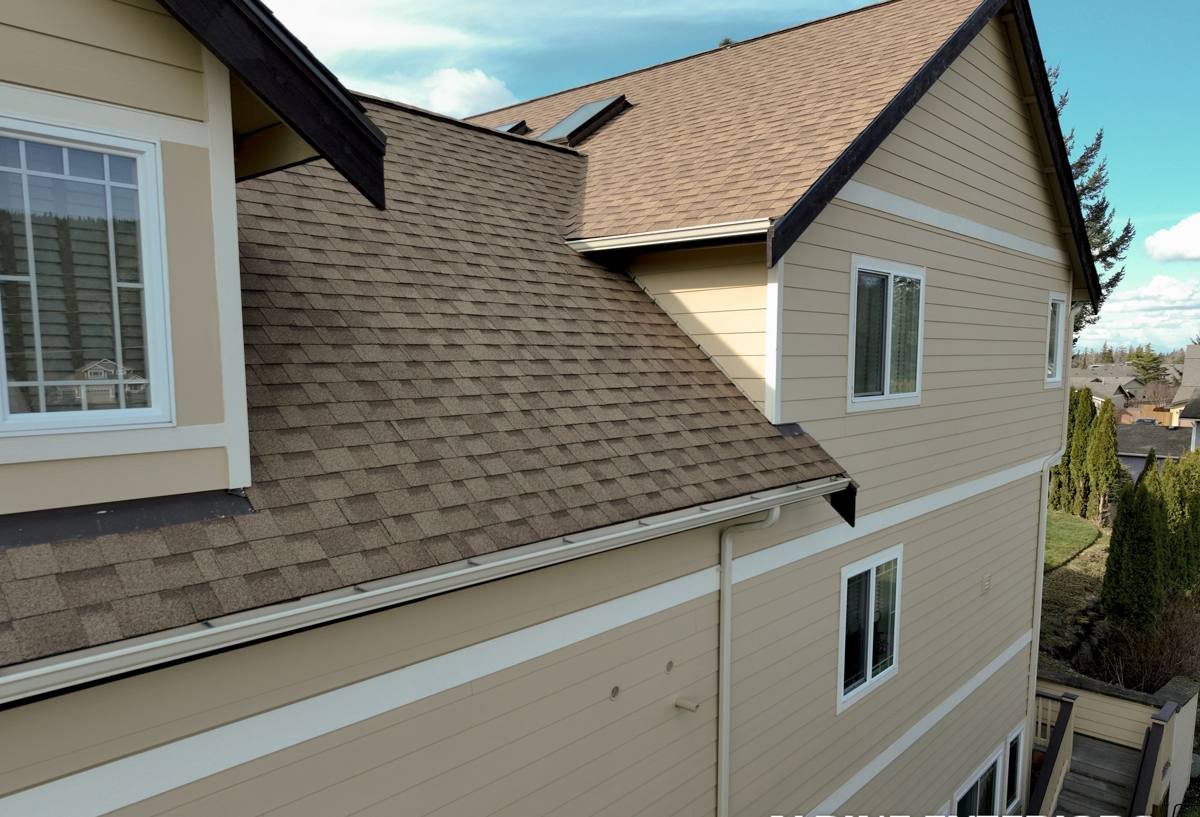
Signs a Custer Home Is Due for Siding Replacement
Siding problems in this climate rarely show up all at once. They start small and compound over a wet season or two. If you're seeing any combination of the following, it's worth having the siding evaluated before it becomes a wall-sheathing problem instead of a siding problem:
- Soft or spongy spots when you press on siding or trim, especially near the bottom courses and around windows
- Paint that's peeling, bubbling, or failing faster than a normal repaint cycle would explain
- Visible cupping, warping, or buckling in individual boards or panels
- Persistent moss, algae, or black streaking that comes back within weeks of cleaning
- Gaps opening up at seams, corners, or where siding meets trim, window casings, or the foundation
- Musty smells or visible staining on interior walls that back up to exterior siding
- Siding that's more than 20-25 years old, particularly if it's wood-based or an older generation of composite
Any one of these on its own might just call for a repair. Several at once, especially on a home that's taken the brunt of Custer's wind and salt exposure for a couple of decades, usually means it's time to talk replacement.
Why We Install Only James Hardie Fiber Cement
We made a deliberate decision years ago to install exclusively James Hardie fiber cement siding, and we don't install vinyl, LP SmartSide, Cemplank, Allura, primed spruce, or cedar. That's not a marketing position — it's a professional standard based on how these products actually perform over time in a climate like this one.
Fiber cement is non-combustible, doesn't expand and contract with temperature swings the way vinyl does, and doesn't have the wood-fiber core that gives engineered wood products their moisture vulnerability at cut edges and seams. James Hardie backs its siding with a factory-applied ColorPlus finish and a strong transferable warranty, and the company engineers specific product lines for different climate zones — which matters directly in a place dealing with salt air and long wet seasons. We'd rather stand behind one product system we know inside and out than install several products we'd have reservations recommending. If you want the deeper reasoning on why we passed on vinyl, LP, or cedar specifically, that's covered on our product comparison pages — but the short version is durability, moisture behavior, and long-term maintenance burden all pointed the same direction.
What a Correct Siding Replacement Actually Involves
Tear-Off and Inspection
Replacement starts with full removal of the old siding, not a re-side over existing material. That's the only way to actually see the sheathing underneath. On older Custer homes we regularly find soft OSB or plywood, rotted framing around window openings, or old flashing that was never installed correctly in the first place. Any of that gets addressed before a single new board goes up — covering over damaged sheathing just locks a bigger problem behind a new wall.
Weather Barrier and Flashing
Given how much wind-driven rain this area sees, the water-resistive barrier and flashing details matter more here than in calmer inland climates. That means correctly lapped house wrap, proper flashing at every window and door, and careful integration where siding meets roofs, decks, and trim. This is the layer that determines whether water that gets past the siding face actually drains back out instead of soaking into the wall.
Fastening and Clearances
James Hardie has specific fastening patterns, nail types, and clearance requirements — including a minimum gap between the bottom of the siding and grade, decks, or roof surfaces — that exist specifically to keep moisture from wicking into the board ends. Skipping these clearances is one of the most common ways we see fiber cement fail prematurely on homes that weren't installed by a crew trained on the product.
Finish Work
Cut edges get sealed, caulking is used at the right joints and skipped at others (fiber cement needs some joints to breathe, not be sealed solid), and trim is integrated so water sheds away from the wall rather than pooling at transitions. This is detail work that's easy to rush and hard to fix after the fact.
How Different Siding Materials Hold Up in Custer's Conditions
| Material | Salt Air Exposure | Wind-Driven Rain | Moss/Algae Season | Long-Term Maintenance |
|---|---|---|---|---|
| James Hardie fiber cement | Non-combustible, stable in salt air with factory finish | Engineered clearances and lapping designed for wet climates | Dense composition resists moisture intrusion at surface | Periodic cleaning and repaint on the timeline you choose |
| Vinyl siding | Can become brittle and discolor faster near salt exposure | Prone to water intrusion at seams and laps over time | Traps moisture behind panels if not ventilated correctly | Low upfront care, but panels aren't repairable long-term |
| LP SmartSide / engineered wood | Wood-fiber core is sensitive to sustained moisture | Cut edges and seams are vulnerable if not perfectly sealed | Moss and algae accelerate surface breakdown over time | Requires consistent recaulking and coating maintenance |
| Cedar / primed spruce | Salt air speeds finish breakdown and grain raising | Absorbs water readily without diligent refinishing | Highly susceptible to moss, algae, and rot in shaded areas | High — regular refinishing and moisture monitoring needed |
This isn't a knock on every use case for these other materials — it's specifically about how they hold up under Custer's combination of salt air, sideways rain, and a moss season that doesn't let up. That combination is exactly why we standardized on one product system engineered for climates like this one.
Our Process, Start to Finish
1. Walkthrough and Honest Assessment
We look at the current siding, sheathing condition where visible, trim, flashing, and any problem areas specific to your home's exposure — which wall takes the worst of the weather, where moss is worst, where water seems to be getting in.
2. Straightforward Estimate
You get a clear scope of work and pricing before anything starts. No pressure, no inflated "today only" pricing tactics.
3. Tear-Off, Repair, and Install
Old siding comes off, any damaged sheathing or framing gets repaired, the weather barrier and flashing go in correctly, and James Hardie siding is installed to manufacturer spec.
4. Final Walkthrough
We go over the finished job with you, including care and maintenance expectations, before we consider the project done.
Why a Crew That Already Works Custer Matters
Siding installation isn't identical everywhere in Whatcom County, and a crew that mostly works drier, more sheltered areas can make reasonable-looking choices that don't hold up here. Knowing which walls in this area typically take the worst wind-driven rain, how aggressively moss establishes itself on north- and shade-facing exposures, and how salt air factors into fastener and trim choices comes from actually working this ground repeatedly — not from a generic install checklist.
There's also a practical side: local permitting familiarity, realistic scheduling around this area's wet stretches, and knowing what problems tend to hide behind older siding on homes of a certain age in this part of the county. A crew that's done this work in Custer before isn't guessing at any of it.
Maintenance After Your New Siding Is Installed
James Hardie siding is low-maintenance, not no-maintenance — especially in a climate that grows moss aggressively. A simple annual rinse-down keeps algae and moss from establishing a foothold, and keeping gutters clear and grading sloped away from the foundation protects the bottom clearance that keeps board ends dry. Beyond that, it's mostly a matter of watching for any caulking that needs refreshing at trim joints over the years and repainting on whatever cycle you choose, since ColorPlus finish is designed to hold up far longer than field-applied paint typically does.
If your Custer home is showing signs of aging siding, or you just want an honest read on whether repair or full replacement makes more sense, we're happy to walk the property with you and give you a straightforward, no-pressure estimate — just fill out the short form below to get started.