 Lynden Siding
 Deck Replacement in Custer: Built for a Wet, Wind-Exposed Corner of Whatcom County
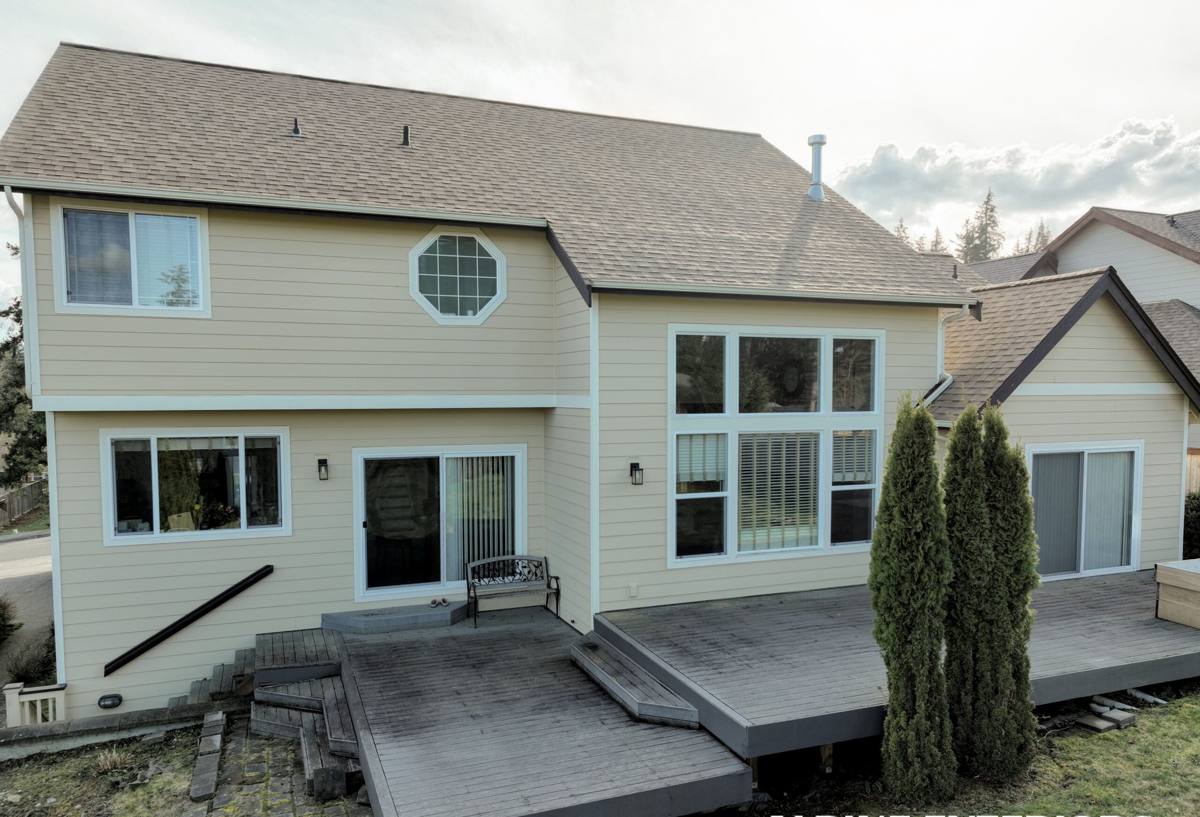
Custer sits in the flat, open farmland north of Ferndale, close enough to the Salish Sea and Birch Bay that homes here feel the same marine-influenced weather that defines this stretch of Whatcom County — salt-laden air carried inland on storm winds, long stretches of driving rain with little terrain to break it up, and a moss and mildew season that can run nearly year-round on shaded or north-facing surfaces. A deck is one of the most exposed structures on a property. It sits outside the building envelope entirely, takes direct sun, rain, and standing water on its top surface, and often has a substructure tucked low to the ground where moisture lingers longest. In this climate, that combination wears decks out faster than homeowners expect, especially when the original deck wasn't built with this kind of weather in mind.
We work on decks, siding, roofing, and windows throughout this part of Whatcom County, and deck replacement is one of the jobs where the difference between a deck that lasts one more decade and one that fails again in five years almost never comes down to the decking boards themselves. It comes down to what's underneath — the framing, the flashing where the deck meets the house, the fasteners, and how water is allowed to move through and off the structure. A good-looking deck built on a compromised substructure is a short-term fix, not a real replacement.
What Custer's Climate Does to Decks
Wind-Driven Rain and Standing Water
Custer's open, flat terrain doesn't offer much wind break, and storms coming off the water push rain sideways as often as straight down. On a deck, that means water reaches surfaces a more sheltered structure would rarely see — the undersides of rail posts, the ledger connection at the house, and gaps between deck boards where debris collects and holds moisture. Any spot where water can pool instead of draining freely becomes the first place a deck starts to fail, usually at the framing level long before it shows on the surface.
Salt-Laden Air and Fastener Corrosion
Custer isn't waterfront, but it's close enough to the Salish Sea that homes here still get meaningful salt content carried in on marine air, especially during winter storms. That accelerates corrosion on lower-grade fasteners, brackets, and hardware in a way a drier inland climate wouldn't. A deck built with standard fasteners instead of corrosion-resistant hardware can show rust staining, weakened joist hangers, or failing screws years before a comparable deck built with the right hardware for this environment.
Moss, Mildew, and Prolonged Moisture
Whatcom County's mild, wet winters create a long growth season for moss and mildew, and decks are one of the easiest surfaces for it to take hold — especially shaded decks, north-facing decks, or any deck surface that doesn't fully dry between rain events. Moss on a walking surface isn't just a maintenance nuisance; it holds moisture against the decking material and can make a deck genuinely slick and unsafe underfoot during wet months, which in this area is most of the year.
Freeze-Thaw and Temperature Swings
Whatcom County doesn't see extreme cold, but it does see enough freeze-thaw cycling through the winter to stress wood fibers, fastener connections, and any spot where water has already gotten into a joint or crack. Wood that's absorbed moisture and then freezes expands and can split or check further, which is part of why minor rot or cracking left unaddressed tends to accelerate rather than stay stable through a Whatcom County winter.
Signs a Custer Deck Needs Replacement
- Soft, spongy, or springy decking boards, especially near the house or in shaded areas
- Visible rot, splitting, or discoloration at the ledger board where the deck attaches to the house
- Rusted, loose, or missing fasteners and joist hangers
- Persistent moss or algae growth that returns quickly after cleaning
- Railings or posts that wobble or feel less secure than they used to
- Gaps, cupping, or uneven boards that have gotten worse over the past year or two
- Visible daylight or staining underneath the deck where water has been tracking through the structure
Repair vs. Replacement: How We Make the Call
Not every aging deck in Custer needs full replacement, and we don't default to recommending it. A deck with sound framing but worn or weathered surface boards is often a legitimate resurfacing candidate. A deck with a compromised ledger connection, rotted joists, or a substructure that's been absorbing water for years usually isn't — at that point, replacing the boards on top of a failing frame just delays the real problem and adds cost without solving it.
| Condition | Repair/Resurface Usually Makes Sense | Full Replacement Usually Makes Sense |
|---|---|---|
| Worn, faded, or splintering surface boards, sound frame | Yes — resurface with new decking | Only if frame is also compromised |
| A few loose or rusted fasteners | Yes — hardware replacement | Not on its own |
| Rot at the ledger board or rim joist | Rarely a lasting fix | Yes |
| Soft or spongy joists under the decking | No — surface fixes won't hold | Yes |
| Deck built without proper ledger flashing | Sometimes, if caught early | Yes, if water has already reached the frame |
| Undersized or outdated footings | No | Yes |
What a Correct Deck Replacement Actually Involves
A deck replacement done right in this climate starts below the decking material, not with it. The ledger board — where the deck attaches to the house — is the single most important connection on the whole structure, because it's both a structural attachment point and a place where water constantly tries to get behind the siding and into the wall framing. Proper ledger flashing directs water out and away from that connection instead of letting it wick into the house, and it's standard practice on every deck we build, not an upgrade.
Framing and Footings
Joist spacing, beam sizing, and footing depth all need to match current structural requirements for the deck's size, height, and intended use — not just match what was there before. Older decks in this area were sometimes built with undersized footings or joist spacing that met a much older or less strict standard. A replacement is the right time to correct that, since the framing will be exposed anyway.
Drainage and Airflow Underneath
Decks that sit low to the ground with poor airflow underneath stay damp longer after every rain, which speeds up rot and gives moss and mildew more time to establish. Where site conditions allow, proper grading, spacing, and ventilation underneath the deck make a real difference in how long the framing lasts, even before considering the decking material itself.
Fasteners and Hardware Grade
Given the salt content in Custer's marine-influenced air, we specify corrosion-resistant fasteners and structural hardware rated for exterior, coastal-adjacent exposure rather than standard-grade hardware. This is one of the least visible parts of a deck replacement and one of the most important, since fastener failure is one of the more common reasons decks in this region fail structurally well before the visible decking surface looks worn out.
Choosing Decking Material for This Climate
There's no single right answer on decking material — it depends on budget, maintenance tolerance, and how the deck will actually be used. What matters most in Custer's climate is how a material handles sustained moisture exposure and how much upkeep it realistically needs to stay safe and good-looking through a wet Whatcom County winter.
| Material | Moisture Performance Here | Maintenance | Typical Trade-Off |
|---|---|---|---|
| Pressure-treated wood | Good if sealed regularly; vulnerable if maintenance lapses | Annual cleaning and periodic sealing | Lower upfront cost, higher ongoing upkeep |
| Cedar | Naturally moisture and rot resistant, but still needs sealing in this climate | Regular sealing to maintain appearance and protection | Attractive natural look, real maintenance commitment |
| Composite decking | Strong moisture resistance, doesn't absorb water like wood | Occasional cleaning, no sealing or staining | Higher upfront cost, less long-term upkeep |
Composite decking has become a common choice for homeowners in this area specifically because it doesn't absorb water the way wood does, which matters when a deck spends much of the year wet. Wood and cedar decks can absolutely hold up well here too, but they need a homeowner who's realistic about the sealing and maintenance schedule required to keep moisture from getting into the material over time. We'll walk through the honest trade-offs for your specific deck rather than pushing one material as the only answer.
How Decks Connect to the Rest of the Home's Building Envelope
A deck that's poorly integrated with the house can cause problems well beyond the deck itself. A ledger board attached without correct flashing doesn't just risk the deck's own framing — it can direct water behind the siding and into the wall assembly of the house, where it does damage that isn't visible until it's significant. We treat deck work as connected to siding rather than a standalone project, which is part of why we handle both trades — the crew building the ledger connection understands exactly how it needs to tie into the siding and weather-resistive barrier behind it.
Our Process for a Custer Deck Replacement
We start with an on-site inspection of the existing deck — checking the ledger connection, joists, footings, and fastener condition, not just the surface boards — since that's where the real condition of a deck actually shows up. From there we give a straightforward read on whether repair, resurfacing, or full replacement is the right call, along with a written scope before any work begins. Ledger flashing, corrosion-resistant hardware, and correct footing and framing sizing are handled as standard practice on every deck we replace, not offered as optional upgrades.
Once the scope is agreed on, demolition of the old deck is followed by a full rebuild of the substructure to current standards, proper flashing at the house connection, and installation of the decking material you've chosen. We walk homeowners through what's happening at each stage, particularly around the framing and flashing work that won't be visible once the deck is finished.
A Checklist Before Hiring for Deck Replacement in Custer
- Ask specifically how they handle ledger board flashing, not just what decking material they sell
- Confirm current Washington contractor licensing and active liability insurance
- Ask whether footings and framing will be inspected or rebuilt to current standards, not just reused
- Get a written scope that separates decking material warranty from workmanship warranty
- Ask what fastener and hardware grade will be used, given this area's marine-influenced air
- Check whether a building permit is required for your project and who's responsible for pulling it
Why a Local Crew Matters for Deck Work
A contractor who works this part of Whatcom County regularly already knows how wind-driven rain, marine air, and a long moss season behave here compared to a drier or more sheltered climate. That understanding shows up in decisions a homeowner never sees directly — how much lap a ledger flashing detail gets, what fastener grade gets specified by default, how much attention goes to drainage and airflow underneath the deck — and those decisions are what determine whether a deck replacement holds up for one wet winter or for decades of them.
If your deck in Custer is showing soft spots, rust stains, persistent moss, or just isn't holding up the way it used to, we're happy to take a look and give an honest read on repair versus replacement. Reach out below for a free, no-pressure estimate.