 Lynden Siding
 Decking Built for Custer's Coastal Conditions
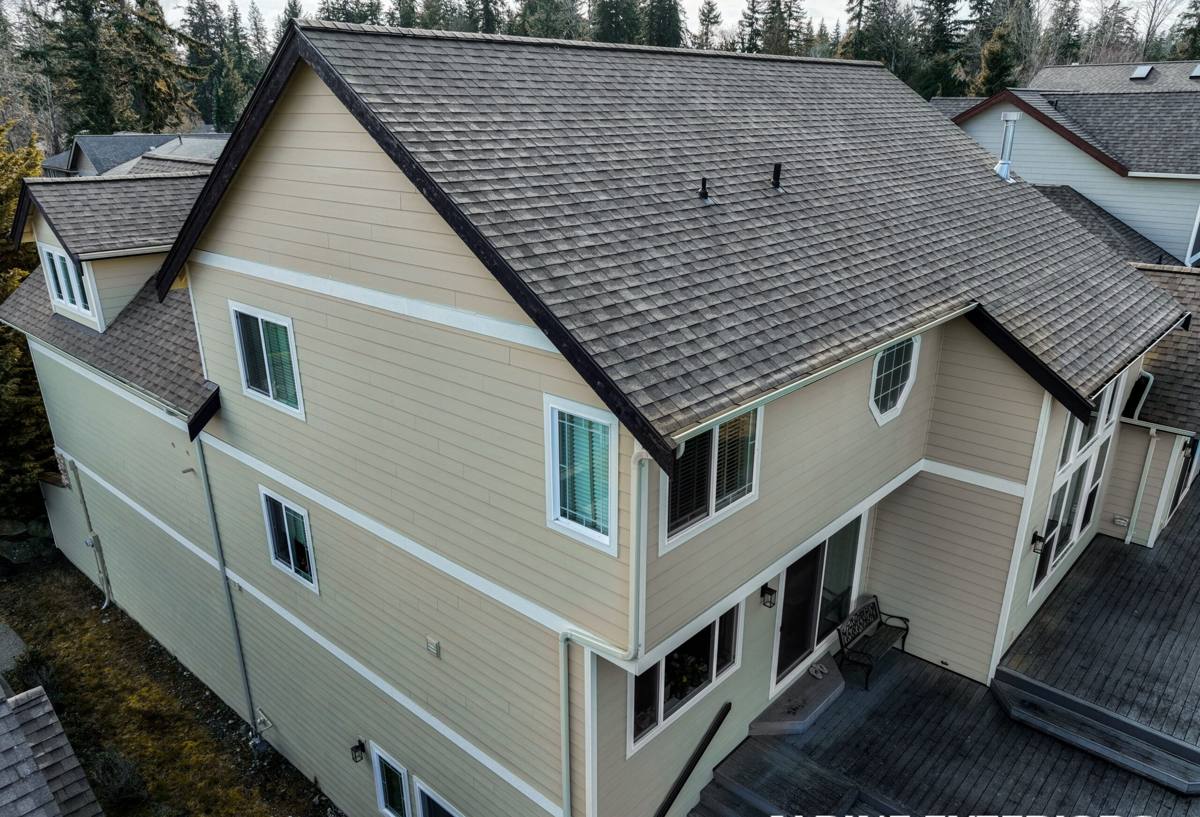
Custer sits close enough to the water that homes here deal with a different set of pressures than decks built further inland around Lynden proper. Salt-laden air off the coast accelerates corrosion on fasteners and hardware. Driving rain, pushed sideways by wind more often than it falls straight down, gets up under boards and into end grain if a deck isn't detailed correctly. And Whatcom County's long, wet moss season means anything horizontal — a deck surface, a rail cap, the gaps between boards — becomes a place for organic growth to take hold if it can't drain and dry.
Composite decking exists specifically to handle these conditions better than wood, but "composite" isn't one product with one behavior. The board you choose, the substructure underneath it, and the way it's fastened all determine whether a Custer deck holds up for twenty-five years or starts showing problems in five. This page covers what we actually do differently for decks in this area, not a generic rundown of composite decking in general.
Why Standard Deck Installs Fail Faster Here
A deck built to a generic spec — the kind you'd see in a big-box how-to guide — is usually engineered around dry-climate assumptions: minimal ventilation under the joists, standard-grade fasteners, and drainage details that assume rain falls straight down and runs off. None of that holds up well near Custer.
Salt Air and Hardware
Ordinary galvanized fasteners and brackets corrode faster in salt-influenced air than they would twenty miles inland. Corrosion at a joist hanger or ledger bolt is a structural problem, not a cosmetic one — it's the kind of thing that doesn't show up until the hardware has already lost significant strength.
Driving Rain and Wind-Driven Moisture
When rain comes in at an angle instead of straight down, it finds its way into places a standard flashing detail doesn't account for — behind ledger boards, under stair stringers, along the house-to-deck transition. Over time that moisture works into any wood substructure that isn't properly protected, even if the decking surface itself is composite.
Moss and Prolonged Dampness
Whatcom County's moss season isn't a few weeks — it's most of the fall, winter, and spring. Anywhere a deck surface stays damp for extended periods without airflow underneath, moss and algae get a foothold. On a poorly ventilated deck, that damp cycle also slows drying time for the substructure, which shortens its life regardless of what decking material sits on top.
What a Correct Composite Deck Build Involves
Composite boards are only as good as what's underneath and around them. A correct install for this area addresses the whole system, not just the visible surface.
Substructure and Framing
We use joist spacing appropriate to the specific composite board being installed — many composite products require tighter spacing than traditional lumber decking to prevent sagging over time, especially at angled or picture-frame patterns. Where the substructure is wood, we treat it as the part of the system most exposed to moisture risk and detail it accordingly, with proper flashing at the ledger and gapping that allows airflow rather than trapping water against the frame.
Fasteners and Hardware
Given the salt-air exposure common around Custer, we use fasteners and structural hardware rated for coastal or corrosive environments rather than standard-grade galvanized parts. This matters most at hidden connection points — ledger bolts, joist hangers, post bases — because those are the hardest failures to catch early and the most expensive to fix later.
Ventilation and Drainage
Composite boards don't rot, but the framing underneath them can if it can't dry out. We keep enough clearance between the ground or a lower roof and the underside of the joists for air to move, and we make sure the deck's overall drainage — including how water sheds off the surface and away from the house — doesn't rely on the composite boards alone to solve a water management problem.
Board Gapping and Fastening Pattern
Composite boards expand and contract with temperature more than wood does. Gapping that's too tight causes buckling; gapping that's too wide collects debris and moss. We follow the manufacturer's specified gap for the exact board profile and climate zone, and we use the fastening system designed for that board rather than substituting generic screws, which affects both appearance and long-term board movement.
Comparing Decking Options for This Climate
| Material | Moisture Behavior | Moss/Algae Resistance | Maintenance |
|---|---|---|---|
| Capped composite | Water-resistant core with a protective cap; doesn't absorb and swell like wood | Good — smooth capped surface resists staining and growth, though periodic cleaning is still needed | Occasional washing; no staining or sealing |
| Uncapped composite | More prone to surface moisture absorption over time than capped boards | Fair — more susceptible to staining in prolonged damp conditions | Periodic cleaning; less forgiving of neglect than capped boards |
| PVC decking | Fully synthetic, does not absorb moisture | Good, similar to capped composite | Low; can run warmer underfoot in direct sun |
| Pressure-treated wood | Absorbs and releases moisture continuously; prone to swelling, splitting, and warping in a wet climate | Poor — porous surface holds moisture and organic growth | Regular sealing/staining required to slow deterioration |
We install composite as our standard recommendation for this area because it removes the ongoing maintenance burden that wood decking creates in a climate this wet, and because a quality capped board holds up to the specific combination of salt exposure and prolonged dampness better than uncapped alternatives. That said, board quality and installation detail matter more than the marketing on the label — a poorly installed premium board will underperform a well-installed mid-range one.
Our Process for a Custer Deck Project
- Site walk and assessment. We look at sun/shade exposure, drainage patterns around the existing structure, and any signs of moisture damage on the current deck or ledger connection.
- Board and layout selection. We walk through composite options with realistic tradeoffs on cost, appearance, and long-term maintenance rather than steering toward the highest-margin product.
- Structural plan. Joist spacing, hardware spec, and ventilation clearance get set based on the board chosen and the site conditions, not a one-size-fits-all template.
- Demolition and substructure work. If the existing frame has moisture damage or undersized framing, we address it before decking goes down — covering it up doesn't fix it.
- Installation. Boards are laid per manufacturer spec for gapping, fastening, and expansion joints.
- Final walkthrough. We go over basic care with the homeowner so the deck starts its life being maintained correctly.
Keeping a Composite Deck Ahead of Moss Season
Composite decking cuts maintenance dramatically compared to wood, but "low-maintenance" isn't "no-maintenance" in a climate that stays damp as long as this one does. A few basic habits keep a deck looking and draining the way it should through the wet months.
- Sweep leaves and debris off the surface regularly in fall — trapped organic matter is what gives moss and algae something to grow on.
- Rinse the deck with a garden hose periodically through winter; avoid pressure washers on composite unless used at low pressure and a safe distance, since aggressive pressure washing can damage the cap layer.
- Keep gutters and downspouts near the deck clear so runoff isn't dumping directly onto the surface or substructure.
- Check that gaps between boards stay clear of built-up debris, especially at the deck's low points where water naturally collects.
- Inspect the ledger board area and any post bases once a year for signs of trapped moisture or corrosion on hardware.
Mistakes We See on Existing Decks in This Area
When we're called out to repair or replace an existing deck near Custer, a handful of issues come up repeatedly, and nearly all of them trace back to a build that didn't account for local conditions.
| Problem | Root Cause | Why It Matters Here |
|---|---|---|
| Rusted or failing hardware | Standard-grade fasteners used instead of corrosion-resistant hardware | Salt-influenced air accelerates this failure mode compared to inland installs |
| Persistent moss buildup | Insufficient ventilation under the deck or poor drainage design | Long moss season means any weakness in airflow shows up fast and stays year-round |
| Buckled or warped boards | Incorrect gapping or fastening not matched to the specific board's expansion properties | Temperature swings plus sustained moisture make gapping errors more visible over time |
| Water intrusion at the ledger | Inadequate flashing where the deck meets the house | Wind-driven rain finds gaps a standard straight-down rain detail would miss |
Why Local Installation Experience Matters
A crew that's already worked on decks around Custer and the broader Lynden area has already seen how these specific conditions play out over years, not just at the moment of installation. That means knowing which hardware actually holds up in this air quality, which drainage details prevent the moss problems that show up two winters later, and how local wind and rain patterns affect ledger and flashing decisions — details that don't show up in a generic installation manual. It also means being realistic with homeowners about what composite decking will and won't do, rather than overselling a "maintenance-free" product that still needs basic seasonal care in this climate.
What Affects the Cost of a Composite Deck
| Factor | Why It Affects Price |
|---|---|
| Board tier (uncapped vs. fully capped) | Capped boards cost more upfront but generally offer better moisture and stain resistance for this climate |
| Substructure condition | Existing moisture damage or undersized framing adds repair or rebuild cost before decking can go down |
| Deck size and layout complexity | Multi-level decks, angled patterns, and built-in features increase both material and labor |
| Railing and fascia choices | Composite or aluminum railing systems vary widely in price compared to basic wood rail |
| Site access | Difficult access or the need to remove an existing deck adds labor time |
We give homeowners a straightforward range during the site walk based on these factors rather than a number pulled from a generic price list — every property near Custer has slightly different drainage, exposure, and access considerations that affect the real cost.
Get a Free Estimate for Your Custer Deck
If you're planning a new composite deck or replacing one that's showing its age, we're happy to walk the property, look at the specific conditions affecting your home, and give you an honest read on what it'll take to do the job right. Use the form below to request a free, no-pressure estimate.