 Lynden Siding
 Birch Bay sits right on the water, and that changes what a siding job needs to survive. Homes a few miles inland in Lynden deal with typical Pacific Northwest weather — plenty of rain, some wind, seasonal damp. Homes in and around Birch Bay deal with all of that plus salt-laden air off the water, wind-driven rain that hits siding at an angle instead of straight down, and a moss season that runs longer than it does on higher, drier ground. A siding installation done to "good enough" standards inland can fall short here. This page covers what Birch Bay's exposure actually demands, what a correct installation looks like in that environment, and why we install only James Hardie fiber cement siding on the homes we work on.
Why Birch Bay Is a Different Siding Environment Than Inland Whatcom County
Distance from the water matters more than most homeowners expect. A house a half-mile off the beach and a house a few miles inland can have very different siding wear patterns even though they're both technically "Lynden area."
Salt Air and Corrosion
Airborne salt from the bay settles on exterior surfaces, including fasteners, flashing, and trim. Over years, that accelerates corrosion on anything not rated for coastal exposure — cheap staples, uncoated nails, and lower-grade trim hardware all degrade faster near the water than they would a few miles inland. It's a slow process, which is exactly why it's easy to overlook when a job gets installed with standard, non-coastal-rated materials.
Driving Rain That Hits Sideways
Open water means wind, and wind means rain doesn't just fall on a house near Birch Bay — it gets driven into it, sideways, especially during winter storms off the strait. Siding systems that rely on gravity alone to shed water (rather than proper lap geometry, flashing, and a drainage plane behind the cladding) get tested harder here than in a sheltered inland lot.
A Longer Moss Season
Whatcom County already runs a long wet season. Add the extra humidity that comes off the bay, plus tree cover and shaded north- and west-facing walls common on Birch Bay lots, and you get siding that stays damp longer after every rain. That's exactly the condition moss and algae need to take hold. Siding material, installation clearances, and how well a wall assembly actually dries all affect how much of a moss problem a home ends up with.
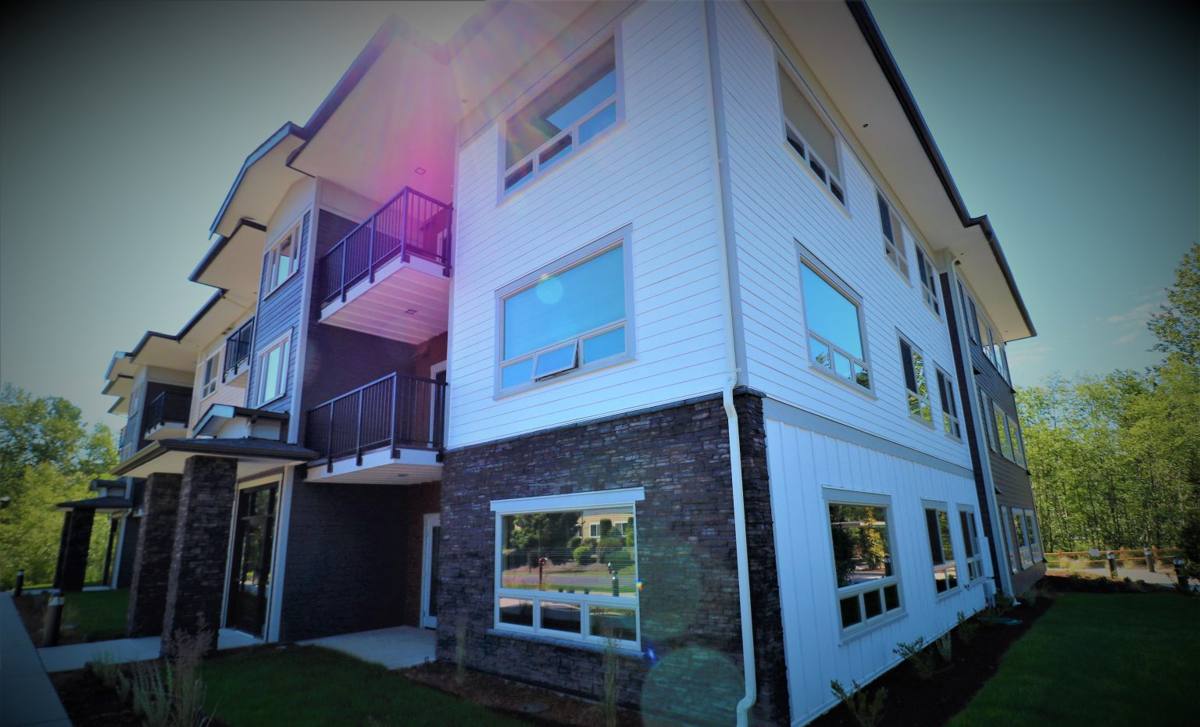
What a Correct Installation Looks Like in a Bay-Exposure Environment
The siding material is only part of the equation. How it's installed determines whether it actually performs the way it's supposed to in this climate.
Weather-Resistive Barrier and Flashing
Behind every properly installed siding job is a continuous weather-resistive barrier and flashing detailed at every window, door, and penetration. In a driving-rain environment, gaps or shortcuts here are where water finds its way into the wall assembly — often well before any problem becomes visible from the outside.
Fasteners and Hardware Rated for the Exposure
Near salt air, fastener choice isn't a minor detail. Corrosion-resistant nails and trim hardware cost more than standard-grade materials, but they're the difference between siding that still looks and performs correctly in fifteen years and fasteners that start staining or failing well before that.
Clearance, Drainage, and Drying
Correct installation keeps siding off grade, decks, and roof lines by the manufacturer's specified clearances, and uses a rainscreen or drainage gap where conditions call for it. That gap lets bulk water drain and lets the wall dry between storms — which matters more in a longer wet season than it does somewhere drier.
Why We Install Only James Hardie Fiber Cement Siding
We don't install vinyl, LP SmartSide, Cemplank, Allura, or primed wood siding. That's a deliberate standard, not a lack of options. In a marine-influenced, high-moisture, moss-prone environment like Birch Bay, the trade-offs of those other products show up faster and cost more to manage than what homeowners are told upfront. James Hardie fiber cement is what we've found holds up correctly, installed correctly, in this specific climate.
| Consideration | Why It Matters at Birch Bay |
|---|---|
| Moisture behavior | Fiber cement doesn't swell, rot, or delaminate from repeated wetting the way wood-based and some engineered wood products can in a long wet season |
| Non-combustible material | Won't contribute fuel to a fire — one less risk factor on a home exposed to coastal wind |
| Factory-applied ColorPlus finish | Baked-on finish resists fading and chalking better than field-applied paint, which matters where salt air and UV both work on a finish |
| Dimensional stability | Won't expand and contract with humidity swings the way vinyl and some wood products do, which keeps seams and caulk joints tighter over time |
| Warranty structure | A strong, transferable manufacturer warranty backed by a product engineered for regional climate exposure, not a one-size-fits-all national spec |
None of this means other products are junk — it means that for a coastal Whatcom County exposure, the trade-offs (paint maintenance cycles, moisture sensitivity, seam behavior, warranty limitations) aren't ones we're willing to install and stand behind on a customer's home.
Choosing the Right Hardie Product for a Bay-Exposure Home
James Hardie engineers its siding by climate zone — that's not marketing, it's a real formulation and testing difference. Homes in Western Washington, including Birch Bay, fall into Hardie's HZ10 climate zone, engineered for wet, moisture-heavy regions. That's the product line we install here, not a generic version meant for a drier part of the country.
Within that, homeowners typically choose between lap siding, panel siding, and shingle-style siding, and between the standard ColorPlus finish palette or primed product painted after installation. For homes closer to the water, we generally steer people toward ColorPlus factory finishes over field paint — one less maintenance item on a house that's already dealing with more weather exposure than an inland home.
Our Process for a Birch Bay Siding Installation
- On-site assessment. We look at the existing siding, sheathing condition, exposure direction (which walls take the most wind-driven rain and salt), and any moss or moisture staining already present.
- Sheathing and moisture check. Before new siding goes on, we check what's underneath. Installing over compromised sheathing just traps the problem behind a new surface.
- Weather barrier and flashing. Continuous water-resistive barrier, properly lapped and sealed, with flashing detailed at every window, door, and penetration before the first piece of siding goes up.
- Product and color selection. HZ10-rated Hardie product in the profile and ColorPlus finish that fits the home, with fastener and trim hardware appropriate for coastal exposure.
- Installation to manufacturer spec. Correct fastener spacing, clearances from grade and roofline, and joint treatment — the details that determine whether the siding performs for its full service life.
- Final walk-through and cleanup. We review the finished work with the homeowner and leave the site clean.
Living With Salt Air and Moss: What Homeowners Can Expect
Even correctly installed, low-maintenance siding isn't zero-maintenance in this environment. Setting realistic expectations upfront saves homeowners surprises later.
- Rinse siding periodically, especially shaded and north-facing walls, to slow moss and algae buildup
- Keep gutters clear so roof runoff isn't dumping extra water onto siding sections below
- Trim back vegetation and tree cover that keeps specific wall sections shaded and slow to dry
- Inspect caulking and trim joints periodically — even good sealant has a service life
- Watch for any staining around fasteners or trim, which can flag a hardware issue worth addressing early
- Repaint or refresh only if using primed product; ColorPlus factory finish extends the timeline before that's needed
Why a Crew That Already Works Birch Bay Matters
Siding installation isn't identical from job to job. A crew that already works this specific stretch of Whatcom County coastline has seen firsthand how salt exposure, wind direction, and moss patterns play out on real homes here — not just in a manufacturer's climate-zone chart. That translates into practical judgment calls: which walls need extra attention to flashing, where drainage details matter most, and what maintenance realistically looks like for a homeowner living a short walk from the water. It also means straightforward familiarity with permitting and inspection expectations in Whatcom County, so a project moves without avoidable delays.
What Affects Cost on a Birch Bay Siding Project
| Factor | How It Affects the Project |
|---|---|
| Home size and wall complexity | More square footage, corners, and trim detail means more material and labor |
| Existing sheathing condition | Repair or replacement of damaged sheathing adds cost but is not optional if found |
| Tear-off vs. new construction | Removing and disposing of old siding adds labor beyond a bare-wall install |
| Product line and finish | Panel, lap, and shingle profiles, plus ColorPlus vs. primed, price differently |
| Site access and exposure | Waterfront and steeply sloped lots can affect staging, scaffolding, and schedule |
Every home is different, which is why we walk the property in person rather than quoting off square footage alone.
If you're planning a siding project for a home in or near Birch Bay, we'll come take a look, explain what we see, and put together a straightforward, no-pressure estimate — no obligation either way.