 Lynden Siding
 Window Installation Built for Aldergrove's Wet Side of the Border
Aldergrove sits right at the edge of the Fraser Valley, close enough to Lynden and Whatcom County that the weather doesn't know the difference. Salt-tinged marine air moves inland off the Salish Sea, driving rain comes in sideways for months at a stretch, and the moss season stretches longer here than almost anywhere else in North America. Windows take the brunt of all three. A window that's installed correctly can handle decades of this. One that's installed even slightly wrong — a missed flashing detail, a bad seal, a shim that's off by a fraction — starts failing within a few winters, and the damage usually shows up inside the wall before it shows up on the glass.
We install windows in Aldergrove regularly, alongside our work throughout Lynden and the rest of Whatcom County. This page covers what local homes actually need from a window installation, what separates a correct job from a rushed one, and why it matters to hire a crew that already understands this specific stretch of the border region.
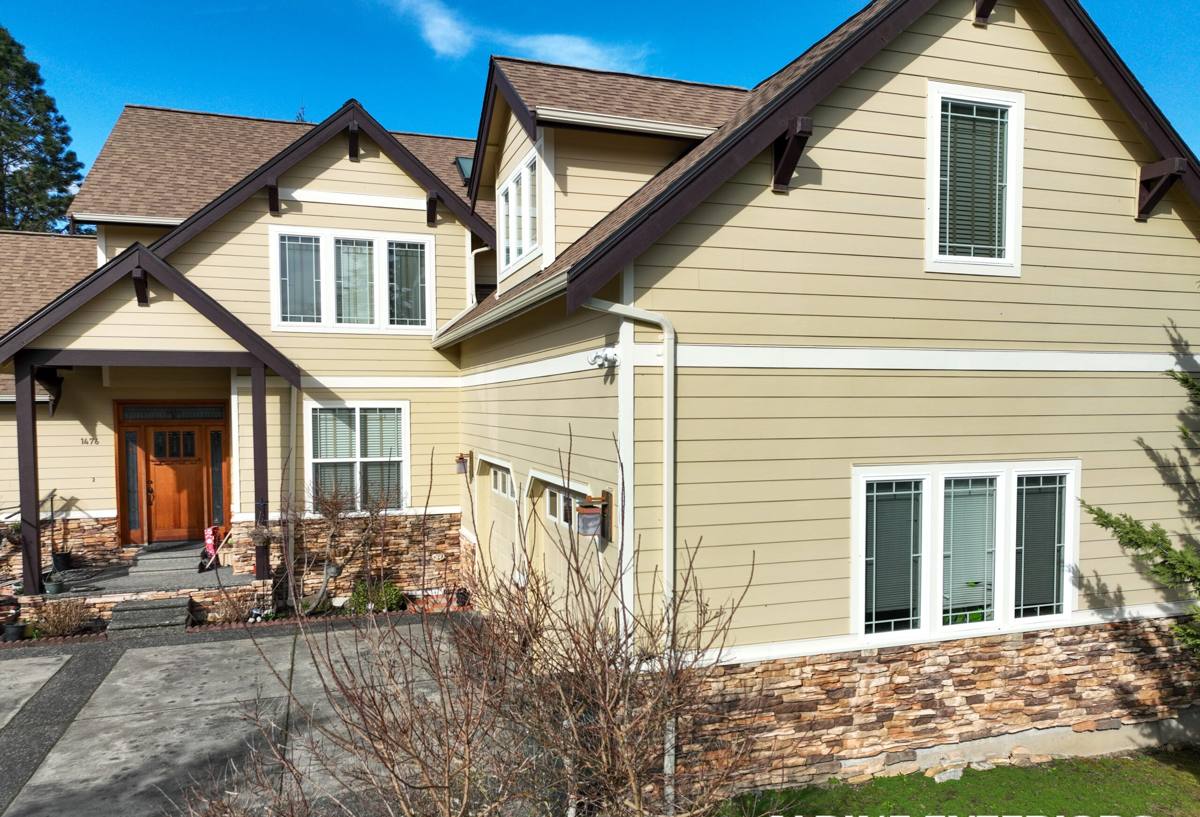
What Aldergrove Homes Are Up Against
The building stock in and around Aldergrove ranges from older wood-frame houses to newer construction, but the climate stress on windows is the same across all of it. A few things stand out:
- Driving rain, not just rainfall. Wind-driven rain pushes water sideways against the building envelope, which means it finds its way under poorly lapped flashing or through gaps that would never leak in a calm rain.
- Long moss season. Extended damp periods with mild temperatures are ideal moss and algae conditions. Moss holds moisture against trim, sills, and siding far longer than open air would, which accelerates rot right at the window opening if the surrounding wood isn't properly protected.
- Salt-influenced marine air. Airborne salt accelerates corrosion on hardware, fasteners, and lesser-grade metal flashing over time, which is one reason material choice around a window matters as much as the window itself.
- Older single-pane and early dual-pane stock. A lot of homes in this area still have original or early-generation windows that were never particularly efficient and are now decades past any meaningful seal life.
None of this is unique to Aldergrove specifically, but it's a heavier combination than a lot of drier regions ever have to deal with, and it's why a "good enough elsewhere" installation standard isn't good enough here.
What a Correct Window Installation Actually Involves
Window installation looks simple from the outside — pull the old unit, set the new one, caulk the edges. Done correctly, it's a lot more specific than that, and almost every long-term failure we see traces back to one of these steps being skipped or rushed.
Flashing and Water Management
The window opening needs a proper drainage plane: sill pan flashing that directs any water that gets past the window back outside the wall, side flashing lapped correctly over the sill flashing, and head flashing lapped under the building paper or house wrap above. This is the single most important part of the job in a climate with sustained driving rain — the window itself is almost never the failure point; the flashing detail around it usually is.
Air Sealing and Insulation
The gap between the window frame and the rough opening needs to be sealed and insulated correctly — not overpacked with expanding foam (which can bow the frame and cause the sash to bind) and not left with gaps that let air and moisture through. This is where drafts and energy loss actually come from, far more often than from the glass itself.
Plumb, Level, and Square
A window that's out of square even slightly will bind, won't lock properly, and will wear its weatherstripping unevenly — all of which shortens its working life and lets in more air and water over time. This gets checked and shimmed at multiple points, not just eyeballed once.
Fastening and Manufacturer Instructions
Every window manufacturer specifies fastening locations, shim placement, and sealant type for their product, and following that spec is what keeps the manufacturer's warranty valid. Skipping it to save time is one of the most common ways an otherwise decent window ends up uncovered when something goes wrong later.
Choosing the Right Window for This Climate
There isn't one universally "best" window — the right choice depends on budget, the home's age and exposure, and how much upkeep the homeowner wants to take on. Here's how the common frame materials compare for a wet, moss-prone climate like this one:
| Frame Material | Moisture Behavior | Maintenance | Typical Fit |
|---|---|---|---|
| Vinyl | Won't rot; seams and welds matter more than the material itself | Low — occasional cleaning | Most homes; best value for the climate |
| Fiberglass | Very stable in moisture and temperature swings, minimal expansion/contraction | Low | Higher-exposure walls, long-term owners |
| Wood | Handsome but vulnerable without diligent upkeep in a wet, moss-heavy climate | High — regular repainting/sealing | Character homes where appearance is the priority |
| Wood-clad (wood interior, clad exterior) | Exterior clad resists weather; interior still needs normal indoor care | Moderate | Homeowners wanting a wood interior look without full wood maintenance |
For most Aldergrove homes, we lean toward vinyl or fiberglass on exterior-facing, high-exposure walls simply because they hold up with the least ongoing attention. That's a maintenance-and-longevity recommendation, not a knock on wood — wood windows can look great for decades, but only with an owner who's committed to keeping up with them.
Our Installation Process
- On-site assessment. We look at existing window condition, surrounding trim and sheathing for hidden moisture damage, and the home's exposure to wind-driven rain before quoting anything.
- Measurement and product selection. Exact measurements, plus a conversation about frame material, glass package, and grille style based on the home and budget.
- Removal and opening inspection. Old windows come out carefully so we can actually see the rough opening — this is often when hidden rot or old flashing failures show up.
- Repair as needed. Any soft or rotted framing gets addressed before a new window ever goes in. Installing a new window over a compromised opening just hides the problem.
- Flashing and installation. Sill pan, side, and head flashing installed in the correct sequence, window shimmed plumb/level/square, fastened per manufacturer spec.
- Insulation, sealing, and trim. Proper insulation in the gap, exterior sealant at the right joints, interior and exterior trim finished to match the home.
- Final check. Operation, locks, and seals tested before we consider the job done.
Signs Your Current Windows Are Failing
Given the local climate, a lot of window problems show up gradually rather than all at once. Worth checking for:
- Fogging or moisture between the panes of a dual-pane window (the seal has failed)
- Soft, spongy, or discolored wood trim around the window frame
- Visible moss or dark streaking building up on the sill or trim
- Drafts you can feel near the frame on a windy day
- Windows that are hard to open, close, or lock, or that don't sit flush anymore
- Peeling paint or bubbling drywall on the interior wall near the window
- A noticeable jump in heating costs without any other explanation
Any one of these on its own might be minor. A few of them together, especially soft trim plus visible moss, usually means water has been getting behind the window for a while.
Why Hiring a Crew That Already Works Aldergrove Matters
Aldergrove sits close enough to Lynden and the border that we treat it as part of our regular service area, not a special trip. That matters in a few practical ways. We're already familiar with how homes are built on both sides of the line — construction norms, common window ages, and typical trouble spots don't change much crossing the border, but permitting and inspection processes do, and Aldergrove properties generally fall under the Township of Langley's building requirements rather than a U.S. jurisdiction's. A crew that does this regularly isn't figuring that out for the first time on your job.
It also means realistic scheduling. We know how border-crossing timing affects a workday, we bring what we need so there's no mid-job run back across the line, and we're not learning the regional climate demands from scratch — the driving rain, the moss, the marine air are things we already build our installation standard around, not surprises we react to after a callback.
What Affects the Cost
Every job is a little different, but these are the main factors that move the price on a window installation:
| Factor | Why It Matters |
|---|---|
| Number of windows | Per-window cost typically drops somewhat as the total job size grows |
| Frame material and glass package | Vinyl, fiberglass, and wood carry different material costs; double vs. triple-pane glass adds cost and efficiency |
| Condition of the existing opening | Rot repair or reframing behind a failed window adds labor beyond a straightforward swap |
| Window size and type | Large picture windows, bays, or custom shapes cost more than standard operable sizes |
| Access and site conditions | Second-story or hard-to-reach windows take more time and equipment |
We don't quote a flat per-window number sight unseen, because the condition behind the old window is often the biggest variable — and that only shows up once we're actually looking at the opening.
If your windows in Aldergrove are showing their age, drafty, fogged, or surrounded by soft trim, we're happy to take a look and give you a straightforward, no-pressure estimate — no obligation, just an honest read on what your windows actually need. Use the form below to get started.