 Lynden Siding
 Deck Building in Acme: Built for Whatcom County Weather
Acme sits in the wooded, rural stretch of Whatcom County east of Lynden, where tree cover, foothill damp, and a wet season that runs long by any standard combine to put real stress on outdoor structures. The same driving rain and long moss season that wear on roofs and siding across the county show up on decks too — just in different ways. Horizontal surfaces hold water instead of shedding it. Shaded corners under trees stay damp long after open ground has dried. Moss and algae get a foothold on any surface that doesn't drain or dry quickly, and end grain on framing lumber can stay wet for days after a storm rolls through.
A deck built without those conditions in mind will look fine for a season or two and then start showing problems: soft spots, slick green boards, gaps that trap debris, or a ledger connection that's been quietly feeding water into the house. A deck built for this climate handles the same rain and shade without any of that, for a lot longer.
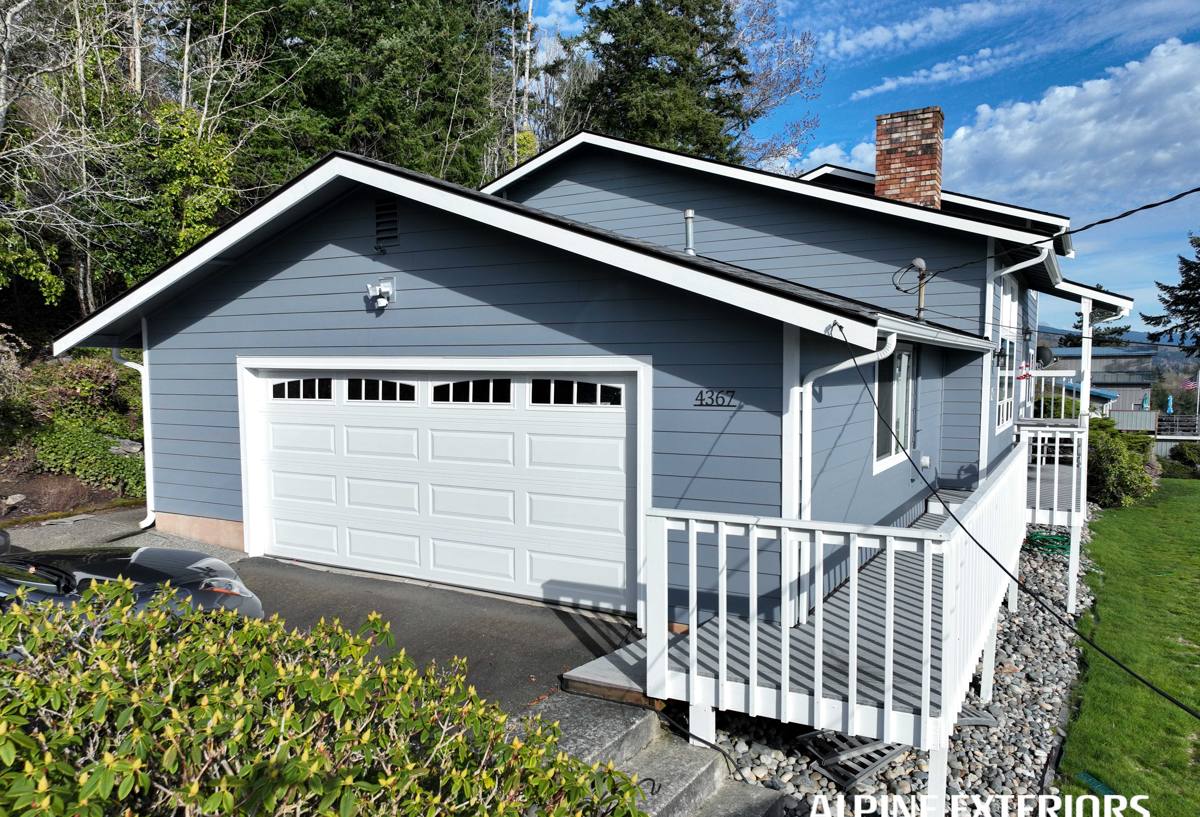
What a Deck Actually Needs to Hold Up Here
Drainage before anything else
Every deck we build starts with how water is going to leave it. That means real slope away from the house on the framing itself, gaps between boards sized for airflow instead of a tight showroom look, and joist layout that doesn't create low spots where water and debris collect. On tree-covered lots, that also means thinking about where leaves and needles will pile up and making sure those spots aren't also the spots where water pools.
Material choice matters more than color
Homeowners usually start a deck conversation talking about color and board pattern. We start with how a material behaves wet, because in Acme it's going to be wet a lot of the year. Some woods and composites handle standing moisture and shade far better than others, and the wrong choice in a heavily shaded, tree-covered yard will show moss and mildew within a year or two regardless of how well it's built.
Fasteners and hardware that won't fail first
A deck is only as good as the metal holding it together. We use fasteners and structural hardware rated for exterior, ground-contact, or coastal-grade exposure depending on the location and how sheltered or exposed the site is — not general-purpose hardware that corrodes and stains the wood around it within a few wet seasons.
Our Deck Building Process
The steps don't change much project to project, but the details inside each one do, based on your lot, your grade, and how much shade and moisture the site holds onto.
- Site visit and design. We walk the site, look at drainage, sun/shade pattern, tree cover, and how the deck will tie into the house, then talk through layout, size, and material options.
- Permitting and footings. We handle the permit process and lay out footings to the correct depth and bearing for your soil, sized to the actual load of the structure — not guessed at.
- Framing. Pressure-treated framing, properly spaced joists, and slope built into the frame itself so the decking surface drains as designed.
- Ledger attachment and flashing. Where the deck meets the house is the single most important connection on the entire structure. We flash it correctly so water is directed out and away from your wall assembly, not into it.
- Decking installation. Boards installed with consistent, code-appropriate gapping for airflow and expansion, with fasteners chosen to match the material.
- Railings and stairs. Built to current residential code for height, baluster spacing, and stair geometry, and finished to match the deck.
- Final walkthrough. We go over the finished deck with you, including what maintenance it actually needs and how often.
Decking Material Options
There's no single "best" decking material — there's the material that matches how much upkeep you want to do and how shaded or exposed your site is. Here's how the common options compare for a property like the ones typical of the Acme area.
| Material | Upfront Cost | Moisture & Shade Performance | Maintenance |
|---|---|---|---|
| Pressure-treated wood | Lowest | Good if sealed regularly; prone to moss in heavy shade without upkeep | Annual cleaning and re-sealing recommended |
| Cedar | Moderate | Naturally rot-resistant but still needs finish maintained to look and perform its best | Periodic cleaning, re-staining every few years |
| Composite decking | Higher | Handles constant damp and shade well; some early composite products struggled with mold in low-light spots, current formulations are much improved | Occasional washing, no staining or sealing |
| PVC/capped polymer | Highest | Best moisture and mildew resistance of the group, fully sealed surface | Lowest — washing only |
We don't push one material on every job. What we push is matching the material to the site — a deck tucked under fir trees with all-day shade should not be built the same way as one that gets full sun most of the afternoon.
Footings, Framing, and the Ledger Connection
Most deck failures we get called out to look at don't start with the decking boards — they start underneath, where nobody looks until something's already wrong. Footings poured too shallow or undersized for the soil will shift over time. Framing that skips proper joist hangers or uses undersized lumber will sag long before the decking wears out. And the ledger board — the piece that bolts the deck to your house — is the connection most likely to cause real damage if it's flashed wrong, because water finds its way behind the flashing and into the house's rim joist and wall framing instead of running off harmlessly.
In a climate with as much sustained rain as Whatcom County sees, that ledger flashing detail is not optional trim work. It's the difference between a deck that's simply a deck and a deck that's slowly rotting out your house from the inside.
Railings, Stairs, and Code
Any deck above a certain height needs a code-compliant guardrail, and any set of stairs needs consistent rise and run with a graspable handrail. These aren't style preferences — they're safety requirements, and they're also what a home inspector or insurance adjuster will check if you ever sell the house or file a claim. We build every railing and stair system to current residential code as a baseline, then let you choose the style and material on top of that.
Cost Factors to Expect
Every deck is priced around its own size, height, and access, but the variables below are what actually move the number.
| Factor | Why It Affects Cost |
|---|---|
| Height off the ground | Taller decks need more substantial footings, framing, and often stairs |
| Ground access | Sites with limited equipment or material access on wooded or sloped lots take more labor |
| Decking material | Pressure-treated, cedar, composite, and PVC span a wide cost range per square foot |
| Railing style | Basic wood rail vs. metal, cable, or glass infill changes both material and labor cost |
| Permit and inspection requirements | Larger or higher decks require more detailed plans and inspections |
We'll always give you a written scope so you know exactly what's driving the price, rather than a single number with no explanation behind it.
What Ongoing Maintenance Looks Like
A well-built deck still needs some attention from you — the goal is to keep that list short and manageable, not eliminate it entirely.
- Sweep off leaves, needles, and debris regularly, especially in shaded areas where they hold moisture longest
- Rinse or lightly scrub off moss and algae buildup before it gets established, particularly on north-facing or tree-shaded sections
- Check and re-seal wood decking on the schedule appropriate to that material — don't wait until it looks dry and gray
- Keep gutters and downspouts near the deck clear so roof runoff isn't dumping extra water onto the structure
- Inspect railings and stair connections once a year for looseness, especially after a hard winter
- Trim back vegetation that's shading or holding moisture against the deck surface
Why Hire a Crew That Already Works in Acme
Building a deck in a wooded, rural corner of Whatcom County is a different job than building one on a flat, open lot in town. Site access is often tighter, grading is less predictable, and shade patterns from mature trees change how a deck needs to be built and finished if it's going to stay clean and dry. A crew that's already worked properties like these knows to plan for those conditions from the design stage instead of discovering them mid-project. We're also familiar with the Whatcom County permitting process for outdoor structures, so there aren't surprises or delays once the project is underway.
If you're weighing a deck project in Acme, we're happy to come look at your site, walk through material options that actually make sense for your yard's sun and shade, and give you a straightforward, no-pressure estimate — just fill out the form below.